Vaccine

Portrait of the week: A Covid Budget, a Cotswold meteor and Angelina Jolie sells Churchill’s painting

Home First-dose coronavirus vaccinations totalled more than 20 million. A study suggested that in the over-eighties, a single dose of either the Pfizer or Oxford-AstraZeneca vaccine was more than 80 per cent effective at preventing hospitalisation. Hospital admissions of 8,452 in the week ending 27 February were 22 per cent down on the week before that. At dawn on 28 February, total UK deaths (within 28 days of testing positive for coronavirus) had stood at 122,705, including 2,340 in the past week, down by 32.3 per cent on the week before that. Six people with the Brazilian variant of coronavirus were detected in Britain, but one could not be traced. In the Budget, Rishi Sunak, the Chancellor of the Exchequer, said borrowing would rise to a peak of 93 per cent of GDP.
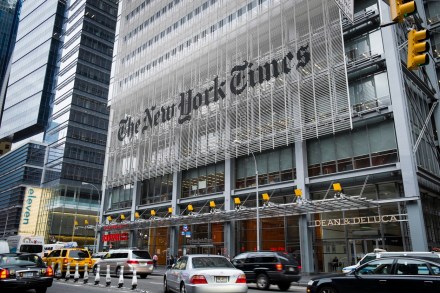
The New York Times’ orgy of British despair

The New York Times seems to have developed a strange view of Britain in recent years – or at least since the Brexit vote in 2016. In the NYT’s world, the UK is a desolate place, where locals huddle round bin fires on the streets of London, gnawing on legs of mutton and cavorting in swamps during the summer, ever fearful of the despot Prime Minister, Boris Johnson. So Mr S was not exactly surprised to see that the paper’s latest missive from the Covid frontline in Britain, published today, veered on the negative side, detailing the ‘crushing onslaught of a pandemic’ in hospitals, in what can only be described as an orgy of British despair.

Oxford’s remarkable vaccine success

It is worth taking a moment to stand back and applaud Sarah Gilbert and the Oxford vaccine team’s achievement. The data released this evening by Public Health England shows that a single dose of both the Oxford /AstraZeneca vaccine and the Pfizer vaccine cuts the risk of hospitalisation by 80 per cent in the over-80s, the most vulnerable group. It also suggests that the Oxford one, despite its messy trial data, is slightly more effective than the Pfizer vaccine in preventing symptomatic infection among the over-70s. The efficacy of the Oxford vaccine has completely changed the outlook for the UK.

EU leaders’ vaccine sniping backfires

The eyes of the world have been on Britain’s vaccination programme in recent months, as the UK government embarked on a dramatic push to get our population inoculated by prioritising first doses. During this time, the naysayers have been plentiful – with some UK commentators and plenty of politicians abroad keen to cast doubt over the strategy. What everyone agreed was that time would tell. But now it appears we have promising results, with a new pre-print of a study published by Public Health England today. The study shows that just one dose of both the AstraZeneca and Pfizer vaccines has significantly reduced Covid-19 infections among those aged 70 and over.

What Angela Merkel can learn from the Queen about vaccine scepticism

You have to feel for Germany. After a fraught vaccine procurement process, not only is the government struggling to persuade its citizens to take the Oxford AstraZeneca vaccine, but Angela Merkel has now stated that she will not be given the jab on account of her age.  ‘I do not belong to the recommended age group for AstraZeneca,’ the German chancellor told Frankfurter Allgemeine Zeitung newspaper. It could well be the final nail in the coffin for an EMA-approved, safe vaccine that has cost her country millions. Merkel’s view may be aligned with government policy – she is 66 and therefore, under the German rules which state that over 65s should not be given the vaccine, she does not qualify for a dose.

Why do old people have fewer antibodies after the vaccine?

The UK policy of delaying second doses of the Pfizer vaccine has been criticised by some as risky, with Pfizer warning that there is no data on the effectiveness of its vaccine other than for the dosing regime used in phase 3 trials: two doses, 21 days apart. But evidence is steadily trickling through. Earlier in the week I wrote here about the Scottish population-wide study which found that a single dose of the Pfizer vaccine reduced hospital admissions by 85 per cent between 28 and 34 days after the jab. This morning comes Imperial College’s React-2 study, which paints a picture that is, on the face of it, rather less flattering. It tested 154,000 people for the presence of antibodies to SARS-CoV-2, the virus which causes Covid-19.

Blair’s back – and advising Tories on vaccine ID cards

When the Prime Minister mentioned ‘Covid status certification’ as part of his route back to normal life, one man must have enjoyed the moment. For Tony Blair it was yet one more little victory in his UK comeback tour, made all the sweeter because Boris Johnson was once a principal opponent of the idea of any ID card system. Blair has been pushing vaccine passports like nobody’s business. A recent paper published by his Institute for Global Change advocated that we carry ‘digital health passports’ on our smartphones, which we could scan on entry to bars, theatres and other places. If you don’t have a smartphone, the paper suggested, the venue could take a photo of you instead, and check it against a database of people who have been vaccinated.

What will life look like after 21 June?

‘Alas’ is a word used many times by Boris Johnson during the pandemic. It is how he prefaces announcements that the data is getting worse and so the government has to impose further restrictions. In recent weeks, though, the numbers have been going in the right direction. The first stage of the vaccination programme was completed two days ahead of schedule. For the first time in this crisis, government targets are being moved forward, not back. Early results seem to show that the jabs are more effective than expected: a Public Health Scotland study suggests that the Oxford-Astra-Zeneca vaccine, the workhorse of the UK immunisation programme, cuts the risk of hospitalisation by 94 per cent. At the same time, take-up has been higher than predicted.

Which Covid vaccine is really the most effective?

State of the art Graffiti on Edvard Munch’s first version of ‘The Scream’ was revealed to be the work of the artist himself. There is a tradition of artists damaging their own work: — In 2018, a Banksy, ‘Girl With Balloon’, was partially shredded moments after being sold for $1.4 million at Sotheby’s by a device fixed inside the frame. — In 1920, Dadaist Francis Picabia arranged for his friend André Breton to rub out his chalk drawing, ‘Riz au Nez’, shortly after it went on display in Paris. — In 1960, ‘Homage to New York’, a sculpture by Jean Tinguely, auto-combusted after going on display in the city’s Museum of Modern Art.

Face masks in schools: a note on the evidence

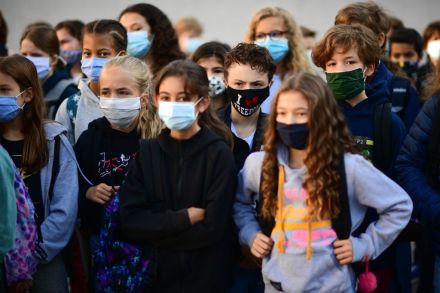
Secondary-school children returning to school from 8 March will be required to wear masks in classrooms, at least for several weeks. That is in contrast to the initial return of children to school last summer. It wasn’t until November that they were required to wear masks at school, and then only in corridors and other communal areas. But should we be forcing children to wear masks? A German study – in a preprint which has yet to be peer-reviewed – has reported negative symptoms of children who wear masks in that country.

Germany is regretting its criticism of the Oxford Covid jab

Germany’s fridges are filled with Oxford jabs. But there's a problem: 80 per cent of the 735,000 doses delivered to Germany so far have not been used. The vaccine is being described in the German press as a 'shelf warmer'. There are even reports of people missing appointments at vaccination centres if they have been notified that they will receive the AstraZeneca product. While this is alarming, a lukewarm reaction to the vaccine might not come as a surprise. The vaccine's reputation has been repeatedly undermined by reports about its efficacy. A decision in Germany not to use the vaccine for over-65-year-olds, despite the European Medicines Agency having approved it to be given to all adults, has hardly helped.

We could all pay the price for the EU’s foolish vaccine nationalism

I'm a card carrying, Europe-loving, wishy-washy centre-left liberal. It therefore pains me to point this out: the EU in general, Ursula von der Leyen specifically, and some of the prominent European leaders such as Emmanuel Macron are getting policy and messaging on vaccines badly wrong. They need to urgently ditch the peacock displays of tribal politics. The French president, in particular, who leads one of the most vaccine sceptical western nations, should not have so publicly questioned the efficacy of what has clearly turned out to be a vaccine that is working in the fight against Covid-19. The consequences of their words could well be long-lasting.

Britain’s class of Covid is in a race against time

Winning the war is one thing, winning the peace is quite another. Time and again through history, national governments have thrown everything into a wartime effort, only to forget that there will be a country – or countries – to rebuild once victory has been secured.  This is why the Prime Minister is so keen to talk about Building Back Better and the Green Skills Revolution that he promises will follow just as soon as the vaccine has worked its magic. We are, we are told, going to create a better Britain once we’ve seen the back of Coronavirus. And of course much of Johnson’s blue sky ambition is admirable, and his famous optimism could prove important in the months and years ahead.

Is Israel’s green pass the key for lifting lockdown?

Coronavirus rates in Israel right now are among the highest in the world. But that didn't stop the Israeli government from lifting its strict lockdown and, yesterday, reopening most of its retail economy. Non-essential shops, shopping centres, libraries and museums reopened to the general public after being closed for more than six weeks, despite the fact that daily cases and hospitalisation numbers remain at pretty much the same levels as when the lockdown began. The streets were packed as people tried to catch up on nearly two months' worth of shopping. The reason – or, perhaps, the justification – for this reopening is Israel's successful vaccination programme.

Will the vaccine reduce public support for lockdown?

The vaccine news today is good, and better than would have been expected even a month ago. The Public Health Scotland data indicating that four weeks after the first dose of the Oxford / AstraZeneca vaccine there is a 94 per cent reduction in the risk of hospitalisation is phenomenal (the figure for Pfizer/BioNTech is 85 per cent). It suggests that the vaccines should deliver on the ‘protect the NHS’ part of the government’s strategy. This will lead to more Tory pressure on Boris Johnson for a faster easing of lockdown. The argument will go that given the data is better than expected, the pace of lockdown easing should be sped up.

Latest vaccine data is even better than we had hoped

The two vaccines approved and in use in Britain showed high efficacy rates in trials, but it takes time for data to creep through on efficacy in the real-world. We are, however, getting the first figures trickling through. This morning comes a paper evaluating the effectiveness of the Pfizer-BioNTech and AstraZeneca-Oxford vaccines in preventing hospitalisation rates in the Scottish population, using a dataset that covers 5.4 million people, 99 per cent of the population. The Eave II study, led by the University of Edinburgh, followed the 650,000 people who received the Pfizer vaccine between 8 December and 15 February and the 490,000 people who received the AstraZeneca vaccine between 4 January and 15 February.

Vaccination offers us a road out of lockdown. Let’s take it

As an epidemiologist and doctor who volunteered to return to the frontline in both waves, I have seen first hand the death and suffering from Covid. And, also, the knock-on effects on those affected by cancelled services. Deciding when to end lockdown is, of course, a difficult decision, but I now fear the costs of lockdown will soon start beginning to outweigh the benefits. There is no doubt that Covid-19 has the capability to rapidly overwhelm our healthcare system and cause unprecedented casualties. Indeed, what has transpired over the last year suggests that Neil Ferguson’s figure – that the virus was capable of taking 500,000 lives – looks fairly accurate. Covid clearly had to be suppressed to stop the NHS being overrun and to keep all emergency services running.

When will vaccines let us reopen society?

With every passing day, more Covid immunity is being gained as hundreds of thousands receive the vaccine. Of course, vaccines take time to mature in the body and offer protection, but with roughly a quarter of the population having now received their first inoculation, our approach to dealing with the virus will inevitably need to shift. The big question is how vaccination has changed the equation for how quickly society can be reopened. Modelling from the PCCF project at Bristol University, on cautious assumptions, suggests that the pace of the vaccine rollout would allow significant reopening with herd immunity achieved in July. First, let’s say how much vaccine immunity has been induced by the vaccine.

Does this Israeli study support Britain’s one-dose strategy?

Is the British approach of prioritising first doses of Covid vaccines and not promising a second dose until 12 weeks later compromising our ability to fight the disease? It is not a moot point, with several EU figures asserting that it is a risky route to take. As I wrote here a couple of weeks ago, as far as the AstraZeneca/Oxford vaccine is concerned, what evidence we have supports the practice of delaying a second dose until 12 weeks after the first one; the vaccine is more effective that way. However, a question mark has continued to hang over the Pfizer/BioNTech vaccine. There is limited data on the most effective dosing regime in this case because the phase 3 trials did not experiment with delayed doses – everyone involved was given a second dose 21 days after the first.