Usa

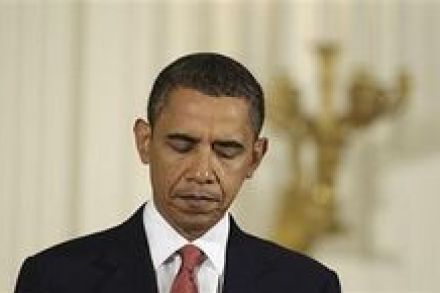
Decision time for Obama

Bob Woodward has the scoop that General McChrystal’s review of Afghan strategy calls for more troops. McChrystal is direct, stating that “ISAF requires more forces” and that “inadequate resources will likely result in failure”. He is also clear that these troops are needed now, "Failure to gain the initiative and reverse insurgent momentum in the near-term (next 12 months) -- while Afghan security capacity matures -- risks an outcome where defeating the insurgency is no longer possible." McChrystal has yet to present his request for more troops to the Pentagon but it is clear that he will ask the administration for considerably more troops. Obama now has to decide whether he will back the new commander he put in place and give him the tools he needs.

Joking apart

Free association underpins the comedy of Lorrie Moore’s writing — or perhaps the verb should be ‘unpins’, since her prose spins off in tangential, apparently affectless riffs. Free association underpins the comedy of Lorrie Moore’s writing — or perhaps the verb should be ‘unpins’, since her prose spins off in tangential, apparently affectless riffs. Even the title of A Gate at the Stairs tugs in different directions. It is a baby-gate; since this novel starts as a comedy — of sorts — about adoption. (But, as the adopting mother says, while mashing flower bulbs into a poisonous puree, the French ‘have jokes that end “And then the baby fell down the stairs.” ’).

Gut instincts

Julie Powell wrote Julie and Julia, a book (and now a film) in which she described her attempts to cook a huge number of recipes by the cookery writer Julia Child. I haven’t read that book, but I get the impression that Powell, 30-ish and married to her childhood sweetheart, was going nuts, and used the cooking as a sort of therapy. Well, here she’s going nuts again, and it’s pretty serious. This time, she decides to become a butcher. At the start of the book, we find her slicing up a piece of liver and getting blood on her face. She tells us her troubles, which amount to the fact that, while she’s still married to Eric, and still loves him, she’s having a mad affair with someone else. She is comfortable with Eric.

Home is where the heart is

Brooklyn, by Colm Tóibín Colm Tóibín’s Brook- lyn is a simple and utterly exquisite novel. The writing is so transparent, so apparently guileless, that I kept wondering what trickery Tóibín had used to keep me so involved, so attached, so unaccountably warmed. The tale’s simplicity is, in a sense, like life’s: an Irish girl called Eilis can’t find good work in her home town of Enniscorthy, so she goes along with a well-intended family conspiracy to send her to a decent job in Brooklyn. It is the early 1950s. Her father is dead. In Brooklyn, she finds her feet and falls in love. But when her older sister dies, she must return to Enniscorthy.

The actress and the orphan

Ask Alice combines two narratives, one beginning in 1904 in the emptiness of the American Midwest, the other in the muffled stasis of Edwardian rural England. The first follows the swift trajectory of Alice, a pretty orphan from Kansas who thinks ‘it must be fun to go places’. Alice, on the train shuttling between one set of backwoods relations and another, is waylaid by a predatory travelling salesman named Drouett; before long she really is ‘going places’. Alice is an adventuress, a red-haired opportunist, a Becky Sharp without the wit.

Fame is still the spur

In The Frenzy of Renown, Leo Braudy’s magisterial study of fame and its history, he identifies the principal allure of being a celebrity: ‘In the heart of the fan and the famous alike, fame is a quiet place where one is free to be what one really is, one’s true, unchanging essence.’ The belief that you can only become fully realised in the glare of the media spotlight is, of course, an illusion. In fact, the opposite is true. Far from enhancing the personality, fame corrodes it. Responsible adults are reduced to an infantile state in which the sole purpose of others is to satisfy their needs. As John Updike said, ‘Fame is a mask that eats into the face.

Lincoln’s legacy

Every so often American Presidents let people know that they are reading a book. When George W. Bush was seen clutching a copy of Andrew Roberts’s History of the English Speaking People, acres of newsprint appeared on this elegant apologia for neo-conservatism. Now his successor in the White House wants us to know that he has a well-thumbed copy of Doris Kearns Goodwin’s Team of Rivals; and just in case you missed that, the publishers have helpfully emblazoned the front of the UK paperback edition with the headline ‘The Book that Inspired Barack Obama’. He could have done much worse. For Team of Rivals is one of the best biographical histories I have read in years.

The end of the affair | 28 March 2009

Given the anti-Americanism displayed on every possible occasion by the French since the days of De Gaulle, and the crudely expressed contempt with which Americans have responded, particularly over the past decade, it is easy to forget that the two nations once enjoyed a relationship even more ‘special’ than the supposedly exclusive one between Britain and the United States. That relationship, which began with Benjamin Franklin’s seduction of French society and Lafayette’s participation in the American revolution, blossomed into a love affair in the two decades following the Great War. Many Americans who had fought in it stayed behind. The comparatively low cost of living permitted penniless writers and artists, as well as society ladies, to congregate in Paris.

The man for the hour

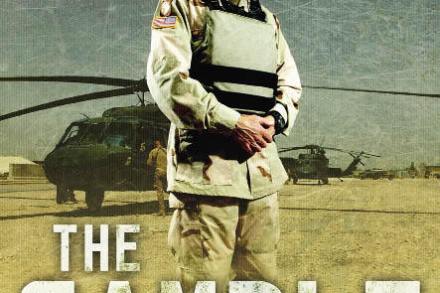
At the turn of 2007, the United States was facing defeat in Baghdad. Shia and Sunni were on killing sprees, the supply line from Kuwait was under constant attack, and F-16s were in action on Haifa Street, less than a mile from the fortified US embassy. Yet commanders in Iraq, and civilians from Defense Secretary Donald Rumsfeld downwards, clung to a bankrupt strategy: withdraw US forces to colossal operating bases outside town — Camp Victory, Camp Liberty — and leave the streets to an untrained Iraqi army, the sectarian national police and to the thieves and murderers. Meanwhile, success was measured in body count whatever the cost to the population, summed up by Col.

Gordon Brown’s Legacy Revisted

No one outside Downing Street can imagine how tense it must be getting in the bunker as the economic situation worsens and the period Gordon Brown has to turn things around shortens. My suspicion is that it is getting very tense indeed. I was informed on Friday that  No 10 was not happy with some of the things I have been writing on The Bright Stuff. We already know that people around the Prime Minster were concerned at the suggestion that they were studying footage of Obama's apologies. Officials have been unable to identify the person who was asking for this footage I am told. All very mysterious. But then again, would you put your hand up? Now they are unhappy at the suggestion that discussions of the "legacy" are off-limits.

Arthur at Camelot

Journals: 1952-2000, by Arthur Schlesinger, Jr, edited by Andrew Schlesinger and Stephen Schlesinger Before sitting down with this hefty doorstopper of a diary, first ask yourself whether you agree — or can imagine yourself agreeing — with the entry Arthur Schlesinger, Jr made on 27 March 1950: ‘I adore sitting around hotel rooms with politicians and newspapermen exchanging gossip over drinks.’ If you do, or can, then you will enjoy this book, for it largely consists of a half-century’s worth of gossip, most of it obtained by sitting around hotel rooms with politicians and newspapermen over drinks.

Was the Abdication necessary?

At least one very startling claim emerges in this study: according to her own account, Wallis, Duchess of Windsor, never consummated her first two marriages. Indeed, she never allowed any man (before the Duke of Windsor, presumably) to touch her ‘below the Mason-Dixon line’. If this is true, it makes a nonsense of the Abdication, since an unconsummated marriage, within Christian canon law, is automatically grounds for annulment. This would mean that the lady was not — or did not need to be — a divorcee, and thus her pairing with Edward, Prince of Wales, should have raised no objection whatsoever.

Stars bright and dim

Much great American writing is regional in a way that British or French writing never has been. Most of the best writing coming from the States inhabits a place which apparently feels no pressure from the great metropolitan centres — Annie Proulx on the Texas panhandle, Cormac McCarthy on the Mexican border territories, Jane Smiley on the Midwest. Even when a great city is in the vicinity, as in Anne Tyler’s or David Simon’s very different considerations of Baltimore, we feel a specific regional flavour emerging; John Cheever’s fictions of elegant suburban life have a distinctly north-eastern flavour which evidently still weighs heavily with writers of that particular region.

The Terrible Exchange Rate Gap…

Larry Kudlow, who normally sees brilliance in every aspect of the Bush administration's record, now sees only disaster. Here he is at The Corner: If Sen. John McCain wants to run as a candidate of change, and if he’s truly interested in distancing himself from President Bush, he should reverse the declining fortunes of the Bush wartime dollar. America’s prestige is on the line... The falling U.S. greenback has become a symbol of American decline... Folks are making fun of the dollar. Our enemies around the world are pointing to the unreliable dollar as evidence of American weakness. It’s as though the administration’s neglect of the dollar is “peso-izing” or “Latin-Americanizing” the greenback.

Fred Thompson’s message to the world: your dead don’t count

Many years ago now, I had occasion to change trains at Pisa en route to Perugia and it was there, I think, that I first became aware of the Ugly American phenomenon. The station was pretty quiet as I recall, or rather it would have been had the air not been filled with the screeching complaints of a well-upholstered middle-aged American lady, dressed in the standard issue kit for European expeditions: too tight t-shirt, loose shorts, white socks and sneakers, complaining loudly about the station masters' reluctance or inability to confirm that the reservation she held for her party was valid or not. So far so normal. This was Italy. The trains run on time because the timetables are generous and so on.

Fat Bastard Actually Accurate Characterisation of the Modern Scot

Oh great. Who knows, perhaps this is even true. I blame Glaswegians. Obesity levels in Scotland are the second highest in the developed world behind the USA, new statistics have revealed. The figures were published as the Scottish Government announced plans to  remove sweets and fizzy drinks from schools. Under new rules, the amount of chips served in school meals will also be cut and more fruit and vegetables provided. Children's Minister Adam Ingram said he wanted to change young people's habits. The figures , released by ISD Scotland, the statistical wing of the NHS, said the "obesity epidemic" in Scotland must be addressed and outlines the extent of the "major public health problem".

Dishonesty and ignorance at any cost

Daniel Larison as already done yeoman work dismantling elements of David Gelernter's appalling piece in The Weekly Standard. But more needs to be done and, that being the case, let's have at it in this and a number of posts to follow. Gelertner's piece, cheerily headlined "Defeat at Any Price" makes the case, natch, that Democrats and liberals in the United States want to see America defeated in Iraq. Of course, they're devilishly clever and never actually come out and say this (Gelertner declines to buttress his case with any quotations from Messrs Clinton, Obama, Edwards et al that would support his claim that they believe "America would be better off if it lost"). Nonetheless, being in thrall to "Appeasement, pacifism and globalism" Democrats want to see America laid low.

The George and Gordon Show Begins Its Run

UPDATE: Welcome TNR Plank people. Nice to see y'all again... Gordon Brown’s approach to the United States has followed the traditional “Good cop, Bad Cop” approach. Having let his subordinates off the leash to disparage  US foreign policy and hint that Washington should no longer be able to count on whole-hearted British support, Brown today played the role of the reassuring and conciliatory policeman who just wants to be your friend. The Prime Minister’s visit to Camp David followed criticism of the US from Brown’s protege Douglas Alexander and Mark Malloch Brown, formerly head of the UN Development Programme and newly installed at the foreign office.

From the annals of the “Special Relationship”…

This is how a "No Spin" government works. Douglas Alexander, Secretary of State for International Development and Gordon Brown's long-time Mini-Me, comes to Washington to bravely speak truth to power. Choosing a suitably establishment venue such as the Council on Foreign Relations, Mr Alexander tells the United States that: "In the 20th century a country's might was too often measured in what they could destroy. In the 21st century strength should be measured by what we can build together. And so we must form new alliances, based on common values, ones not just to protect us from the world, but ones which reach out to the world.