Unions

My new job at the Amazon packing factory

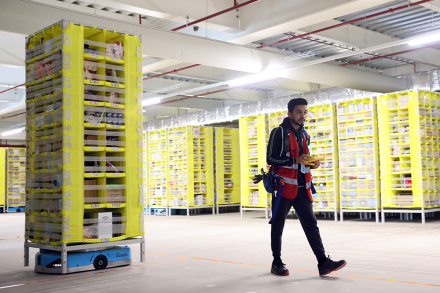
What will you do if it all goes wrong? I have a back-up plan: working for Amazon. Its Luton warehouse offers tours to the public, and I went along to see what my future may hold. The vast hangar sits in a field of mega-sheds near the M25, where built-up London peters out into scrub and green farmland. I arrived at a bright-yellow security gate where I was greeted by Amin and Sophie, who seemed thrilled to welcome our party. Six in all. Sophie asked us – or perhaps ordered us – to deposit our phones in a locker whose key she retained during our visit. Amin explained the rules. Follow me. Walk within the blue lines. Ascend staircases on the left. Use the handrail. Off we went.

The National Theatre needs help

From our UK edition

In The Print is a docudrama about the bitter war between Rupert Murdoch and the unions in the mid-1980s. Murdoch was determined to computerise the production of his UK titles and to terminate the far left’s stranglehold on his business. Daily papers are vulnerable to last-minute strikes and his thieving employees made no secret of their larcenous tactics. The print workers, known as ‘inkies’, earned £1,000 a week for 16 hours’ work and their union, Sogat, behaved like a bunch of racketeers. They laughed at Murdoch by submitting wage claims for employees called ‘Donald Duck’ and ‘Ronald Reagan’. Murdoch fought back with smart, imaginative tactics that Sogat, under Brenda Dean’s leadership, couldn’t handle.

The battle for Anna Wintour’s Vogue empire

When Anna Wintour announced she was stepping down as editor-in-chief of Vogue in June, it appeared to be the end of the ice queen’s reign. Yet Wintour retained her large, chintzy corner office as well as her two other roles – as Condé Nast’s global chief content officer and Vogue’s global editorial director. If you looked closely, you might have seen a steely determination lurking behind her trademark sunglasses, the look of a generational editor intent on more power – and perhaps even revenge. The Condé Nast Union naively regarded Wintour’s move as that of a then 75-year-old drifting into quiet retirement, the old guard surrendering to youth.

Biden admin upended by chaotic weekend

The Biden administration is struggling to find its footing amid a series of unfortunate events that are testing the oft-vacationing president and his vice president, who is currently auditioning for the top spot in American politics.Hurricane Helene decimated parts of North Carolina, leaving millions of Americans without power, at least thirty dead and many more missing. Entire towns are practically gone, and pictures of video of the storm’s aftermath show flooding enveloping homes and washing out highways. Local officials are begging for assistance and resources; state Representative Neal Collins, for example, tweeted, “I currently have two people on oxygen needing generators & 1 person on dialysis needing one.

Labour vs labour: how can the government claim to be promoting growth?

From our UK edition

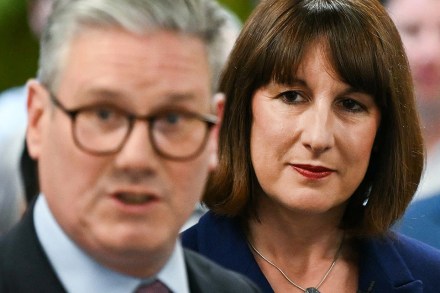
Growth, growth, growth: that was what Keir Starmer told us would be his government’s priority in his first press conference as Prime Minister. Nearly three months on, as the Labour party heads into its first conference in power for 15 years, it is becoming ever harder to reconcile Starmer’s promise with the policies that his government seems determined to deliver. With junior doctors voting to accept a 22 per cent pay rise, yet another group of public sector workers has been lavished with financial reward without any obligation to accept or implement more productive working practices. The NHS is in the midst of a pay bonanza at a time when productivity in the health service has been declining. Since the pandemic, ever more employees are delivering significantly fewer treatments.

Labour’s union problem

From our UK edition

Less than two months in, one aspect of Keir Starmer’s government is becoming clear. This administration is closer to the trade unions than any we have had in the past 45 years. It is not just that the government has ceded readily to wage demands from teachers (a 5.5 per cent rise this year), junior doctors (22 per cent over two years) and train drivers (15 per cent over three years) – it has done so without seeking any agreement to changes in working practices. Given the abysmal productivity record of the public sector in recent years, especially since the pandemic, this is a remarkable omission. The government’s failure to represent tax-payers’ interests in these pay awards serves as an invitation for further unreasonable demands.

Inside Labour’s fight with the unions

From our UK edition

By the end of the year, Britain may be one of the few countries in the democratic world where the right is losing. In America, Donald Trump is the favourite to win. Ahead of next month’s European Parliament elections, momentum is with Germany’s AfD, Marine Le Pen’s National Rally and Austria’s Freedom party. Migration is the most pertinent issue pushing Europe rightwards, but many voters are also turning to insurgent right-wing parties as a rebellion against the cost of net-zero policies. Labour sees an electoral benefit in sticking to its green energy plans to stop voters defecting to the Greens In the UK, the future of green scepticism looks somewhat different.

The gloomy future facing trade unions

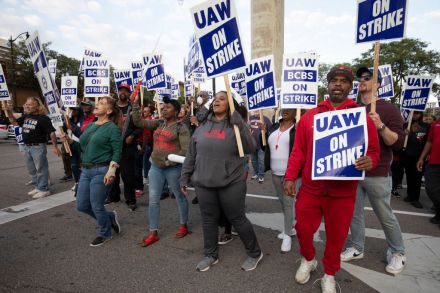
Few developments have more cheered progressive activists than the perceived resurgence of labor unions. This has been sparked by largely symbolic efforts to unionize in places such as Starbucks and Amazon, as well as more sizable wins by the Writers Guild of America and the Screen Actors Guild and United Auto Workers, the country’s most important private labor union. In 2022 strike activity more than doubled from the previous year. Yet ultimately these wins may turn out to be largely Pyrrhic.

unions

Was 2023 the year of the labor union?

It is only fitting that the low point of the American labor movement occurred in 2009, the Year of the Rat. The Great Recession may have started with Wall Street speculation in the housing market, but your average American had most likely never heard of Henry Lehman or his siblings until the day Dick Fuld drove the 150-year-old bank bearing their name into the ditch. But General Motors, Chrysler? Cars, even more than Hollywood, jazz and the semi-automatic rifle, are the quintessential American business. How could those get driven into the ground? As soon as freshly evicted homeowners finished packing the remains of their subprime split-levels into the backseats of their battered Tahoes, they went looking for culprits. They settled on the United Auto Workers.

labor

Who was the original Terf?

From our UK edition

Terf wars Who was the original Terf (trans-exclusionary radical feminist)? – The practice of some women’s groups in excluding trans women began almost with the advent of trans women themselves. In 1978, the Lesbian Organisation of Toronto refused membership to a trans woman who identified as a lesbian – saying it would only accept ‘womyn born womyn’. – The term ‘Terf’, however, dates only from 2008, when it was used in a blog post by feminist writer Viv Smythe in response to a ban on trans women attending the Michigan Womyn’s Music Festival (a ban which had been in place since 1991). – The festival, which had been going since 1976, was boycotted by some and was last held in 2015.

Who else has come after Percy Pig’s crown?

From our UK edition

Pig out Marks & Spencer wrote to an ice cream parlour in Hertfordshire demanding that it stop calling one of its products ‘Perky Pig’ on the grounds that it infringed the chain’s copyright of Percy Pigs, which it has been selling since 1992. Some more onomatopoeic porcines: – Pierre Pig: collectible plastic figurines introduced by Fabuland in 1984. The characters in the series also included Pat Pig, Peter Pig and Patricia Piglet. – Peppa Pig: children’s TV series first broadcast on Channel 5 in 2004, and favourite of former PM Boris Johnson. – Percival Pig Finds His Manners: children’s book published in the US in 2014. – Percival, the Performing Pig: children’s play by Dilys Owen. – Perry Pig Jump: Nintendo game brought out in 2019.

In LA, unions are winning at the expense of kids

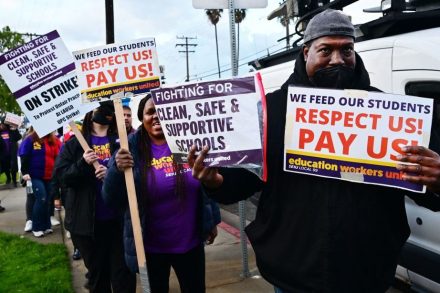
Service Employees International Union Local 99 staged a three-day walkout in Los Angeles last week after negotiations failed. SEIU, which represents about 30,000 cafeteria workers, bus drivers, special education assistants, etc. called for a strike if their demands were not met by the Los Angeles Unified School District. And the United Teachers of Los Angeles decided to ditch school, too, in what was deemed a “sympathy strike.” The unions’ action forced every public school in LA to shut down from March 21 to March 23. It all played out in the usual way.

teachers unions los angeles

Why aren’t the teaching unions speaking out about Batley?

From our UK edition

‘Sadly, his life here in Batley is over. Even if he gets his job back, how can he possibly return to Batley Grammar School? It will be far too risky. And how will he be able to walk around the town with his kids, doing normal things knowing that he could be killed?’ These were the harrowing words of the father of Batley Grammar’s suspended RE teacher yesterday. It’s hard to believe that a professional working in a liberal democracy like Britain, whose only ‘crime’ was to use a drawing to start a class discussion, is now facing a lifetime of police protection, unable to return to work and living in fear for his family’s life.

Is Macron heading for his Margaret Thatcher moment?

From our UK edition

There was a sense of foreboding in France at the start of this week. After the anarchy of last Thursday and the extraordinary violence in western France on Saturday, where radical environmentalists fought a pitched battle with police, what would the next seven days bring?  Much of the media speculated that the 10th day of action organised by unions in protest at the government’s pension reform bill would result in the sort of scenes witnessed across France five days earlier, with city halls torched, shops sacked and police stations attacked. Jean-Luc Mélenchon, the leader of the left-wing La France Insoumise, was accused by the government on Monday of tacitly encouraging the disorder. Yesterday, he called for protestors to make their point peacefully.

WATCH: Markwayne Mullin’s macho Teamster throwdown

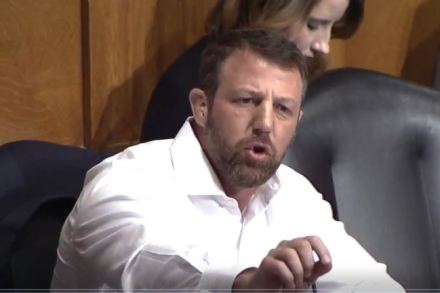
Cockburn looked on at what he at first took to be a run-of-the-mill sports bar fight at 4:30 in the afternoon — only to realize it was Oklahoma senator Markwayne Mullin throwing down with Teamsters president Sean O’Brien in the hallowed halls of Congress. Mullin, a Republican, came in guns a’blazing to a Senate Health, Education, Labor and Pensions Committee hearing, saying he is “not at all against unions,” before listing the reasons unions are bad. The exchange between Mullin and O’Brien is painful to watch — and the transcript reads pretty much like what you'd expect to hear before a fistfight in a Chili’s parking lot. Cockburn has assembled, for your reading pleasure, a play-by-play highlight reel of the clash...

How teachers’ unions could unwittingly usher in school choice

In a surprise development, teachers' unions in eight states recently announced drives to pass legislation that would establish so-called “wealth taxes.” Working with progressive legislators in California, Connecticut, Hawaii, Illinois, Maryland, Minnesota, New York, and Washington, the unions have devised what they believe are the best ways to tap, not just the incomes, but the assets of the most successful earners. Under the bill proposed in California, for example, residents with both financial and illiquid assets would be required to file yearly reports on their holdings, obligating those worth more than a certain amount to pay 1 to 1.5 percent of the total to Sacramento, even if they move out.

More rail trouble could be on the horizon

Economic news over the last few months has been bleak. Whether it’s inflation, supply chain disruptions, or the threat of recession, worrying news abounds. But among the headlines, there was a topic that briefly bubbled to the surface before being all but forgotten: a potential strike by the country’s railroad workers. Amtrak, in anticipation, canceled all cross-country routes, but Labor Secretary Marty Walsh averted a strike at the eleventh hour by negotiating quite literally through the night to find an agreement with the workers. It’s easy to forget about rail. In a time when inflation and potential recession are dominating headlines, transportation issues just don’t seem as interesting.

The secret of Mick Lynch’s success

From our UK edition

There are plenty of losers from this week’s railway strikes, not least the legions of commuters who found themselves stuck. But one clear winner is emerging: RMT boss Mick Lynch. Lynch has been feted for his straight-talking media appearances and composure under fire. He’s clever, witty and funny. It also helps that he has made fools out of some of those media darlings some British viewers love to hate. It’s surely only a matter of time before he pops up on Have I Got News For You. But perhaps his greatest asset isn’t what he offers but who he isn’t. What sets him apart is how different he is from Bob Crow, the firebrand former general secretary of the RMT. Crow was, famously, the combative last but one leader of the RMT.

The utter shamelessness of Britain’s rail unions

From our UK edition

In what other industry could demand collapse by a tenth and yet the staff still think that they have a right to an above inflation pay rise and no job losses? Rail privatisation was supposed to put an end to union militancy and to relieve taxpayers of the financial risk of running the railways. Patently, it has achieved neither objective. Three national rail strikes have been declared for later in the month, to compound strikes on the London underground. Meanwhile, taxpayers will contribute £16 billion this year to propping up an industry in which demand for its services have collapsed. In the week to 22 May (before the effect of last week’s bank holidays) usage of national rail services averaged 89 per cent of what it did before the pandemic.

It’s time for Boris to take on the rail unions

From our UK edition

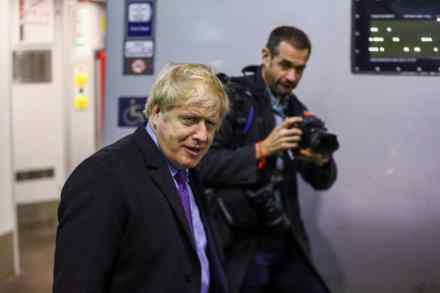
Imagine if we gave the rail unions what they really wanted, and renationalised the railways. Would they then leave us alone and get on quietly with the job of driving trains, clipping tickets and so on? Like hell they would. Thankfully, Nicola Sturgeon has just tried this very human experiment, so that the Westminster government does not have to. On 1 April, railway services north of the border were taken back into public ownership so that, as the unions would put it, passengers could once again be put first and profits no longer drained away by nasty private companies rewarding their evil shareholders. And the result? Er, a national rail strike – just the same as the unions are threatening in England.