Jonathan Bydlak

Jonathan Bydlak is the director of the governance program at the R Street Institute, a center-right think tank.

The budget fight and the new politics of entitlements

It’s almost spring, and you know what that means: buds popping on the trees, birds chirping as the days grow longer, and the president introducing a budget that will be quickly forgotten. And so it's happened. But there have been a few interesting twists that could make this budget season more interesting than most. President Biden wrote an op-ed for the Wednesday New York Times presenting his plan to “extend Medicare for another generation.” The piece was largely predictable: calls to raise taxes on the wealthy as a way “to increase the program’s solvency by twenty-five years.” While some fiscal conservatives welcomed the president’s willingness to raise the issue of Medicare solvency, his ideas are largely dead on arrival for Republicans.
kevin mccarthy

Don’t expect Republicans to fight lame-duck spending

Lame-duck sessions of Congress are rarely uneventful. Whether it’s cramming through spending at the last minute or cramming through even more spending at the last minute, our legislature can always be counted on to rubber-stamp bills that lacked political support before Mariah Carey returned to the airwaves. Leading the charge for the opposition this time around is the self-declared speaker of the House, Kevin McCarthy. A Bloomberg headline recently proclaimed that “McCarthy Draws Line on Spending,” and trumpets seemingly blared out from the heavens heralding that Republicans had — finally — rediscovered their fiscally conservative bona fides. But not so fast: this is a script we’ve seen before.

Democrats’ last gambit: a corporate windfall tax

Inflation continues to be the economic story of the day. While Democrats try to divert attention to the job market, and many Republicans seem more interested in appealing to “gut feelings” on issues like crime, the latest polling shows that rising prices remain top of mind for most voters. To the extent that the Biden administration is talking about inflation, it’s generally been to downplay the latest numbers (at least when not accidentally highlighting it with ill-fated tweets that take credit for historically high Social Security cost-of-living adjustments). But there is another talking point that some Democrats are taking as an alternative: big corporations are to blame, and windfall taxes are the solution.

The infrastructure bill spends big at the worst time

Few things are inevitable in Congress, but passing massive spending during a time of record deficits is probably one of them. Late Friday night, the House agreed to changes made by their Senate colleagues, sending a $1.2 trillion infrastructure package to President Joe Biden’s desk after months of debate. Despite much palace intrigue and handwringing, our leaders managed to do what they do best: authorize spending a lot more of our money. The vote was mostly along party lines, with a baker’s dozen Republicans crossing the aisle in support of the package — much to the chagrin of their conservative colleagues. With contentious midterms closing in, some Republicans wanted to tout their adeptness at bringing home the bacon to more moderate districts.

More rail trouble could be on the horizon

Economic news over the last few months has been bleak. Whether it’s inflation, supply chain disruptions, or the threat of recession, worrying news abounds. But among the headlines, there was a topic that briefly bubbled to the surface before being all but forgotten: a potential strike by the country’s railroad workers. Amtrak, in anticipation, canceled all cross-country routes, but Labor Secretary Marty Walsh averted a strike at the eleventh hour by negotiating quite literally through the night to find an agreement with the workers. It’s easy to forget about rail. In a time when inflation and potential recession are dominating headlines, transportation issues just don’t seem as interesting.

Are we in a recession? Does it matter?

Since the latest growth numbers have come out, much ink has been spilled over the question of whether the economy is in a recession. Perhaps unsurprisingly, the Biden administration tried to get out ahead of Thursday’s release with a press statement noting that back-to-back quarters of negative growth doesn't necessarily mean a recession. Also predictably, Republicans strongly rebuked the idea, saying, “You can’t change reality by arguing over definitions.” Both sides of the debate will continue to play out, and both sides will continue to miss the point. Ultimately, it doesn’t matter very much whether growth goes up or down by 0.2 percent. What matters is the general trajectory of the economy. And on that front, the Biden track record is mixed at best.

democrats abortion

Biden’s budget doesn’t matter

Every year, the president puts forth a budget. And every year, the media diligently reports on it as if it matters to what the government will do over the coming year. Don’t get me wrong: budgets are important. They provide a sense of their crafters’ priorities and a roadmap for achieving their goals. But budgets don’t hold the force of law, which means — in our government — they serve as non-binding blueprints and little else. This is especially true of presidential budgets. That’s because while the budgetary process starts with the president, where it goes from there is determined by Congress alone. During the Trump years, Congress didn’t even bother bringing the president’s budget to a vote.

budget

Energy independence is a false hope

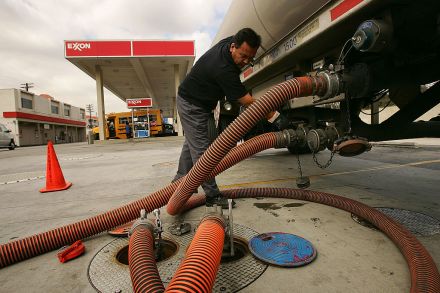
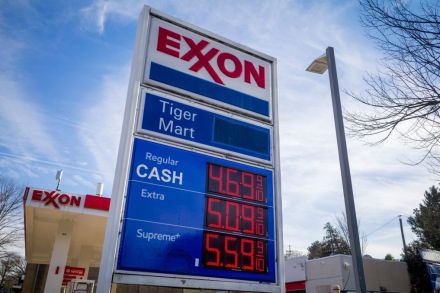
In the wake of Russia’s attack on Ukraine, gasoline and energy prices soared in the United States. While they’ve come down a bit since, it’s worth examining why war in Eastern Europe caused a spike in prices thousands of miles away — and whether a common proposal in response would have made a difference. Over the last decade, Republicans and Democrats have made “energy independence” a major policy priority. The goal in a nutshell is to produce the energy we need at home, so that the United States is more insulated economically from international disputes abroad. On this goal, advocates have made progress — in fact, the United States is already energy independent by some measures.

energy

Sanctions on Russia will shake the world economy for years

The war in Ukraine will dominate the news for the foreseeable future. But while the bombings will eventually cease, the economic consequences for the world have just begun. That’s because in an era of increasing interconnectedness, economic impacts don’t stop at borders. Most attention has been focused on the immediate impacts of sanctions on Russia, and they are significant. In the past, sanctions have proven largely ineffective at punishing foreign enemies. President Barack Obama, for example, failed to use them effectively in 2014 during the last Ukrainian-Russian dispute. But this time, the actions taken against Russia were largely unprecedented, with even traditionally neutral countries like Switzerland and Sweden calling for restrictions that are “as big as they can be.

economy

Don’t renew the child tax credit

The Covid-19 pandemic has affected every part of society, and the country’s economic wellbeing has been no exception. The time since March 2020 has provided a sort of natural experiment as to how various untested policy ideas play out in real life. Initially, most politicians on both sides of the ideological spectrum agreed on the need for a robust federal response to the virus. These actions took many forms: universal relief checks, enhanced unemployment benefits, and historic funding of vaccine research and distribution — just to name a few. For well over a year, the federal government was a source of seemingly unlimited spending. Although many of those policies have since fallen by the wayside or are at least becoming less relevant, some remain part of a fierce public discussion.

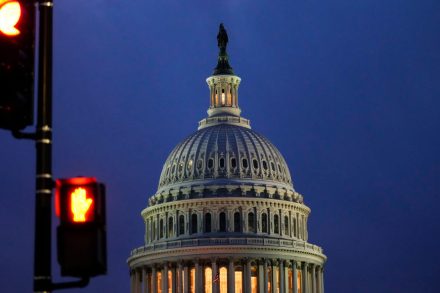
A view of the U.S. Capitol (Photo by Drew Angerer/Getty Images)

Inflation stays for the holidays

No issue has been more politicized over the last six months than the sudden reemergence of inflation. For those keeping score at home — and many of us are whenever we buy our groceries — the latest report puts the current inflation rate at 6.8 percent, the highest since 1982. How one perceives the inflation threat depends as much on one’s political beliefs as it does on economics. Many conservatives are inclined to see this inflation as a more permanent fixture of the economy, believing it to be a consequence of the ongoing profligacy of the Biden administration. Democrats, in contrast, have tended to characterize the phenomenon as largely transitory and more a result of ongoing supply issues related to the pandemic.

‘Build Back Better’ could limit access to prescription drugs

Much has been written about the expansiveness of the Biden administration’s signature priority: the Build Back Better Act (BBB). The legislation is projected by the Congressional Budget Office (CBO) to spend more than $1.6 trillion in its attempts to address countless Democratic priorities ranging from climate change to the expansion of Medicaid. One aspect of the bill, however, has attracted far less fanfare than it should have: its impact on the cost of prescription drugs. Provisions in the bill would, among other things, impose rebates on drug manufacturers if prices rise faster than inflation. It’s an idea that sounds great in the current moment of creeping inflation, but is ultimately little more than a market distortion likely to produce an array of adverse consequences.

Republicans’ fiscal responsibility theater

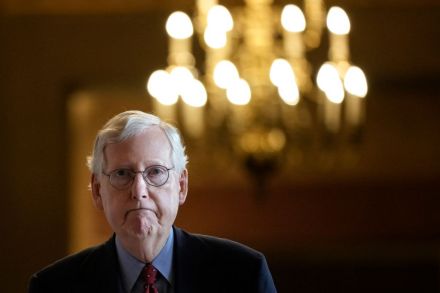
If you think Washington couldn't get any more dysfunctional, think again. On Monday night, Senate Republicans blocked a Democratic attempt to avoid a government shutdown. This raises the temperature in a Congress that’s already had, shall we say, a pretty high fever since being sworn in on January 3. Depending on who you ask, the Republicans’ latest action is either a brave attempt at stopping Biden’s massive spending package — Mitch McConnell’s stated perspective — or a foolish gamble bringing us one step closer to a debt default, as Democrats claim. In a sense, both sides are right. But Washington also needs to remember that refusing to raise the debt limit is akin to cutting up the credit card after maxing it out. It doesn’t solve the actual problem.

fiscal responsibility

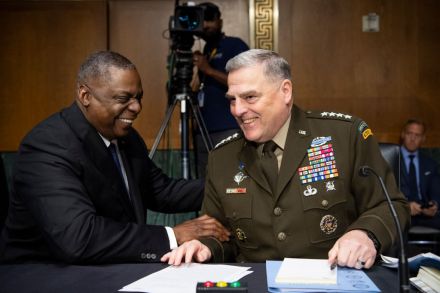
Congress pretends to hold the Pentagon accountable

The Biden administration’s latest $3.5 trillion spending proposal continues to attract attention. With a hodgepodge of Democratic priorities ranging from climate change to Medicare expansion, the bill is the more partisan companion of the administration’s $1 trillion infrastructure plan. Of course, another blockbuster story has been distracting attention from these packages — the difficult withdrawal from Afghanistan. Many in Congress continue to be critical of the administration’s handling of the pullout, and some are determined to use the crisis to their political advantage.

congress defense budget