Ukraine

The shadow fleet helping Russia to evade sanctions

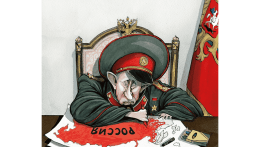
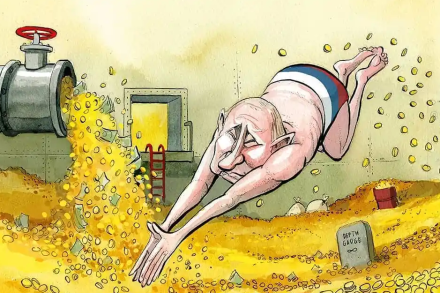
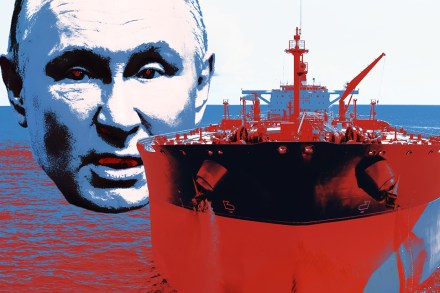
Economic sanctions were meant to be the West’s secret weapon against Russia, a way of crippling Vladimir Putin’s war machine and bringing his invasion of Ukraine to a halt without Nato firing a shot. Instead, Russia’s economy and military remain in rude health. After recent heavy attacks north of Kharkiv, Putin’s troops have seized more than 38 square miles of territory and stretched Kyiv’s already thinly deployed defences as they grind forward in Donbas. Putin has demoted his long-serving defence minister Sergei Shoigu, replacing him with the little-known economist Andrei Belousov. Appointing a finance specialist as military chief was a reminder that armies march on money. In Russia’s case, oil money.

In Kharkiv, culture is a form of defence

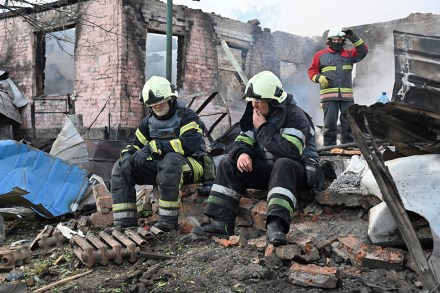
Kharkiv It was a strange feeling to walk alone through eerie corridors in the basement of the Kharkiv Opera Theatre and suddenly hear a burst of music and applause. As Kharkiv faced the Russian advance, a Kyiv-based drama group had come to the city to hold an Art Fortress concert to raise the spirits of local residents. For the audience, mainly middle-aged women, this underground event was a welcome distraction from the encroaching reality. Many waved in time to the music, delighted by the performance, and chanted ‘Slava Ukraini’ as the closing remarks were made. As another missile is heard, first responders in helmets and body armour rush down to the metro This support is vital as the city braces for what lies ahead.

Letters: the admirable strength of Ukrainians

The bravery of Ukraine Sir: Few articles could resonate as strongly as that of Svitlana Morenets (‘Scrambled logic’, 20 April). She brings the agony of her brave countrymen and women home to us, and the effect of dithering and equivocation by the West. As a volunteer with a refugee charity, I weekly admire the character of our Ukrainian clients, mainly older ladies who spend their time bringing us delicious homemade cakes, volunteering in charity shops and signing up to English classes at the local college.

The cost of European peace

After six months of delay, the US Senate has finally passed a $60 billion foreign-aid package which will send urgently needed ammunition and military equipment to Ukrainian soldiers. It may well be the last such cheque to be signed in Washington. Donald Trump is favourite to be the next president of the United States and the senators closest to his brand of ‘America First’ politics, J.D. Vance of Ohio and Josh Hawley of Missouri, led the opposition to the Ukraine package. Their argument, crudely put, is that Europe should bankroll its own defence. The American money confirmed this week gives Europe about a year to adjust to this new reality and prepare for it. A generation had grown up believing that peace and democracy were the natural order of things.

Lessons from the foreign aid votes

From our US edition

The past week has presented a fascinating object lesson in the continued tension over the direction of foreign policy and national security in the MAGA era, on what matters and what doesn’t, and who matters and who doesn’t, when it comes to finding a true forward-looking Trump-Reagan fusion. I wrote about this in the context of reviewing the new book by Matt Kroenig and Dan Negrea, who wrote a Ukraine-focused piece for Foreign Policy last week. But that’s just writing, not voting — and this week brought votes that include more useful indicators of what’s going on.

foreign aid

Why does the West protect Israel but not Ukraine?

When Israel and its allies shot down hundreds of Iranian drones and missiles, they demonstrated what an effective air defence looks like. The slow-moving Shahed-136 suicide drones were not hard for the Israeli, Jordanian, British, American and (probably) Saudi air forces to find and eliminate. Even Iran’s cruise missiles were thwarted. It was an overwhelming victory for Israel and a humiliation for Iran. In Ukraine, all this was watched with desperation and even anger. While Israel boasts robust air defence systems and, with its allies, can deploy hundreds of combat aircraft to repel Iran’s attack, Ukraine must ration its defence munitions. Kyiv is forced to choose which cities to protect.

Macron vs Putin: this summer’s Olympic battle

Dixmont, Yonne Last summer, Emmanuel Macron lashed out at France’s constitution because it prevents him from running for a third consecutive term in office. It is, he told his entourage, a ‘disastrous stupidity’. The majority of the French people would disagree. Macron’s approval ratings are dire, and a poll at the start of this month revealed that the youngest president in the history of the Fifth Republic has the support of only 7 per cent of the under-35s. Should anyone be surprised? Immigration is out of control, farmers have marched on Paris and teachers are at the end of their tether because of classroom intimidation. Anti-Semitic acts have surged since Hamas attacked Israel in October and drug cartels are extending their reach into towns and cities.

Will Biden support Ukraine’s attacks on Russia?

This time last year, Volodymyr Zelensky was touring western capitals, calling for weapons and money to launch a decisive summer offensive. Nato eventually provided Leopard and Challenger tanks, Bradley infantry fighting vehicles, M777 howitzers, Himars rocket artillery and Patriot air defences – but too little, too late. The much-vaunted offensive went nowhere, despite a mutiny by the Wagner Group and widespread disarray in the Russian army. Instead, Soledar, Bakhmut and Avdiivka were seized. Today, Russian missile assaults are intensifying, not receding. In March, Russia hit Ukraine with 264 missiles and 515 drones. A relentless bombardment of Kharkiv is making Ukraine’s second city uninhabitable.

Can David Cameron charm the Americans?

David Cameron is stateside today as the Foreign Secretary tries to muster up support for the US to send aid to Ukraine. While Cameron plans to discuss other urgent issues on the trip, such as the situation in the Middle East, the priority is to make the argument for the US to step up funding to Ukraine; senior Republicans are accused of blocking a £49 billion package for Kyiv. The push comes after Ukrainian President Volodymyr Zelenskyy warned on Sunday that his side would lose to Putin if American aid was withheld and Ukrainian air cover is not improved. Will the charm offensive work?

David Cameron meets Trump at Mar-a-Lago

From our US edition

Lord Cameron, the UK foreign secretary, is stopping off at Mar-a-Lago tonight before once again making the rounds in Washington, DC to tub-thump for Ukraine aid. Cameron, who served as Britain's prime minister from 2010 to 2016, is meeting with Republican presidential candidate Donald Trump, who has been skeptical about Ukraine’s prospects of beating back the Russian invaders. A spokesperson for the UK Foreign Office downplayed the significance of Cameron meeting Trump as "standard practice." “The foreign secretary is on his way to Washington DC, where he will hold discussions with US secretary of state Blinken, other Biden administration figures and members of Congress," the spokesperson said.

david cameron

Trump strikes a deal on abortion

From our US edition

Former president Donald Trump announced on Monday that he believes abortion policy should be left to the states to decide and reaffirmed support for exceptions for rape and incest, declining to endorse much-discussed national limits on the procedure.The statement, which was shared on Truth Social, is set to disappoint pro-life organizations throughout the country. Many feared the Trump campaign would continue to move further away from traditional pro-life positions, including refusing to back policies such as a fifteen-week ban. Susan B.

Portrait of the Week: hate crimes, surprise knighthoods and flaming rickshaws

Home The Hate Crime and Public Order Act came into effect in Scotland, making it a crime to communicate or behave in a manner ‘that a reasonable person would consider to be threatening or abusive’, with the intention of stirring up hatred based on age, disability, religion, sexual orientation, transgender identity or being intersex. The Scottish government offered online training to 500 Police Scotland ‘Hate Crime Champions’. The author J.K. Rowling named ten people who call themselves women that she called men. Police Scotland said complaints had been received about her, but that but no action would be taken. Rishi Sunak, the Prime Minister, said: ‘We should not be criminalising people saying common sense things about biological sex.

How Ukraine plans to revive its birth rate

In my village in Ukraine, there aren’t many families left intact. The funerals of those who have been killed in the war have been taking place with crushing regularity. It feels like everyone’s loss. Today, in house after house, you can find parents whose children have either died or are still fighting with no indication of when they may return. It’s almost impossible for couples to start families – men are deployed to the front line with little hope of any leave. If they return alive, most are maimed in some way.  There is, though, a spark of hope for these young Ukrainians. Ukraine has quite an advanced network of fertility clinics, which are often used in more peaceful times by foreigners taking advantage of liberal surrogacy laws.

Lessons from costly wars past

From our US edition

Money is often a substitute for strategy in US foreign policy. We spent $2 trillion in Afghanistan, only to lose the country the minute our troops began to pull out. How much will it realistically cost, then, to beat Russia in Ukraine? Will the next $100 or $200 billion do the trick? This is not a question that supporters of war-spending ask themselves. As in Afghanistan, spending is a way to defer thinking about actually winning — or facing the serious possibility of losing. Our aid buys delay, not results. Ironically, while the specter of World War Two is invoked every time there’s a conflict, our experience then teaches the same lesson as recent attempts to purchase victory.

wars
foreign policy

Where is the clarity in modern center-right foreign policy?

From our US edition

When Ohio senator J.D. Vance arrived at the Munich Security Conference in February, he had a clear message meant for the world: the Republican Party was no longer the party of Ronald Reagan. Standing outside the Hotel Bayerischer Hof, he informed reporters that he did not believe American support for combat against authoritarian regimes should extend to Ukraine — and that he would continue to oppose efforts to “increase the supply of weapons in Ukraine because we’ve already expended so many of our munitions and resources” to achieve a victory that he does not foresee. Vance’s bootstrap story is well-known — he’s a Marine veteran turned Yale Law grad turned venture capitalist made prominent by his bestselling Appalachia memoir Hillbilly Elegy.

Portrait of the week: Lee Anderson defects, Ireland rejects and Kate photoshops

Home Rishi Sunak, the Prime Minister, said that Britain needed to build new gas-fired power stations to ensure energy security. GDP grew by 0.2 per cent in January. The number of people of working age classed as economically inactive rose to 9.25 million, compared with 8.55 million in February 2020, according to the Office for National Statistics. Among those aged 16 to 34, economic inactivity was rising; among those aged 35 to 64 it had fallen. Long-term sickness accounted for 2.7 million people not in work, 600,000 more than four years ago. The National Health Service employed more than two million for the first time, more than a third of public-sector workers.

Resisting the escalation in Ukraine

From our US edition

The drums of war are reverberating across Eastern Europe. Every geopolitical decision made by global powers carries immense weight. Amid the fear of growing conflict, one figure has emerged, wielding a sharp tongue and a pointed finger, challenging hesitant American lawmakers to bolster Ukraine’s defense against Russian aggression. Polish foreign minister Radek Sikorski has embarked on a media offensive, chastising Republicans for their reluctance to green-light the Biden administration’s proposed $60 billion military aid package for Ukraine. Despite his purported noble objectives, Sikorski’s appeal deserves closer examination.

ukraine

Pope Francis’s Ukraine war faux-pas

From our US edition

If you didn’t know any better, you might think that Pope Francis was no longer welcome in Ukraine. His recent interview with a Swiss broadcaster, excerpts of which were released over the weekend, has caused a whirlwind of disappointment and anger in Ukrainian policy circles as well as with some of Ukraine’s staunchest supporters in the West. The subject of derision: whether Ukraine should do a little less fighting and a lot more talking. Asked to comment about the debate between those who seek a negotiated end to Russia’s two-year-long war in Ukraine and those who oppose such a stance, Pope Francis chose the side of dialogue.

pope francis

Victoria Nuland was the Kremlin’s princess of darkness

From our US edition

It was not a Super Tuesday for either Senator Kyrsten Sinema or State Department official Victoria J. Nuland. Each announced that they were stepping down from their positions. Sinema is declining to run once more in Arizona for the Senate. Nuland is exiting her post as the number three official at State, where she was widely seen as the champion of a hawkish approach to foreign policy. Sinema delivered a mawkish message that essentially blamed the American people for failing to recognize, let alone value, her valorous attempt to restore American power and prosperity. Nuland, by contrast, had to be satisfied with a statement from secretary of state Antony J. Blinken: “She always speaks her mind.

victoria nuland