Ukraine

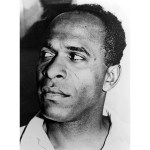
The fresh, forceful voice of Frantz Fanon

‘If I’d died in my thirties, what would be left behind?’ is the question that keeps coming to mind reading this timely new biography of Frantz Fanon, the psychiatrist and philosopher who became an icon to leftist revolutionaries across the globe. ‘Would I want history to judge me by what I wrote at 36?’ For that was the absurdly young age at which Fanon died of leukaemia in 1961, leaving two key works to his name: Black Skin, White Masks and The Wretched of the Earth. Not a huge legacy, then, in sheer numbers of words.

air force catfished

Air Force employee catfished into sharing military secrets

From our US edition

In what may be the most obvious catfishing scam of all time, a contractor for the Air Force was caught sharing military secrets with an individual posing as a Ukrainian woman on a foreign dating app.   David Franklin Slater, a retired Army lieutenant colonel who was serving as a US Air Force civilian employee at the time of the catfishing, was arrested Saturday on three charges of conspiracy and disclosing national defense information.  Slater held a top-secret security clearance from August 2021 until April 2022 which gave him access to briefings about the Russo-Ukraine War.

How foreign policy will impact the 2024 election

From our US edition

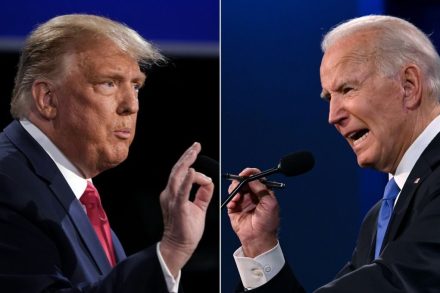
Donald Trump’s long march through the Republican primaries leaves little doubt about the inevitability of a Biden-Trump rematch in November — court cases and old age notwithstanding, of course. Unlike previous contests, foreign policy looks set to be at top of mind for many voters. Which, if you’re a Biden supporter, isn’t great news. In a recent AP poll, four in ten American adults named foreign policy as issues the government should work on in 2024. The president’s decisions abroad broadcast weakness, lack of direction and myopia, traits that have come to define his first term. The deadly and chaotic withdrawal from Afghanistan was only a sign of things to come, as more conflicts and crises sprang up around the world.

policy
trump

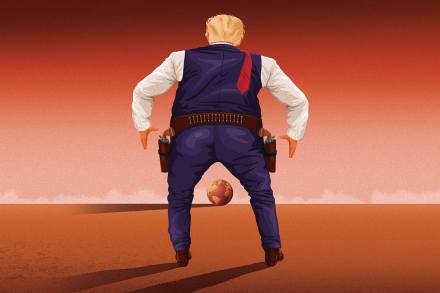
What will the new Trump foreign policy look like?

From our US edition

A month after the election shock of 2016, CBS’s John Dickerson sat down with the ninety-three-year-old Henry Kissinger to get his assessment of the incoming president. “Donald Trump is a phenomenon that foreign countries haven’t seen,” Kissinger pronounced, noting that many nations would have to weigh “their perception that [Barack Obama] basically withdrew America from international politics, so that they had to make their own assessment of their necessities,” along with “a new president who is asking a lot of unfamiliar questions.” Given “the combination of the partial vacuum and the new questions, one could imagine that something remarkable and new emerges out of it,” Kissinger added. “I’m not saying it will. I’m saying it’s an extraordinary opportunity.

biden ward

Who’s really behind the Biden administration’s foreign policy?

From our US edition

If you’re one of the many people worried that US foreign policy is in the hands of a visibly declining eighty-one year-old president, Alexander Ward’s account of the Biden administration’s first two years in office may — or may not — make you feel better, for he leaves readers with little doubt as to who is actually the executive branch’s most influential decision-maker: forty-seven year-old national security advisor Jake Sullivan. Ward might deny any such authorial intent, but time and again he shows his hand, as when he invokes “Sullivan’s first two years at the helm alongside Biden.

Trump says he will let NATO down. How will Kamala Harris respond?

From our US edition

When Donald Trump declared that Russia could do “whatever the hell it wants” to NATO countries, he was espousing his own lifelong credo. Trump has done whatever he pleases for most of his life. It was generous of him to extend the same carte blanche to the Kremlin, which is presumably pleased with his offer but has yet to comment on it publicly.  Once upon a time, conservatives used to raise an eyebrow over the notion over doing whatever the hell you want. They were in a more censorious mode, arguing that this amounted to moral relativism. Now it seems that anything goes.  The old certitudes are gone.

donald trump nato

Vladimir Putin’s night at the Tucker Carlson circus

From our US edition

Tucker Carlson is a master contortionist. As conservative strategist David Reaboi reminded us this week, one of the most egregious examples of Carlson’s tendency for reality deformation came in the form of an interview with Kanye West, the troubled rapper who sat for an interview on Carlson’s erstwhile Fox News show a couple of years ago. It was the middle of West’s antisemitic meltdown, but because West was embracing Donald Trump, Carlson presented him as a sensible, even brilliant thinker. “Is West crazy?” Carlson asked at the top of the interview, before concluding at the end: “Not crazy. Worth listening to, even if you disagree with him.

tucker carlson

The biggest overreactions to Tucker Carlson’s Putin interview that no one has seen yet

From our US edition

Judging by some of the responses to Tucker Carlson’s announcement of his forthcoming interview with Vladimir Putin, you'd think the former Fox News host had been caught driving a tank into Kharkiv. Naturally, Cockburn is reserving judgment until he's seen the conversation itself — which is scheduled to be released this evening. Of course, Carlson has a track record of going easy in interviews with morally dubious guests such as Andrew Tate, Russell Brand and Kevin Spacey — and several other outlets were declined the opportunity to grill Putin by the Kremlin. Nonetheless, the reactions to Carlson's presence in Moscow seem particularly highly strung given no one currently knows what questions he asked. Among the most vocal critics of Carlson has been Hillary Clinton.

tucker carlson moscow

House GOP declares border bill ‘DEAD on arrival’

From our US edition

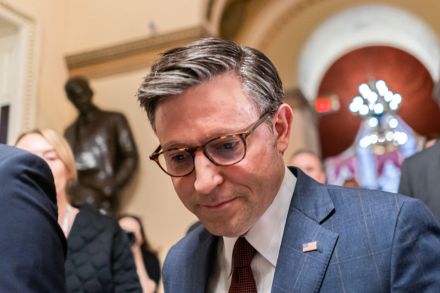
After a long wait, the text of the bipartisan Senate bill for Ukraine and border funding was finally released on Sunday night. The massive piece of legislation clocks in at 370 pages and, in addition to the border policy changes previously reported on here, sends an additional $60 billion to Ukraine, tightens asylum standards, prohibits removal of unaccompanied minors, authorizes $1.4 billion in FEMA funding for resources for migrants settling in the US and gives President Biden the authority to overturn any emergency authorization at the border. The House GOP’s verdict is in: Speaker Johnson asserted that the legislation is “dead on arrival” in his chamber.  “I’ve seen enough.

Both parties are fumbling the border debate

From our US edition

Given just how unpopular illegal immigration is, it is stunning to see both the likely nominees for president fumbling the issue. That’s political malpractice.  For Biden, the malpractice consists not only in keeping the border open, which is already killing him in the polls, but in resisting the strongest Republican proposals to close it. Every time Republican congressional leaders visit the White House to negotiate, they come away empty handed.   In stiff-arming the Republican proposals, the White House has put itself in the awkward position of saying it will grudgingly accept their efforts but only if Republicans make concessions on other issues.

border

Would I die for Britain? No thanks

The West’s military posture has moved from ‘thick’ to ‘suicidal’. The recent speech of General Sir Patrick Sanders, the head of the British Army, in which he suggested that Britain needs a ‘citizens army’ to see off Russia, has forced the Government to deny that it wishes to introduce conscription – in advance of a great power conflict that Grant Shapps says is perhaps five years away. The media is casually debating ‘would Britons refuse to serve?’, on the basis that Gen Z is too neurotic to fight. The better question is ‘should we serve?’, on the grounds that our generation of leadership is so staggeringly dumb. What did Phil Ochs sing?

Ukrainians can’t trust Putin’s hollow promises

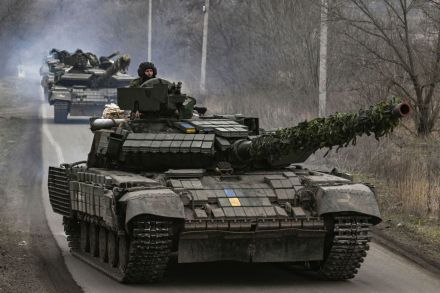
Ukraine’s parliament will soon vote on much-needed conscription regulations which would draft an extra half a million recruits into the army. The categories of eligible men will be expanded, the draft age will be lowered from 27 to 25, and any man caught attempting to evade it will face harsh sanctions or imprisonment. Volodymyr Zelensky has stopped talking about victory coming any time soon. His New Year’s message was grim: everyone must either fight or help through work. Ukrainians are braced for another year of war. But talk of ‘peace’ or ‘compromise’ is still seen as code for a surrender which would reward rather than punish Vladimir Putin’s atrocities, cede ground and give him the opportunity to come back for the rest later.

Must we live in perpetual fear of being named and shamed?

You should feel thoroughly ashamed of reading this infamous rag. Or else you might decide to revel, shamelessly, in its critics’ prim disapproval. From political squalls to global wars, David Keen argues that a ‘spiral of shame’ and shamelessness now traps individuals and societies in arid cycles of pain, rage and revenge. Manipulative actors – ‘advertisers, warmongers, terrorists, tyrants and charlatans’ – sell us ‘magical solutions’ to the anguish of the shame they themselves stoke. But they merely pass the burden to other groups, leaving us with more suffering. Keen writes: ‘Such actors do with shame what the Mafia does with fear.’ The author teaches conflict studies at the LSE.

ukraine

The re-supplied Russians hit Ukraine with full force

From our US edition

LVIV — The Japanese have a concept of forest bathing for health. Joe Rogan promotes daily ice baths for a little shock to get you going in the morning. But in Ukraine, people often experience missile-and-drone baths, and so it was in the early hours of last Friday, when Russia launched what seems to have been its biggest ever sky assault upon Ukrainian cities. It was the first major Russian attack upon Ukrainian since the summer, when Ukraine disrupted Moscow’s missile-launching Black Sea Fleet.  Since then, it’s been a brutal New Year.  Just before 5 a.m.

No one wants to talk about Ukraine any more

Apologies for this seasonal downer. Had the website such a listing, this column would surely soar to number one in The Spectator’s ‘Least Popular’ roster. For just now, few topics are a bigger turn-off than Ukraine. Following Russia’s invasion, I got caught up in the same waves of emotion that washed over most western publics, and I say that with no regret. After relentlessly battling the prevailing cultural winds these past few years, I was relieved to feel a sense of solidarity for once. Most of us were revulsed by the gratuitous aggression, allied with an underdog whose bite proved surprisingly fierce, thrilled by a former comedian’s unexpected rise to his nation’s occasion and consumed by a weirdly addictive loathing for Vladimir Putin.

The US Senate is playing into Putin’s hands

The news this week that Republicans in the US Senate had voted together to block a supplemental funding bill that included provision for $61 billion for Ukraine was greeted with predictable dismay in Kyiv and glee in Moscow. Ostensibly this was a bid to force the White House into prioritising more spending on securing the Mexican border. However it also reflects a real sense on the part of some within the GOP that the United States is either throwing good money after bad in maintaining support for the conflict, or continuing to subsidise a backsliding Europe that really ought to be taking the lead on this crisis. After all, while Europe as a whole has committed more funds to Ukraine – $143.

The Ukrainian war can only end in a peace deal

Kyiv In Ukraine, the political mood has become sombre and fractious. As the front lines settle into stalemate, Russia ramps up for a new season of missile and drone attacks, and vital US support for Ukraine’s war effort crumbles under partisan attack in Congress, one existential question looms large. Should Volodymyr Zelensky continue to fight endlessly in pursuit of a comprehensive defeat of Russia which may be unattainable – or should he consider cutting his losses and reaching a compromise? At the war’s outset, the Ukrainian President had a clear answer. ‘I am sure there are people who won’t be satisfied with any kind of peace [with Russia] under any conditions at any time,’ he told the Associated Press.

Poland and Hungary learn different lessons from history

From our US edition

For decades, the European Union was dominated by a combination of French élan and German economic clout. By the late 2010s, a conservative Budapest-Warsaw alliance seemed poised to challenge this arrangement. The ideological firepower was supplied by Hungarian prime minister Viktor Orbán, who emerged as an unlikely spokesman for the international right, while Poland’s booming economy and large population lent the partnership some much needed heft. The Polish elections in mid-October not only marked the end of the Law and Justice party’s near-decade of conservative rule; they offered another blow to a Polish-Hungarian relationship already fraying over the war in Ukraine.

poland

Is this where world war three starts?

Daugavpils You can tell quite a bit about a place by the number of national flags on display. One or two on public buildings here and there is a healthy genuflection to a moderate and comfortable patriotism. But groups of the same national flag every five paces, on every building and festooning the parks and boulevards – well, there’s something going on, isn’t there? You’re in a place where trouble is surely just around the corner, a place where the national authorities may not feel entirely secure. What sort of trouble? Well, one wouldn’t want to be over-dramatic, obvs, but in this particular case, world war three.

Biden’s Oval Office address was a sales pitch

From our US edition

A primetime address in the Oval Office is the pinnace of presidential speechifying. Ronald Reagan used the room in 1986 to console the nation after the Challenger blew up on live television. George W. Bush declared the global war on terrorism there. Donald Trump leveraged the weight of the Resolute Desk as he talked to Americans about a deadly but mysterious virus called Covid-19 for the first time.   Tonight, it was Joe Biden’s turn. The topics, the wars in Ukraine and Israel, couldn’t be more different with respect to the players, the stakes or the circumstances leading up to them. Even so, Biden tried to convince the American people on the idea that the two wars were one and the same.

oval office joe biden