Uk politics

A deal that would kill Gove’s agenda at birth

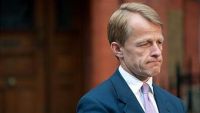
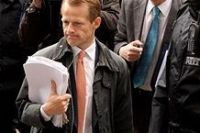
While both the Conservatives and LibDems support the idea of Swedish schools, a Lib-Con deal could kill the agenda stone dead. David Laws is proposing to allow local authorities to have the power to veto new schools – which would, in effect, mean no rollout. As we all know, this could strangle the Gove school agenda at birth. Local authorities, whether Labour or Tory, will hate the idea of competition in the provision of education. The local authorities and teachers’ unions are incredibly powerful, and defeated Thatcher, Adonis and Blair. They have also nobbled the LibDems to the extent that, I understand, David Laws believes that he could not get rid of the local authority veto. His party, and the special interests it represents, would not let him.

Cameron offers the hand of coalition to the Lib Dems

Woah, I didn't think Cameron would go that far.  In his statement just now, the Tory leader started off by talking about minority government, as one might expect.  But he soon skipped past that, and onto what sounded like a more formal coalition with the Lib Dems.  He called it the Tories' "Big Comprehensive Offer". This offer trumped the one that Brown put forward ealier by virtue of its clarity.  Where Brown had hints and innuendo, Cameron had an itemised list of policies and specifications.  And so the Tory leader set out the areas where he wasn't willing to compromise with the Lib Dems: Europe, cutting the deficit and immgration.

Brown sets out his stall for the Lib Dems

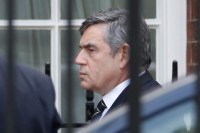
Gordon Brown's statement outside Number 10 just now was a strange mix of statesmanship and salesmanship.  He began by trying to sound as reasonable as possible: claiming that he "understands" why Nick Clegg would like to meet with David Cameron first, and adding that he would happliy wait for them to finish their negotiations.  He claimed that he is keen to "resolve the situation for the good of the country."  And he mentioned that Alistair Darling would be attending various meetings about the spreading fiscal crisis in Europe. But then, about halfway through, he flipped into used car salesman mode – hawking his rusty party to a sceptical Nick Clegg.

Tim Montgomerie: Cameron must change his style of leadership

There are rumours that Tory grandees are gathering to confront Cameron over his lacklustre campaign. The prospect of electoral reform, or another election amid autumnal austerity, has many reaching for the panic button in certain Tory circles.   Speaking to the BBC, Tim Montgomerie has just added his voice to the criticism of the campaign and Cameron’s single-minded leadership. He also added that the party wanted a radically different campaign to the one the leadership offered. The leadership gave reassurance that it knew what it was doing. Montgomerie argued that Cameron cannot expect to receive such leniency after this result. Con Home has surveyed party members this morning, they insist, overwhelmingly according to Montgomerie, that Cameron go it alone.

Nick Clegg gives the Tories the go-ahead

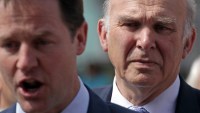
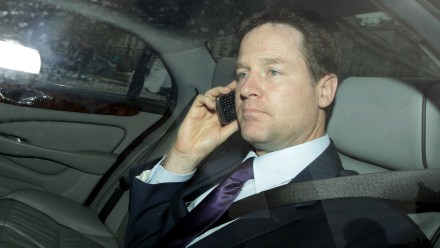
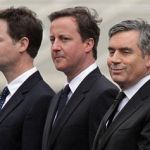
So Nick Clegg has finally spoken – and his words will be welcomed by the Tories.  In an address outside of the Lib Dem HQ on Cowley St, he reiterated his previous argument that "whichever party gets the most votes and the most seats, without gaining a majority, has the first right to form a government."  But added that "it seems this morning that the Conservative Party have the most votes and the most seats ... it is for the Conservative Party to prove that it is capable of governing in the national interest." What this means in practice isn't 100 percent certain – although it doesn't sound good for Labour.

There may be Tory trouble ahead

Will the 1922 Committee of Tory MPs elect an emergency chairman today? If so, the mission would be to warn Cameron off doing any deal with the LibDems. Most Conservatives will wake up today judging the Cameron campaign to have failed. In the view of many, he will have failed to honour his "change to win" promise: they all changed, as he asked, but he didn't win. There will be a price to pay, and perhaps one of the heads around Cameron will have to roll to assuage the discontent. Any Lib-Con deal over voting reform will be anathema to many recently-elected as well as existing  Tory MPs. A new chairman of the 1922 Committee will want to make this point to Cameron before any damage is done. A deal with Northern Irish MPs would probably be as much as the party would wear.

Peter Mandelson is open to the idea of Brown going

Peter Mandelson has just tossed a firecracker in to the arena.  Asked on the Beeb whether Labour might get rid of Brown to accommodate the Lib Dems, he replied: "There will be a number of permutations ... I'm not ruling anything in, or anything out." So, in other words: yes.

Let the recriminations begin

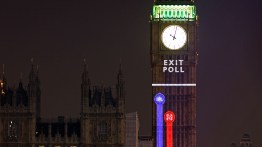
Let's rewind to 10pm yesterday evening, when the exit poll was released.  Most politicos - myself included - were incredulous.  We could just about believe that there might be a hung Parliament with the Tories as the largest party, but a reduced number of Lib Dem seats?  After Cleggmania and all those recent opinion polls?  Gedouttahere. But, this morning, that exit poll is looking a good deal more prescient.  After an evening of erratic results, Sky's projection matches it almost exactly: 309 seats for the Tories, 259 for Labour, and 54 for the Lib Dems.  So we're on for a hung parliament, and all the backroom discussion and subterfuge that that entails. Already, the dividing lines have been traced across Westminster.

Election Night live blog

0843, JGF: The result in Hampstead and Kilburn is remarkable. The local Lib Dems were convinced that they would win. But Glenda Jackson survives by 42 votes with the Tories in second. 0639, PH: A dejected sounding speech from Nick Clegg. 0638, PH: Clegg says "this has been a disappointing night for the Lib Dems - and we obviously didn't achieve what we hoped to achieve." 0637, PH: In his acceptance speech, Nick Clegg is going big on the voting problems of last night. 0634, PH: Some good news for the Lib Dems: erm, Nick Clegg holds in Sheffield Hallam. With an increased majority. 0620, JGF: Jon Cruddas holds on, he'll have a big role to play in the Labour party machinations of the last few days.

Tory confidence?

Just under two hours to go until polls close, and Tory types around Westminster seem fairly confident that they can snatch a majority.  Their argument remains the same: that a combination of their party's concentrated firepower in the marginals and their motivated voting base will swing it for them.  And their demeanour is slightly more relaxed than you'd expect.  Maybe they're just tired, maybe it's all show – but, in true Catchphrase style, I'm simply saying what I see. CoffeeHousers seem just as confident, if not more so.  Over in our poll on Spectator Live, 60 percent of you think we'll end up with a Tory majority.  27 percent go for a Tory minority government.  And then we're into fractions for the other options.

The best and worst of the campaign: David Cameron

Cameron's best moment: the sunshine of the final TV debate David Cameron has had a peculiar campaign.  For the most part, the big set-piece occasions haven't quite caught fire, while many of the Tory leader's successes have been the relatively low-key and impromptu successes of the campaign trail.  Having said that, it was the biggest set-piece event of them all - the final TV debate - which gave Cameron his best moment of the election.  Here, he was energetic, direct and, most importantly, optimistic.  And he even managed to sell the Tories' school reform policy in a straightforward and engaging way.  In his closing statement, Cameron did what he always promised he would - and let sunshine win the day.

A last blast of polling

I have just been looking at the last wave of polling done for Euro RSCG, who have done much of the advertising for the Tories. The polling, done by one of the big polling firms, was carried out on Tuesday and Wednesday. It shows that 49% of those surveyed expect Cameron to be Prime Minister after the election, up from 46 percent in the last sample which ended on Saturday. Only 16 percent expect Brown to be PM post-election. The data also shows Lib Dem momentum slowing in the final days of the campaign and Labour picking up a bit.

Best and worst of the campaign: Gordon Brown

As we wait for the polls to close, and the final countdown to begin, we at Coffee House thought it would be a good opportunity to look back on the campaign as a whole. And, so, here's the first in a series of three posts identifying the best and worst moments for the main party leaders. We've started with the man who remains Prime Minister for the time being: Gordon Brown. Brown's best moment: the Citizens UK speech As it happens, choosing Brown's best moment of the campaign is easy. Alongside so many gaffes, scowls and lies, the flashes of proficiency tend to stick out - and none more so than his speech to Citizens UK earlier this week. Yes, the audience was heavily inclined towards him.

How a cow won the 1970 election

The conspiracy theory of history is rarely right; the bungle theory is rarely wrong. So it was at the 1970 British general election. I bungled. The polls gave Labour a 3 percent lead; instead the Tories won. Historians disagree on why this was so. Some blame the margin of error in opinion polls. Others say there was a late swing. If so, I was to blame. It was the Sunday before the Thursday polling. We were panicking. Our Tory backroom boys gathered together three or four future cabinet ministers. I asked how were we to deal with inflation – more important in those days than the budget deficit.

The party leaders vote

David and Samantha Cameron leaving the polling station in Spelsbury Gordon and Sarah Brown arrive to vote in North Queensferry Nick and Miriam Clegg vote in Sheffield.

Predicting election results is a fool’s errand

Why is predicting this election so difficult? Because voters themselves don’t know what to do. Before each of the last seven elections, Ipsos/Mori ask voters if they might change their minds. In 1983 and 1987, about one in seven said yes. This time, almost half of the British electorate may change their minds. This explains why 2010 has been the most volatile election in recent memory – with all thee parties having been ahead, in some way, during the campaign. And it also explains why prediction is a fool’s game. My gut still tells me ‘small Tory majority’ but I have learned never to bet on my gut. The press consensus is that Cameron will win over 300 seats, but no poll points to this result. And the bookies?

Nigel Farage in plane crash

Guido reports that a two-seater aeroplane carrying UKIP's Nigel Farage was circling in the air before crashing near Buckingham. Farage is understood to have walked away from the accident with only minor injuries and is now on his way to hospital. More details to follow. UPDATE: Reports are inconclusive, but it seems that Mr Farage was pulled semi-conscious from wreckage and may be seeing a heart specialist at Horton General Hospital Banbury.