Uk politics

Davis and Straw unite against prisoner voting rights

David Davis and Jack Straw have joined forces to resist the enforcement of prisoner voting rights, an emotive issue bequeathed to the hapless coalition by the previous government. Beside the obvious moral question concerning prisoners’ rights, Davis hopes to open a second front in the struggle over sovereignty with the European Union. He told Politics Home: ‘There are two main issues here. First is whether or not it is moral or even decent to give the vote to rapists, violent offenders or sex offenders. The second is whether it is proper for the European court to overrule a Parliament.’ Unless Davis has confused his articles, his second point is invalid. This decision has nothing to do with the European Court or the European Union.

The inflation crisis deepens

How big does inflation have to get before our politicians admit that it’s a problem? Once again, it has “surprised” on the upside - the CPI index stood at 3.7 percent for December, against a supposed target of 2.0 percent. And the RPI index, which the nation called “inflation” until Gordon Brown asked the media to use CPI instead, is running at 4.8 percent - almost twice its former target of 2.5 percent. That is the painfully high figure to which George Osborne has just added a juicy VAT increase, which is bound to take CPI above 4 percent. Inflation has been above target for three of the last four years - and still Mervyn King says it’s a blip. This is how he justifies the UK’s low interest rates (0.

MPs turn on PFI

There is nothing like being wise after the event. The Public Accounts Committee has turned on the private finance initiative, saying there is ‘no clear evidence’ that PFI delivers more value for money and no evidence that taxpayers have shared the profits. The committee reported: 'There were instances where PFI may have been used where there was no evidence that it was the best procurement route. Local authorities and health trusts used PFI because there was no realistic alternative, not because it represented best value for money. The use of PFI and its alternatives should now be robustly evaluated. Looking back at PFI procurements, the government should also do more to find out where and why PFI works best and capture the lessons.

Let’s hope the paternity revolution stalls

Nick Clegg’s announcement on the extension of paternity leave has been drowned by the cacophony surrounding NHS reform. The government is keen to describe itself as family friendly – with the exception of Vulgaria in Chitty Chitty Bang Bang, all government's do. Clegg hopes to bring flexibility to the workplace and relieve young mothers who would like to return to work. It’s an admirable aim, but there is only so far socially manipulative legislation can go before it becomes grossly counter-productive. David Frost, Director General of the British Chambers of Commerce, has made a strong case against further law. “Last week we saw changes to the default retirement age, in April we've got changes to the right to request flexible working.

Dorrell: I have reservations about the Health Reforms

Stephen Dorrell, the former Health Secretary and current Chairman of the Health Select Committee, and Chuka Umanna appeared on the Daily Politics to debate Lansley’s latest reforms. Judging by this interview, Dorrell’s reservations seem to be of the constitutional rather than institutional variety. And Umanna avoided the question about whether these reforms have their genesis in the Blair/Milburn era, which suggests that Ed Miliband will denounce yet more of Blair’s record in the quest to detoxify his party’s brand.

Cameron’s rough ride on Today

David Cameron’s interview on the Today Programme this morning was another reminder of what a hard year it is going to be for the government. The bulk of it was devoted to Cameron doing his best to defend and explain the government’s planned reforms to the NHS. Cameron, normally so assured in these interviews, seemed frustrated as John Humphrys kept pushing him on why he was doing it having condemned NHS reorganisations in the past.   Then, the interview moved on to bankers’ bonuses. As he did on Andrew Marr earlier in the month, Cameron implied that action was coming. But there were no specifics set out, and if action is coming it will contradict with the signals that the Treasury was sending out last week.

Too far, too fast?

It is hubristic of David Cameron to talk of his ‘legacy’ at this stage in his premiership, not least because he invites criticism that the government’s public service reforms are going too far, too fast. The leaders of six health unions have reacted to the imminent publication of the Health and Social Care Bill with a concerned letter to the Times (£); they argue that price competition is divisive and that the reforms promote cost above quality. Dissent has spread far beyond the usual union suspects.

Labour may be doing alright, but Miliband is still dodgy on the public finances

Ed Miliband's leadership may be young, but his trickery on the public finances is already well worn. We got it all in his interview with Andrew Marr earlier – and then some. There was the claim that Labour "paid down the debt" (that I dealt with here). There was the claim that Labour's spending was responsible (my response here). And there was a straight-up lie about Miliband's forecast for a double-dip. So far, so Brown. What caught my ear, though, was this exchange: Andrew Marr: I mean Tony Blair said in his memoir that by 2005, he was worried that the party was spending too much. And Alistair Darling said actually it was about 2007, he was worried that the party had been spending too much - before the crash happened.

Breaking the curious silence on upcoming tax changes

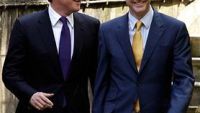
This week, Nick Clegg added his name to the fast-growing list of politicians addressing the critical question of living standards. His phrase of choice was ‘alarm clock Britain’, in effect his version of Ed Miliband’s ‘squeezed middle’. It is, of course, a clunking label for what is a serious topic (hardly the first time a politician has achieved such a feat). But quibbles over terminology aside – and as Miliband’s article on Friday confirmed – these are the first serious shots in the political battle to frame the coalition’s crucial March Budget.

How it’s going right for Ed Miliband

Ed Miliband has had three launches in three months – but, much as I hate to admit it, things are getting better for him. His party are now consistently ahead in the polls, so in my News of the World column today I look at what’s going right. Here are my main points: 1) Cameron’s embrace has, alas, proved toxic for the Lib Dems. I have been impressed by Nick Clegg since he entered government. I’d like to see him rewarded for the tough decisions he took, and in more ways than being named ‘politician of the year’ by the Threadneedle/Spectator awards. But it just isn’t happening. The ‘merger’ model of coalition that they have chosen (as opposed to the Holyrood model used in Scotland in 1999-07) has robbed them of their identity.

Purple Pritchard

It’s a far cry from the egregious Tory right of Sayeeda Warsi’s imagination. Mark Pritchard, Secretary of the 1922 Committee, has looked at the result of the Oldham and Saddleworth by-election and has concluded that the Tories and Liberals may have to reach an arrangement for future by-elections. He said: "I think this has wider questions for other by-elections that will invariably come along over the next few years, and that is whether we have an open discussion now over whether we have some sort of close co-operation with the Liberal Democrats in Westminster by-elections...a quid pro quo type of arrangement.

Miliband in denial

Did he get cold feet? Or was his new spin-team overenthusiastic in their pre-briefing? We were told we'd get an apology from Ed Miliband in today's speech, but instead he entrenched himself in his position that Labour did nothing wrong on the deficit. I'm surprised at this decision. Surely Ed Miliband understands, as his Shadow Chancellor understands, the central importance to an opposition party of economic credibility. That credibility will not return while Miliband bases his economic argument on a denial of the facts. First, and critically, he argues that Britain's deficit was not a problem going into the crisis. Not only is this disputed by an impressive array of domestic and international experts, from Tony Blair to the European Commission and Mervyn King.

Ditching Clegg won’t help the Libs

Despite the brave smiles, the senior Lib Dems are wearing long faces. Matthew Parris considers (£) the collapse of the Conservative vote in Oldham East and Saddleworth as a disaster for the Lib Dems, their own vote sustained by an influx of Tory voters. The Tories may not recover that support, but that does not ease the Liberal Democrats’ dilemma. Parris observes: ‘Privately Nick Clegg will have drawn from this the only sane conclusion, but it is one that I’ve found the Liberal Democrats strikingly reluctant to discuss. It is that in the seats where his party stands a chance next time, it must either re-engage the sympathies of its former supporters who are defecting to Labour, or it must throw itself upon the mercies of Tory sympathisers.

Cameron hopes to lessen fuel woes

Today saw the latest Cameron Direct event, and the Prime Minister defended his government’s position of bankers’ bonuses and Europe, and he devoted a section to profess the fortitude of the coalition itself. But Cameron realises that he needs to offer positive news, both to a country acclimatising to austerity and to a party that has broken out in a rash of ill-temper. Fuel duty was his chosen tonic. There were no commitments, but Cameron promised to review the level of duty or road tax as part of the March budget. This lends a little weight to the rumours that fuel duty and/or road taxes might be cut or a fuel duty stabiliser introduced to cheer anxious motorists and avert the threat of strikes.

Decentralisation key to Afghan pullout, says David Miliband

It is fashionable to ridicule David Miliband's search for a post-political career. But in yesterday's Daily Telegraph the former Foreign Secretary showed that – for all his mistakes in office – his intellect, and judgement on a number of key issues, including how to bring the Afghanistan War to an end, was, and remains, razor-sharp: "Afghanistan's battles are not just between the Afghan and foreign forces and the Taliban insurgency, but between (and within) Afghanistan's often warring tribes. When Nato trains the Afghan National Army, it's good – but not if you are a Pashtun who sees the predominantly Tajik army as the enemy.

Warsi’s ‘nasty party’ moment

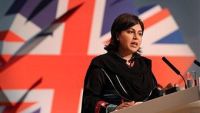
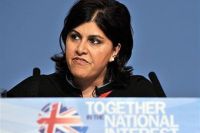
Sayeeda Warsi’s attack on the ‘right wing’ of the Conservative party has had a predictable impact. There is fury that the party chairman is attacking a section of the party, it is something that a considerable number of Tories will never forgive her for. It is also being pointed out that there were a lot of Tory MPs campaigning in Oldham on Saturday and they came disproportionately from the right of the party.  What to do about Warsi is quite a problem for the Tory high command. She does visibly show how the party has changed but she’s also not very competent. Cameron has already split her role, giving Cameron’s university friend Andrew Feldman a whole bunch of the financial and administrative responsibilities.

Warsi takes on the Tory right

After the result, the spin. We got the first drafts of each party's response to the Oldham by-election in the dark hours of this morning – but the picture is solidifying now that the sun has risen. What's clear is that both Labour and the Lib Dems are having an easier time putting on a united front than the Tories. The Labour response was typified by Yvette Cooper's appearance on the Today Programme earlier. She broadcast the message that her party would have broadcast whatever the result: that this is defining proof that the public doesn't back the coalition and its economic policy. And as for the Lib Dems, they're all chirping the same lyric of, "Oh, well, yes, we did alright, really, given the circumstances." But it's a little trickier for the Tories.

Comfortable win for Labour in Oldham East & Saddleworth

And all on a turnout of 48.1 percent. So far as the Lib Dems and Labour are concerned, these numbers probably met expectations. Overall support for Elwyn Watkins has held firm since the general election, but he was always going to struggle to get within 103 votes of Labour once again. While a 10-point victory for Debbie Abrahams is encouraging for Labour, without quite suggesting a tidal shift in the public mood. The 14 percent drop in the Tory vote is a little more striking, though – and it's telling that Andy Burnham dwelt on it in his response to the Beeb. For their part, the Tories are pointing to the natural squeeze on third parties in by-elections.