Uk politics

Who is the coalition’s tough guy?

Next week the Prime Minister will make his much-awaited law-and-order speech. This should, under normal circumstances, be the third or fourth such speech by a Tory leader who's been in government for more than a year. Normally, it would be an occasion to score easy points from centre-right voters. But these are not normal times. The PM has rebranded the party to such a degree that it has nearly lost its law-and-order credentials. In addition, the U-turn over sentencing policy now needs to be explained. So this is a claw-back kind of speech, where the PM has to restore trust and win friends anew. The real problem is, of course, policy. But more superficially, the government has a problem of voice.

More to come?

I understand another story concerning improperly obtained documents may break shortly concerning Ed Balls, his spads, a civil servant and a journalist at the FT. Whitehall is in a febrile mood.

Balls in the limelight

The most important political consequence of the leak of the Project Volvo documents is that it reminds everyone in the Labour party of what a divisive figure Ed Balls is. Ever since the leadership contest, where his reputation as a plotter crippled his candidacy, Balls has been trying to soften his image. He has sought to present himself as a more collegiate figure. But this leak is a reminder of how Balls used to operate and why some people in the Labour party will do everything they can to prevent him from becoming leader. We now wait to see what emerges about how these documents made their way into the public domain and whether retaliation follows. For the other Ed the challenge is to find a way to move Labour beyond the factionalism of the past.

Your five-point guide to the Ed Balls files

Intrigue, hilarious intrigue this morning, as the Telegraph releases a bunch of documents that clarify just how far the Brownites went to oust Tony Blair. They are, it is said, from the personal files of Ed Balls, and they are copious in both quantity and variety. From straightforward poll results to 31-page reports on how Brown is a Volvo not a BMW, this is a real insight into the numerous pathologies of party and government. Here's my five-point overview: i) The leadership coup in waiting. It starts only two months after the 2005 general election, and Balls' own ascent to Parliament, with a memo setting out the structure of Brown's leadership campaign team. And it soon crescendos.

Thieves of Westminster becoming more brazen

Yesterday, Keith Vaz received a response to a written question he filed to John Thurso regarding thefts on the parliamentary estate. Having lost an iPad and a laptop from his office, Vaz was keen to see if petty crime is a problem on the estate. Thurso’s response appears to confirm that it is. The catalogue of listed crimes highlights wide ranging theft in Westminster over the past few years. There have been 106 reported incidents in the past six years alone, with a definite upward spike in the past year. A record 40 incidents have been reported so far in 2011, increasing rapidly as the year has gone by. Laptops were the most popular item to be stolen – with 31 reported as stolen, 25 in 2011 alone.

Blair is still a believer

To an extent, British politics is still determined by whether or not you agree with Tony Blair. For more than a year, the coalition and the opposition have been debating whether to continue Blair’s public service reforms; this is a testament to his failure as Prime Minister as much as it to his success. Today, has given an interview to the Times (£), coinciding with the release of his memoirs in paperback. He uses it to question the Labour party’s current journey back into “nostalgia”. He says: “The attraction of a concept like Blue Labour is it allows you to say that there’s a group of voters out there we can’t reach at the moment, so what we should do is really empathise with their plight.

Sanctioning Gaddafi

Yesterday, Foreign Office minister Alistair Burt went to Chatham House to explain the UK's Libya policy. It was a mildly painful experience. A particular gem: "Where we will end up nobody quite knows." Well-spoken Lindsey Hilsum easily skewered UK policy, talking of the "indecent haste" of the ICC investigation and raising the ICC's proposal to focus on a political deal. Sir Richard Dalton, an ex-mandarin, remarked that the "tone of optimism of the minister needs to be questioned further." Burt got a lot better during the Q&A, but the event did not make for a particularly compelling argument for what the UK is doing, which is a shame, not least because Alistair Burt can do better. More so as Libya policy may be in better shape now than it has been for weeks.

The turbulent priest

“Nowadays politicians want to talk about moral issues, and bishops want to talk politics,” said Sir Humphrey. This week’s New Statesman has been guest edited by the Archbishop of Canterbury. In his lead editorial, Dr Rowan Williams has launched a brutally eloquent assault on the coalition for embarking on a programme of radical reform for which, he claims, there is no mandate. With particular reference to the health and education reforms, Williams says: “With remarkable speed, we are being committed to radical, long-term policies for which no one voted. At the very least, there is an understandable anxiety about what democracy means in such a context.

A missed opportunity to strengthen the Big Society in rural areas

David Cameron came into power promising to deliver the greenest government ever and this week the government published its Natural Environment White Paper. In his article on this site, Richard Benyon – Defra Minister and long-time supporter of rural affairs – explains where he believes this White Paper will make a difference. From provisions to increase outside learning for school children, to recognising the hard work that rural businesses are already doing; there is much to be commended.    ‘The Natural Choice’ promises to repair the damage that has been done to the environment in the recent past and encourage greater involvement in helping nature prosper – the ‘Big Society’ in action.

Cameron’s u-turns come at a price

David Cameron hasn’t wasted much time since his return from holiday in dealing with the government’s two biggest political vulnerabilities: its policies on the NHS and criminals. The u-turns have got Cameron into a better place politically but they come at a cost. On the NHS, Cameron has had to water down the Lansley reforms and accept the temporary creation of a two-tier NHS and a highly bureaucratic structure. While on sentencing, Cameron has removed one of the ways that Ken Clarke was trying to save money. But, perhaps, the biggest problem with these u-turns is that they add to the impression that he’s not prepared to stand and fight, that when the going gets tough he gets going.

Even Ed knew he’d lost

Cameron made history today. He gave the Speaker a genuine reason to call PMQs to a halt. Usually Mr Bercow pops up two or three times to shout down shouters and to waste time by ordering time-wasters not to waste time. But today protocol obliged him to stop proceedings. A half-hearted punch-up was in progress over government u-turns and the PM was defending his reforms by referring to his favourite Labour ally, the shadow health secretary. If he quotes John Healey much more often Cameron will owe him royalties. Ed Miliband accused the government of lengthening waiting times by abolishing Labour’s targets and Cameron countered by claiming that the figures were misrepresented regularly. "The opposition leader misled the house two weeks ago," said Cameron.

Policing the local and the national

Today’s announcement on a proposed new National Crime Agency (NCA) is a key element in the government’s ambitious police reform agenda.  Recent political attention has focused on changes to police pay and conditions and budget reductions, but the structural reforms that Theresa May and Nick Herbert are pursuing matter more in the long-term.  And before it is dismissed as another attempt to create a “British FBI”, the background and rationale for the NCA is worth exploring. The NCA is much more than a rebranding of the Serious Organised Crime Agency (SOCA) – the troubled organisation set up by Charles Clarke.

Cameron’s easy ride

Having u-turned on two more policies in the last two days, one would have expected David Cameron to have a hard time today at PMQs. But he didn’t. Ed Miliband never got going, turning in one of his worst PMQs’ performances. Cameron pithily summed up Miliband’s performance when he joked that ‘the best thing that can be said about his performance is he wasn’t thinking about politics on his honeymoon.’ Miliband’s performance today will add to the low-level grumbling about him among some Labour MPs and members of the shadow Cabinet. Miliband has a big speech coming up on Monday and he needs it to deliver a rationale for his leadership, to give it a purpose.

Retreating from Kabul

Britain’s former envoy to Kabul, Sherard Cowper-Coles, has written an op-ed about NATO’s coming withdrawal from Afghanistan in this morning’s Times (£). The unspoken analysis is that: having failed to defeat the Taliban unconditionally in battle, it will be hard to secure peace and stability. Like Matt Cavanagh, who wrote an extensive report on the situation in Afghanistan for Coffee House last week, Cowper-Coles says that NATO is split between ‘shooters’, who perpetually ask for one more ‘big push’, and politicians, who are seeking negotiated settlement and military drawdown.

Paxman trips up Balls

Ed Balls walked into two traps on Newsnight yesterday evening. First, he seemed stumped when Jeremy Paxman asked him if he was praying that George Osborne was right. Paxman’s ‘gotcha point’ was that if Osborne isn’t right the country is in deep trouble and Balls wouldn’t want that. But Balls’ more serious slip was to say, “My view, though, is that the central outcome isn’t that we see a resumption of growth.” This, as coalition sources have been pointing out today, allows them to present any growth as a vindication of their strategy. For all the talk about the NHS today, the economy still remains the central battleground in politics. So far, the economic data has not been decisive one way or the other.

Valuing the natural world

Today, the government launched its Natural Environment White Paper. This document is a vision for how we value and use nature, now and in the future. The public was heavily involved in the White Paper's creation. Thousands of suggestions came from individuals and small local naturalist groups, right up to large national NGOs and bodies like the National Trust. This shows that concern for nature is alive and well in Britain. The paper was launched by Caroline Spelman; but, crucially, it received input from Greg Clark from Communities and Local Government and Norman Baker from Transport. The Treasury have also been close partners. The proposals seek to reconnect people with nature.

Cameron on a charm defensive

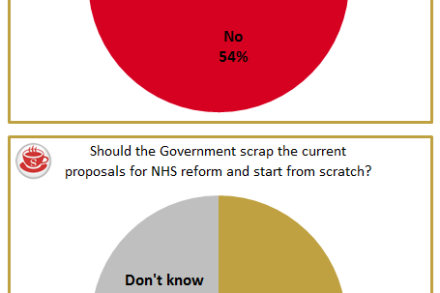
David Cameron is at his best when his back is to the wall. His speech on the NHS was largely as expected – a charm offensive designed to appease his warring coalition and reassure a fevered public. I’ll wager that he has succeeded; but reservations and pitfalls remain. Cameron recognises that competition is the stiking point for most Liberal Democrats, while the Tories insist on it. Competition will stay. He said, “New providers, more choice and competition raises standards and delivers value for money.” However, competition will not be unbridled. Cameron reassured doubters, “But let me clear, no: we will not be selling off the NHS, we will not be moving towards an insurance scheme.