Uk politics

Moving towards more efficient public sector pay

Data issued yesterday by the Incomes Data Services indicated that average pay settlements over the first quarter of 2011 in the public sector were close to 0 per cent. However, pay settlements in the private sector were closer to 3 per cent. Does this mean that Policy Exchange were wrong in a recent report to conclude that public sector workers are overpaid compared to their private sector counterparts? The basic answer is no. We highlighted that on a range of measures, workers in the public sector were overpaid compared to their comparators in the private sector. Even on our most conservative measure, which accounted for compositional differences in terms of age, location, hours, gender and qualifications, this gap was around 9 per cent.

Where we are in Afghanistan

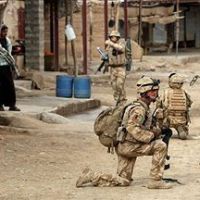
I wrote back in November that as we approached the July deadline when President Obama promised to start drawing down troops from Afghanistan, the tensions between politicians and military would re-emerge, as “the military ask for more time to get it right, and Obama tries to hold them to the deal he thought he made in late 2009”. This is now coming to pass, in London as well as Washington. I also argued that having some sort of public timetable for the troop drawdown was a reasonable solution, perhaps the only solution, to the politicians’ problem of balancing conflicting messages to different audiences in Afghanistan and at home.

Building a yellow-beating strategy

If the Tories are to win an overall majority at the next election, they are almost certainly going to have to take some seats off the Liberal Democrats. Given that the Tories have problems in Scotland and the urban north, the party needs to win seats like Somerton and Frome.  This fact is why Tory MPs are paying such attention to a piece by Rob Hayward on Conservative Home. Hayward, a former Tory MP who has advised the party on the coming boundary review, points out that where the Lib Dems had an MP, their vote in the local elections pretty much held up.  This implies that removing Lib Dem MPs at the next election will be harder work than many Tories think.

The Lucifer Effect

Today’s papers are full of comment on the brilliant Panorama exposé of care home abuse. But none have mentioned what jumped out at me: the parallels between this and the Stanford Prison Experiment. The way that the tattooed Wayne treated his mentally ill patients is sickening — but, to me, this is not just a story about human evil. It’s a story about how institutionalisation brings out the evil in people, and that this evil is far closer to the surface than we like to admit. Philip Zimbardo, a psychology professor at Stanford, randomly divided 25 volunteers to play the roles of prisoners and guards in a poorly-regulated, mock prison.

Lansley’s inflated sense of his own department’s spending

The listening is over, now for the legislating. But if you're keen to find out how Andrew Lansley's health reforms will look in the end, then don't expect many clues in his article for the Telegraph today. Aside from some sustained hints about involving "town halls" and "nurses" in the process, this is really just another explanation of why the NHS needs to change — not how it will change. Lansley's central justification is one that he has deployed with greater frequency over the last few weeks: that, without change, the NHS will become too cumbersome and costly a beast.

The Tory euro-wars make a brief return

The Europhilic ghost of Ted Heath is stalking the House of Lords, upsetting the passage of the European Union Bill, the bill containing the coalition’s EU referendum lock. Lord Armstrong of Illminster, who was PPS to Edward Heath between 1970 and 1975, is trying to introduce a ‘sunset clause’ to ensure that the bill lapses at the end of this parliament. (He is working with Labour whip Lord Liddle, although Labour insists that this is not party policy.) Another amendment has been tabled to guarantee that referenda are binding only if turnout exceeds 40 per cent. This could mean that Britain succumbs to legislative creep from Brussels because only major issues (such as joining the Euro) are likely to attract sufficient turnout.

Clarke’s crimes

One of the Conservative leadership’s worries at the moment is that the party is losing its reputation for being tough on crime. So it won’t welcome today’s Daily Mail splash about how a prisoner was granted permission by Ken Clarke to father a child by artificial insemination.   Now, we don’t know the precise details of the case, meaning that it is hard to come to a firm judgement. But I understand that when he was justice secretary Jack Straw rejected these kind of applications. He was, one familiar with the issue tells me, of the view that prisoners should not be allowed to benefit from non-medically necessary NHS services.   One intriguing thing to watch is how Ken Clarke responds to this story.

More ermine troubles for Nick Clegg

Tory backbenchers have been whispering to the Times (£), and their words will not hearten Nick Clegg. If the coalition pushes for Lords reform, one says, then about 50 of them will rebel. "If you were listing priorities for the Tories, I'm not sure you would put this at the top," another adds, "[it might be] bumped down by other priorities that come along." Much hinges on how eager David Cameron is to confront this resistance, and hasten a policy that was more or less writ into his party's manifesto. In the weeks following the AV referendum, the Tory leader has been happy for Clegg to act alone as the scourge of an unelected Lords. But, without support, Clegg could just look like the fall guy, there to take the heat for yet another Lib Dem disappointment.

The inflation battle heats up

He left with a warning. "I think that there is a big risk emerging to the credibility of the Bank," said Andrew Sentance last night, on his final day as a member of the Monetary Policy Committee. And he continued, "If inflation does not come down in the way that the Bank is suggesting — and I think there is a big risk that is the case — then that is going to have a big knock on effect on the credibility of the bank's commitment to its inflation target." Sentance's views are unsurprising.

The growing need for a policy response to the ‘new inflation’

There’s been much debate on these pages about the political implications of higher inflation. Ironically, this morning’s news of record food prices could relieve the pressure on the Bank of England Governor. His argument for caution when it comes to a rate rise is based on the claim that UK inflation is now being driven by events beyond the MPC’s control. Today’s figures reinforce that case, showing that global commodity prices remain a key driver of the rising cost of living in Britain’s households. The same argument doesn’t really work for the Chancellor, whose remit isn’t just to keep headline inflation down, but also to help households cope with the kind of inflation we’re now seeing – whatever its cause.

The coalition’s 2015 problem

The generals and the politicians are at odds with each other. This much has been clear since the run-up to last year's Defence Review, but it finds a particularly clear expression in the Telegraph's interview with Lt Gen James Bucknall today. Britain's most senior commander in Afghanistan may not say, in terms, that we should avoid a timetable for withdrawal from the country — but he skirts awfully close to it. "It is of utmost importance that we stay the course, that we stay as long as it takes to finish our job," he says, only a fortnight after David Cameron announced that 450 troops will be pulled out of the country this year. More specifically, Bucknall wants at least "two winters and two fighting seasons" without a diminished combat capacity.

Britain’s other, bigger debt problem

And what about the other sort of debt? We spend so much time harrumphing about the national debt that an important point is obscured: personal debt, the amount owed by individuals, is even higher. I wrote an article on the subject for a recent issue of The Spectator, as well as the Thunderer column (£) for last Saturday's Times. But, really, a piece in the latest Spectator (subscribers here) by Helen Wood — the former prostitute who transacted with Wayne Rooney, as well as with a "married actor" who has slapped her with a superinjunction — puts voice to the problem in blunter fashion. "My mistake," she writes, "was to get into debt": "I borrowed £800 to go on holiday, followed by £500 to pay the rent — both from loan sharks.

Clegg’s ermine troubles

Turkeys don't vote for Christmas, that much we know. But thanks to the wonders of modern science, we can now poll them on it. Today's Times carries a survey of the 789 peers who are entitled to sit in the Lords — of whom, 310 responded. It's not a huge sample size, but the results, you assume, are representative. 80 per cent oppose a wholly or mainly elected second chamber, including 46 per cent of Lib Dem peers. 81 per cent believe that the Lords works well as it is. And 74 per cent believe that it wouldn't be "constitutionally correct" for the Commons to force through a cull of the unelecteds by deploying the notorious Parliament Act.

In England’s green and pleasant land

What do the TUC, heavy industry and the European Commission have in common? This is not the start of a bad joke; the answer is that they all oppose the government’s energy policy. Ten days ago, Tata (formerly British Steel) announced that it was to cut more than 1,500 jobs at plants in Scunthorpe and on Teeside. The directors later confirmed that their decision was influenced, in part, by the introduction of a costly carbon floor price at the last Budget. The floor price, which exists on top of levies imposed by the EU, has increased the burden of taxation on energy consumption to subsidise renewable energy research. In last week’s issue of the Spectator, Matt Ridley predicted how this policy will likely be an expensive fiasco.

Testing the health of the coalition

Listening is seriously damaging the coalition’s health. The Sunday Mirror carries a report that chimes with a week of rumours in Westminster: the NHS reforms are going to be significantly diluted to appease warring Liberal Democrats. The Mirror adds that Lansley is likely to quit in protest. Matt d’Ancona argues, in his essential column this morning, that this is not a listening exercise but a ‘full blown carefully orchestrated retreat’. It is, if you will, a political version of the battle of Arnhem: the NHS reforms were a reform too far in this parliament, so tactical withdrawal is now imperative. Clegg and Cameron’s signatures are on the original White Paper.

Brennan comes to Balls’ aid

To present the government side in the Shoesmith case, former minister Kevin Brennan MP has written an extensive defence of Ed Balls' decision to sack Sharon Shoesmith. Brennan's argument is predicated on Ofsted's report. Brennan writes: 'Faced with such a report, the Secretary of State had to act decisively. Anyone who doubts for a moment the decision Ed Balls took should look again at that report and its implications for the leadership of child protection in that borough.' Shoesmith has cast doubt on Ofsted's report, asserting that its authors had been leant on after they had conducted their research and found her department to be under pressure but in good order. The appeal to the Supreme Court will clearly have to test the independence of Ofsted's report.

Shoesmith strikes at Balls and executive power

Sharon Shoesmith cut into Ed Balls on the Today programme this morning. She said: "Why don’t we ask Ed Balls why he acted on November 12, 2008 when he knew for 15 months that Peter Connelly had died and I was working with his officials, I was going to the government office, they were reading the draft reports. Haringey council knew all about it. We examined the conduct of our social workers, we found a disciplinary against them, but they weren't sacked - all of that was open and clear and on the table and everyone knew everything about that. It wasn’t until the spat in the House of Commons when David Cameron taunted Gordon Brown that everything changed overnight. That is the one occurrence that changes all of this story.

From the archives: Bush in London

You may have noticed that Barack Obama came to the country on a state visit this week. But he wasn't the first US President to be extended an invitation from the Queen, oh no. George W. Bush beat him to that particular honour in 2003. Here are a couple of Spectator pieces from the time, the first the magazine's leader column, the second by Peter Oborne: Don't burn Bush, The Spectator, 15 November 2003 The Queen's state carriage has carried some pretty rum types over the years. Nicolae Ceauscescu took a break from murdering his countrymen to take a ride down the Mall in June 1978. In 1994 it was Robert Mugabe's privilege and in 1979 Kenya's President Daniel arap Moi - at a time when Moi's corrupt administration was bleeding his country of £00 million a year.

NHS Reform: In praise of ‘cherry-picking’

The British Medical Association (BMA) has always been a trade union with elements of professionalism on the edges. Its report this week on the NHS reforms was the work of unadulterated, self-serving trade unionism. Our modern trade union leaders would have been embarrassed to publish it, even Bob Crow. It tries to portray competition as the opposite of co-operation, when competition is the opposite of monopoly, in this case a public sector medical monopoly. Competition describes an arrangement under which teams of people co-operate with each other to find better ways of serving customers than rival teams of collaborators. The co-operation of which the BMA speaks is a weasel word for producer domination.