Blair Gibbs

Winsor — the outsider

From our UK edition

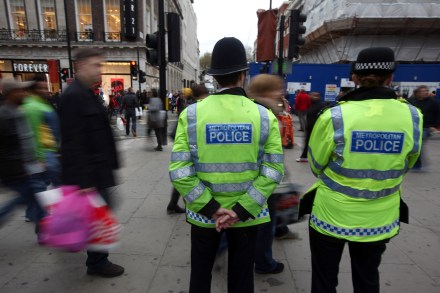
In nominating the lawyer and former rail regulator Tom Winsor as her choice to be the next chief inspector of constabulary, the home secretary has stoked more discontent among the ranks of the Police Federation. Not only is he the first non-police officer ever to be nominated to the role, but he is also the author of a bold review of pay and conditions that made long-overdue recommendations to modernise the police workforce. For this reason alone, the Police Federation is dismayed by the nomination, and MPs on the Home Affairs Select Committee (meeting today) may yet try to block him.

Trigger happy policy

From our UK edition

There have been signs recently that ministers are slipping back into the policy-by-headline mindset that defined the last Labour government. We're seeing the sorts of policies that lack evidence, are launched without any detail on timetables or implementation, and are usually geared around an initiative — if possible, a pilot or a local trial that is short-lived and guaranteed not to alter very much. Today the Home Office brought us a classic of the kind: the ‘community trigger’ to address anti-social behaviour. The Home Secretary’s motivation is sincere, but the method — devised by her officials — is deeply flawed.

Labour’s late to the policemens’ ball

From our UK edition

Labour has today unveiled a panel of experts to consider the future of British policing.  The review, chaired by the former Metropolitan Police Commissioner Lord Stevens, will report by spring 2013. There are far-reaching changes underway to the institutional structure of the police.  The coalition government is pursuing sweeping reforms of police pay and conditions and creating a remodelled national policing architecture, with a new National Crime Agency.  The boldest reform — devolving governance to locally elected Police & Crime Commissioners (PCCs) — will have long-term implications.

Clarke is right to focus on reoffenders

From our UK edition

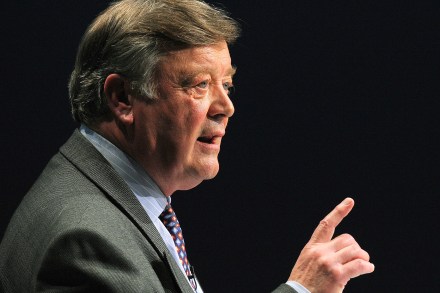
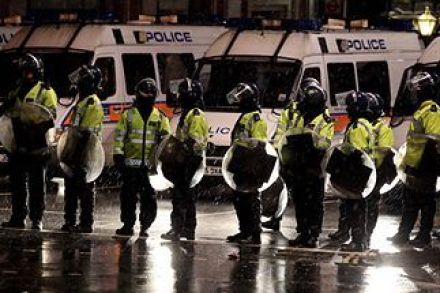
The Justice Secretary Ken Clarke – who was away during the disturbances last month – has signalled his return with an uncharacteristically tough piece in today’s Guardian. The reference to the rioters as a “feral underclass” is not language that the penal reform lobby will welcome from their favourite Minister, but it does signal a firmer line from the Justice Secretary: “In my view, the riots can be seen in part as an outburst of outrageous behaviour by the criminal classes – individuals and families familiar with the justice system, who haven't been changed by their past punishments.

Only police reform can keep politics out of policing

From our UK edition

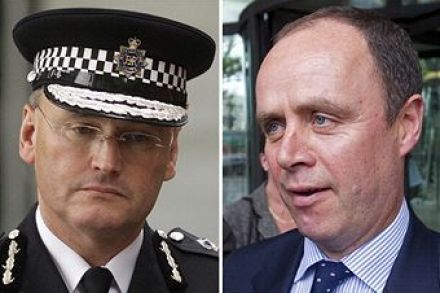
We expect and openly tolerate close, even cosy, relations between politicians and the media – each relies on the other for survival in a society that is less deferential and where politicians find it difficult to be heard, let alone trusted. The police need to tell their side of the story. But the police are not politicians. When senior police officers begin to behave like politicians – and 18 dinners with one media group looks like a politician’s diary – they damage the wider reputation of the service. First, officers who meet with the press are still public servants with a duty of discretion, and yet insight and understanding can quickly descend into un-attributable briefings that demean the police.

How the government can cut prison costs: privatisation

From our UK edition

The spending settlement agreed with the Treasury last October requires the Ministry of Justice (MoJ) to make budget reductions of £2 billion up to 2014-15. And, until this morning, the settled approach was that only by reducing demand on prisons would the necessary savings be found. After Downing Street’s intervention, the revised plans published this afternoon upend that approach. There will still be substantial cuts to the legal aid budget and some changes to remand, but some key (though ill-conceived) measures to trim the prison population have been excised completely, with no changes to guilty plea discounts and no relaxation of the release conditions for dangerous offenders serving indeterminate sentences.

Policing the local and the national

From our UK edition

Today’s announcement on a proposed new National Crime Agency (NCA) is a key element in the government’s ambitious police reform agenda.  Recent political attention has focused on changes to police pay and conditions and budget reductions, but the structural reforms that Theresa May and Nick Herbert are pursuing matter more in the long-term.  And before it is dismissed as another attempt to create a “British FBI”, the background and rationale for the NCA is worth exploring. The NCA is much more than a rebranding of the Serious Organised Crime Agency (SOCA) – the troubled organisation set up by Charles Clarke.

The drug infestation in our prisons

From our UK edition

Despite the focus on the government’s controversial plans to reduce the prison population, the troubled Prison Service continues to cause headaches for Ministers in another way — by failing to get on top of the security problems plaguing the estate In the 1990s, when Michael Howard was in Ken Clarke’s position, the concern of ministers was escaping inmates. The Prison Service has made huge strides on this, despite ongoing issues with the open prison estate and day-release of some inmates. But now the ever-present problem is lax internal security and especially drug-infestation. The jailing this week, for two years, of a prison officer based at Feltham Young Offenders Institution is just one example of the problem.

Tackling the last great unreformed public service

From our UK edition

The Home Office has an ambitious police reform agenda and is overseeing challenging budget reductions, but they are also forging ahead with plans to introduce real workforce modernisation.  The serious and credible reviewer, Tom Winsor, will publish his independent report next Tuesday.   Winsor’s review will cover pay, conditions and other aspects of employment that will set the framework for a new settlement when the current 3-year pay deal expires. Expect police overtime and shift patterns to be another major focus of the review.   David Cameron himself, who once boldly described the police as “the last great unreformed public service” is firmly committed to this agenda.

Bringing rights back home

From our UK edition

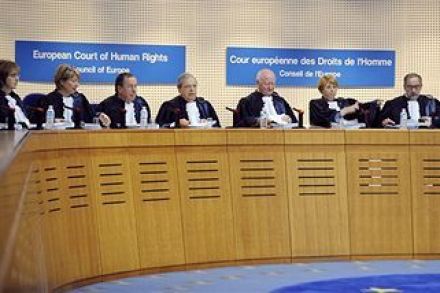
Thursday’s debate on the backbench motion on prisoner voting tabled by Jack Straw and David Davis is set to be a real parliamentary event – a rare occasion where the will of the elected legislature might just make a big difference.  The real news will not be how many endorse the ban, but which MPs – aside from those abstaining Government Ministers and Denis MacShane – choose to bow to Strasbourg.   MPs preparing to speak out against Strasbourg are now armed with a powerful academic case.  A new Policy Exchange report authored by the political scientist Michael Pinto-Duschinsky – Bringing Rights Back Home – outlines how the UK can address the growing problem of conflicts between judges and politicians in human rights cases.

The welcome arrival of elected Police & Crime Commissioners

From our UK edition

Directly-elected Police & Crime Commissioners (PCCs) are the boldest reform of policing since the 1960s. In May 2012 there will be 41 new political beasts in England and Wales with large, direct mandates. They look set to transform policing and public debate about crime. The new Commissioners will replace weak and invisible police authorities who, despite costing £65m a year and spending £25m in the last 3 years alone on expenses and allowances, have failed to hold chief constables to account. As a result, police chiefs have become too powerful, too detached and too risk-averse – with failure to tackle crime often just excused.

Prisoner voting rights are undemocratic

From our UK edition

It was unlikely that the Coalition could have played for any more time before lifting the ban on prisoner voting.  That was the tactic played by the previous Government, but now it seems the will of Strasbourg will prevail.  But the policy is wildly out of step with public opinion, hard to justify and difficult to administer – it is also another example of how our own Parliament and domestic courts have been undermined.     The public are opposed – usually on principle – to granting additional privileges to serving prisoners, especially when they have done little or nothing to earn it.  They are against voting rights in particular on the grounds that it is one of the rights that lawbreakers give up by virtue of their crime.