Uk politics

Miliband offers with one hand and stabs with the other

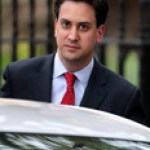
Ed Miliband delivered a speech at the Festival Hall this morning. A couple of strategic issues emerged from it. The first is that Labour has decided that the IMF is wrong: “This Government is going too far and fast, hitting families and making it harder to reduce the deficit.” This is not altogether surprising. Ed Balls’ recent article in the News of the World suggested that Labour will attack on the cost of living and youth unemployment, both of which may serve to slow the rate at which the deficit is reduced. As Fraser noted yesterday, Labour is aided by rising inflation, which is deepening the effect of cuts. However, Labour is still yet to admit to its role in the crisis or reveal how it would cut the deficit.

The need for a strong man to strong-arm the new counter-terror policy

If the counter-terrorism strategy the government is announcing today is to succeed, it will have to overcome bureaucratic opposition and institutional inertia. As Dean Godson writes in The Times today (£), senior civil servants in the Office of Security and Counter-Terrorism are highly reluctant to accept the government’s new, more muscular approach to this issue and will go back to the old, failed way of doing things if given the chance. If the Prime Minister’s writ is going to run across government on this issue, he is going to need someone working from the centre with Cameron’s explicit backing whose sole role is to supervise the implementation of the policy — the Home Secretary has too much on her plate to expect her to do this task alone.

Preparing for a post-Gaddafi Libya

The Libya intervention has been in operation for a few months and the rebels have been making gains, most recently in Yafran. But progress remains slow and perhaps it is time to look again at how the lessons of Bosnia, Iraq and Afghanistan might have a bearing on Libya. The first lesson is simple: assume the worst. If you think that a regime will collapse quickly, plan for it to last a long time. If you expect a peaceful transition, plan for a violent one. And if you hope that unarmed monitors will be enough once hostilities are over, prepare for a well-armed peacekeeping force to be deployed. Optimistic predictions of the post-Saddam Iraq encumbered the planning process and meant the US-led coalition was unprepared for the contingencies that arose.

Accentuate the differences

This is an age of ideas, not of ideology. That is the thesis of Amol Rajan’s enthralling overview of the intellectual trends in contemporary British politics, published in today’s Independent. As part of the piece, Rajan has interviewed Maurice Glasman, who gives a far clearer account of 'Blue Labour' than he did during his recent comments to the Italian press. Communities must be organised to resist the caprices of capital and the dead-hand of the state. Resist is probably the wrong word because the aim appears to be, in Philip Blond’s celebrated phrase, the ‘recapitalisation of the poor’, which implies some form of empowerment. Rajan notes that Glasman holds a lot in common with Philip Blond’s Red Toryism and the Big Society.

The IMF delivers its verdict

While Dominque Strauss-Kahn was in a New York court room, pleading not guilty to charges of sexual assault, his former IMF colleagues were delivering their verdict on the UK economy at the Treasury. The IMF are very polite guests and their report has provided some timely support for the coalition’s fiscal approach by declaring that there is currently no need for a Plan B. The Osborne operation has been quick to point out that even in various alternative scenarios the IMF set out in their report, they don’t call for more spending or smaller cuts. But there are things which the IMF says that won’t be music to Osborne’s ears.

Cameron’s health worries

David Cameron has made the NHS his political mission. “I can do it (explain his priorities) in three letters: NHS,” he once said. It was a reassurance that the NHS was safe in his hands. His conviction doubled as a vital tactical stance to prove that the Tories were 'nasty' no more. So, the news that he is re-affirming his faith with an NHS pledge card is telling – a response to the fact that the public do not trust the Conservatives with the health service. It's back to square one. According to Benedict Brogan, the pledges simply reiterate that the Tories can be trusted with the NHS. There is no attempt to explain how reform will unfold, nor indeed whether it will unfold at all.

Counter-terrorism means stopping dealings with extremists

The coalition’s counter-terrorism strategy will be published tomorrow. This rather delayed review has been the subject of some semi-public wrangling, Cameron and Clegg have given speeches setting out very different visions for it. But one thing to remember is that the test of the review's robustness isn’t just whether it stops government money going to extremists groups. It also has to lead to government, at all levels, stopping dealings with these groups, denying them the oxygen of recognition. Today’s Telegraph notes that 20 groups will lose their funding because the views they espouse are antithetical to British values. This is to be welcomed.

Osborne’s “flexibility” explained

So what does George Osborne mean by "flexibility"? Do we hear the quiet sound of a gear change, prior to a u-turn? No, I'm told, it's Plan A all the way. And here are the details. The government's five-year departmental budgets (the so-called DEL limits) are set in stone. They won't change (in cash terms) until April 15, after which no figures have been set. If inflation continues to be high, then this will exacerbate the real effect of the cuts (Osborne has already seen trouble caused by with this as inflation has turned the tiny NHS budget increase into a tiny NHS budget decrease). The OBR reckons it may deepen them from 13 per cent to 19 per cent." What might change is the cost of debt and dole. This can't be budgeted for: you never know how many folk will claim.

Cable tries to keep everyone happy – apart from the unions

When the GMB union invited Vince Cable to address their conference today, I doubt they wanted this: a warning that the government could legislate if the brothers decide to militate. The Business Secretary does add that "the case for changing strike law is not compelling," so long as industrial action remains limited. But, on the surface, this is still the firmest coalition attack on the unions since David Cameron and Boris wrote that angry article for the Sun in January. And it comes from the side of the coalition, the Lib Dems, who were thought to be opposed to taking on the unions in the first place. Perhaps Cable really is more ruthless on this than his reputation would suggest. The question, though, is of how the rhetoric will translate to reality.

Helping the kids be all right

Tomorrow sees the publication of the report David Cameron commissioned on how to address the commercialisation and sexualisation of childhood. Thanks to a leak we already know most of what’s in the report. It proposes, among other things, that sexualized advertisement shouldn’t be displayed in places near where children go, that the watershed should be more strictly enforced, that lads mags shouldn’t be displayed at eye level and that it should be easier for parents to block access from home computers to certain internet sites. There’ll be those that dismiss these proposals as gimmicks or as too small to make a difference. But making the public square more family friendly is a noble purpose and something that it is appropriate for government to get involved in.

The vanguard of the universities revolution?

One new institution does not a revolution make. But there's still something a little revolutionary about the New College of the Humanities that is set to open, in London, in September 2012. Perhaps it's the idea behind it: a private university that charges fees of £18,000 a year (with bursaries available to those who can't afford that). Or perhaps it's the names who are fronting it: AC Grayling, Richard Dawkins, Niall Ferguson, etc. They will, apparently, be conducting tutorials themselves. The public academics, it seems, are pitching their tents on the private sector. Mary Beard lists some reasons no to get too excited here. This is, she says, little more than a US-style liberal arts college that won't offer science courses or post-graduate qualifications.

The return of the signature parade

Oh dear, we're back to letter-writing again. 52 academic sorts — including the Labour advisor Richard Grayson and Blue Labour proponent Stuart White — have a letter in today's Observer urging George Osborne towards a 'Plan B' for the economy. They even sketch out, in less than 150 words, what that Plan B might look like. And, strangely enough, it has more than a tinge of Ed Miliband about it, including — and I quote — a green new deal; a focus on targeted industrial policy; the empowerment of workers; "unsqueezing" the incomes of the majority, and so on. I say we're back to letter-writing again, because it's all so reminiscent of one of the most unedifying episodes in the fiscal debate so far, from before last year's election.

Glasman sings the blues

Maurice Glasman, a favoured thinker of Ed Miliband’s, has given an interview to someone called Filippo Sensi who writes for an Italian magazine called Europa. I sound a firm note of caution here because there is a distinct possibility that it's a spoof. Take Glasman on the etymology of Blue Labour: "There is a sense of bravery and tragedy in our position and that is one meaning of the word blue, that links Miles Davis with Picasso and Aristotle. It is not mentally ill or depressed to feel triste and out of that understanding can flow a deeper understanding of the world and a more durable courage in resisting it than a superficial optimism that is the definition of Berlusconi and the progressive left.

Why wasn’t Mladic arrested earlier?

How did Ratko Mladic escape arrest for so long? Writing in this week’s issue of the Spectator (buy it here), Charlotte Eager remembers her nervous summers with the azure-eyed butcher, in the course of which she writes: "Why wasn’t Mladic arrested before? After all, British, French and US special forces wandered Bosnia freely for many years after the end of the war and he used to be spotted in restaurants, boils and all. The problem, according to some ex-SAS chums, was that our governments wanted Mladic to be taken alive. ‘That would not have been possible then,’ said one: back then, his thugs were still pumped up enough to die for him. Sixteen years after the war, the adrenalin has ebbed.

Charles Moore warns that the Downing Street machine isn’t working

Charles Moore, Margaret Thatcher’s biographer, is one of the columnists most sympathetic to and best informed about what David Cameron is trying to do. So when Charles warns that the current set-up of Downing Street isn’t working for the Prime Minister, Number 10 should take notice. Charles’ worry is that the new Downing Street set up is insufficiently political, that policy and politics are being kept too far apart. I think Charles is right about this. The Number 10 policy unit is now made up mostly of civil servants or former management consultants who, by their very nature, aren’t intellectually or ideologically committed to the Cameron public service reform agenda.

Flying into a known unknown

British Apache and French Tigre attack helicopters flew into action over Libya yesterday, the Ministry of Defence confirmed last night. As when news of the deployment first broke, parliamentarians and military talking heads have warned that this is an escalation of the conflict. Some MPs have called for parliament to debate the issue when it returns from recess on Monday. NATO commanders are at pains to stress that the scope of the operation has not changed. Lieutenant General Charles Bouchard, commander-in-chief of Operation United Protection, told reporters at his headquarters in Naples. “It’s an additional capability to pinpoint these [military] vehicles that are much more difficult to see from aircraft at high altitude.

The green consensus in action

A couple of days ago, I wrote about the deleterious effects of political consensus on energy policy. A good example of this has emerged today. According to Politics Home, Luciana Berger and Caroline Lucas are seeking an amendment to the Green Deal to impose a target for domestic carbon reduction. A number of salient points emerge from this. First, it’s a fine instance of the obsession with targets; itself an indication that this area of policy is largely a top down initiative – driven by targets, taxes and penalties. The Green Deal, as it currently stands, is one of the few areas that put incentive before directive. The idea was to ‘nudge’ consumers into improving domestic energy efficiency.

Cameron’s European opportunity

Jean-Claude Trichet’s speech yesterday proposing a ministry of finance for the eurozone (£) can be taken as setting out how the European Central Bank wants to resolve the eurozone’s problems. It is yet another example of how the European elite use crises to advance integration.   But just as important from a British point of view is Trichet’s admission that the overall package of changes he is talking about “naturally demand a change of the [EU] treaty". This, as Fraser has written previously, presents David Cameron with a glorious opportunity to take advantage of this moment to redefine Britain’s relationship with the European Union.

Not just a wily Fox, but a watchful hawk with time on his side

Liam Fox is fond of reminding us that he didn’t come into politics to cut the armed forces. A wistful look falls across his face when he says it – an indication of frustration as much as sincerity, a sense deepened by his letter of concern about the government spending so much more on international development. Opponents of Fox might characterise this as hypocrisy: he would reduce the size of the state without touching the armed forces, they say. His enemies in the Conservative party say that it’s typical of this “clever fool’s” intellectual indiscipline. Fox the military and fiscal hawk wants to “have it both ways”.