Uk politics

Parliament has finally woken up – because voters are keeping their MPs in line

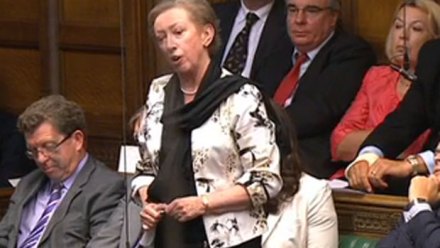
They should have seen it coming. A government defeat on an issue of war may be unprecedented, but defeat on the Syria vote did not come out of the blue. You can certainly blame poor party management, failure to prepare the ground, underestimating the poisonous legacy of Iraq — but such failings are common enough. The biggest single factor is one that ministers, the media and MPs themselves have failed to understand: Parliament has changed. The consensus has long been that Parliament no longer matters. It is assumed to be the docile creature of the government, full of spineless or ambitious MPs who are the slaves of the party whips. In fact, unnoticed and under our noses, that has been becoming progressively less and less true throughout my 30 years in Parliament.
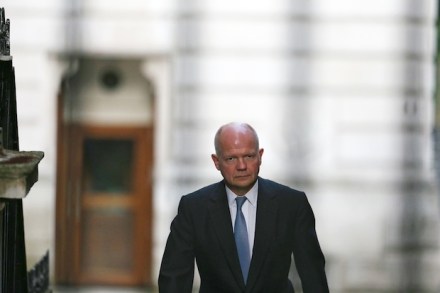
William Hague tells the 1922 that ‘lessons will be learned’ from Syria vote

William Hague’s appearance at the 1922 Committee has underlined the fact that the Tory party is now split on foreign policy. I’m told that the questions that the Foreign Secretary received were pretty much evenly split between the passionate supporters of intervention in Syria and its passionate opponents. Those present calculate that the room was evenly split between the two factions. Hague, I understand, made a robust case for why Britain needs to remain an outward looking nation that is prepared to use its military forces. But he did say, when asked, that ‘lessons will be learned’ from how the Syria vote was handled. This answer will fuel Westminster speculation that Hague was unhappy with the decision to recall Parliament.

‘To sack Jesse Norman over a moral issue like whether to support war is outrageous’

Jesse Norman's departure from the policy board hasn't come as a huge surprise to many Tory MPs: I was with one after the vote who was subjecting his twitter feed to a lengthy examination to work out whether Norman was stranded overseas. The only evidence available was that Norman went to a beer festival on 26 August and found out about the recall from the BBC and Easyjet. 'I love beer festivals, but I also know when to turn up,' grumbled the MP. It would have been a terrible message to send to other backbenchers if Norman hadn't been moved from his job. This is a sign of Number 10 applying a bit of an Andy Flower strategy to MPs: and that is a good thing for party management in general. But one Tory colleague I've spoken to this morning disagrees.

Exclusive: Jesse Norman to leave No.10 policy board after Syria vote

Jesse Norman is to leave the Number 10 policy board after abstaining in last week's vote on Syria, I have learned. It was made clear to the Tory MP, who is known to have disagreed with the government's position on Syria, that this was an inevitable consequence of avoiding a three-line whip vote. But I understand that the decision was made more in sorrow than in anger, and sources hope the path back for Norman will be a quick one. An announcement on his replacement will be made shortly. The policy board hasn't, as I revealed in the politics column last week, gelled brilliantly yet, but colleagues found Norman impressive to work with. He is unlikely to be on the backbenches for long. P.S. Norman is sixth on the Order Paper for today's PMQs. Which will be interesting.

Tom Watson: the Labour man with a plan

Ed Miliband needs to reassure his backbenchers that he does indeed have a good plan after the GMB union announced it was cutting its affiliation funds to the party by 90 per cent. But someone else already has a plan: and it looks strangely like one that will cause the Labour leader a bit of grief. Tom Watson has this morning written a blog in which he suggests that ending the link between the party and the unions 'is a very serious development that threatens a pillar of our democracy that has endured for over one hundred years'.  He writes: 'Over the next year we have been asked to consider a change to the constitution of the Labour party, though no detailed proposals have been revealed.

GMB funding blow for Labour shows need for a clear plan from Miliband

Has Labour got a plan? If it does, the GMB doesn't like it, announcing this morning that it will cut its affiliation funds from £1.2 million to £150,000, effective from january 2014. The cut is to reflect the number of the union's members who it estimates would choose to affiliate to the Labour party under the new reforms announced by Ed Miliband. In a statement this morning, the union said: 'GMB CEC expressed considerable regret about the apparent lack of understanding the proposal mooted by Ed Miliband will have on the collective nature of trade union engagement with the Labour Party.

No-one has any plans for a second vote on Syria, part II

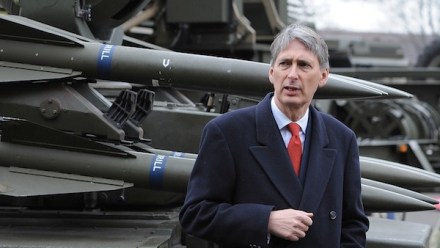
Today's Foreign Office Questions was a far classier affair than yesterday's rather snippy session with Philip Hammond on Defence. William Hague chose not to tell Labour that they had no authority when talking about Syria, instead choosing to focus on the humanitarian situation that Britain can still do something about. His first answer was as follows: 'The United Nations has announced that there are now 2 million Syrian refugees in the region. The United Kingdom is already the second largest donor, supporting more than 900,000 Syrians, and we will do more. The president of the Syrian National Coalition will visit London on Thursday, when we will discuss further support to save lives, promote political dialogue in Syria, and advance the holding of a second Geneva conference.

Increasing the minimum wage will only harm the lowest paid

‘If you earn £6 an hour flipping burgers then Allegra might have good news for you,’ said Jeremy Paxman on Newsnight yesterday. Paxman was of course introducing the mooted Conservative Party policy idea to increase the minimum wage, a story reported by Allegra Stratton. Stratton responded: ‘We’ve learnt that the Prime Minister’s advisors are thinking of turning Tory policy on its head and raising the minimum wage - not yet, but some time before the next election.’ For me, this brief exchange and the rest of the Newsnight piece reflected the state of the debate on this issue in the UK. First, Jeremy Paxman assumed that those flipping burgers would be able to keep their jobs if the national minimum wage was increased ‘significantly’.

Andrew Lansley: we can’t afford to delay the Lobbying Bill

For a bill purportedly about transparency, the Transparency of Lobbying, Non-Party Campaigning and Trade Union Administration Bill has quite a lot of muddied water swirling around it at the moment. Leader of the House Andrew Lansley is currently giving evidence to the Political and Constitutional Reform Committee on the legislation, which many fear has all sorts of unintended consequences (it's worth reading Mark Wallace on ConHome for more detail on the potential problems). But the chair of the Committee, Graham Allen, is an outspoken critic of the Bill.

A Game of Numbers: Pollsters Go To War in Scotland

On Sunday an opinion poll was just a poll. Nothing to be too excited by. Unreliable too. The real poll - the one that counts - is still a year away. So put not your faith in numbers. Disappointment that way lies. On Monday the mood in the Scottish nationalist camp changed. Opinion polls now offered a persuasive and necessary reminder that Scotland's on the march. A march that ends in freedom and liberty and whisky next September as an ancient country reasserts her prerogatives  and takes here rightful place in the family of nations once again. Polls are pure dead brilliant, don't you know? From which you will gather that two opinion polls have been released in Scotland these past few days and they cannot both be accurate.

CCHQ is already carrying out Andy Coulson’s GQ advice on Ukip

The Conservative party may have lost its summer momentum, but at least it isn't worrying about Ukip at the moment. Former spin chief Andy Coulson is doing some worrying in this month's GQ on the Tory party's behalf, warning that the party needs an even stronger message on Europe to counter the threat of Nigel Farage's party. But some of his advice will hearten CCHQ, as spinners and researchers are already ahead of Coulson. The article says: 'UKIP must be taken seriously so as to expose just how empty-headed it really is. Every utterance must be recorded and analysed, every speech given proper attention by some of the bigger, more ambitious young brains in CCHQ, every tweet matched where appropriate by a sensible question applying targeted pressure to UKIP policy.

Could making Whitehall smaller, better, faster, stronger save £70 billion?

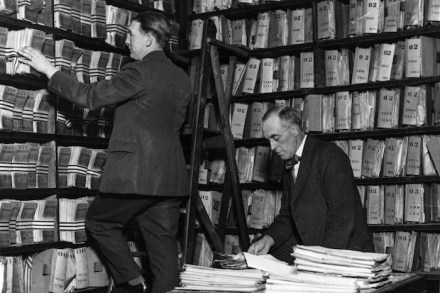
The government could save £70 billion from the Whitehall spending bill by moving into a new digitised age. That's the gist of a new report from Policy Exchange, detailing the amount of archaic waste that exists in the civil service. Some of the examples in the Smaller, Better, Faster, Stronger report are astounding — the Crown Prosecution Service prints one million sheets of paper every day. Two articulated lorries loaded with letters and paperwork drive into the DVLA every day. Policy Exchange suggests many of these wasteful paper-based services could be taken to a central online location, aka the GOV.UK website. Bringing the government’s online presence into once place has been divisive.

No 10: Absolutely no plans for a second vote on Syria. Labour: We could consider it

Will there be a second vote on Syria? As you might expect, that question dominated today's lobby briefing with the Prime Minister's official spokesman. He told journalists that 'there has been no change' in the Prime Minister's view since Thursday's vote and that 'parliament has spoken: that's why the government has absolutely no plans to go back to Parliament'. As I said this morning, the only way in which you'd be at all safe putting money on another vote on this matter would be if Ed Miliband came back to Cameron and pledged his support. And on this, Labour is being rather less equivocal than the government.

Nick Clegg: We won’t ask Parliament the same question on Syria

Nick Clegg has this morning added his own voice to those at the top of the Coalition saying they won't go back to Parliament for another vote on Syria. The Deputy Prime Minister was careful to be clear that he and his colleagues respected parliament's verdict, and didn't want to push MPs when they had already made their views clear: 'We're not going to keep asking the same question of Parliament again and again. We live in a democracy, the executive cannot act in a way which clearly is not welcome to Parliament or the British people, so we're not proposing to do so... I can't foresee any circumstances where we would go back to Parliament on the same question, on the same issue.' Coincidentally, it is Defence Questions in the House of Commons this afternoon.

The second vote that MPs really should hold on Syria

Even though George Osborne did everything he could yesterday to kill talk of a second vote in the House of Commons on action in Syria, speculation about that vote still makes the front pages this morning. There are probably safer bets to place. But one of the failings of Parliament last week - amidst all the cheering for a boost for democracy that is apparently characterised by ministers getting stuck in soundproofed rooms and missing key votes - was that in failing to pass either the government motion or the Labour amendment, Parliament failed to even condemn the use of chemical weapons against the Syrian people.

George Osborne: There’ll be no second Commons vote on Syria

There’ll be no second parliamentary vote on Syria, George Osborne stressed this morning. There had been speculation that following President Obama’s decision to go to Congress before using military force, meaning that strikes won’t happen before the week of the 9th of September, there could be a second parliamentary vote on UK military involvement. But Osborne scotched that idea on the Andrew Marr show this morning. listen to ‘Osborne - No second Syria vote’ on Audioboo Obama’s decision, though, has eased the political pressure on David Cameron.