Uk politics

The coalition’s new case for HS2

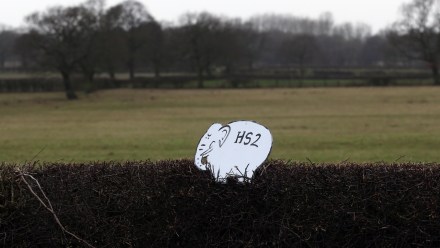
The coalition government is preparing a new case for HS2. Concerned that public and political support for the project is slipping away, there’ll be a major effort to renew enthusiasm for it. In this new case, there’ll be far less emphasis on speed and far more emphasis on how HS2 is needed because the existing railway lines are full up. This marks a recognition inside government that the savings on the journey time to Birmingham, which are less than half an hour, are too small to act as a public justification for the project. Expect to see this new argument reflected in the Transport Secretary Patrick McLoughlin’s speech on Wednesday. I suspect that HS2 will retain the support of all three front benches in this parliament.

Labour clears Unite and Karie Murphy of wrongdoing in Falkirk row

After going all out over the Falkirk selection row, Labour rather quietly issued a statement this afternoon conceding that neither Unite's candidate Karie Murphy, nor constituency party chair Stephen Deans, nor the union itself were guilty of any wrongdoing. The party's statement said: 'The Labour Party began an internal process to examine the controversy surrounding the selection of a parliamentary candidate for Falkirk. At each step Labour’s general secretary and NEC have acted quickly to protect the interest of the party. 'Since Labour began its internal process key evidence has been withdrawn and further evidence provided by individuals concerned. Karie Murphy and Steve Deans, who were suspended, will now be reinstated as they have not been guilty of any wrongdoing.

Barack Obama and public opinion on Syria

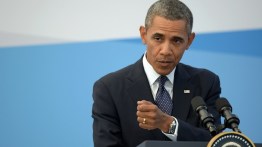
There are a number of obvious differences between last week's vote in Parliament and the forthcoming Congressional vote on Syria. But today when he gave his closing statement at the end of the G20 summit, Barack Obama highlighted another very interesting divergence in the way he is approaching the vote. Asked whether he understood the concerns of members of Congress who will have to vote against the will of their constituents, Obama replied: 'Now with respect to Congress and how they should respond to constituency concerns, I do consider part of my job to help make the case and to explain to the American people exactly why I think this is the right thing to do.

David Cameron: We can’t let Russia dictate other countries’ foreign policy

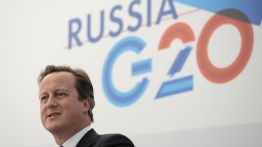
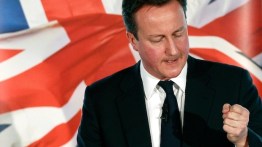
As well as having another extended Hugh Grant moment about how great Britain is (excluding David Beckham's feet, but including One Direction), David Cameron got his chance to hit back at Russia's intransigence on Syria this afternoon as the G20 summit drew to a close. Nodding to the lengthy declaration issued by the leaders - which fails to mention Syria or Assad - the Prime Minister emphasised that 'this summit was never going to reach an agreement on what action is needed on Syria'. When Barack Obama spoke later, he said the discussions had reached unanimity that 'chemical weapons were used in Syria, there was a unanimous view that the norm against using chemical weapons has to be maintained', but that only the majority had agreed that Assad was responsible.

David Cameron’s Small Island songs

In response to some snarky comments from Russia about Britain, the Prime Minister has just released this bizarre statement on his Google+ page about how he feels about our country: 'Britain may be a small island, but I would challenge anyone to find a country with a prouder history, a bigger heart or greater resilience. 'Britain is an island that has helped to clear the European continent of fascism - and was resolute in doing that throughout World War Two. 'Britain is an island that helped to abolish slavery, that has invented most of the things worth inventing, including every sport currently played around the world, that still today is responsible for art, literature and music that delights the entire world.

Don’t blame the banks for not lending enough to small businesses

It is now a truism in Westminster to argue that banks are failing UK businesses, especially smaller ones, by reining in lending, thus thwarting growth. The problem with this truism is that it isn't, er, true. And it also distracts attention from the real funding problems that businesses struggle with, which means government policy consistently misses the point. This myth about banks refusing to lend is based partly on anecdote and partly on the sharp decline in the stock of lending to small and medium-sized enterprises since the credit crisis.

Fixing the civil service

Universal credit is having a bumpy ride: but whose fault is it? Yesterday's Commons urgent question on the National Audit Office report turned into a bit of a blame game, with Iain Duncan Smith saying rather bitterly that he had expected his department to meet the challenge of delivering this big reform. His response to Bernard Jenkin on the importance of a good civil service was one of the most telling of the whole session: Bernard Jenkin: Is my right hon. Friend aware that the Public Administration Committee will produce an important report tomorrow about civil service reform?

Small island will need to talk big on Syrian aid

Even though Vladimir Putin slotted Syria into the G20 agenda last night, no-one seriously thought that this meant the world leaders would come to a proper agreement on what to do about the conflict. In the last few minutes, David Cameron has told journalists covering the summit that 'divisions are too great' for a deal, and that Russia wants further evidence that the Assad regime was behind the terrible attack in August. George Osborne was on the Today programme earlier discussing the summit. He said: 'We've set out what we think is the right response, obviously President Obama has set out what he wants to do and there is a disagreement around the table, I don't think there's any secret about that.

Dot Wordsworth: We’ve been self-whipping since 1672

Isabel Hardman of this parish explained after last week’s government defeat that a deluded theory among the party leadership had held that Tory backbenchers were now self-whipping. When she aired this opinion on Radio 4, Michael White of the Guardian did a Frankie Howerd-style, ‘Ooh, Missus!’ routine. Surprisingly, self-whipping is no neologism. The satirical Nonconformist clergyman Robert Wild, in a poem on Charles II’s declaration of indulgence in 1672, refers to the ‘self-whippings, of the Popish Priests’. He meant the use of the discipline for ascetic motives. This was equally frowned upon by the Quaker poet John Greenleaf Whittier.

Iain Duncan Smith turns up the jargon on universal credit

Iain Duncan Smith was in an aggressive mood when he appeared before MPs this morning to explain the latest awkward report on universal credit to the Commons. He combined his anger with a plethora of jargon. This made for an interesting debate, as it's very difficult to sound punchy and angry while talking about 'agile processes', 'roll-outs' and 'pathfinders' (although mercifully he didn't use 'pathfinder as a verb', as he and other colleagues have in the past). listen to ‘Iain Duncan Smith defends his welfare reforms in the Commons.

Toby Young: Should I be an MP?

In this week's Spectator, columnist Toby Young toys with the idea of standing as a Conservative candidate in in Hammersmith. He examines the factors stacked against any chance of success, and the reasons he has for standing: Suppose I won. Then what? I’d be faced with the pride-swallowing siege that is the life of a newly elected MP. Forget about affairs of state. The only decision I’d have to make would be who to suck up to more, George Osborne or John Bercow? Neither prospect fills me with joy. Being a backbench MP is drudge work for the most part and I’d have to take a salary cut to do it. Once upon a time, MPs could expect a little respect for devoting themselves to public service, but not any more.

Parliament has finally woken up – because voters are keeping their MPs in line

They should have seen it coming. A government defeat on an issue of war may be unprecedented, but defeat on the Syria vote did not come out of the blue. You can certainly blame poor party management, failure to prepare the ground, underestimating the poisonous legacy of Iraq — but such failings are common enough. The biggest single factor is one that ministers, the media and MPs themselves have failed to understand: Parliament has changed. The consensus has long been that Parliament no longer matters. It is assumed to be the docile creature of the government, full of spineless or ambitious MPs who are the slaves of the party whips. In fact, unnoticed and under our noses, that has been becoming progressively less and less true throughout my 30 years in Parliament.

William Hague tells the 1922 that ‘lessons will be learned’ from Syria vote

William Hague’s appearance at the 1922 Committee has underlined the fact that the Tory party is now split on foreign policy. I’m told that the questions that the Foreign Secretary received were pretty much evenly split between the passionate supporters of intervention in Syria and its passionate opponents. Those present calculate that the room was evenly split between the two factions. Hague, I understand, made a robust case for why Britain needs to remain an outward looking nation that is prepared to use its military forces. But he did say, when asked, that ‘lessons will be learned’ from how the Syria vote was handled. This answer will fuel Westminster speculation that Hague was unhappy with the decision to recall Parliament.

PMQs: does David Cameron have any idea of MPs’ real concerns with the Lobbying Bill?

There's nothing wrong with the Prime Minister turning up to PMQs with a snappy line that he wants those watching to remember. But sometimes as the exchanges wear on, the risk grows that the clever line isn't going to get a showing because the questions haven't been quite right. And so the line gets shoehorned into an answer that isn't quite relevant. Take today's question from Margaret Beckett on the lobbying bill that last night some Tory MPs decided to vote against. Beckett asked: 'Why does the PM believe that his plans to restrict lobbying are opposed by organisations from the Salvation Army, Countryside Alliance, Oxfam, the British Legion and so on, right through to ConservativeHome?

‘To sack Jesse Norman over a moral issue like whether to support war is outrageous’

Jesse Norman's departure from the policy board hasn't come as a huge surprise to many Tory MPs: I was with one after the vote who was subjecting his twitter feed to a lengthy examination to work out whether Norman was stranded overseas. The only evidence available was that Norman went to a beer festival on 26 August and found out about the recall from the BBC and Easyjet. 'I love beer festivals, but I also know when to turn up,' grumbled the MP. It would have been a terrible message to send to other backbenchers if Norman hadn't been moved from his job. This is a sign of Number 10 applying a bit of an Andy Flower strategy to MPs: and that is a good thing for party management in general. But one Tory colleague I've spoken to this morning disagrees.

Exclusive: Jesse Norman to leave No.10 policy board after Syria vote

Jesse Norman is to leave the Number 10 policy board after abstaining in last week's vote on Syria, I have learned. It was made clear to the Tory MP, who is known to have disagreed with the government's position on Syria, that this was an inevitable consequence of avoiding a three-line whip vote. But I understand that the decision was made more in sorrow than in anger, and sources hope the path back for Norman will be a quick one. An announcement on his replacement will be made shortly. The policy board hasn't, as I revealed in the politics column last week, gelled brilliantly yet, but colleagues found Norman impressive to work with. He is unlikely to be on the backbenches for long. P.S. Norman is sixth on the Order Paper for today's PMQs. Which will be interesting.