Uk politics

Deputy Speaker Nigel Evans resigns following sex charges

The Conservative MP for Ribble Valley Nigel Evans has resigned as Deputy Speaker following an announcement he will be charged with offences including sexual assault, indecent assault and rape. The Crown Prosecution Service said in a statement this evening: 'Following an investigation by Lancashire police, the Crown Prosecution Service has received a file of evidence in the case of Mr Nigel Evans MP which concerns allegations of a sexual nature. 'After careful consideration, we have concluded that there is sufficient evidence and that it is in the public interest to prosecute Mr Evans. Lancashire Constabulary has therefore been authorised to charge two counts of indecent assault, five counts of sexual assault and one count of rape relating to a total of seven alleged victims.

Who donates what to the Labour party?

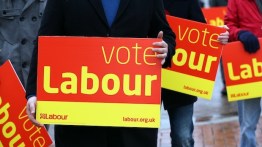
Who donates to Labour? It’s a question asked countless times since Ed Miliband began to reconsider his party’s links with the trade unions but there has been much confusion over the numbers, in particular the importance to Labour of union funding. Here’s a quick guide to who donates how much to the Labour party. 1. How much do Labour receive in donations? In 2012, Labour received £19 million in donations, which is roughly the same as the year before and in 2008, a similar point in the electoral cycle. It’s still down from £25 million at the last general election: For comparison, the Conservative party received £14 million in 2012 and the Liberal Democrats £3 million. 2. How much do the trade unions donate?

Ed Miliband avoids a showy showdown with the unions

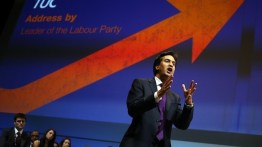
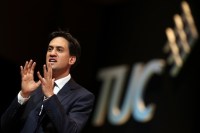
When Ed Miliband peaks, he really knows how to do it. His speech at last autumn's Labour conference was magnificent. Given the pressure on him to convince the unions to back his reforms to their links to the Labour party, you'd expect he'd have picked today's address to the Trades Union Congress conference to deliver another blinder. Sadly today was not a peak in the range of Miliband speeches. Sure, he produced a vaguely funny joke about a chap called 'Red Ed' who was in fact the Conservative Prime Minister Edward Stanley. Miliband told the conference that Stanley was 'the man who first legislated to allow trade unions in this country'. But it felt as though he was scaling a hill as he told this story without ever managing to reach the top.

The lobbying bill is a pernicious attack on freedom. All good men (and women) should oppose it.

Sometimes, you know, I come close to despair. These are the times when you think the Reverend I.M Jolly was right. About everything. I mean, you could read Benedict Brogan's column in today's Telegraph and think that with friends like these the free press - to say nothing of the freedoms of the ordinary citizen - have no need for enemies. To begin with, the headline is not encouraging. Shining a light on the shadowy figures who shape our politics. It's just a little too close to the sort of thing you might find in a BNP newsletter. But perhaps, you may think, as is so often the case the headline is a misleading teaser. If only that were the case.

Labour must make itself a movement again

‘As you enter the dock the sight of the forest of masts in the distance, and the tall chimneys vomiting clouds of black some, and the many coloured flags flying in the air, has a most peculiar effect ... Nearly everywhere you meet stacks of cork, or else yellow bins of sulphur, or lead-coloured copper-ore. As you enter this warehouse, the flooring is sticky, as if it had been newly tarred, with the sugar that has leaked through the casks.’ This was how Henry Mayhew described the 90 acres of London docks – stretching across St George, Shadwell and Wapping – in the 1850s. It was where the riches of the Empire came in, and the finished wares of the Workshop of the World went out.

Ed Miliband vs the Trade Unions (and why Tories should hope the Unions win)

There is something distasteful about the latest Tory assault on the Trade Union movement. I hold neither candle nor torch for Len McCluskey and am, generally speaking, opposed to the kinds of policies much-favoured by Union bosses (sorry "Barons"). But the Tory attack on organised labour still jars. It may well be that the unions do a poor job of representing the interests of their members. It may also be that they have an outsized influence on the Labour party. These seem matters for union members and the Labour party to decide for themselves. It's not really anyone else's business. And, to be frank, the distinction between attacking Union bosses (sorry "Barons") without simultaneously seeming to attack union members (sorry, "hardworking, ordinary Britons") is a tricky one to make.

Ed Miliband: Cameron wants to write trade union members off

Ed Miliband thought he'd delivered the speech of his life at last year's Labour conference. But though it knocked the socks off everyone in the conference hall, it wasn't enough: the Labour leader is having to deliver to one but two speeches to save himself this autumn. Today he will try to sell his union reforms to the Trades Union Congress conference in Bournemouth, and in a fortnight he will give another important party conference speech. The Labour leader wants to frame his reforms as having a purpose that all parties should want: bringing politicians back into contact with ordinary people. He will try to contrast what he plans to do with the Conservative party: 'We have a Prime Minister who writes you and your members off.

Sketch: Dancing on the head of a BBC pin

The BBC’s managerial superstars, past and present, arrived at the Public Accounts Select committee yesterday afternoon to answer questions about executive pay. Like a frightened flock of geese they all began waddling in the same direction. Away from responsibility. Up first was Mark Thompson. The former D-G had jetted in from New York and his aim was to exonerate himself with a bulldozer strategy. ‘I paid senior staff fortunes to remove them swiftly. Delay would have cost more. I saved the BBC millions. I was brilliant. No one can touch me. Beat that.’ The Thompson tank was very effective and flattened all questioners. The issue then turned to the BBC Trust’s ability to hold the executive to account.

The malign influence of trade union extends beyond the takeover of Labour

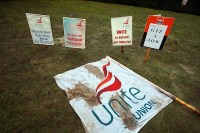
Money passes hands. Allegations are made. A would-be MP is suspended, only to be pardoned once evidence is mysteriously withdrawn. Such is the murky world of Labour’s relationship with the trade unions. Since the revelations of vote rigging in the Falkirk candidate selection the Westminster bubble has become obsessed by a number of questions. How much funding does Labour get from trade unions? (too much), what exactly did they get in return? (Ed Miliband) and will Red Ed will be able to stand up to paymasters? (he won’t). As Ed Miliband travels to Bournemouth the unseemly brawl of student politics are being writ large in one of the UK’s largest political parties.

Scottish voters don’t like independence, their Parliament, what it does or the leaders

What do Scottish voters think about the Scottish Parliament? Nothing particularly pleasant, according to Lord Ashcroft’s latest polling. The Tory peer has asked 12,000 Scots over the last few months what they think about their Parliament, the work it undertakes, its leaders and the notion of independence. The resulting picture isn’t a very happy one. Firstly, the role of the Scottish government. Just 14 per cent claim to have a ‘very good idea’ of how power is divided up between Holyrood and Westminster, while 40 per cent claim to have ‘very little idea’. Just over half think  Scottish Parliament elections are of equal importance to Westminster and 18 per cent believe it is more important.

Nick Clegg: Labour ‘perilously close’ to voters not knowing what they stand for

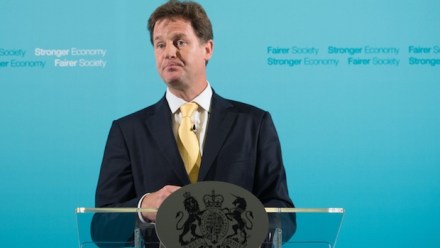
Nick Clegg gave his monthly press conference today. It might kindly be described as 'wide-ranging', which is often code in journalese for 'not offering very much'. But the Deputy Prime Minister did offer a few nuggets which are worth exploring. The first is that he was very keen to put his name on the list of figures at the top of the Coalition trumpeting the improved economic circumstances. 'I am not going to use that phrase,' he said, when asked whether he could see 'green shoots' in the economy. 'I'm happy to use any other euphemism: the clouds are lifting… the sinews of the British economy are starting to strengthen.' A victory for muscular liberalism, clearly.

George Osborne hits back on cost of living and trashes Plan B

One of the Tories' real failings over the past few years has been to ignore the spores of a problem, and then wait until it has mushroomed into something they can't handle. Take the bedroom tax, food banks, or zero hours contracts: all of which Labour has managed to brand as a sign of the evil coalition's failure, complete with scary names, partly because ministers never bothered to frame these issues themselves. So this morning George Osborne attempted to trip up Labour in its latest charge against the Tories: the cost of living. And he got in before his opponents have made it up to full speed. It would have been tempting for the Chancellor to give a triumphant speech in which he teased and ridiculed his opponents now that things are going his way.

Flodden 500 Years On: The Flower of Scotland, Lying Cold in the Clay

As best I can tell it is not permissable to talk or write about the battle of Flodden without first asking why it is not talked about more frequently? But of course there are good reasons why this calamity (a matter of perspective, I grant you) as slipped from mind. In the first place, contemporary Scotland feels less need to remember disaster. Or even, cynics might suggest, history. Secondly, for the English it was just another occasion on which they hammered the Scots. And they did it with their reserves, so to speak, commanded by the Earl of Surrey while Henry VIII was away battling the French. Nevertheless, Flodden was a catastrophe for Scotland, the single greatest military defeat in the country's history.

Sarah Teather: Another MP driven out of the Commons’ boy’s club

The Liberal Democrat MP Sarah Teather has decided to stand down at the next election. I realise that this will not be a popular view on here, but I think that’s a great shame. She has been an unflinchingly principled, honest and always thoughtful MP; in essence it is the nature of the coalition which has convinced her that modern politics is a foul and dispiriting business. There’s a case to be made that she’s in the wrong party, mind, but that’s the only real criticism I could level at her. She’s been attacked for her decision in the Daily Mail by that screeching agglomeration of recycled opinions and epic self-regard, Janet Street Porter. She has, according to this harridan, ‘let the side down’, and should have been ‘tougher’.

Osborne can be confident about the economy – but not HS2

George Osborne's speech on the economy today will show how much the Chancellor's stock has risen in the past year. It also shows that in spite of the embarrassing defeat on Syria two weeks ago, the Conservatives still feel they can be confident about their appeal to voters, because things are going well on the domestic front. If the growth forecasts were still terrible and key sectors such as manufacturing were still producing terrible figures, the Syria vote would have had far more dangerous consequences for the Tory leadership. But instead, they are able to bounce back from defeat with the statistics that make them look strong. As James pointed out in his Mail on Sunday column yesterday, this will be his most upbeat verdict yet on the economy.

Sarah Teather’s exit is just another growing pain for the Lib Dems

Sarah Teather's decision to stand down at the 2015 election won't surprise many people who know what a battle the Lib Dem MP would have had to hold onto her Brent Central seat. Her majority is only 1,345. But her public reason for standing down is interesting, too, even if some may suspect that the battle for Brent held more sway. Teather is an example of the Liberal Democrat party getting used to government, and, in the politest way possible, growing up.

Miliband has to win the fight that he’s started

When Ed Miliband was booed at the TUC in 2011, there was quiet delight among many of his closest aides. They thought that this jeering would help put some distance between Miliband and the unions and show that he wasn’t their puppet despite the role they had played in his election. But this year, the booing that Miliband is expected to receive will matter far more. Miliband is now engaged in a defining struggle with the union machine over his party reforms. As I say in the Mail on Sunday today, if he doesn’t get them through, then he’ll be a busted flush as a leader. Unite being cleared by the Labour party of wrongdoing over the Falkirk selection shows just how much of a fight Ed Miliband has on his hand.