Uk politics

Spectator podcast special: The View from 22 on today’s Autumn Statement

Following George Osborne’s 2013 Autumn Statement this morning, The Spectator’s Fraser Nelson, Isabel Hardman and James Forsyth discuss the Chancellor’s announcements, the reaction he received in the House of Commons, how Ed Balls responded to the statement, the winners and losers and what we can expect to see on tomorrow’s front pages. You can subscribe to the View from 22 through iTunes and have it delivered to your computer every week, or you can use the embedded player below: listen to ‘Spectator podcast special: The View from 22 on today’s Autumn Statement’ on Audioboo

Autumn statement 2013: Ed Balls’ counterattack

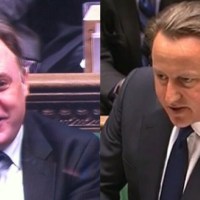
Ed Balls knew that his response to George Osborne’s Autumn Statement today was going to be difficult. As I blogged this morning, the Shadow Chancellor didn’t really have anywhere to go other than complain about the cost of living. This was aggravated by the fact that any Shadow Chancellor’s response to any autumn statement is a tough gig as he has no more advance sight of the figures and announcements than anyone else (perhaps George Osborne was just trying to be kind this year by briefing so much out in advance). But Balls’ strategy seems to have been the following: 1. Draft some good jokes in advance The jokes were

Gerry Adams: still a revolting man and still trying to steal Irish history.

I know this is not exactly breaking news but Gerry Adams is a vile man. Since no-one devotes much attention to Northern Ireland these days it is easy to forget this. Easy to file Adams and his Sinn Fein comrades into a musty drawer marked Ancient History. But the past is not another country. In Dublin this week the Smithwick Tribunal’s report into alleged Garda collusion with the IRA in the murders of RUC officers Harry Breen and Robert Buchanan in 1989 was finally published. The report confirmed long-held suspicions that the IRA had a mole or, less dramatically, a simple informant inside the Garda station in Dundalk, County Louth. The

George Osborne’s jubilant ‘yes, but’ Autumn Statement

Just because George Osborne had some very good figures indeed to read out at today’s Autumn Statement doesn’t mean that he had an easy job. There’s Labour’s campaign on the cost of living, which the Chancellor and his colleagues have given enough ground to that it has credence. Then there are the worries of his senior colleagues that Osborne might ‘bank’ the recovery too early. But Osborne did deliver a statement that addressed all these concerns. Threaded through it was a ‘look how wrong they were’ theme of the Chancellor outlining those predictions of doom from the Labour benches about the effects of the government’s economic policy, and contrasting them

George Osborne’s 2013 Autumn Statement in graphs

1. Growth has been re-forecast, again (above). This year and next, it’s a lot better than Osborne forecast last time (in the red). A little worse thereafter. 2. The projected deficit is, as a result, smaller than he forecast in March. But still way ahead of his original Plan A. 3.  Debt as a share of GDP, Osborne will still miss his target: to have the ratio falling by 2015/16. It’s worth remembering that he’s still going slower on debt that the Darling plan that he attacked in the last election. 4. Employment: the bright spot. Public sector workforce has fallen by 640,000 but George Osborne rightly points out this is more than offset by

Audio hub: 2013 Autumn Statement

Throughout the day, we’ll be posting audio highlights from the 2013 Autumn statement — including speeches from George Osborne and Ed Balls. George Osborne’s statement to the House of Commons: listen to ‘George Osborne’s Autumn Statement’ on Audioboo

Autumn statement: Labour’s only safe attack line

George Osborne wants to use today’s Autumn Statement to focus on the good figures and his government’s responsible approach to the economy. This, Tory strategists hope, will leave Labour with nowhere to go: Ed Balls has been a prophet of doom whose predictions now look as useful as those offered by a chap with a sandwich board offering the definite date for the end of the world, and voters are still suspicious of Labour’s instincts when it comes to spending. Labour has obliged this morning by releasing the below poster, which shows its top dogs accept that for the time being the party has nowhere to go either, other than

Mandarins routinely take Fridays off and sometimes can’t spell ministers’ names. Why does this go on? 

It’s a fact that most ministers are most scared, not of their political rivals but of their civil servants. Ministers know that if they cross civil servants, all of their foibles may soon end up in print. It’s one reason why politicians so often repeat the mantra ‘Our civil service is the best in the world,’ so as to keep on their good side. One man stands out: Francis Maude, Minister for the Civil Service, has spent most of his political life telling his party why it doesn’t work as a modern institution and now he’s taking on the civil service with equal frankness. This approach has not gone down

A choice for Tories: Goldman Sachs or UKIP?

Hats-off to James Kirkup for noticing that Goldman Sachs have suggested they would “drastically” cut their UK workforce (and operations) should Britain decide to leave the European Union. That is the view of Michael Sherwood, the fellow responsible for running Goldman’s european operations. I am sure eurosceptics will dismiss this as the usual scaremongering just as Scottish nationalists dismiss warnings that some businesses (RBS?) might shift their operations south in the event Scotland votes for independence next year. This is but one of the many ways in which the european and Scottish questions overlap or dovetail with one another. Perhaps it is only scaremongering! But what if it isn’t? In any case, the Tory High Command

Cameron focuses on long-term plan for Autumn Statement, not short-term goodies

Much of the meat of the Autumn Statement has already been briefed, which raises the question of what’s left to get excited about tomorrow. There will likely still be a number of crowd-pleasing announcements, but ministers are clearly keen to clear some space on the decks to focus on the figures that George Osborne will announce on the deficit and the updated growth forecasts. And a lightly-filled rather than overflowing goody bag from the Chancellor also gives him the opportunity to drive home his message about the ‘responsible recovery’ and a responsible government, rather than one that starts handing out prizes the moment the recovery appears on the horizon. David

PMQs: Labour’s constant attacks make a Lib-Lab coalition unlikely

Today’s PMQs showed that Labour still have no plan for Nick Clegg other than to attack him. With Clegg standing in for Cameron, Harriet Harman didn’t try and tease out any differences between the coalition partners but instead attacked him as the best deputy any Tory Prime Minister could have and as an accelerator on the Tory agenda not a brake. On one level, this makes sense. There are a certain number of votes on the centre-left of British politics that Labour and the Lib Dems are competing for. Painting the Lib Dems as Tory accomplices helps Labour in this market. But on another, these highly personal attacks on Clegg

Tory attacks on Alistair Darling show that WMD Unionism is MAD

I don’t really understand why politicians spend so much time talking to journalists. Most of the time little good can come from doing so. Of course, from a personal or professional perspective, this is fine and adds greatly to the gaiety of trade and nation. Nevertheless… Take, for instance, the reports in today’s Financial Times and Daily Mail in which “senior” government sources stick their shivs into Alistair Darling. The leader of the Unionist campaign fighting next year’s referendum on Scottish independence is, we are informed, “comatose most of the time”. A different (I think) Downing Street figure complains that Darling is a “dreary figurehead”. Meanwhile in the Mail, Gerri Peev finds

New constituency polling: who would vote Ukip?

What do the Liberal Democrats and Ukip have in common? According to the second round of Survation’s constituency polling, they are both locally outperforming their national trends. Thanks to the Ukip donor Alan Bown, we can see how the seats of Great Grimsby and Dudley North would vote, were there a general election tomorrow: These seats are important because they are numbers nine and ten on the Conservatives’ target list for the 2015 election (requiring a one per cent swing to win). Both suggest some worrying trends for the Tories. Since 2010, Labour’s voting share has risen by six/seven points, while the Conservatives have dropped 11/12 points. The Lib Dems

Sketch: Alan Rusbridger’s select committee interrogation

Guardian editor, Alan Rusbridger, was quizzed about the Snowden leaks in select committee today. The chair was amply filled by Keith Vaz who always comes across as well-fed, well-meaning and well-nigh useless. He began by thanking the Harry Potter clone for showing up at all. ‘I didn’t know it was optional,’ said Rusbridger frostily. Vaz wondered if the Guardian boss loved his country. Rusbridger affected surprise at the question and said he loved our principles of free speech and democracy. He was a patriot. Labour members toadied up to him and hailed his paper as a champion of liberty. But the Tories were ready to lock him in the slammer and

Coffee Shots: Boris Johnson’s Christmas cheer

If only Boris Johnson had enjoyed as fun a day as his mannequin in Madame Tussauds. While the Mayor struggled with an IQ test set by LBC’s Nick Ferrari, his waxwork was donning a cheery Christmas jumper for Save the Children’s Christmas jumper campaign.

Boris Johnson’s Tory colleagues refuse to stick up for him on IQ comments

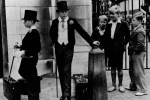
Boris Johnson insisted today that critics of his comments about IQ had chosen to ‘wilfully misconstrue what I said’. He told LBC radio this morning that ‘what I was saying actually is that there is too much inequality, and my speech was actually a warning, as correctly reported by many newspapers, actually a warning against letting this thing go unchecked. Because if you look at what’s happened in the last 20 to 30 years, there’s been a widening in income between rich and poor – there’s no question about that.’ He also managed to fail an IQ test, which was an inevitable consequence of this whole debacle. But Labour is

Could ‘norms’ be influencing controversial fitness-to-work tests?

Every so often, when another strange case crops up of someone being declared fit as a fiddle for work who then dies a few days later, or who cannot walk, talk or feed themselves, questions are asked about how on earth the government could have got its fitness-to-work tests quite so wrong. These Work Capability Assessments run by ATOS Healthcare on behalf of the Work and Pensions department, are a cross-party mess: set up by Labour and continued by the Coalition. I’ve written before about the problems with their design and the contract between the DWP and ATOS, but another element that makes the test even messier has come to