Uk politics

Scepticism about Scottish devolution is growing fast

A report suggesting that the £414m Scottish Parliament building could reach the end of its ‘useful life’ by 2060 – after just 45 years – provides the perfect metaphor for the state of devolution in 2017: a parliament that has been noticeably reluctant to use its powers in the last decade slapped with a ‘use by’ date. Irony can be awfully cutesy at times. The Scottish Parliament’s problems don’t begin and end with its building though. A poll by Panelbase gave voters an opportunity to declare themselves scunnered with the whole enterprise of devolution. Asked if, instead of independence or the status quo, they would rather shutter Holyrood tomorrow, 19 per cent of Scots said they are up

Hacks banished from the floor at Labour party conference

Oh dear. Since Jeremy Corbyn became Labour leader, he has had an at times difficult relationship with the ‘Mainstream Media’. From hacks being booed at press conferences to Corbyn avoiding questions, it’s safe to say that the media feel a little bit unloved. Now, it seems Labour’s high command is keen, too, that party members have limited interaction with the MSM. At this year’s party conference in Brighton, the press will not be granted access to the floor. Instead journalists will have to watch proceedings from the balcony. This means that the media will be away from the action – and unable to interact with delegates on the floor. The official

What the papers say: Boris’s ‘naked pitch’ for the top job

Has Boris Johnson launched a military coup? Based on ‘some of the chatter coming out of the Westminster Bubble’, you’d be forgiven for thinking his Brexit intervention was just that, says the Sun. It’s time for everybody to ‘calm down’, the paper urges. Yes, some of those who have questioned the timing of the article – published in the run-up to Theresa May’s major speech on Brexit this Friday – may have a point. But Boris is nonetheless ‘entitled to a view on what Britain might look like after we leave the EU’. The Tories need to quit the fighting amongst themselves and realise that the only ones to benefit from

Old habits die hard for Russell Brand

Oh dear. Although Russell Brand once said he had never voted, and never would, as a result of his ‘absolute indifference and weariness and exhaustion from the lies, treachery and deceit of the political class’, he went on to change his tune when her urged his fans to vote Labour in the 2015 election – and later endorsed Jeremy Corbyn. So, Mr S was curious to discover that Brand has now returned to his old tricks. The comedian-turned-left-wing revolutionary tells the Sunday Times that he didn’t vote in the EU referendum as he was on ‘holiday’: ‘How did he vote in the referendum? He mumbles: “I was on holiday.” He didn’t vote over Brexit? “No,” he

Brexit poses fresh problems for Welsh devolution

Twenty years ago Wales (barely) said Yes to devolution. Despite a Welsh Assembly being supported by the wildly popular new Prime Minister Blair and opposed by the very unpopular Conservatives, the public gave the most grudging endorsement to partial self-rule. A lot of water has flowed under many Welsh bridges since then. Public opposition to devolution fell away surprisingly quickly after 1997; the latest evidence, which I will be presenting in Cardiff on Monday, confirms that a clear majority in Wales now support devolution. There is little political opposition either. The Conservatives swiftly accepted the referendum result; since returning to power at Westminster they have overseen two Wales Acts transferring

Why is the UK’s supposedly impartial statistics watchdog joining the Boris-bashing?

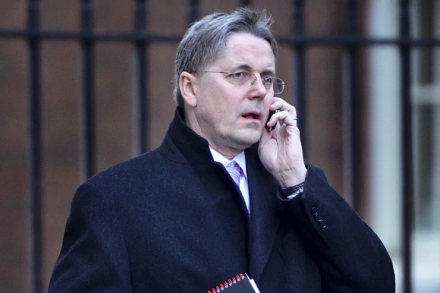
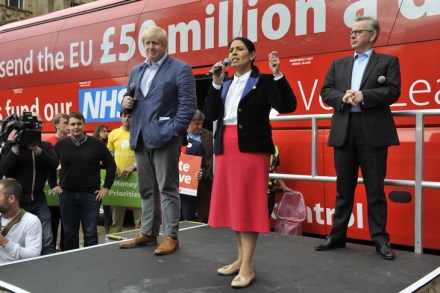
Okay, it’s a rainy Sunday, but surely the new chief of the UK Statistics Authority has better things to do than send angry tweets to the Foreign Secretary? Alas not. Today Sir David Norgrove, the newish chairman of the UK Statistics Agency, tweeted out a letter declaring himself ‘surprised and disappointed’ that BoJo has ‘chosen to repeat the figure of £350 million per week, in connection with the amount that might be available for extra public spending when we leave the European Union’. He says that this ‘confuses gross and net contributions…. It is a clear misuse of official statistics’. Sir David Norgrove writes to Foreign Secretary about use of

Sunday shows round-up: Amber Rudd says Boris is ‘back-seat driving’ over Brexit

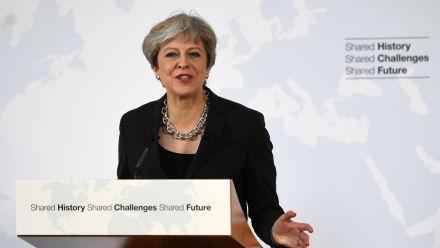
Amber Rudd – Boris should not ‘back-seat drive’ over Brexit The Home Secretary took to Andrew Marr’s sofa in the wake of the Friday’s failed terrorist attack on a London Underground train at Parson’s Green station. However, the topic swiftly turned from security to Boris Johnson’s latest 4,000 word essay published in the Telegraph on Saturday. The Foreign Secretary laid out his vision for Brexit – days before the Prime Minister is due to make a crucial speech in Florence. Rudd defended Boris’ intervention, but made clear that she did not want the Foreign Secretary to be in charge of the UK’s negotiations: AM: Do you think that this article

Banksy’s Brexit mural has helped halt Dover’s decline

When people come to Dover, it’s usually to pass through. The magnificent castle on the cliffs may be a tourist attraction in its own right, but for the most part, Dover has been a place people go through on their way to or back from the Continent. It’s never been much of a seaside destination. The rise of cheap flights, the end of duty-free and the advent of the Channel Tunnel diminished its status as a port, and the 2008 crash hit it hard. The number of vagrants, street drinkers and empty shop premises in the centre bear witness to a town that has seen better times. Yet things are

Boris’s nasty politics would hurt the Tories and Britain

I used to have a lot of time for Boris Johnson. Sometimes whole days, in fact: from 8am until 8pm, I’d ring and text and email him, politely urging him to tell me what he planned to write his exquisitely expensive Telegraph column about, and when he’d deign to send it to me. It was, as others who’ve had the joy of calling him a colleague can attest, maddening. But he always filed, in the end. I don’t claim that working acquaintance with Boris gives me any unique insight into his soul. In fact, familiarity only makes his real character more obscure. My overall impression of a man famous for being talkative

Finally, Boris Johnson has overcome his stage fright. Let’s hear more from him

In my Daily Telegraph column yesterday, I asked where Boris Johnson had gone. We never hear from him now, I said, unless there’s been some tragedy overseas or some risqué joke backfiring in Bratislava. Since becoming Foreign Secretary, the most gifted communicator in the Tory party had been mute – a baffling waste of talent. While he sulked, Brexit was being defined by its enemies. The narrative has become one of tedious negotiations and no one in government seemed able (or even interested) in saying what the point of Brexit was. Boris helped inspired a nation to vote for Brexit, and gave a wonderful, liberal and globally-minded definition of it

Can Theresa May satisfy both Boris and the EU?

We are only six days away from Theresa May’s big Brexit speech in Florence. But it is far from certain what will be in it, as I say in The Sun today. The biggest domestic challenge for May, insiders say, is squaring Boris Johnson. I’m told that ‘there is quite a lot of nervousness about that’. ‘Boris has been the most hard-line’ of the Cabinet Brexiteers an insider tells me. One of those involved in the negotiations between the two camps predicts ‘it is going to be a tetchy week.’ Boris’s issue is money. He is opposed to paying a big exit payment to the EU and he’s told Number

Jeremy Corbyn is getting better at political point-scoring

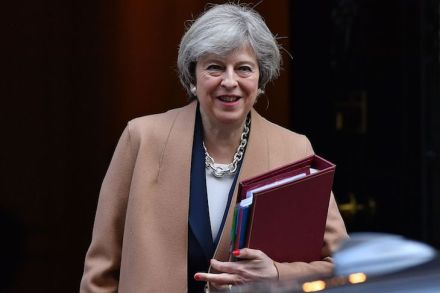
This week marks two years since Jeremy Corbyn was announced as the Labour leader. When he took over, he promised to shake up the way Prime Minister’s Questions was done, to make it more about the voters and less about the political point-scoring. But interestingly, he has now settled into a rather effective political routine. Corbyn now runs through a series of policy areas on which the Tories look weak, almost regarding Theresa May’s answers as incidental to the process rather than the prompt for him to probe more and point out that she hasn’t answered the question at all. This is probably a wise move, given Theresa May tries

These late night sittings will make Parliament much less productive

One of the most noticeable things about MPs as they amble around Westminster today is how tired so many of them look. They’ve been kept up late the past two nights by unusually long sittings of the House of Commons, with the final three-line whipped votes not taking place before 10pm on both days. On Monday, it was the second reading of the EU Withdrawal Bill, and last night a prolonged debate on the Finance Bill meant everyone had to hang about until later to vote on Andrea Leadsom’s plan to make the Conservatives appear to have won the election outright after all by guaranteeing the government a majority on

Why social care could be heading for the long grass once again

How are ministers going to deal with the social care crisis? This could be a weekly question on Coffee House for the next few years, along with what is Labour’s policy on Brexit and when will Theresa May decide to stand down. As I wrote last week, the different parties are all claiming they want cross-party talks but not really doing much talking to one another. Now, I understand that ministers are planning to do a lot more talking before they make any sort of decision on how to create a long-term financial settlement for the sector. As she started to unpick her disastrous manifesto proposal for a ‘dementia tax’,

The EU Withdrawal Bill is a victory for British parliamentary democracy

Everyone needs to calm down about the EU Withdrawal Bill. The way anti-Brexiteers are talking about it you’d think Henry VIII himself had risen from his burial vault, sword in one hand, Anne Boleyn’s head in the other, come to crush parliament and the plebs beneath his velvet boot. The Tories’ use of ‘Henry VIII powers’ to incorporate, amend or ditch EU-born laws means they’re ‘acting like Tudor monarchs’, Brexit panickers claim. Please. There’s a chasm-sized moral difference between Theresa May’s executive antics and those of the Tudors: she’s acting on the command of 17.4m people, the largest democratic throng in British history, where they acted from personal kingly whim.

The most half-baked thing about the anti-transgender Christian couple isn’t their approach to gender

We live in a society with a tendency towards liberal intolerance, in which the fury of the mob turns on anyone who dares hold a different belief to the mainstream particularly if they are from an unpopular group such as conservative Christians. But we also live in a society where some people who hold non-mainstream beliefs don’t feel they really have to think them through. Last week, I wrote about the difference between directing scorn at Jacob Rees-Mogg for holding unpopular beliefs which he is happy to justify, and directing scorn at those who hold unpopular beliefs which they aren’t prepared to debate in public, possibly because those beliefs are

Angela Merkel’s foreign policy proposals should worry Brexiteers

With the German election a fortnight away, and Angela Merkel’s Christian Democratic Union enjoying a commanding lead, you might suppose the German Chancellor would be tempted to play safe and keep her head down. However as Theresa May has shown, that’s a risky strategy for an incumbent. Far better to come out fighting, take the battle to your opponents – and choose the ground upon which you wish to fight. Merkel’s favourite battleground has always been foreign policy, and with her conservative CDU on course for a resounding victory, yesterday’s interview with the Frankfurter Allgemeine Zeitung gives the clearest outline so far of what her priorities will be when she

Grayling holds talks with Tory MPs in Northern transport row

The Tories are starting their series of U-turns on the public sector pay cap, but after so much see-sawing over whether they would drop the cap or not, the party will get very little political credit for doing so. It now looks as though ministers are yielding to pressure from Labour and Conservative backbenchers, rather than deciding that the time for pay restraint has come to an end. As I wrote last week, the decision to end the pay freeze is only the latest in a line of concessions to disgruntled MPs following the snap election and the DUP deal. The next political row could well be Northern transport infrastructure.

Who will blink first in the Brexit bill fight?

Tonight’s series of votes on the second reading of the EU withdrawal bill are unlikely to be the most spectacular part of its passage through the Commons. MPs have decided in the main to focus on the Committee stage which follows, as this allows Brexit-sceptics to try to force changes to the legislation without being accused of blocking Brexit. Labour is voting against the Second Reading and the programme motion, but the Tory rebels have decided to keep their powder dry, and so the debate this afternoon is much more of a preview of the fights in committee stage than it will be about the principle of the legislation, which