Uk politics

Labour’s conference, day two: The Spectator guide

John McDonnell takes centre stage on day two of the Labour party conference. Here are the best of the events taking place at conference, on the fringes and at Momentum's 'The World Transformed': Labour conference: 10.50am: Shadow Foreign Secretary Emily Thornberry 11am: Shadow Brexit Secretary Sir Keir Starmer 12.15pm: Shadow Chancellor John McDonnell 2.15pm: Living standards and strong economy 3.35pm: Mayor of London Sadiq Khan Fringe events: 8am: Engineering Brexit Ruinart, Hotel du Vin. Speaker: Hilary Benn 8am: The Times and Sunday Times Red Box Fringe London Lounge, The Brighton Centre. Speaker: Angela Rayner 9.15am: Powering a nation: A strategy for Britain’s future post Brexit New Statesman hub, British Airways.

Labour’s Soft Left goes on the offensive

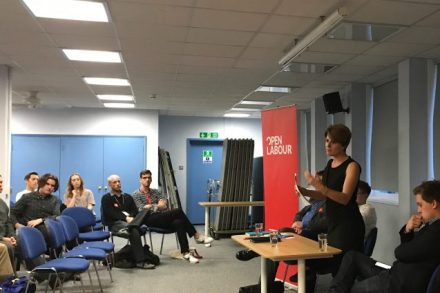
The Labour Party is starting this conference season in its most confident mood for years - even though it still isn’t in government. It’s not just the confidence of the party’s leader as he makes demands on public spending which would previously have been dismissed, but also what MPs and activists are now calling for as they stand up at fringe meetings. They may not have won an election, but they have started to regain the political narrative, and so they are in a considerably less defensive mood than over the past few years. Take tonight’s Open Labour fringe rally. Open Labour is a ‘soft left’ pressure group in the party, though there was nothing soft about tonight’s event. It kicked off with a passionate speech from newly-elected MP Emma Hardy.

Labour keeps Brexit off the menu at their party conference

Brexit has given the Labour party something of a collective headache ever since the referendum. Now, the party is trying a new approach: pretending it doesn’t exist. The party’s annual conference has just decided which issues will be voted on by those gathering in Brighton – and the issue of leaving the EU failed to make the cut. Brexit got 72,000 votes in a ballot of Constituency Labour Party delegates. But because other issues, including the NHS (187,000), social care (145,000), housing (187,000) and railways (120,000), got more, Brexit won’t now be the subject of a vote. This is a win for Momentum, who appear to have used their clout in terms of numbers among CLP delegates to good effect, ensuring Brexit won’t be the subject of a vote.

Sunday shows round-up: Corbyn’s single market dilemma

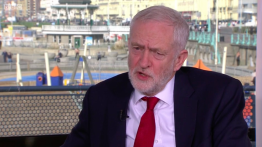
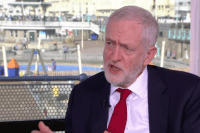
Jeremy Corbyn - We need to 'look very carefully' at any future EU trade relationship As the Labour party conference in Brighton gets underway, Jeremy Corbyn put in an appearance on The Andrew Marr Show. Of particular interest, was Labour's position on the single market – particularly whether the Labour leader was prepared to change his mind after pressure from party members and senior Labour figures: https://www.youtube.com/watch?v=OQhSp8M7JUY AM: 66 per cent of your party members want to stay inside the single market. Will you listen to them? JC: Of course I will listen to them. What I would say is that the important priority is to ensure that we have a tariff free trade access to the European market. Half of all our trade is with Europe...

Labour conference, in pictures

It's that time of the year again. As Labour conference kicks off in Brighton, the annual event has managed to attract a range of interesting characters – all with a common aim: true socialism. With Labour leading in the polls, Mr S has been touring the conference centre and World Transformed festival to get a glimpse of what life would be like under Corbyn: [caption id="attachment_9940392" align="aligncentre" width="520"] Bye bye Sun[/caption] [caption id="attachment_9940542" align="aligncentre" width="520"] (Credit: Lucy Fisher)[/caption] [caption id="attachment_9940342" align="aligncentre" width="620"] A World Transformed display[/caption] [caption id="attachment_9940402" align="aligncentre" width="520"] Labour – a party for workers?

Watch: Clive Lewis vs Caroline Flint on racism and migration

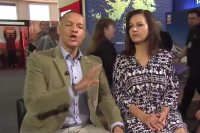
Labour’s conference only started a few hours ago but already the cracks are starting to show. While the Tories are doing a good job of tearing themselves apart over Brexit, Labour is determined not to be outdone. Clive Lewis and Caroline Flint don’t see eye-to-eye on many issues - and the question of freedom of movement is no different. On Sky’s Sunday with Paterson, the pair debated the question of whether opposition to immigration was a matter of racism. It's fair to say their exchange summed up why Labour's still has some work to do on its Brexit stance... Does opposition to immigration come down to racism? pic.twitter.

Jeremy Corbyn’s Brexit confusion continues

One of the daily rituals in British politics at the moment is each of the main parties sending out press releases about how 'hopelessly divided' the other is on Brexit. There are so many facets on which politicians can bicker that this ritual won't end with the negotiations, or the transition period (however long that ends up being) or indeed with the eventual relationship with the EU that Britain settles into. "There will be a lot of movement" of workers after Brexit - @jeremycorbyn tells #marr pic.twitter.

Jeremy Corbyn’s Uber memory lapse

The Uber ban presents something of a dilemma for the Labour party. The decision by Transport for London not to renew the taxi company’s licence has angered the party’s young voters. Yet Labour politicians are inclined to side with the unions rather than those affected by the ban. But when Jeremy Corbyn was put on the spot on the Andrew Marr show today about whether he has ever used an Uber, he found the perfect way of dodging the question: AM: Have you ever taken an Uber? JC: ….I don’t think so. AM: You don’t think so? JC: I’m not sure but I don’t think so If Jeremy ever does remember, Mr S would be interested to know the answer...

Battle lines drawn ahead of Labour conference

Comrades, Labour conference is here. Today MPs and members descend on Brighton for four days of speeches and discussions on what Labour has to do in order to become a party of government. With the party now leading in the polls, the fringe talks on 21st century socialism, Venezuela and foreign policy at large will be watched with newfound interest from the business community. Given the trouble the Tories found themselves in last week over Europe, one could be forgiven for thinking that the Labour party by comparison is now the picture of stability and calm. But as the party comes together for the first time since the snap election, a number of battles are being fought behind the scenes.

Labour’s conference, day one: The Spectator guide

As the  Labour party conference kicks off, Jeremy Corbyn's grip on power has never been stronger. The party's moderates have been sidelined from the main stage at this year's event in Brighton. And a vote this week on rule changes affecting future Labour leadership contests is likely to give a further boost to those on the party's left. On day one of Labour's conference, here are the main events to watch out for: Labour conference: 10.30am: Morning plenary session: NEC Chair’s Address; CAC report 11.20am & 2.15pm: Protecting our communities 4.30pm: General Election report Fringe events: 12.30pm: Will one last heave win Labour the next general election? Hall 7 - Trent, Hilton Brighton Metropole Speaker: Chuka Umunna 12.

‘Long and vain’: Europe’s press reacts to Theresa May’s Florence speech

Following months of tortured negotiation between the UK and the EU, Theresa May delivered her speech in Florence yesterday in an attempt to break the Brexit deadlock. Mrs May proposed a two-year transition period during which Britain would retain its access to the single market and confirmed that the UK Government will honour its commitments to the EU budget. She also spoke of the ‘shared challenges and opportunities’ that face the UK and the EU in a bid to build consensus. Here’s how Europe’s press reacted to the long-awaited speech. France France’s centre-left daily, Le Monde, agrees with Theresa May that Brexit negotiations can be extended beyond March 2019, however, points out that all member states must be in favour of such a move.

Jacob Rees-Mogg sees red

Although Theresa May did manage to prevent a revolt breaking out after her speech in Florence yesterday, that's not to say anyone in Cabinet is particularly pleased by her words. The Prime Minister did buy herself more time – but failed to clearly say where she what direction she was planning to go in that period. On the backbenches, Conservative MPs have less reason to hold their tongue over such concerns – as Jacob Rees-Mogg demonstrated on Newsnight.

Is America’s ‘despair epidemic’ about to arrive in Britain?

However stressful and bad things get for a parent of young children, there is always one thought that puts it all in perspective - just wait until they're teenagers and they're calling you up at 3am asking for a lift from a nightclub in New Cross. So reports like this one, showing that one in four adolescent girls suffer from depression, are bound to add to that gnawing feeling of dread. Firstly the caveats - any statistic that claims '1 in such and such' suffers from this, or is a victim of this, should be treated with scepticism. Depression is also an ill-understood term, a medical diagnosis widely applied by non-medical experts. But it's safe to say that a lot of people are unhappy, and in particular a lot of young women.

The big questions Theresa May must answer

Theresa May’s speech in Florence was fine as far as it went, I say in The Sun this morning. A time limited transition is a sensible way to smooth out Brexit. But May didn’t answer the really big questions in this speech: what kind of future relationship with the EU does the UK want? How does it think regulatory divergence should be managed? The problem is that the Cabinet is divided on these questions—and neither side is strong enough to win the argument. So, Boris and Gove can stop Hammond and Heywood from getting what they want. But they can’t win the debate themselves. The result is a stalemate. This means the government doesn’t have clear direction on this crucial question.

Is my euroscepticism partly down to a delayed teenage rebellion?

On Tuesday, for the first — and undoubtedly last — time in my life, I found myself mounting the platform at the Liberal Democrat conference. This was because my father, Richard Moore, was receiving a richly deserved award there. He is 85, so I was assisting him up the steps in Bournemouth. Part of his distinguished service to his party consists in the fact — surely unique in human history — that he has attended every Liberal annual conference since 1953: these shows have taken up a year of his life. He told me that he spoke at the first one he attended, in Llandudno, in favour of what was then referred to as the Schuman Plan, the embryo of what is now the European Union. It is sad for him that Britain will leave the EU more than 65 years later.

The Brexiteers own optimism just as Remainers claim reason

On Brexit bias, tone has become almost as important as argument. I notice that cheerfulness can grate on some, who regard it as political comment. When the Australian high commissioner asked on the Today programme why Brits were so gloomy, it was categorised as an anti-Remain intervention. It is true that whoever came up with the word ‘Remoaners’ delivered a lasting blow. The Brexiteers own optimism just as Remainers claim reason. I want to try to tell the story of Brexit through concrete examples rather than positions. We looked at the fashion industry the other day and the designer Patrick Grant made a simple case. When he is making a suit, he imports parts from different countries. He can order a zip from Italy overnight.

May’s Florence speech is a blueprint for keeping Britain in the EU as an ‘associate’ member

I am not a conspiracy theorist. But if I were, I might conclude that the prime minister's speech in Florence represents the victory of Whitehall, led by the cabinet secretary Sir Jeremy Heywood, over the arch Brexiteers in the cabinet. Because although it is spectacularly short on detail, it does not represent a clean break with the EU. And it seems to propose some kind of associate membership of the EU for Britain as the long-term status quo. May proposes a new trading relationship with the EU that is neither membership of the European Economic Area and the single market or a conventional free trade arrangement. She wants our future economic relations with the continent to be more intimate than the latter and a bit less intimate than the former.

May’s Brexit speech leaves some key questions unanswered

Theresa May’s speech in Florence set out more detail on the government’s position on transition. But it did not answer the question of what the UK’s final relationship with the EU should be, and how the UK thinks regulatory divergence between it and the EU should be managed. May’s transition proposal, though she still prefers the term implementation period, would see the UK continue to obey all EU rules and regulations and accept free movement, albeit with registrations of new arrivals. In effect, Britain would be staying in the EU but as a non-voting member. She suggested that this transition last two years. But she also said it should go on for as long as necessary for the new systems to be put in place.