Uk politics

Parliament needs to do far more than just stand up to the latest government power grab

What a surprise: a government trying to make it easier to get legislation through the House of Commons. Today’s Huffington Post story that Leader of the House Andrea Leadsom is trying to ensure that there is a Tory majority on every committee scrutinising legislation is just the latest example of Theresa May’s government making every effort to make life easier for itself. Journalists at the Number 10 lobby briefing today pointed out that the Tories haven’t actually won a majority and therefore do not deserve to have a majority in public bill and delegated legislation committees. Rather astonishingly, the Number 10 spokesman responded that ‘the government has a majority on

What can ministers do to calm the EU withdrawal bill row?

The EU withdrawal bill debate is winding on, with MPs criticising the ‘power grab’ planned by ministers. There won’t be any votes until Monday, and unless something changes, it looks as though the legislation will pass its second reading. Assuming that this is the case, it is much more useful to look at who is threatening to make amendments to the bill at Committee stage. The tone of the Brexit-sceptics so far has largely been reasonably respectful, as they are trying to encourage ministers to make concessions ahead of that. It is rare for a government to be defeated in a committee stage vote, but this bill is different as

Brexiteers, your enemy is the government

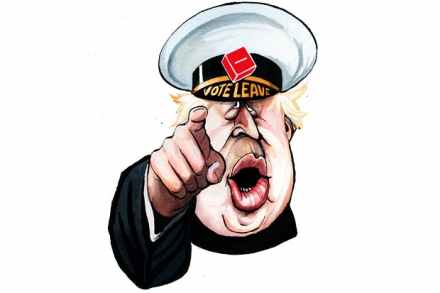
Twenty-nine years ago this month, the Vote Leave campaign got underway. Nigel Farage was still making his anti-establishment way as a City broker and a young Michael Gove was heading northwards to work on the Aberdeen Press and Journal. Instead, it was the founder of the movement who did the honours. Margaret Thatcher travelled to Bruges, to the College of Europe, the Europhile madrassa that has radicalised generations of youth to the cause of ever closer union. There in the belly of the beast she smartly explained why Britain was marvellous and wouldn’t it be better all round if the Continent was more like Blighty. The Bruges Speech was in

Clean eating goddesses seize on Corbyn’s vegan aspirations

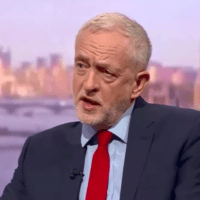
Jeremy Corbyn’s interest in veganism has excited far more interest than is necessary, given most people probably assumed the Labour leader was already a follower of this plant-based diet (in between the odd pleasurable shortbread). It has gone down particularly well with the ‘clean eating’ lobby, who hope that the endorsement of a Labour leader who was cheered at Glastonbury will boost the appeal of their trendy diets. Today’s Evening Standard carries a piece by Camilla Fayed, the founder of ‘Notting Hill clean-eating restaurant Farmacy’ (though the ‘clean-eating’ line is only in the paper, not the online copy, which suggests that Fayed doesn’t like being lumped with other clean eaters) who

Can leading politicians get away with opposing abortion and gay marriage?

What can politicians with socially conservative beliefs expect from public life? Is there now a faith glass ceiling under which lurks would-be party leaders whose views on abortion and homosexuality are just too unpalatable for voters? If there is one, Jacob Rees-Mogg might have a good chance of telling us where it is located. The alleged contender for the Tory leadership told Good Morning Britain today that abortion was ‘morally indefensible’ in any circumstances and that he opposed same-sex marriage because ‘marriage is a sacrament and the decision of what is a sacrament lies with the Church not with Parliament’. William Hill has already cut the North East Somerset MP’s

Nicola Sturgeon’s Third Way

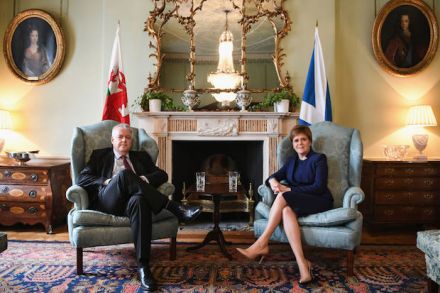
Nicola Sturgeon is invariably at her most persuasive best when she puts partisanship to one side and emphasises that, in addition to leading the Scottish National Party, she is also first minister of Scotland. Occasions such as yesterday, when she outlined her programme for government, give her that opportunity to shine. In place of boastfulness, there was modesty; in place of gurning about what she could not do, there was a refreshing emphasis on what she could. It was a speech tacitly admitting the truth of admissions made by former SNP ministers that during the referendum years the party allowed itself to be distracted by independence at the expense of ambitious

In defence of Jacob Rees-Mogg

The art of Jacob Rees-Mogg is to be preposterous and sincere at the same time. It’s the reason why he is increasingly popular. It explains Moggmania. It’s also why people are now beginning to take him seriously as a Tory leadership contender; why he is topping the polls for that job. It helps that he is a gent, a man who treats everyone with courtesy, which has always been popular. But it is his ability to be genuine while coming across as absurd – or is it the other way round — that makes voters warm to him. A bit like Jeremy Corbyn. Take Mogg’s interview this morning. His views about

David Davis mocked for ‘simple and easy’ Brexit claim

The most memorable line from David Davis’s statement on the Brexit negotiations to the Commons was his claim that ‘nobody pretended this would be simple or easy’. MPs who disagree with the Brexit Secretary loved this because quite a few people have made claims to that effect, including Davis and his colleague the International Trade Secretary Liam Fox. But in terms of any revelations to MPs, the most interesting line from the minister was that the negotiations on the divorce bill could go down to the wire. ‘My expectation is that the money argument will go on for the full duration of the negotiation,’ he told the Commons. This is

The government’s defence in the Henry VIII powers row won’t work

While the Tory whips are reasonably relaxed about the prospects for the second reading of the EU withdrawal bill, they are already preparing for the row in Committee stage over Henry VIII clauses. The Cabinet discussed the importance of getting the legislation through Parliament when it met this morning, and ministers are aware that these statutory instruments, which allow the government to make changes to legislation without any parliamentary scrutiny, could become an even bigger problem when the Bill reaches the Lords. The Prime Minister’s official spokesman was asked about these powers at the lobby briefing today. He argued that they were only acting as a ‘correcting power’ which would

Railways in the North the next in line for Tory revolt

Tory MPs are very pleased that Number 10 is once again dropping hints that the public sector pay cap will be lifted in the autumn budget. A number of them had spent the summer being chided by nurses and police officers in their constituencies about the discrepancy between MPs’ pay and the eight-year freeze on pay for public sector workers. But this is of course just the first in a long line of successful policy changes that Tories are going to extract from the Treasury as a result of the snap election. Ironically for Philip Hammond, who got into hot water after telling Cabinet that even women can drive trains,

MPs hold breath for cross-party social care talks

Theresa May created many problems for herself in this year’s snap election. Some are rather difficult to ignore, like fewer MPs and no Conservative majority. Others are very tempting and advantageous to ignore, like social care. The botched manifesto proposal on the long-term funding of social care has made reform even less attractive to politicians who were already minded to set up as many independent reviews and commissions as possible in order to avoid telling the public that this is going to cost a lot of money to fix. Meanwhile the sector is even more on its knees than it was before. Crises don’t get better just because politicians ignore

Should Tory MPs want a reshuffle promotion from Theresa May anyway?

Who does Theresa May want to promote in her reshuffle? On our Coffee House Shots podcast today, we discuss how the Prime Minister actually feels powerful enough to even consider moving ministers around, and why she might want to delay that reshuffle for as long as possible. But there’s another question worth asking, which is who wants to accept Theresa May’s offer of a promotion? One of the names being mooted is Tom Tugendhat, currently the chair of the Foreign Affairs Select Committee. Tugendhat has only recently taken that position, but it wouldn’t be an unprecedented move: Rory Stewart left his position as Defence Select Committee chair in 2015 after

How much pain are Brexiteers prepared to inflict on us?

When this magazine endorsed Brexit, it did so in typically trenchant and elegant fashion. ‘Out and into the world’ we said. The central thesis of The Spectator’s case for Leave was that the European Union has become a parody of itself, a sclerotic, irredeemably unreformable, set of institutions that are, at some core, fundamental, level intrinsically incompatible with this country’s instincts, traditions, and future. Even so, that case, forceful though it was and certainly hardly without merit, still suffered from the wishful thinking that has, alas, been so typical of so many Brexiteers. Britain’s departure would, we wrote, ‘show reform-minded Europeans that theirs is not a lost cause’ though how

Anti-Semitism is not a priority in the Labour Party

It is the gripe of every end-of-the-bar bigot you meet. ‘Look, I’m not saying there isn’t any racism but there can’t be as much as they claim. They exaggerate it. This isn’t me saying this, by the way. I know loads of black lads who say the same. They’re just milking it. It stands to reason.’ Place that paragraph before almost any Labour member and they would know exactly what they were looking at. They would call it textbook racism. The throat-clearing at the outset. The downplaying of the problem. The some-of-my-best-strawmen-are-black rhetorical device. Whatever the intent (though we can probably guess), the overall effect is to delegitimise critics of

Where will the real trouble come from on the EU Withdrawal Bill?

Things may be rather awkward for David Davis in Brussels at the moment, but at least he doesn’t need to worry too much about what’s going on in the Commons. The EU Withdrawal Bill starts its second reading debate this Thursday, with the big vote on whether it will pass to Committee stage, and how long that next stage will be, on Monday 11 September. The Tory whips are now confident that there won’t be any trouble from their own side at this stage, with pro-Remain Conservatives planning to table all their amendments at the Committee stage, rather than trying to block the Bill’s progress this week. The Tories who

How Theresa May plans to sneak policies past MPs

If Theresa May is in it for the ‘long term’, does this mean that she plans to do big things with her premiership? The Prime Minister promised a great deal when she stood on the steps of Downing Street over a year ago, but has so far delivered a snap election which messed up her chances of actually achieving what she promised. She now has to rely on a party which doesn’t share all of her values – the DUP – or the good will of Labour MPs who happen to support what she wants to do. But this is all about May’s weakness in the House of Commons Chamber.

Senior Tories oddly supportive of Theresa May’s plan to stay

Theresa May’s announcement that she plans to serve as Prime Minister for ‘the long term’ has come as rather a surprise to her party. Cabinet ministers and senior backbenchers had hoped that all the talk of her sell-by-date and a leadership contest would have faded in time for the autumn, but this has stirred it up again. There are two schools of thought in the party as to whether the Prime Minister went into her interview yesterday intending to give a stronger line on whether or not she was going to leave. By and large those who are most unimpressed by the way she has led up to this point

Theresa May wants to spend her political capital in an odd way

What on earth is Theresa May up to? The Prime Minister seemed to have successfully calmed things down in the Tory party following her disastrous snap election. But now she has thrown everything wide open again by telling reporters that she would like to fight the next election and that she is her ‘for the long term’. The ‘do you want to fight the next election’ question is a tricky one for Prime Ministers to answer. Say ‘no’ and you become a lame duck. Normally saying ‘yes’ makes more sense, even if you’re secretly planning to scarper before there is another campaign. But May had already cast herself as a

Theresa May’s climbdown on corporate excess is a major retreat for the Tories

‘Mayism’, whether it left you in admiration or despair, at least seemed like an identifiable philosophy. It was concerned with social justice, but it wasn’t socialist: it was better described as post-liberal. Mayism was sceptical of free markets, which were prey to ‘selfish individualism’ (as the manifesto put it), but it didn’t see big government as the answer. It preferred to spread economic power, by clamping down on corporate malpractice and giving new rights to workers. And the symbol of this – until yesterday when the Tories pretty much dropped the proposal – was the idea of putting workers on company boards. To be exact, the idea has not been

How Kezia Dugdale made Mission: Impossible more difficult for herself

When Kezia Dugdale was elected Scottish Labour leader, she tweeted: ‘Mission: Impossible has a happy ending, right?’ As she steps down from the job, Dugdale is getting enough praise to suggest that her mission has a happy ending. But is that really fair? She leaves with more Scottish Labour MPs in Westminster than she started with: impressive, given many had assumed Scottish Labour was dead for at least a generation after the SNP surge in 2015. But then again, she leaves with her party in third place at Holyrood. Her critics on the Left will argue that the party’s recovery in its Scottish seats was far more down to Jeremy