Uber

Make way for Ubercare

From our UK edition

There is much to be faulted in Uber, which has branched out from delivering people into delivering meals, under the unappetising name UberEats. But even I, someone who can rarely bring herself to write the word ‘sharing’, as in economy, without inverted commas, am prepared to give credit where credit is due. Uber has made private door-to-door transport accessible to far more people than before. It has thus done a lot of people a favour and hugely expanded the market, harnessing new technology to do so. It has provided jobs for people who did not have them, or who prefer to work in the semi-autonomous Uber way.

Rides without romance

From our UK edition

You know the old designation NSIT — Not Safe in Taxis? Well, we need a new one: TSIU — Too Safe in Ubers. I don’t want to get into the rights and wrongs of Uber, whether the gig economy puts more money in the pocket of the taxi driver from Wembley or benefits only the San Francisco app-ocracy. I don’t have strong feelings about Ubers vs black cabs and whether the former are undercutting the latter, doing them out of their Knowledge and their livelihoods. My objections to Uber are not economic or ethical, they are romantic. Uber has killed off the back-of-the-taxi clinch. It used to be that, after a date, a party, a play, a chap could prove his mettle by striding to the kerb, raising his arm and shouting ‘Taxi!’ in a firm, strong baritone.

Uber has become the labour market’s scapegoat

From our UK edition

The offensives against Uber are coming thick and fast. In October, a UK court ruled against the ride-sharing giant in favour of two drivers demanding minimum wages and vacation pay, even though Uber is a platform, not an employer. At the moment, the company is on trial in the EU, where judges are trying to determine what it actually is after European lawmakers (primarily in France) dragged it to court. And on Monday, Uber lost a case in Quebec on whether its drivers were employees or contractors.  Last week, it emerged that the fight is still raging in the US too, where Uber has just settled a lawsuit for $20 million over claims it inflated estimates of how much prospective drivers could earn if they signed up and misled them about the cost of car financing deals.

It’s time for Hammond to send a ruthless hit squad into RBS

From our UK edition

The new series of The Missing is surely the gloomiest television of the year. But it has nothing on the endless saga of RBS, which seems to use the same disturbing time-shift device: whenever there’s a horrible new plot twist, you have to spot whether we’re in 2008, 2011 or today. The crippled bank, still 73 per cent state-owned, has lost £2.5 billion in the first three quarters of this year, having just paid out another £425 million in ‘litigation and conduct’ costs chiefly relating to mortgage-backed securities hanky-panky in the US. Since its bailout eight years ago, it has lost considerably more than the £46 billion of taxpayers’ money that was pumped into it, and has never reported a full-year profit.

The Uber ruling will change little

From our UK edition

So the GMB and the two Uber drivers who thought they ought to receive holiday pay and be guaranteed the national living wage have won their case. An employment tribunal has ruled that Uber was wrong to classify them as self-employed as their contracts placed too much demand on them to work at particular times – a condition which indicates employment rather than self-employment. What the other 40,000 Uber drivers think of the case is not clear. On the one hand, having status as employees would offer them a guaranteed £7.20 an hour and paid holidays. On the other hand, it would mean paying higher National Insurance contributions and less flexibility to work when they want to. It would make it much more difficult for them to combine driving a cab with doing other work.

Low life | 9 June 2016

From our UK edition

Showered and shaved and wearing a stiff new Paul Smith candy-stripe shirt, I took an Uber to the party. I love London and it was grand to be back and to be driven through the sunny streets by Yusef, one of the many new arrivals adding vibrancy, energy and diversity to our great city. Diversity is strength! Diversity is our greatest strength! (I used to believe that unity is strength, but I have lately recanted of this foolish and evil idea.) ‘Will you be voting in or out, Yusef?’ I said in a comradely manner, as one perplexed citizen to another. ‘I think stay in, sir,’ he said. ‘Better for the economy.’ ‘What economy?’ I said. ‘The global economy is a parasitic Ponzi scheme and the EU is already hollowed out.

How your brain buys a sofa

From our UK edition

Almost every popular commercial product owes its success to two different qualities. First, it does the job it is ostensibly designed to do pretty well. Secondly, it has some quality that you might call ‘limbic appeal’. It delights or soothes our unconscious mind in ways which defy objective measurement. Much as it delusionally believes that it runs the show, the power granted to conscious reasoning within the brain is that given to a slightly colour-blind, utilitarian man when he buys a sofa with his wife. The man may have his own preferences, but he has a minimal role in the selection, involving as it does many complex factors that defy male comprehension (my wife has names for colours that seem not to exist on the visible spectrum).

Fast and furious | 14 April 2016

From our UK edition

Modern life is too fast. Everyone is always in a hurry; people skim-read and don’t take the time to eat properly; the art of conversation is dying; technology places too much stress on the human brain. This litany of familiar complaints comes, of course, from the late 19th century, as collected by the American writer and XKCD comic artist Randall Monroe in his arch cartoon ‘The Pace of Modern Life’. And here we are in the 21st, in another culture that both worships and deplores its ostensibly unprecedented speed. Today we have hookup apps and high-frequency trading, and ‘tl;dr’ (too long, didn’t read) is the all-purpose internet comment; but on the other hand we have long reads and slow food.

Feedback frenzy

From our UK edition

I used to enjoy ‘giving feedback’ in the glory years when nobody wanted it. Now, upon completing a routine transaction, the customer is bombarded with breathless demands for response. The neurotic corporate catchphrase is ‘How was it for you?’ The world is now in feedback frenzy. Companies endlessly prod us for our views so they can brandish positive statistics at each other — or sack somebody. A new app, called Impraise, even invites workers to evaluate their own colleagues anonymously. You could spend your whole day just rating every interaction as something between poor and excellent. From Uber drivers to call-centre workers, everybody’s chasing a tick of recorded acclaim.

Diary – 23 March 2016

From our UK edition

Killing time in a Heathrow first-class lounge, I notice how many men adopt an unmistakable ‘first-class lounge’ persona. They stand like maquettes in an architect’s model (feet apart, shoulders squared, defining their perimeter) and bellow into mobiles like they’re the first person ever to need ‘rather an urgent word’ with Maureen in HR. Along with this ‘manstanding’ comes the ‘manspreading’ of jackets, laptops and newspapers (FT for show; Mail for dough) over a Sargasso Sea of seats. In many ways, ‘first-class-lounge persona’ echoes ‘country-house-hotel face’ — the affectations couples embrace during weekend mini-breaks.

When sharing isn’t fair

From our UK edition

In Silicon Valley, renting out is the new selling —and renting out stuff that belongs to other people can be far more profitable than renting out your own. Over the past few years, companies like Airbnb and Uber have made a great deal of money by pioneering a business model of connecting consumers, who want to use things — such as apartments and cars with drivers — with other people, who want to provide them. For public relations reasons they promote this model as the ‘sharing economy’. And who could be against ‘sharing’? But this isn’t the kind of sharing your mother taught you.

Today in audio: Bored Bercow lashes out

From our UK edition

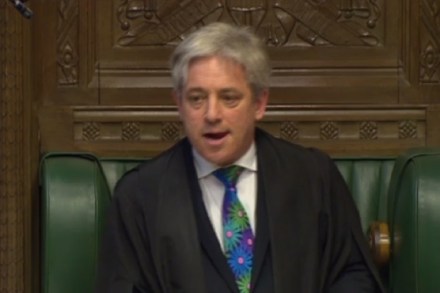
John Bercow hit out at Greg Hands for his 'long-winded, boring and unnecessary' answer in the Commons: Ken Livingstone said that his history of rebellions, as well as those rebellions orchestrated by Jeremy Corbyn and John McDonnell, proved they were right: The former London mayor also said Labour was 'completely out of kilter with the membership' and that it was time for Labour MPs to come to terms with Corbyn: George Osborne had a dig at Labour's appointment of Yanis Varoufakis.

Sadiq Khan threatens crackdown on Uber, saying allowing its taxis was a ‘mistake’

From our UK edition

The worldwide Uber debate is quite helpful in that it forces politicians to answer a simple question: are you for the people, or the vested interests? Sadiq Khan, the Labour candidate for Mayor, declared his hand today in an LBC phone-in. Challenged by a (Scottish) black cab driver about his views on Uber, he said: There are almost 100,000 private hire vehicles in London. Over the last three years there has been, roughly speaking, a 10,000 increase in the number of private hire vehicles. The black taxis are now as low as 23,000, for the first time in a generation, there are fewer people doing the knowledge. And I’m afraid the mistake was made a couple of years ago when TFL allowed the Uber taxis to come on stream. Why are there so many more private hire taxis?

Why the greatest innovations do only one thing, but do it well

From our UK edition

McDonald’s got rid of cutlery. Uber does not allow you to pre-book taxis. Amazon began by selling only books. Conventional logic would suggest that successful innovations are best when they allow you to do lots of things. Actually, if you want your innovation to change behaviour, it is often best to launch an innovation which does only one thing. It is much easier to adopt a new technology if its function is unambiguous. The device solves one simple problem, and solves it very well. If X then Y. I have never had much luck with multi-purpose kitchen devices. Although theoretically they have a plethora of different uses, their application is so vague that you end up not using them at all. You may have a microwave which also contains a grill function. Have you used it more than twice?

Not all Uber drivers are Islamists, just like not all London cabbies are John Worboys

From our UK edition

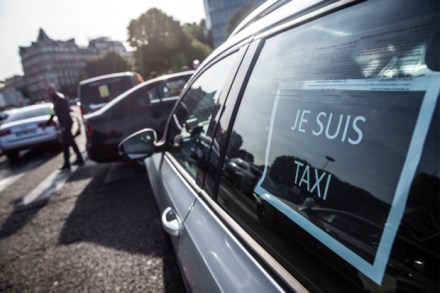
Uber aren't going to be thrilled to hear that Muhaydin Mire, the man who has been arrested on suspicion of knifing a man at Leytonstone station, while shouting 'This is for Syria', was reportedly one of their drivers. On social media, London cabbies have already started to capitalise on this, by making the case that you're better off sticking with them if you want to avoid catching a ride with a jihadi. A new hashtag is currently doing the rounds: #HeWasAnUberDriverBruv - and the Licensed Taxi Drivers Association has been quick to adopt it, while also wondering how many more 'TFL licensed terrorists' are out there.

I have no sympathy for people who complain about ‘sharia Uber drivers’

From our UK edition

Actress Frances Barber has complained about her taxi driver after a night out in town, tweeting: https://twitter.com/francesbarber13/status/668598758473654272 The man had allegedly told her she was ‘disgustingly dressed’ and that ‘women should not be out at night’. This was after she had remarked about the weather being cold. That’s the problem with liberalising the taxi market to let any random person drive you around – it reduces the level of trust. As Rory Sutherland explained in this magazine a couple of years ago, trust is extremely important to capitalism and that’s why having hurdles such as the Knowledge is necessary: ‘Reciprocation, reputation and pre-commitment are the three big mechanisms which add to trust.

Technology podcast special: the disruptive impact of digital innovation

From our UK edition

This podcast was sponsored by King and Wood Mallesons. Is technological change a good thing for the British economy? In this View from 22 special podcast, The Spectator's Fraser Nelson discusses the disruptive impact of new technologies with Julian David, CEO of Tech UK, Andrew Pinnington, CEO of Hailo and Rob Day, a partner at King and Wood Mallesons. What does digital innovation look like and what can businesses do, if anything, to prepare for it? How is the British economy coping with the speed of technological changes through new innovations like Uber and Airbnb? Which industries have struggled the most to cope with new innovations? And are big or small businesses most likely to suffer from disruption?

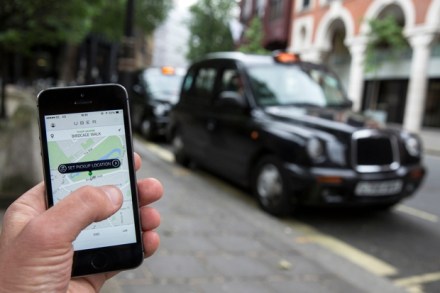
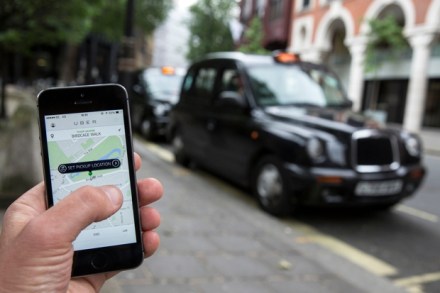
Uber is useful, convenient and safe. How can TfL justify cracking down on it?

From our UK edition

Oh, Transport for London. How could you? That was my reaction when I read the plans to crackdown on Uber in the capital. And it seems over 80,000 people agree with me, judging by a petition that was launched on Tuesday. For a city which is meant to be the centre of global commerce, with Boris Johnson who supposedly loves markets as its mayor, London really isn’t doing too well. First the night tube service, which was meant to start on the 11th of September, got delayed thanks to pressure from the unions, and now Transport for London (TFL) is protecting taxi drivers from innovation and competition.

Cabbies storm London City Hall over Uber row

From our UK edition

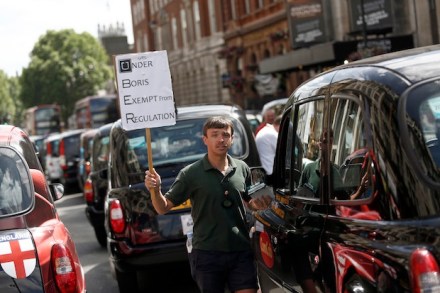
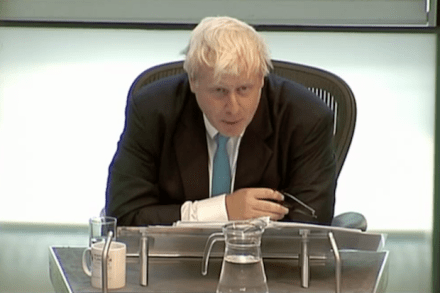
Boris Johnson’s war with black cab drivers stepped up a notch today. His monthly Mayor’s Question Time session was abruptly shut down after cabbies packed out the public gallery of London City Hall to protest about what they see as Transport for London’s unfair regulations for Uber. As the video above shows, Johnson’s description of the cabbies as ‘Luddites’ did not go down well at all and the London Assembly's deputy chair decided it should end. Steve McNamara, general secretary of the Licensed Taxi Drivers' Association, has told the Evening Standard Boris's ‘Luddite’ was to blame, saying it was not ‘the smartest of moves but it escalated out of all proportion’.