Uber

E-scooters are a wretched species to be introduced into the urban ecosystem

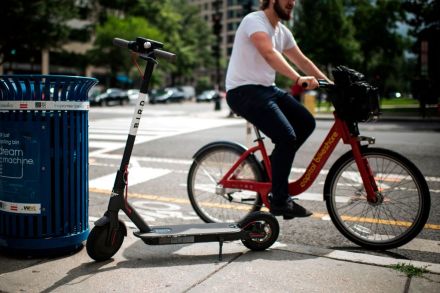
Scattered along the streets of Washington DC are electric scooters. Most have four-letter names: Bird, Lime, Skip, Jump, Bolt. Using one for the first time, you may prefer to employ another four-letter word. I know I did. My first taste of the e-scooter phenomenon was on a visit to Los Angeles in February last year. The Santa Monica company Bird had been up and running for only five months, yet already its scooters were all over the city, like avian excrement. Students at UCLA embraced the Birds. Nobody seemed fazed by the undeniable fact that you cannot look cool on a battery-powered two-wheeler. The epidemic then spread to other American metropolises: Atlanta, Minneapolis, Miami. New York has so far held out, but will likely soon fall.
e-scooters

Diary – 25 April 2019

From our UK edition

The best moment of my Easter ended up being an impromptu debate with the delightful comedian Sarah Millican about the concept of ‘the ideal Easter egg’. If memory serves, Sarah may have preferred the large eggs with extra chocolates inside. I prefer the opposite — small, delicate ones with no extra treats. I hope my preference won’t be seen as another stereotypical middle-class protest against greed and excess… I was asked to be a judge of the Churchill Awards, which celebrate the societal contributions of the over 65s. At first I thought it must be a mistake. Don’t you have to be old to do that? Then I checked. I am old. At the winner’s lunch at Claridge’s, Miriam Margolyes’s first words to me were ‘I’m hungry’.

Diary – 19 July 2018

From our UK edition

It was blessedly cool inside the Romanesque nave, its massive arches resisting the heat as they had done everything else that history had thrown at them in the past thousand years. Through the great west doors, which had been left open for ventilation, I could glimpse the ruins of the adjacent Norman castle, bleached white by the intense sunshine. In front of me were the serried ranks of prep school pupils at their speech day and I was presenting the prizes. The boys were in blazers; the girls in boaters and the staff were gowned. The head opined sensibly and the dean prayed. The organ thundered; the choir sang exquisitely and the soloist soared with that fragile, plangent beauty of the boy treble. It was quintessential England.

How tech lobbyists harness the power of grassroots activism

From our UK edition

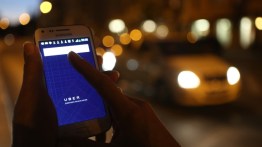
A strange thing happened after TFL’s decision last month not to renew Uber’s license to operate in London. The ride sharing app started a petition on the website change.org. To defend the livelihoods of 40,000 drivers - and the consumer choice of millions of Londoners - sign this petition asking to reverse the decision to ban Uber in London. Thousands of stranded bus-shy Londoners rushed to sign, making it the fastest growing petition in the UK this year. (At the time of writing it’s reached 855 thousand signatures). And of course it was accompanied by the mandatory hashtag #saveyouruber, which was shared by the official Uber UK Twitter account. Big business has always used its clout and money to lobby.

Raising the threshold crappiness

From our UK edition

I love anything open late at night. Never mind ‘the sigh of midnight trains in empty stations’; even mundane activities like filling up with petrol become enjoyably Edward Hopperish after midnight. Often the places are so quiet you wonder why they bother opening at all. But it is a strange psychological fact that opening a shop 24 hours a day often pays, even if nobody ever buys anything between 1 a.m. and 6 a.m. Somehow the knowledge that the shop never closes means people are far more likely to shop there at conventional times. This quirk also explains why the most successful coach firm between Oxford and London runs services all night: not because people really want to travel between 2 a.m. and 5 a.m., but because they like to know that they can.

Disruptive companies like Uber are the lifeblood of the free market

From our UK edition

It has long been my understanding that innovative business entrants are the very lifeblood of our free market society. In recent months, however, you’d be forgiven for thinking this is no longer the case. Uber, Taxify, AirBnB, Deliveroo, Amazon, Google, along with many other modern innovators, have at times been treated like pariahs. Some of this criticism has been legitimate, with shortfalls in conduct or corporate culture rightly condemned. But much of the vitriol appears to be fuelled by those who have lost out to what is simply a more competitive and appealing business model.

Portrait of the week | 28 September 2017

From our UK edition

Home Jeremy Corbyn, the Labour leader, told the party conference that Labour was ‘on the threshold of power’. The party had been ‘war-game-type scenario-planning’ for things like ‘a run on the pound’, John McDonnell, the shadow chancellor, said at a fringe meeting. Mr McDonnell had delighted conference-goers by denouncing Private Finance Initiatives: ‘We will bring existing PFI contracts back in-house. We’re bringing them back! We’re bringing them back!’ But next day, Jon Ashworth, the shadow health spokesman, said: ‘It’s only a handful which are causing hospital trusts across the country a significant problem.’ Mr McDonnell also promised to renationalise rail, water, energy and the Royal Mail.

Barometer | 28 September 2017

From our UK edition

Lost in the post Postcard maker J. Salmon is to close after almost 140 years, because holidaymakers now send phone selfies rather than cards. — What is believed to be the very first postcard was a selfie of sorts. It was a caricature of postal workers that practical joker Theodore Hook sent to himself in Fulham using a penny black stamp in 1840, the year the penny post was introduced. — It was another 30 years before postcards were officially accepted by the Royal Mail, and the now standard design of a picture on the front, address and message on the back was established only in 1902. — Mr Hook’s card was sold at auction in 2002 for £31,750. Pay walls Which countries have the largest pay gaps between men and women, in a survey of 33 countries?

Uber was the ugly snowplough that cleared the path but its dominance is bound to fade

From our UK edition

An Uber insider tells me not to write off the ride-hailing giant too soon, because it’s a very smart company for all its faults — and because the numbers of drivers and users for whom it is part of daily life will make it difficult for Transport for London to uphold its licence withdrawal on appeal, so long as Uber makes gestures of humility. But the moral of the story, says my source, is that as a ‘tech disrupter’ invading a regulated sector, the company created by Travis Kalanick ‘relished the fight with governments and entrenched interests far more than was normal or reasonable’, rather than seeking to be part of the urban fabric through collaboration or partnership.

In banning Uber, London is fighting the future

From our UK edition

For the last ten months I have been working as an Uber driver in London. It is an amazing company to work for. Totally flexible, constantly innovative, fair and prompt in its payments. I’ve driven old people, youngsters, businessmen, drunks, choirgirls, cancer patients, a woman about to give birth, athletes (fit and injured) and visitors from every corner of the globe all over our great capital without any problem. It is a fantastic social enabler for anyone on a budget in the metropolis. And I’ve found it to be a perfectly fair and reasonable provider of income for self-employed, self-motivated people, such as myself.

Corbynistas fail to practise what they preach

From our UK edition

TFL's decision not to renew Uber's licence in the capital has gone down like a cup of cold sick with many Londoners – including a good chunk of the 40,000 drivers who will soon be out of work. However, over at Labour conference in Brighton, the decision has proved very popular. It's been praised at the fringe events, by Labour politicians and just today Tim Roache –  the General Secretary of GMB – has spoken at conference where he called on all Labour members to boycott the taxi firm. Alas Mr S thinks his words may have fallen on deaf ears. So far, several conference attendees trying to get an Uber to or around the centre have found themselves hit by a surge charge.

Jeremy Corbyn’s Uber memory lapse

From our UK edition

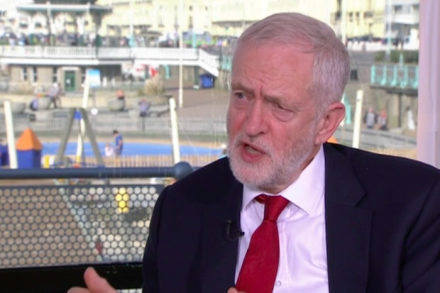
The Uber ban presents something of a dilemma for the Labour party. The decision by Transport for London not to renew the taxi company’s licence has angered the party’s young voters. Yet Labour politicians are inclined to side with the unions rather than those affected by the ban. But when Jeremy Corbyn was put on the spot on the Andrew Marr show today about whether he has ever used an Uber, he found the perfect way of dodging the question: AM: Have you ever taken an Uber? JC: ….I don’t think so. AM: You don’t think so? JC: I’m not sure but I don’t think so If Jeremy ever does remember, Mr S would be interested to know the answer...

The new test for true Corbynistas: do you support the Uber ban?

From our UK edition

Forget power to the people, today it's power to black cab drivers! Transport for London has announced that Uber will not be issued a new private hire licence, with London mayor Sadiq Khan 'welcoming' the decision. This means no more Uber in London – though the decision will be challenged in the courts. So, as 40,000 drivers worry about their income and 3.5 million Uber customers consider the effect on both their finances and travel plans, take heart that true socialists will at least be happy. Earlier this year, Labour's Rebecca Long-Bailey said using Uber isn’t morally acceptable – and today Paul Mason has crowned the decision a 'brilliant victory' for the Labour movement: https://twitter.

The Uber ban is a pitiful howl against a changing economy

From our UK edition

Eight days. That’s how long you have left to enjoy Uber if you live in the capital. Transport for London, a body that should really replace ‘for’ with ‘against’, says it will not renew Uber’s operating licence when it expires on September 30.  It’s a victory for the cabbie lobby, which cannot match the private hire app on price or convenience. How much easier to hector government into shutting down the competition. It’s a win, too, for fans of over-regulation, who have been out to get Uber for some time now. They are aficionados of rigidity and Uber was frustratingly fluid, its business model less susceptible to the impositions dreamed up by restive bureaucrats.

Sadiq Khan has kowtowed to the protectionists over Uber

From our UK edition

Let’s face it, the decision today by TfL not to renew Uber’s licence to operate in London has not come about ultimately as a result of genuine concerns over passenger safety. It is a protectionist move to promote the business interests of London’s black cab drivers and to satisfy the unions and other left-wing activists who have latched onto Uber as a cause célèbre in their efforts to stamp out flexible ways of working. I don’t know much of what goes on the back rooms of Labour party HQ but it is fascinating that the decision has come to be made on the same day that it was announced that the Mayor of London, Sadiq Khan, will be speaking at next week’s Labour party conference after all.

Without Uber, London will be a more dangerous city for women

From our UK edition

Transport for London has decided it knows what will keep me safe better than I do. The transport regulator has today refused to reissue Uber’s private hire licence, on the basis of 'public safety and security implications'. Let me tell you about security implications as a woman in London. If I come out of a club or bar in the middle of the night, I do not want to be hanging around alone on the pavement for half an hour while my minicab fails to materialise, engaged in a frustrating negotiation with the operator about where exactly my driver is. I don’t want to trawl the streets in the hope of finding a black cab to hail down, only to be told my zone 3 address is too out of the way for them.

What the papers say: the hard left’s hatred of Uber is an excuse

From our UK edition

The likes of Uber and Deliveroo are shaking up the jobs market in such a way that one of Theresa May’s first acts as Prime Minister was to commission a report into the future of work. Yesterday, as the PM opted for a much-needed relaunch, that report came out. The likes of Rebecca Long-Bailey, the Labour frontbencher, made their minds up quickly: the report was a missed chance and we shouldn’t use companies like Uber until they clean up their act. Here's what the papers had to say: We should feel ‘lucky’, says the Sun sarcastically, that ‘Labour’s preachy politicians’ are leading us on the path ’towards the high moral ground of the hard-Left.

Rebecca Long-Bailey: Using Uber isn’t morally acceptable

From our UK edition

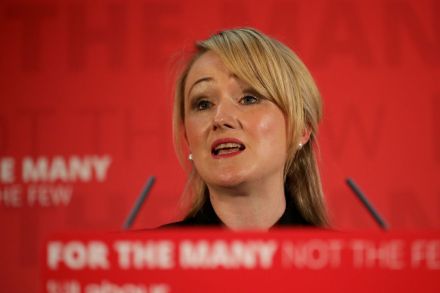
Thinking of hopping into an Uber today? Think again. At least that's the message from Labour frontbencher Rebecca Long-Bailey. The Corbynite MP - who has been widely tipped as a possible successor one day to Jezza - said she doesn't use Uber because she doesn't think it's 'morally acceptable' to do so. Here's what she told Nick Robinson this morning: I don't personally use Uber because I don't feel that it is morally acceptable but that's not to say that they can't reform their practices. Rebecca Long-Bailey says she doesn't use Uber because she thinks it is "not morally acceptable" #r4today pic.twitter.com/NI2NnhBgH8 — BBC Radio 4 Today (@BBCr4today) July 11, 2017 Mr S.

Shadow business minister admits to using ‘morally wrong’ Uber

From our UK edition

Oh dear. This morning, Rebecca Long-Bailey risked alienating the three million people who use the Uber taxi app, when she said that it was 'morally unacceptable' to do so. While the shadow business secretary cited concerns with the gig economy as her reason for doing so, it seems not everyone in her team agrees.

Does Emmanuel Macron represent the ‘Uber-isation’ of politics?

From our UK edition

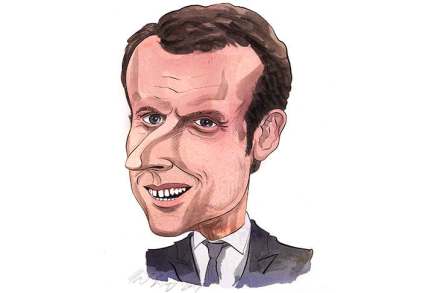
A French friend tells me that Emmanuel Macron represents the ‘Uber-isation’ of politics. I suppose that makes Le Pen the spokesman for the black cab interest. I want to live in a country which manages a modus vivendi between these two schools of thought. If life is all Uber, it will be freer and cheaper, but also more ignorant and grotty. If life is all black cabs, prices will be too high and cabbies will revert to the surlier service they used to give in the 20th century. Perhaps such peaceful coexistence is an impossible dream.