Uber

Powder to the people

From our UK edition

It’s Notting Hill Carnival this weekend. Two days of skanking, dutty dancing and daggering (the dance, rather than the weapon). No carnival experience would be complete without rum punch and jerk chicken, or for that matter crime, cannabis and cocaine. Drugs are part of the fun at Europe’s biggest street festival. There were 76 drug arrests at the festival last year, and 88 arrests made before the party even started as part of a dawn raid seizing machine-guns and crack. Not that partygoers are about to let a little thing like the law get in the way of their bank holiday. A survey earlier this summer from the European Monitoring Centre for Drugs claimed London is the city with the highest concentration of cocaine in sewage in Europe.

Could a row with Uber be taxi for a London mayoral candidate?

From our UK edition

One of the striking things about the contest in Labour for the mayoral candidacy is how many of the candidates are keen to admonish private taxi firm Uber. Sadiq Khan has described it as a ‘problem’ and said he is ‘on the side of the back cab driver’, Tessa Jowell is ‘enormously concerned’ and doesn’t have an Uber account, while David Lammy wants to ‘protect the institution that is the black cab’ and wishes there had been a confrontation between the Mayor and Uber as there had been in Paris. But perhaps these candidates should take heed of what has happened to another mayor who confronted Uber. Bill De Blasio picked a fight with Uber in New York earlier this year, and lost.

My hope for Uber? That something better overtakes it soon

From our UK edition

I’m as irritated by Uber as the French seem to be — though I wouldn’t go as far as they did last week in arresting the ride-sharing company’s managers. Uber has hit official resistance everywhere from Johannesburg to São Paulo; but a disruptive free-market technology so readily adopted by users that its name has entered global language is bound to win the argument in the end. The only question is whether it will be overtaken by something better. I certainly hope so. Deep in Clapham, a fellow dinner guest offered to call ‘an Uber’ to take us back north of the river. Sure enough, a scholarly-looking fellow with a clean car was there in moments. So far so good — until the driver said: ‘You go to Birmingham, yes?

Good and bad politics: the Budget against a backdrop of Greek chaos

From our UK edition

George Osborne’s Budget was good politics: not so much in terms of tactical point-scoring, though there was plenty, but in terms of striving for big objectives of fiscal rectitude and wider prosperity by incentivising sensible economic behaviour and discouraging casual reliance on the state: ‘a country that backs those that work hard and do the right thing’, in David Cameron’s phrase. Some of it will provoke rage, some of it will swiftly unravel, but it was a real attempt to steer the UK in a positive direction. How sad that it had to be presented against the backdrop of the Greek crisis, which is the most howling concatenation of bad politics so far this century.

Jemima Goldsmith: my Tinder has ‘loads of Pakistanis and people with beards’

From our UK edition

Jemima Goldsmith's love life has been well documented by the red tops in recent years, with her former loves including Imran Khan and Russell Brand. So Mr S was pleased to hear that - in the name of research - she has been adopting a new approach and experimenting with the dating app Tinder. Goldsmith took to the stage at Vanity Fair's digital summit to conduct a Q&A with the app's founder Sean Rad. Things started off politely with Jemima, who is the sister of Zac Goldsmith, quizzing Rad over why he had come up with the idea for the app, which has over 50 million active users: 'I think meeting people should be fun. The ultimate aim is to be the place you go to when you want to meet somebody new and sort of make these connections.

That’s not a ‘sharing economy’: that’s an invitation to sell your whole life

From our UK edition

Technology businesses have a genius for inflicting indignities on us and spinning them as virtues. When they don’t want to respect copyright, they talk about the ‘democratisation of content’. When they want to truffle through our contact lists and browsing histories, they talk about ‘openness’ and ‘personalisation’. A hundred years ago, when a widow had to take in lodgers to pay the bills, it was called misfortune. Today, when an underemployed photographer has to rent out a room in his house or turn his car into a taxi, it’s called the ‘sharing economy’. First Google took his job. Now Airbnb wants his house. Next they’ll be after his pets. In fact, they already are.

Podcast: Cameron’s second coalition dream and the problems of the sharing economy

From our UK edition

David Cameron is secretly planning for a second coalition, according to the new Spectator. In this week’s View from 22 podcast, James Forsyth and Miranda Green discuss the possibility of another Conservative-Liberal Democrat coalition after the general election. Would it be more difficult than it was five years ago to strike a deal? Will the Conservative party back Cameron if he falls short of a majority and decides against a minority government? And why is 30 MPs the magic number for the Liberal Democrats to enter into another coalition? Fraser Nelson and Alex Massie discuss our interview with Alex Salmond and his plans to hold Ed Miliband’s feet to the fire.

The joys and sorrows of two-way ratings systems

From our UK edition

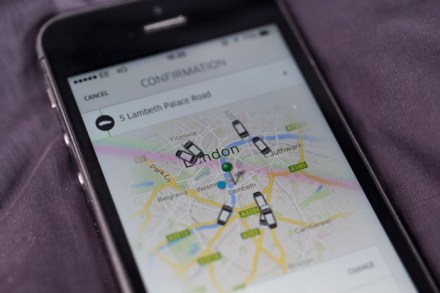
‘J’ai failli attendre’ — ‘I almost had to wait’ — allegedly said by Louis XIV when his carriage drew up just a few seconds before he reached the bottom of the palace steps. Pathetic, I know, but I try to re-enact this moment with taxi booking apps: I watch the car approach on the map on my phone, then time my departure to emerge from the building exactly when the car pulls up at the kerb. It is a moment of synchronicity which delights the trivial mind — in the way many men enjoy timing the flushing of a lavatory so that the end of the flush coincides with the last moment of micturition. But there is now another reason to do this: to avoid keeping the driver waiting.

Dear Mary: How do you stop someone wearing leather trousers to work?

From our UK edition

Q. My husband employs an ageing rocker in his shop. She is highly efficient, and is an extremely nice woman. Our problem is that she will insist on wearing leather trousers to work and the noise is driving my husband mad. She is not the type to complain of harassment but how do you suggest he approach this delicate issue? — Name and address withheld A. In the early days of rock, it was thought that there was no better vehicle with which to display a good figure than leather trousers. The modern alternative — as worn by photographer Lady Brocket — are leather-look trousers, often with a waxed ingredient. They look like leather but are noise-free and with none of that distinctive leather smell. They are also resistant to pouching.

Yes, Wonga lent at shocking rates – but it was customers who lied

From our UK edition

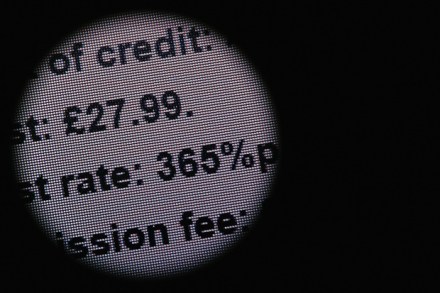
‘Payday Lady is not trading at this time,’ says her website, sounding a little like La Dame aux camélias. Indeed (since I could not find her anywhere) the message may indicate that Payday Lady is not just temporarily indisposed, but has given up the game altogether. I’ll be glad to hear from her if she hasn’t. Meanwhile I can report that her rival Cash Lady (who promises she’ll be ‘here to help you’ within three minutes) was still out there — despite having her television ads banned last year — and so were Purple Payday, Pounds to Pocket, Peachy Loans, PayDay Pig and CashCowNow, all at colossal ‘representative APRs’ that look relatively cheap compared with Wonga’s notorious 5,853 per cent.

Ever wondered what goes on in those green sheds you see around London?

From our UK edition

You know, those mysterious huts that allow entry only to cab drivers? I used to fancy they were cover for a network of underground bunkers where cackling taxi drivers plotted world domination and new ways to fuck up traffic at the Nag’s Head. One day, I vowed, the truth would be outed. This was how I ended up attending a mass sing-along at the cabbies’ hut in Russell Square. It was part of something called the ‘Cabbies’ Shelter Project’, organised by some very nice people who’d obviously been wondering the same thing. No subterranean tunnels were in evidence. Just a kitchenette, the all-pervasive stench of bacon fat and a cabbie called Mark Bird hammering out a knees-up on a keyboard. Joe le Taxi he wasn’t, let alone Travis Bickle.

Video: London cabbies, Über alles

From our UK edition

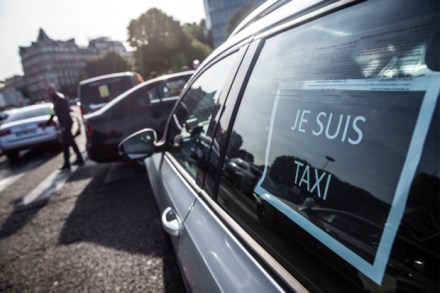
What's upsetting London cabbies? Is it really that Transport for London aren't fairly implementing the special privileges awarded to Hackney Carriages, or are they simply against a bit of healthy competition? According to some, it's all Goldman Sachs' fault, but can the iconic London taxi stem the tide of technological change forever? We sent The Spectator's intrepid Harry Cole down to the frontline of Wednesday's London taxi protests, conveniently located outside of 22 Old Queen Street, to find out more.

Uber is for Londoners. Black cabs are for tourists

From our UK edition

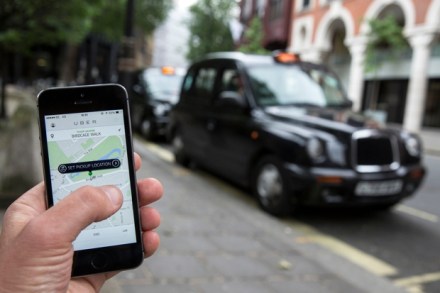
Black cab drivers are striking in London today because they are angry that Uber – a rival taxi service supported by Google – is undercutting their market. They will argue that Uber’s drivers are using a smartphone app to calculate fares, despite it being illegal for private vehicles to be fitted with taximeters. I couldn’t care less about the intricacies of this argument (the High Court can figure that one out). All I care about is getting home safely and it not costing too much. Uber offers me that. I’m wary of jumping into unlicensed minicabs. As those spooky tube adverts remind you, ‘If your minicab's not booked, it's just a stranger's car’. But with Uber, they are booked.