Uber

The subway deserves some respect

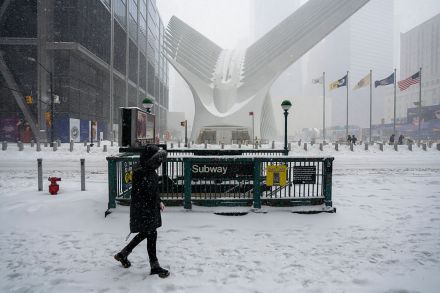
A few weeks before the end of the year, I was invited to a house party at which I had the misfortune of becoming embroiled in a conversation with a man I’ll call Joe, because his name was Joe and I don’t feel inclined to offer him the dignity of a pseudonym. There’s a theory I’ve corroborated since moving to New York in 2020. Every conversation at a party in this city eventually gravitates toward one of five subjects: traffic, the weather, real estate, sex or the mayor. The ultra-rich are among the subway’s most devoted riders Joe told me he works in finance (which he pronounced “fin-ants”) and it seemed he wasn’t bothered about the weather. He wasn’t a tax-optimizing Connecticut commuter, so had no unsolicited opinions to share about traffic.
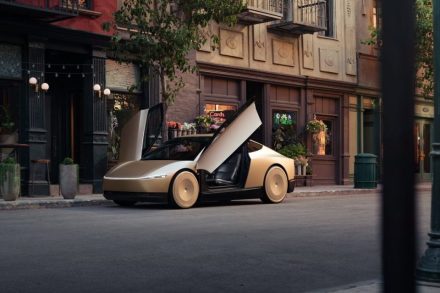
Tesla’s Cybercab promises a better future — for Elon Musk

Each year, more than 40,000 people die in car accidents — and most of them are caused by user error. Set aside drunk driving and texting and live-streaming while driving a McLaren in the rain; even in normal conditions, humans are just not, fundamentally, great drivers. So imagine a future without that; where death by car accident is a freak occurrence and driving is handled by expert computers instead. We don’t use elevator operators anymore and are glad for it — and autopilot systems have long made flights safer. Why not let computers drive us too? True “Level 4” autonomous cars wouldn’t just make commutes more pleasant, letting you read or sleep as your car takes you to work, but save many, many lives. I believe in that future.

tesla

Has America checked out of Airbnb?

Airbnb is in trouble. Nick Gerli, CEO of real estate consulting firm Reventure, reports, “The Airbnb crash is real,” along with a list of the top ten cities where the company’s revenue has collapsed. “Watch out for a wave of forced selling from Airbnb owners later this year,” Gerli forbodes. https://twitter.com/nickgerli1/status/1673774695693385728 Last month the Wall Street Journal reported, “Airbnb reported higher revenue and profit in the first quarter, but customers reserved fewer-than-expected stays and the company gave a mixed outlook for the second quarter, spooking investors.” And while Investors Business Daily this week forecast “a new, more promising comeback attempt” for Airbnb stock, murmurings of an “Airbnbust” are hard to ignore.

airbnb

Je suis Karen

As I creep into my mid-twenties something is changing. I’m not quite young enough to be carefree, I pay my bills and taxes on time and worry about the noise pollution level in the area I’m looking to move to. I’ve swapped my six-inch heels for practical sneakers, and I tut at teenagers causing a commotion on the subway. All of which led a friend to accuse me of becoming “something of a Karen.” The charge is a serious one these days. You see, Karen is no longer a playful term used to describe your entitled aunt who complains about slow service in a restaurant, flipping her asymmetrical bob in irritation. To call someone a Karen in 2023 is to wade waist-deep into the culture wars. At some point over the last few years, the word became more than a tongue-in-cheek jibe.

karen

The Karens of Uber get their DEI chief suspended

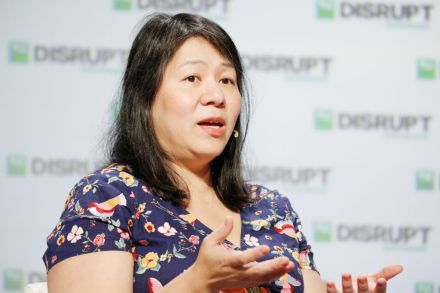
Karens are, to use a leftist term, “problematic.” In use as a pejorative for four or five years now, “Karen” appropriates a common Generation X girl’s name to refer to an entitled middle-aged woman who demands exceptional treatment, undeserved deference and unearned “privilege” to make her way through life or to express power through unwarranted concern for others. Karens are generally believed to be middle-class or slightly above, sport an unsmiling no-nonsense mien and favor a pert bob hairdo that stylists now routinely call the “speak-to-the-manager,” after a request Karens commonly make when they encounter disappointment.

uber bo young lee

Biden declares war on Lyft and Uber

The Biden administration’s Department of Labor recently released a new interpretive rule regarding whether workers are classified as employees or independent contractors. The action reverses a Trump-era rule that simplified the classification process, and was dedicated to preserving the gig economy. Employees are much more expensive than independent contractors — possibly by as much as 30 percent. This is, in part, because independent contractors are not subject to federal minimum wage or overtime regulations, among others, and are not protected by the National Labor Relations Act, meaning it is more difficult for them to unionize. This all may seem rather trivial, but the impact on both the consumer and the worker will be significant.

The United States of Uber

I’m getting into the backseat of an Uber in Washington, DC with a cup of coffee in one hand and a tattered, floppy cloth mask in the other. I’ll make a half-assed attempt to mask up! indulging the Democrats’ last gasps of Covid political theater, only on airplanes and in Ubers, and that’s just to avoid the hassle of getting banned if you don’t. My mask — I only own one — is about as snug as a Kleenex with too-wet noodles for straps. It covers my contagion holes for only a few moments at a time when the loose cloth rests on the tip of my nose. The struggle to keep it up for the duration of the journey is my own bit of theater. “Do you need to switch that mask out?” a flight attendant once asked me. “Oh, no, I could never do that.

uber

Back to the future

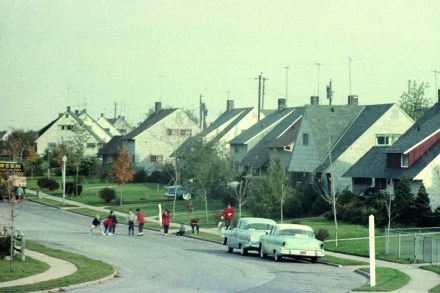
Will COVID-19 change society? If effective treatments and a vaccine are found, maybe not. After a bad year or two, the pre-pandemic status quo of dense cities, crowded subways and far-flung global supply chains might be restored, and the global plague might be forgotten as swiftly as the Spanish flu was in the subsequent Jazz Age. I don’t think so. I hope to be proven wrong, but I suspect the trauma will endure long enough to effect lasting changes in lifestyles and business models. In the United States and similar western democracies, the post-pandemic social order may seem more like that of the 1950s than the 2000s.

1950s

There’s no need to mourn the loss of Uber’s London license

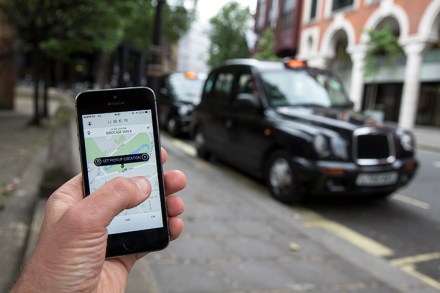
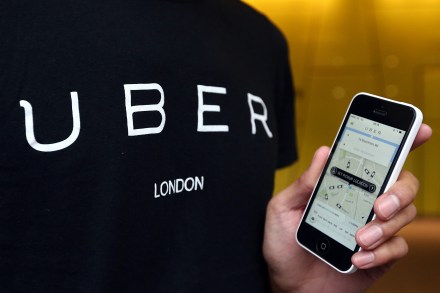
Early experiences of Uber in London did not encourage me to become a regular user. My first driver thought I wanted to go to Birmingham when the ride had been booked from Clapham to Mayfair. The next was a furious driver who would have seen off Lewis Hamilton at Hyde Park Corner. Call me old-fashioned, but I still prefer the pottering black cab with its opinionated Essex-dweller at the wheel and the possibility of paying in cash. So my own modus operandi is unaffected by Transport for London’s decision not to renew Uber’s license in the capital and I’m not in the least upset about it. OK, life today is all about apps, cashless convenience and the individual’s right to make choices and take risks.

uber

E-scooters are a wretched species to be introduced into the urban ecosystem

Scattered along the streets of Washington DC are electric scooters. Most have four-letter names: Bird, Lime, Skip, Jump, Bolt. Using one for the first time, you may prefer to employ another four-letter word. I know I did. My first taste of the e-scooter phenomenon was on a visit to Los Angeles in February last year. The Santa Monica company Bird had been up and running for only five months, yet already its scooters were all over the city, like avian excrement. Students at UCLA embraced the Birds. Nobody seemed fazed by the undeniable fact that you cannot look cool on a battery-powered two-wheeler. The epidemic then spread to other American metropolises: Atlanta, Minneapolis, Miami. New York has so far held out, but will likely soon fall.

e-scooters