Trade

India’s century: Sunak’s plan for a new Indo-Pacific alliance

When Rishi Sunak became Prime Minister, India’s press was thrilled. ‘From Age of Empire to Rishi Raj’ declared the Times of India: another headline hailed the ‘Browning Street’ phenomenon. ‘Indian son rises over Empire’, proclaimed the New Delhi TV channel, a play on the colonial-era adage that the sun never sets on Britain’s empire. When Sunak visits New Delhi for the G20 next week, it will be quite a moment. Two Hindu heads of government will meet – the old power and the new. Sunak’s agenda is to bind Britain closer to a growing Asian economic powerhouse – which last week completed its first successful moon landing – while containing China by bolstering its rivals.

The dollar is here to stay

From our US edition

Reports of the death of the US dollar as the world’s reserve currency are greatly exaggerated. Fortunately for America, while the dollar is by no means unsinkable, it will not be toppled anytime soon. Threats exist, but rather than coming from abroad, to paraphrase Lincoln, they spring up among us. How the US manages its economy will largely be the determinant factor in the dollar’s continued supremacy. Currently, the dollar makes up about 58 percent of foreign currency reserves worldwide, well ahead of its competitors. The next closest currency is the euro at 20 percent, and then the yen and pound sterling, both at about 5 percent — China’s renminbi is at a paltry 3 percent (just ahead of a real powerhouse, the Canadian dollar).

dollar debt

Why Britain will lose from America’s trade wars

Davos this year marked the start of a great economic divorce of the United States and Europe. Katherine Tai, the US trade chief, said that globalised capitalism is not working anymore. It leaves workers behind and gives fuel to populists, she said. Really, the Biden administration wants reassert US dominance in the world, and is using the country’s economic weight to do it. The Europeans, meanwhile, seem happy to become more protectionist too, with France’s Europe minister Laurence Boone calling the new US stance a ‘wake-up call’ and saying that Europe should respond in kind. Europe’s leaders are reacting to the reality that, with high energy prices, their manufacturing cannot remain competitive without tariffs.

Germany’s Faustian entanglement with China

From our US edition

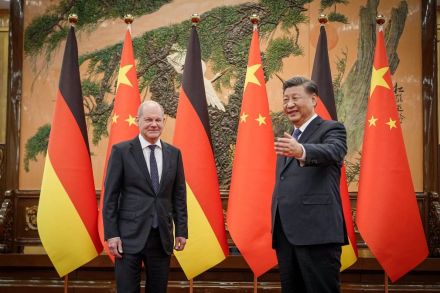
Back in November, German Chancellor Olaf Scholz met with Chinese Communist Party (CCP) chairman Xi Jinping. His visit to China was the first by a G7 leader in three years. Facing heated domestic and international pushback, Scholz framed his visit as an effort to “further develop” economic cooperation between Berlin and Beijing. In this context, such “further development” means further cementing Germany’s Faustian bargain with China, one in which European-based players, like Airbus and Volkswagen, claim immediate revenue — but at their long-term expense and at great strategic cost.

It’s time for the US to revoke China’s ‘normal trade’ status

From our US edition

In April 2022, six weeks after Moscow’s invasion of Ukraine, President Biden signed legislation to suspend Russia’s Permanent Normal Trade Relations (PNTR) status. “Revoking PNTR from Russia,” he said, “is going to make it harder for Russia to do business with the United States… The free world is coming together to defeat Putin.” PNTR status, also known as Most Favored Nation (MFN) status, is a designation granted among World Trade Organization members. Receiving nations are awarded all trade advantages that any other nation receives. Revoking PNTR status from Russia was a strategic move. It opened the door to deliver comprehensive economic strikes against Moscow and sent a clear signal to markets.

Manufacturing in the US shouldn’t be so hard

From our US edition

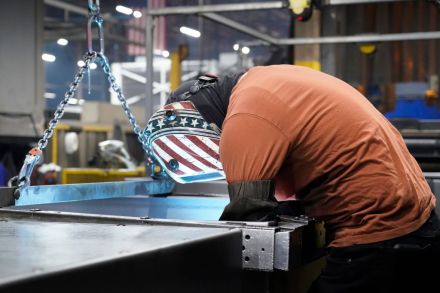
There’s an automotive parts manufacturer in my hometown. The company has grown over the course of its 19-year life, from around 20 employees two decades ago to 45 full-time employees today. Despite the dirty nature of much of the work, the facility is kept clean, open, airy, and bright. There are no shavings on the floor or fumes in the air. The men who weld, bend, blast, and powder coat the metal parts and send them to the warehouse for packaging and shipment do so energetically. “Honestly, [the work] is very satisfying,” the shop’s lead welder, Joe, told me during a recent tour of the facility. “I’ve always wanted to do things with my hands, and I’ve always enjoyed welding.

What Truss’s US trade deal U-turn is really about

Farewell to the UK/US trade deal. That's the news from Liz Truss's trip to the UN assembly in New York. The Prime Minister has told hacks on the flight over that the UK will not strike an agreement with America for many years. The former international trade secretary suggested that talks were unlikely to even start in the medium term: 'There isn't currently any negotiation taking place with the US and I don't have an expectation that those are going to start in the short to medium term.' The comments come ahead of her first proper meeting with Joe Biden since becoming Prime Minister. The former International Trade Secretary suggested that talks were unlikely to even start in the medium term Her comments have caused quite a stir back home.

Changing the Northern Ireland Protocol won’t break the law

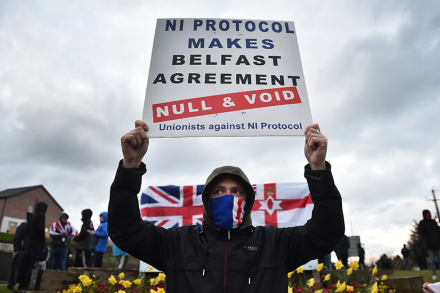
The UK is about to publish a bill that will override parts of the Northern Ireland Protocol. We are doing this unilaterally – the EU doesn't want us to do it, but we're going to do it anyway. Surely that means we’re about to breach international law? It's worth quickly going over why this is happening. The EU wanted to protect its common market, and no one wanted a border down the island of Ireland, so a trade border was placed in the Irish Sea. That has created trade friction between two constituent parts of the United Kingdom. Unionists are unhappy with that arrangement. And unhappy Unionists have led to the suspension of power-sharing at Stormont and therefore a problem for the Good Friday Agreement. So, the UK feels it has to act. But – ah!

An economy that’s good, not just efficient

From our US edition

After serving in World War Two and many years working in the dental supply business (sans a high school diploma), my grandfather made a decision as a husband and father of five young children: he went into business for himself. It takes guts to start your own enterprise, especially when it means leaving the relative safety and security of steady employment. My grandfather worked long hours. He recruited his children to help with all manner of odd jobs, such as cleaning the warehouse. With no retirement package to speak of, he might have worked into old age, except for a clever merger with another small business aimed at attracting the attention of a UK-based company that in time bought him out. I suppose you could say the global capitalist system worked for my grandfather…sort of.

No, Biden didn’t just snub Brexit Britain

For European Union enthusiasts, the ‘trade deal with America’ has joined ‘£350 million pledge on a bus’ as one of the great Brexit lies. A certain amount of gloating has therefore greeted the news that Joe Biden last night ‘downplayed’ the possibility of a US-U.K. Free Trade Agreement. It’s a ‘snub’, Brexiteer hopes are dashed, and so on. But did Biden actually ‘downplay’ anything? Not really, since nobody has been seriously playing up the possibility of late. Many journalists are today talking as if the Prime Minister had been hoping to announce with Biden the trade deal Donald Trump promised Britain in 2017. But Boris has been the one minimising the government’s hopes.

J.D. Vance: Biden is unwilling to secure the southern border

From our US edition

All eyes are on the flyover state of Ohio as the fight for the future of Trumpism unfolds. In January, Ohio Republican Sen. Rob Portman announced he was bowing out of politics for good. His vacancy has set up a rare primary between two candidates offering two different versions of Donald Trump's amorphous ideology. One believes the former president's rhetoric should assimilate with bygone Tea Party-era politics and contemporary culture war talking points. The other is running on the populist rollercoaster that slung Trump into the White House. Rust Belt boy wonder Josh Mandel, who served in the statehouse and was state treasurer for almost a decade, touts a pro-Trump campaign 'to protect the Judeo-Christian bedrock of America.

nationalist vance

Brexit is good news for Africa

Few who voted for Brexit were actually racists, much as those opposed to the project would like to have you believe. There were probably as many reasons as the 17.4 million people who voted to leave the EU. For example, I am an African-born British citizen who enthusiastically campaigned for Brexit, hoping that an independent United Kingdom would offer mother Africa a better future. Brexit should create an opportunity for Africa, not only to escape the crippling EU Common Agricultual Policy but also to trade itself out of the dehumanising poverty through equitable trade deals. Even the EU's supporters accept that the Common Agricultural Policy is a disaster for its southern neighbour.

The problem with linking trade deals to human rights

Trade deals are in the air post-Brexit, but not everybody is happy. In a speech this week Frances O’Grady, the TUC General Secretary, accused the government of not taking international morality into proper account when closing such deals. She demanded the government take steps to suspend trade deals with a number of countries that, according to recent research by the TUC, had a murky record on labour standards and human rights. By failing to do this and continuing to deal with these regimes, she said, the UK would be turning its back on workers everywhere and in addition demonstrating that it could not be trusted to observe decent standards at home.

Revealed: How the UK-Australia deal was struck

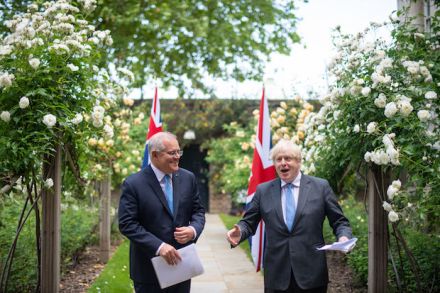
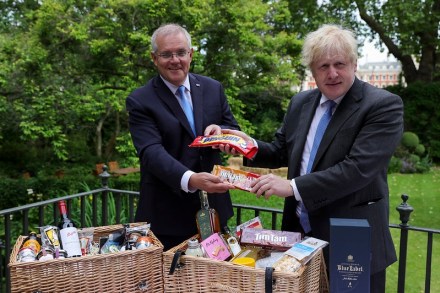
The basis of the UK’s first bespoke trade deal since leaving the EU was finalised with Australia over two dinners. One took place in the garden of the residence of the Australian High Commissioner to the UK, where guests were fed Australian lamb. The other in Downing Street where Welsh lamb was on the menu. They were menu choices that pointed both to what the deal would achieve – zero tariffs, including on agricultural goods – and the main point of contention in a negotiation that has spanned nearly a year since talks began last June. In that time, there has been a Cabinet row over protectionism on Australian meat imports and a diplomatic incident that nearly hampered the talks.

Has Covid turned us into a nation of cyclists?

On this day Would 19 July make a suitable ‘freedom day’ (assuming Covid restrictions are lifted even then)? There is an ominous warning from history. In 1919, 19 July was designated ‘Peace Day’, on which victory in the Great War would be celebrated with parades and banquets, three weeks after the signing of the Treaty of Versailles. In London 20,000 service men and women marched on a seven-mile route past the temporary Cenotaph. Many demobbed servicemen felt aggrieved, however, that so much money was being spent on celebrations when many of them were out of work and still without the housing they had been promised.

The real value of the Australia trade deal

If Britain had been unable to agree a trade deal with Australia, then Brexit really would have been pointless. The country is one of our greatest allies and we have no rational reason to fear its beef, its sugar or its people. A free trade deal, aligned with visa-free travel, ought to have been the easiest deal to do. A deal is now done, phasing in these freedoms over 15 years. But even this sluggish pace is too fast for the protectionists who are popping up. Some have predicted that our beef farmers will be ruined and the countryside laid to waste as our markets are opened to competition. Many of the claims revolve around the fact that just under half of the beef produced in Australia comes from animals treated with growth hormones — a practice banned within the EU.

The UK-Australia free trade agreement is a triumph

How significant is the UK-Australia trade deal announced this week during Prime Minister Scott Morrison’s visit to Britain? Well, Australia already has 17 genuine free trade agreements, including with the United States, Japan and China. But the free trade agreement with the UK is undoubtedly one of the highest quality agreements Australia has ever reached. In terms of the liberalisation of markets, it is only exceeded by the free trade agreement Australia has with New Zealand. This demonstrates something very important: that the UK, having left the European Union, is going to be a genuine champion of global trade liberalisation.

The political advantages of the UK-Australia trade deal

The UK government has agreed its first bespoke trade deal since leaving the EU. After Boris Johnson met with Australian Prime Minister Scott Morrison on Monday night, a deal has been agreed between the two sides. The deal on the table offers tariff free trade for all British goods, enhanced access for British tech companies and ought to make it easer for Britons under the age of 35 to travel and work in Australia. As for the Cabinet row over whether an influx of Australian meat could threaten the livelihoods of UK farmers, a 15-year cap on tariff-free imports has been agreed – though the specifics are yet to be published. The deal shows that free marketeers in government are still being heard So, what does this mean for the country?

How to fix the protocol

The blame game between London and Brussels over the Northern Ireland protocol obscures the fact that there are solutions waiting to be found. There are, as I say in the Times today, ways to reform the protocol and better protect the Good Friday Agreement while not threatening the integrity of the single market. Three changes would render the protocol far more acceptable Three changes would render the protocol far more acceptable and would better position it to withstand the undoubted pressures it will come under when the EU and UK start to diverge their regulations.  The first of these is a trusted trader scheme for food. This would allow registered suppliers to move goods — including, yes, sausages — from Great Britain to Northern Ireland without checks.

It’s time to revisit the Northern Ireland protocol

Britain has already seen two ‘Brexit days’ — when it formally left the EU on 31 January 2020 and the end of the transition period 11 months later. But given that it has taken less than six months for the Northern Ireland protocol to unravel, it’s horribly clear that our future relationship with the EU is anything but settled. The transport of sausages and other chilled meats from Britain to Northern Irish supermarkets may seem a trivial matter. But the attempt by the EU to enforce a ban on this trade demonstrates what so many people found problematic about the idea of an internal UK border down the Irish Sea. And it is surely a harbinger of battles to come.