Tracey emin

Tracey Emin at her most operatic

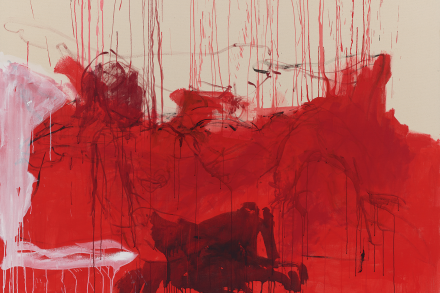
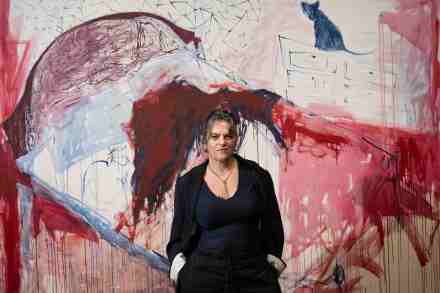
I feared this summing-up of Tracey Emin’s career might be self-congratulatory – biennale here, damehood there. But it’s Emin at her most operatic, facing mortality after surviving extensive surgery for bladder cancer in 2021. Blood and suffering are its subjects: the broken body, and the ascension of the spirit. The Young British Artists are getting on for 60, and Emin embraces it. Arranged in the centre of the exhibition is a ‘corridor to the afterlife’, inspired by an Egyptian tomb, dark and narrow. Along one side are sexy Polaroids she took of herself 26 years ago, along the other, gruesome hospital selfies. You might not want to look too closely

Tracey Emin’s victimhood is a poor foundation for art

It was a given that the critics would indulge in emotional onanism when they covered the Tracey Emin retrospective at the Tate Modern – apt enough when you consider the sexual content of so much of it. But what surprised me was that it wasn’t just women. For the art is almost entirely about Being Tracey: her abortions, her sexual abuse as a teenager by horrible men, her diaries, her cancer with pictures of the bloody stoma, her famous unmade bed, with its used condoms, granny slippers and teddy (it sold in 2014 for £2.5 million) and her death mask, which was done in life … obviously. That, you might have thought, would put

The joy of hanging out with artists

Lynn Barber is known as a distinguished journalist, but what she always wanted to do was hang out with artists. This book feels like a marvellous cocktail party, packed with the painters and sculptors Barber has interviewed over the years: Howard Hodgkin, Phyllida Barlow, Grayson Perry, Maggi Hambling. Sarah Lucas and Tracey Emin eye one another warily from opposite sides of the room; Salvador Dali’s ocelot weaves between the guests; everyone, naturally, is smoking. Lucian Freud is a no-show – though having refused Barber’s many interview requests, he did send a scrawled note explaining he had no wish to ‘be shat upon by a stranger’. Feuds and gossip are the

Neon signs have a curious power

In a corner of St Pancras station, Tracey Emin is always turned on. ‘I want my time with you’, a neon sculpture by the artist, has been on show here since 2018. It was part of the ‘annual’ Terrace Wires public arts programme, in which a new work is commissioned every year to hang from the station’s roof; but the pandemic distended time, and Emin’s words have stayed put. Though a new commission was unveiled yesterday, an installation by Shezad Dawood, that hangs on different wires, elsewhere in the terminus. Assembled from bright pink tubes, and shaped like Emin’s looping script, ‘I want my time with you’ looms over the grand

How the Beano shaped art

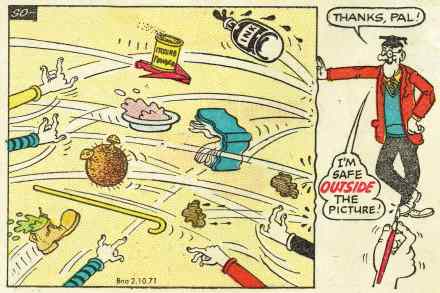
Superman and the Beano are both 83 years old. The American superhero first pulled on his tights for Action Comics No. 1 in June 1938. The following month, roughly 443,000 copies were sold of the Beano’s first issue, featuring Pansy Potter (the Strongman’s Daughter), Big Fat Joe, Wee Peem (He’s a Proper Scream) and, my personal role model, Lord Snooty. Not until Grand Theft Auto launched in 1997 has anything so culturally significant come out of Dundee. But there is a key difference between Superman and the Beano. While American heroes in general and Superman in particular uphold rules, the Beano’s success — its 4,000th edition in 2019 made it

Entertaining – but there’s one abomination: National Gallery’s Sin reviewed

Obviously, we’re living through an era of censorious puritanism. Granted, the contemporary creeds are different from those of the 16th century. But the imperious self–righteousness is much the same — which gives the entertaining little exhibition at the National Gallery entitled Sin an unexpectedly contemporary edge. Personally, I’ve always thought that the doctrine of original sin has a great deal of explanatory power (it explains why history can’t ‘end’ and plenty of things will always go wrong — because that’s the way people are). Arguably, the medieval list of deadly failings — anger, pride, sloth, etc — provides a better summary of human nature than many later attempts. At any