Tourism

We’ve lost our only anti-vaxxer friend in the village

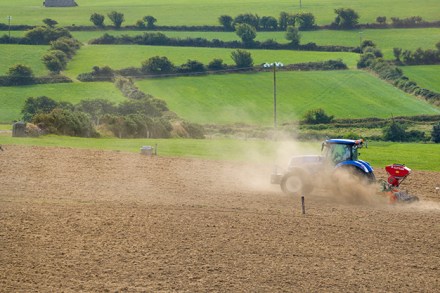
‘Can I go now?’ said the farmer I was talking to over my gate, and he looked so scared I felt a bit ashamed of myself. I had flagged him down as he went by in his rickety blue tractor that’s so old it looks like Noah used it to load hay onto the Ark. I told him I hadn’t seen him for a while. He usually waves or comes in for a chat. He has been our favourite neighbour since we moved to West Cork. As he owns the land above us where our water well is situated, that’s all to the good. We went out of our way to befriend him from the get-go, but after deluging him in home-baked fruitcakes and offers of dinner, for he lives alone, we realised he was our sort of person anyway.
What do the French see in Ireland?

As the eco-tourism season got under way, the confused-looking French people began to arrive. They come to see ‘la nature’, and they insist they don’t mind about the rain or the terrible food, or the fact you can’t actually access any of this nature because it’s all owned by strapping great Cork farmers who won’t let you near it. After a few days, their faces suggest they’re getting a tad disorientated, but they don’t want to admit it. First there arrived a very nice couple from a town in northern France where the builder boyfriend and I had one of our most memorable holidays together. As I served them their breakfast coffee, they asked where they could go for a walk, for they had tried in vain for days.

Americans think they want the ‘real Ireland.’ They don’t

As the first Americans of the season got out of their car I scrunched up my face and groaned. “They’re all like that, remember?” said the builder boyfriend. “What if the bed gives way?” I demanded. “How will they even fit in the bed?” The BB shrugged. “Who cares?” he said, with his usual sunny attitude. I don’t mean to suggest these people were overweight. I mean they were giants. I’m sure their depth was right for their height. There was just an awful lot of them, and we are not the Premier Inn, with super-king beds that sleep two medium-sized horses. She was in sportif wear. He was tousle-haired and bearded, dressed in a flowing shirt and baggy trousers.

ireland

Americans think they want the ‘real Ireland’. They don’t

As the first Americans of the season got out of their car I scrunched up my face and groaned. ‘They’re all like that, remember?’ said the builder boyfriend. ‘What if the bed gives way?’ I demanded. ‘How will they even fit in the bed?’ The BB shrugged. ‘Who cares?’ he said, with his usual sunny attitude. I don’t mean to suggest these people were overweight. I mean they were giants. I’m sure their depth was right for their height. There was just an awful lot of them, and we are not the Premier Inn, with super-king beds that sleep two medium-sized horses. She was in sportif wear. He was tousle-haired and bearded, dressed in a flowing shirt and baggy trousers.

In defence of museum charges

It occurs to me only now that I might have spent far too much time in France. Indeed, so familiar with Paris did I claim to be that, in 2023, I was contacted by an agency in need of someone who could conduct specialised ‘art tours’ for small groups of foreigners. Most of these clients were Americans, largely from the Midwest, but there was also a number of well-to-do Chinese and the odd Indian. They wanted much the same thing: they’d seen the Eiffel Tower and been ripped off on the Left Bank; they’d eaten at Lipp and some had even bussed out to grottier banlieues to get a real-life taste of La Haine. What they really wanted, however, was someone to hold their hand around the museums.

The day Peter Mandelson tried to get me sacked

Assuming it was full of junk, I tried to pull the trunk out of the way but I couldn’t move it, so I opened up the lid and gasped. Whenever the builder boyfriend is away I do battle with clutter. I’d gone through acres of horse tack in the boiler room and was now up the back stairs in the rabbit warren of rough-and-ready back bedrooms which haven’t been used since the last family, who also ran this place as a guest house, made their children sleep there to free up the nicer rooms.

Don’t bother visiting Rome

As a general rule, once a city erects turnstiles to tourist attractions which were once free to visit, it is time to go elsewhere. Never more so than in the case of Rome. Last week the Italian capital introduced a €2 charge to visit the Trevi Fountain. Tight-fisted tourists like me will still be able to see the Trevi from a distance – it happens to stand in a public street. The charge will be only for sad Instagrammers who want to get close enough to chuck their coins in the water. The city’s tourism department has suggested the fee is needed to manage the throngs of vacationers. Even then, God forbid, they won’t be able to take off their sandals and take a dip – that will earn them a €500 fine. Which raises the question: why bother visiting the fountain at all?

rome

Has Ireland’s tourist board just killed my Airbnb?

The estate agent said that they would send someone round tomorrow and I had to calm them down. Come in two weeks, I told them, because the builder boyfriend is still painting the hallway with the yellow paint I don’t much like any more because it’s taken so long. The new laws leave us paranoid about having anyone step foot in our house for longer than three weeks They love selling these old country piles in Ireland because they change hands so often it’s a licence to print money – not for the owners, but for the agents who keep selling them year after year, after the owners have not been able to afford to keep them going. Usually, it’s the lack of plumbers and tradesmen, but now there is another problem.

Hell is other tourists in Antarctica

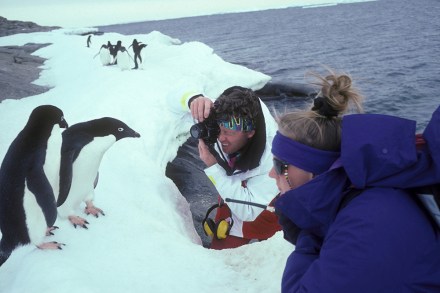
My first love was a penguin. Pengwee was an adorable brown and white emperor chick who had my heart and broke it the day he dived into the bath. After a week in the airing cupboard he smelled of fish – surprising in a soft toy. But then penguins are surprising. Towards the end of the Cretaceous period, 65 million years ago in Zealandia, a fragment of the Gondwana supercontinent, penguins waddled off along their own evolutionary path. Other birds flew through air; penguins flew through water. Natural selection pi-pi-pimped up the penguin (sorry) to astonishing specialisation. Hunting in black oceanic deeps, many species can see in ultraviolet.

Vegas’s seedy soul will save Sin City

From our US edition

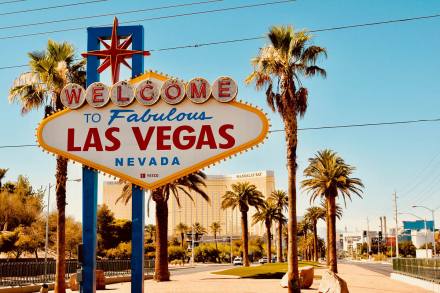
I vividly remember the first time I saw Las Vegas. It was decades ago, and a friend and I did the classic LA-Vegas mini-road-trip, across the burning desert, arriving in Nevada around dusk. As we crested the final sandy hill, I saw this thing. This glittering neon jewel-box of a city, glowing in the twilight. I fell in love at once, a love that was only confirmed when we actually entered Vegas, and I realized I was motoring down Hugh Hefner Way.That love didn’t quite last, however. Not long ago I returned, and something felt very different. Sadder, somehow. Yes, I was shown a Damien Hirst-designed bedroom with a fridge full of diamonds, but I also saw too much druggy homelessness, and too many stickers that gave me a shock.

Vegas

Plastic-free paradise

From our US edition

“Welcome to Wayanad. From here, all plastic is banned.” Prasanth was on a mission, belly pressed to the carpet of his car, legs sticking out on the roadside. He emerged triumphant, brandishing a forgotten Coca-Cola bottle and carrier bag before starting the ignition. Crossing into the high-altitude, hilly state of Kerala, he pulled up at a designated recycling spot.  Ephemera rained out of my upturned tote bag upon strict instruction to hand over any plastics. At Wayanad’s border, two impassive security guards eyed my friend and me as we instinctively sank back in our seats. A regular driver for tourists, Prasanth shrugged off the routine check, pointing to a sign as we were waved on.  “1,000 rupees fine! See?

india

Owen Matthews, Bijan Omrani, Andrew Hankinson, Laurie Penny & Andrew Watts

29 min listen

On this week’s Spectator Out Loud: Owen Matthews says that Venice’s residents never stop complaining (1:11); Bijan Omrani reads his church notebook (7:33); Andrew Hankinson reviews Tiffany Jenkins’s Strangers and Intimates: The Rise and Fall of Private Life (13:54); as 28 Years Later is released, Laurie Penny explains the politics behind Alex Garland’s film franchise (18:25); and, Andrew Watts provides his notes on Angel Delight (25:09). Produced and presented by Patrick Gibbons.

News from a small island: Theft, by Abdulrazak Gurnah, reviewed

In 2021, the award of the Nobel Prize in Literature made Abdulrazak Gurnah the world’s second-best-known Zanzibari – after a certain Farrokh Bulsara, aka Freddie Mercury. Forgive the flippant comparison, but the pop world’s perplexity over Queen’s vocalist’s origins feels germane to the quest for a coherent self and story undertaken by the Nobel laureate’s chief characters. Born in 1948, in what was still the ancient, British-protected sultanate of Zanzibar, Gurnah has, over 11 novels, done more than explore ‘the fate of the refugee in the gulf between cultures and continents’ (as the Nobel citation primly put it). His fiction shows that the shocks of power and history can make an exile of anyone, even in our home and in our skin.

NFL in DC is the ultimate lefty YIMBY-NIMBY showdown

From our US edition

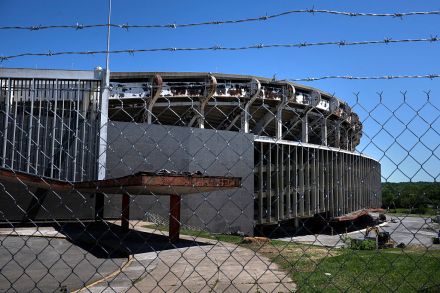
A pair of announcements by the National Football League in collaboration with Washington, DC has local citizens more excited than ever about football’s future in the capital city – but it’s also attracting opposition that stands to create a YIMBY versus NIMBY showdown on the left on the biggest national stage.  For YIMBY futurists on the left, whether you’re talking about Ezra Klein’s and Derek Thompson’s abundance agenda or Matt Yglesias’s dreams of a billion Americans, the possibility on offer by the NFL and the Washington Commanders seems ideal to achieve great things for the city.

Tokyo drift: Japan’s once-pricey capital is now cost-effective… for Americans

From our US edition

I spent my last afternoon in Tokyo stocking up on snacks and feasting on cheap and delicious conveyor belt sushi, in anticipation of characteristically criminal airport concession prices. But when I made my way past Haneda Airport’s Rodeo Drive-esque esplanade of luxury shops — does anyone really buy a $10,000 Omega watch on their way to their gate? — I was in for a surprise. Bottles of water, iced tea and other soft drinks were less than $1 in airport vending machines, just like everywhere else in the country. I wasn’t hungry, but when I realized that I could buy a plate of yakisoba with shrimp, pork and squid for the yen equivalent of $6 and six takoyaki (essentially balls of fried octopus) for $4.75, I ordered both.

Tokyo

How cartomania captivated even Queen Victoria

The wife of the Victorian photography pioneer Henry Fox Talbot called his first cameras ‘mousetraps’: little wooden boxes that were designed to capture anything placed before them. Yet most of Fox Talbot’s earliest photographs do not show living bodies at all. Long exposure times meant that the faintest twitch on a sitter’s face would dissolve it into a foggy blur, so instead he trained his lens on objects like shells and books, creating whole new collections he could reproduce in ghostly black and white. Preserving the images of dead children in an album, like dried flowers, meant that they could remain little forever Within a few years numerous other photography enthusiasts would follow his lead.

Tourists are the new pariahs

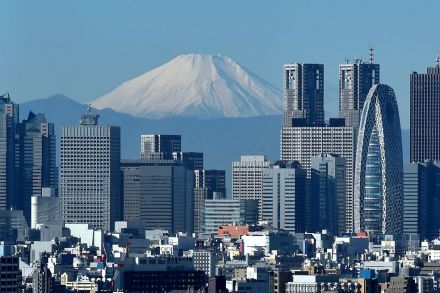
Think of Majorca and what do you picture? Maybe it is elegant tapas bars in the Gothic quarter of Palma, full of yachties and foodies from across the world. Maybe it is literary pilgrims trekking to the house of Robert Graves or noisy parties of Brits and Germans, squabbling over sunbeds in Magaluf. In one Japanese town, residents have erected a screen to block a much-prized view of Mount Fuji Any which way, what you picture is tourists. Lots of tourists. So many tourists that the reality of Majorca as an authentic place is quite obscured, invisible under the weight of visitors. And if you think that sounds bad, so do the Majorcans, which is why they are finally – perhaps belatedly – rebelling.

How dangerous is it to fly by helicopter?

Crime without borders How many nations are signed up to the International Criminal Court? – 124 signed the Rome Statute in 1998 and ratified it. – 31 have signed it but never ratified it (includes Iran, Thailand, Ukraine). – 2 (Philippines, Burundi) ratified it but have subsequently withdrawn. – 4 signed the statute, never ratified it and have since withdrawn (US, Russia, Israel and Sudan). – 41 have never signed (including China, India, Turkey).  Chopper cropper How dangerous is it to fly by helicopter as opposed to fixed-wing aircraft? It is hard to find comparable global statistics, but the National Transport Safety Board keeps figures for the US: – In 2022 there were 7.2 accidents for every 100,000 hours flown by helicopter, of which 1.

Loving Las Vegas

From our US edition

After ten hours of flying and too much bad airplane coffee, the beef carpaccio from 8 East at the Circa casino was ecstasy. Topped with potato chips, served with drops of citrus-infused wasabi crème, it would have been fabulous anytime. But nursing a cold Sapporo, stoned on exhaustion and discombobulation, I shivered in delight with every bite. Just a single piece would have been worth the flight. It was my first time in Las Vegas — my first time in the States — and I was hoping to write a meaningful story about a too-much written about place.

Vegas
Galápagos

The Galápagos evolution even Darwin didn’t foresee

From our US edition

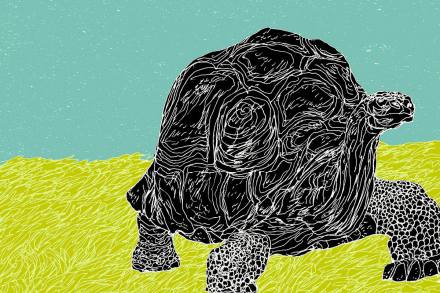
Lonesome George, a Pinta Island giant tortoise, spent the latter half of his hundred years munching on cacti and roaming around the Charles Darwin Research Station on the Galápagos island of Santa Cruz. He borrowed his name from the 1950s American comedian and actor George Gobel and one of the three B-52 Stratofortresses that completed the first non-stop jet circumnavigation of the world in 1957. But the name was ultimately more fitting for the tortoise who was the last of a million-year-old species. In 1959, fishermen introduced three goats to Lonesome George’s home of Pinta Island, one of the smallest islands of the Galápagos archipelago. Just ten years later, they had multiplied to around 40,000.