Theresa may

There’s more to Boris’s ‘mugwump’ insult than meets the eye

From our UK edition

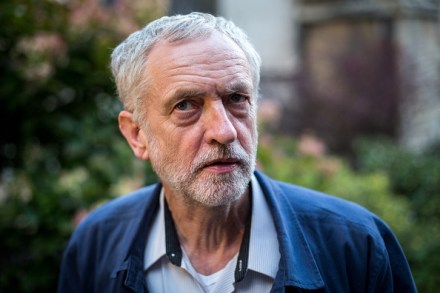
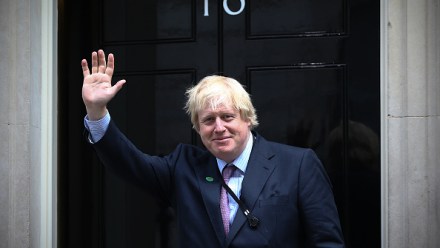
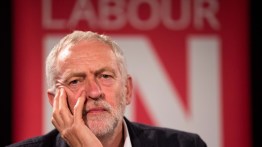
Boris Johnson has entered the election campaign with a bang. The Foreign Secretary was being squirrelled away, some were saying, after a number of ministers apparently suggested to Theresa May that she should sideline Boris to avoid alienating voters. It’s clear that’s not going to be happening. Today, Boris is front and centre calling the leader of the opposition a ‘mugwump’. In the Sun, Boris said that some may think Corbyn is harmless - a ‘mutton-headed old mugwump’ - but they’d be wrong to hold that view. The po-faced will say this is proof that Johnson is up to his old tricks and we shouldn’t fall for it; shadow foreign secretary Emily Thornberry has done just that, calling the comments ‘crass’.

Why Theresa May’s 1970s-style energy price caps won’t work

From our UK edition

Better access to education. Tax cuts for anyone in the struggling middle. More affordable homes, and more money for the National Heath Service. There is nothing wrong with Theresa May seeking to stake out the centre ground of British politics and stop Brexit turning into a right-wing campaign to turn back the clock. But one might have imagined she’d use conservative means to achieve this, rather than raiding Ed Miliband’s last manifesto for ideas. The proposed price cap on energy companies is an alarming example of Mrs May’s left turn. There are so many ways in which the price cap is a genuinely terrible idea that it is hard to find space to list them all. But here are four big flaws to be getting on with.

Why Tories are talking up Labour

From our UK edition

Considering that their party is expected to win by a landslide, the Tory spin doctors sound unusually panicked. They are keen to point out that the polls aren’t always right, and the pollsters are still trying to correct what they got wrong at the last general election. They insist that national voting tells you little about what will happen in the key marginal seats. These are normally the pleas of a party that is failing, and trying to persuade voters that it is still in the race. But Labour isn’t doing a good job of spinning its own prospects — so the Tories are doing it for them. This is not as odd as it first sounds. The Tories are worried about complacency, about their vote not turning out.

Do do God

From our UK edition

This election was won two days before it was announced, on Easter Sunday. Theresa May put out an Easter message in which she suggested that British values had a Christian basis. It was her version of David Cameron’s message two years before, in which he said that Britain is a Christian country. She was rather more convincing. I don’t know whether Cameron is sincerely religious, but he didn’t seem it. He didn’t even seem to try very hard to seem it, as if fearing that his metropolitan support might weaken, and perhaps that George Osborne would make a snarky jibe about it at cabinet. But it still did him good to make those pro-religious noises. St Theresa should keep her piety out of politics, said a few pundits.

How to vote to save the Union

From our UK edition

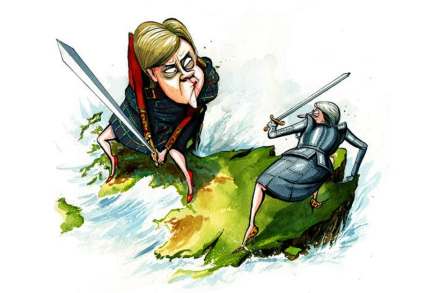
When launching the Scottish National Party’s election campaign, Nicola Sturgeon said the word ‘Tory’ 20 times in 20 minutes. For much of her political lifetime, it has been used by the SNP as the dirtiest word in Scottish politics. Nationalists have long liked to portray the Conservatives as the successors to Edward Longshanks: an occupying army with little affinity for the people they were trying to govern. But things are changing fast in Scotland. Amid the other political dramas of the past few months, the revival of Tory support north of the border has gone relatively unnoticed. They had only one MP after the last election, but a poll this week puts them on 33 per cent in Scotland — enough to win 12 seats.

Parliament’s departing greybeards enjoy one final waffle at PMQs

From our UK edition

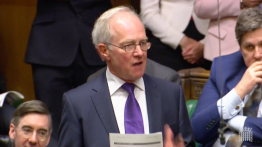
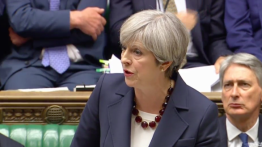
There was astonishment at the start of PMQs as Michael Fabricant’s wig flew up into the air. Fortunately its owner was rising to speak at the same time so no embarrassment was suffered. John Bercow indulged the house in this last session before the election and let MPs give speeches rather than ask questions. The results were mixed. Was it classic Westminster-in-action? Or classic Westminster inaction? The exchanges lasted twice as long as normal and were less than half as informative. Theresa May crammed every sentence with Crosby buzz-phrases. ‘Strong economy’, ‘stable Conservative leadership’ she said about a zillion times. Her remote-controlled backbenchers followed suit.

Civil life in London is now balanced on a knife edge

From our UK edition

I'm a member of a small and weird minority, the conservative urbanophiles. Obviously cities are nests of degeneracy and, even worse, the false faith of progressivism - my postcode voted 82 per cent Remain and the Tories finished fourth in 2015 - but nevertheless urbanisation is glorious, the best thing our species ever did. City life means socialising, culture and prosperity.  But the English-speaking world forgot two important things about city life in the 20th century, lessons that have been painfully half re-learned: that cities should be beautiful and cities need to be civilised.

Ditching the triple-lock pensions bung is a risk May can afford

From our UK edition

PMQs went on for an almost an hour today as John Bercow attempted to get in as many valedictories from retiring MPs as possible. But there were two significant pieces of news made in today’s session. First, in answer to Angus Robertson, Theresa May refused to say that the triple lock would continue if the Tories win this election. This is the clearest indication we have had yet that it won’t be in the manifesto and will, sensibly, be jettisoned after the next election. The Tories are 20-odd points clear and have an even bigger lead among the over 65s, jettisoning this expensive electoral bung is a risk that May can afford to take.  The second piece of news was Theresa May not repeating the line that ‘no deal is better than a bad deal’ with the EU.

Watch: Theresa May’s Brexit blunder

From our UK edition

Theresa May is playing it safe during this election cycle and doing her best to leave the blunders to Labour. With the likes of Dawn Butler touring the airwaves, it’s a strategy that appears to be working wonders for the Prime Minister. But even a supposedly safe pair of hands like May isn’t immune to making a mistake. On a campaign trip to Wales today, the PM has been attempting to convince voters to back the Tories ahead of the snap general election. She's also been talking up Britain’s prospects after Brexit. All was going well. Or at least it was until May appeared to suggest that her plan for Brexit would involve Britain leading the world ‘in preventing tourism’.

Labour’s decimation would be a disaster for Britain

From our UK edition

Today's polls suggest that Theresa May could be on track to secure a Commons majority of 150, reversing – in just 20 years – the landslide that was inflicted on the Tories in 1997. These figures, from the Daily Telegraph, reveal no fresh agony for Labour: already the worst case scenario being floated in Labour circles would involve a catastrophic loss of about 100 MPs. This is an apocalyptic vision, mainly propagated by centre-leaning folk who have seen their influence wane over the past two years, and is something of a long-shot (the bookies currently favour a Labour seat band of 150-199, but only price 100-149 at 5/2). But let’s say it does happen: what happens next?

What does Emmanuel Macron mean for Brexit?

From our UK edition

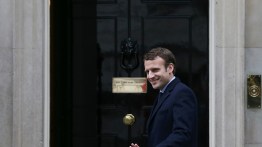
It was a badly kept secret in Westminster that very senior figures in the UK government wanted Francois Fillon to win the French presidential election. He was regarded as being the best candidate for Britain, and the one most likely to be pragmatic on Brexit. But with Fillon out, attention switches to Macron—the overwhelming favourite. Macron is emotionally and ideologically pro-EU. He has been clear that he doesn’t want a sweetheart deal for Britain. On his campaign visit to London, he talked aggressively about luring businesses to France post-Brexit.

The Tories don’t need Zac back in Richmond. They need Luke Parker

From our UK edition

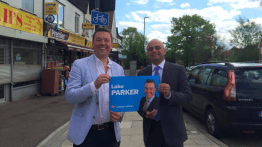
Are the Conservatives sharp enough to be able to beat the Liberal Democrats in battleground Remain-voting seats? We hear today that they might put forward Zac Goldsmith as their candidate for Richmond Park - the same Zac Goldsmith who quit the party in protest at the Heathrow decision, then triggered a by-election and ran as an independent. But he lost to a Lib Dem. So now he has decided to rejoin the party and run again - and oddly, they've let him. He's in the final three. To select him would be a huge tactical own goal for the Tories: as Neil Kinnock found out, when voters turn something down, they don’t like to be asked again. And as Zac found out, it's hard for an arch-Brexiteer to win in an arch-Remain constituency: a new fact of political life.

Why Matthew Parris is wrong about a Tory lurch to the right

From our UK edition

Exaggeration is the political pundits' stock in trade: nobody built a loyal readership on equivocation. But Matthew Parris' recent commentary about the Conservative Party's direction under Theresa May borders on the hysterical. A few weeks ago he used his Times column to hyperventilate about a Conservative Party 'paralysed in the headlights of a dangerous surge of reckless populism and in thrall to its own right wing'. Last Saturday, he returned to the theme and wrote of a 'deep, deep shift under way in our party...leaving anyone once attracted to the strong strand of tolerance and moderation we found powerful in the Conservative tradition feeling cowed, discouraged'.

Tony Blair is the messianic Remainer here to save us from ourselves

From our UK edition

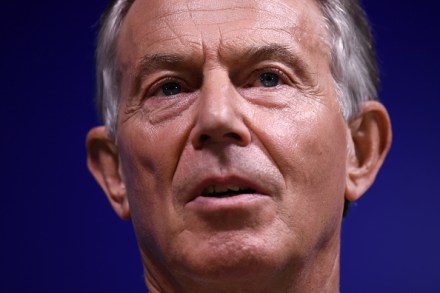
Here they come, Tony Blair and his tragic chattering-class army. The former PM, whose rictus grin and glottal stops still haunt the nation’s dreams (well, mine anyway), is on the march with his pleb-allergic mates in business and the media. Blair and the Twitterati, linking arms, united in their horror at the incalculable stupidity of northerners and Welsh people and Essex men and women and other Brexiteers, their aim as clear as it is foul. They’re here to save us from ourselves. ‘Tony Blair is trying to save Britain from itself’, as one report put it. Excuse me while I pop an anti-nausea pill. Yes, Blair, the political version of Michael Myers, the nutter in the Halloween movies who just cannot be slain, is back. Again.

Theresa May’s election gamble is paying off

From our UK edition

Everything you need to know about the current state of the polls is summed up by the fact that one which puts the Tories at 40 per cent, a level that they haven’t hit in a general election for a quarter of a century, and 11 points clear is presented as a blow to them. Now, the reason that the Mail on Sunday has done this is because other polls have the Tories so far ahead that a mere 11 point lead looks rather anaemic. ComRes has the Tories at a jaw-dropping 50 per cent, with Labour on 25 per cent. YouGov puts the Tories on 48 per cent, and 23 points ahead. Interestingly, it also finds that May is more trusted than Corbyn on the NHS suggesting that even Labour’s banker issue won’t save it this time.

This election will be won or lost on the suburban battleground

From our UK edition

In Westminster, all the general election chatter is about Brexit. Will Tory Remainers turn Lib Dem? Will Labour leavers desert Jeremy Corbyn? As polling day draws near, however, the Europe obsession must recede. Politicians may not be able to look past last year’s referendum, but voters will have moved on. MPs will find that, as before, the great issue of our time will be just one of many on the doorsteps. This summer’s battleground won’t be Brussels. It will be suburbia. Domestic matters will decide whether Theresa May returns to Downing Street with a fat majority, and no one is more domesticated than the average suburbanite. We are intensely local. We want good local schools and good local hospitals — we don’t like grand projects like HS2.

Theresa May’s great gamble

From our UK edition

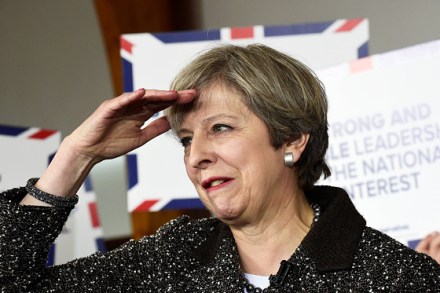
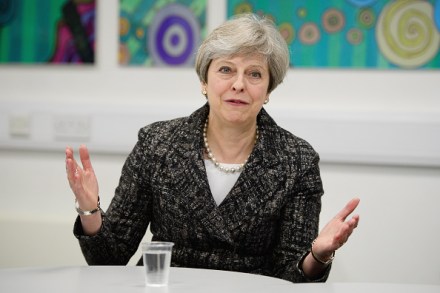
Theresa May has long been clear about what sets her apart from other politicians: she doesn’t play political games. When she launched her bid for the top job last year, she was clear that — unlike her rivals — she hadn’t succumbed to the temptations of Westminster. She told us that she didn’t drink in the bars or gossip over lunch. She invited the TV cameras into her first Cabinet meeting as Prime Minister to record her telling ministers that ‘politics is not a game’. The danger for May in calling an election three years ahead of schedule is that it looks a lot like game-playing. Has a 20-point poll lead proved too much of a temptation, even for this vicar’s daughter?

Why foreign aid fails – and how to really help Africa | 22 April 2017

From our UK edition

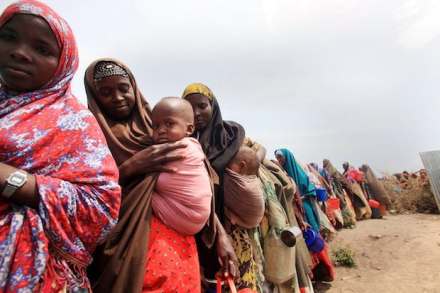
The British government is strikingly generous in foreign aid donation But if money alone were the solution we would be along the road not just to ameliorating the lives of poor people today but ending poverty for ever. The idea that large donations can remedy poverty has dominated the theory of economic development — and the thinking in many international aid agencies and governments — since the 1950s. And how have the results been? Not so good, actually. Millions have moved out of abject poverty around the world over the past six decades, but that has had little to do with foreign aid. Rather, it is due to economic growth in countries in Asia which received little aid.

What will be in May’s manifesto?

From our UK edition

On Tuesday, Theresa May stood outside Downing Street and said that she was calling an early election so that she could get the 'job done' and take Britain out of the European Union. The Prime Minister claimed that without a snap vote, opposition parties would try to change Britain's course because 'the Government's majority is so small'. But this doesn't mean the Tories will stick with the 2015 Conservative manifesto. Both May and Philip Hammond have offered a glimpse of what old election promises they may bin in the 2017 manifesto. In an appearance in Maidenhead, May said that the government's commitment to spending 0.7pc of national income on foreign aid 'will remain' - although it must be spent 'in the most effective way'.

Those who want a clear Brexit will need to make sure it is in the manifesto

From our UK edition

Mrs May’s decision to call a snap general election is not very welcome, and I had thought she would think it too risky, but it makes sense — obviously because of Jeremy Corbyn and, a bit less obviously, because of public attitudes to her. She has brilliantly convinced people that she is a straightforward, unpolitical person who doesn’t descend to political games. This is untrue. She is, however, a person without childish vanity, celebrity hunger or media obsession. She benefits from a big cultural change, which descends from Mrs Thatcher, via all sorts of others — Angela Merkel, Ruth Davidson, Nicola Sturgeon. Women are now seen as stronger, more real and less silly than men. This is an old folk wisdom, but it only recently became the orthodoxy in politics.