Theresa may

Twelve months of May

From our UK edition

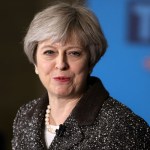
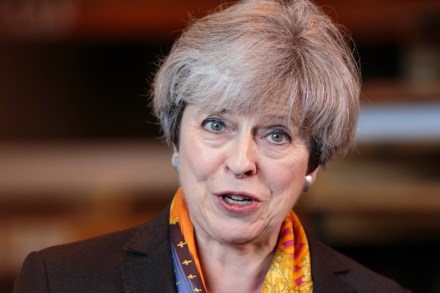
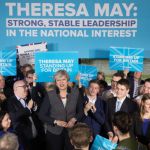
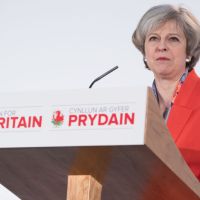
Normally, the first anniversary of a prime minister taking office is the occasion for a lot of opinion polls and assessments. But by going to the country early, Theresa May has pre-empted that. By the time she has been in No. 10 a year, the voters will already have delivered their verdict via the ballot box. Still, it is worth assessing what May has done so far. When she arrived in No. 10, her team had three main priorities. They wanted to complete the modernisation process by making the Tories more appealing to the so-called ‘just about managing’ classes, and to those outside the party’s heartlands. They were determined to shore up the Union — to see off Nicola Sturgeon’s renewed drive for Scottish independence.

Mother Theresa

From our UK edition

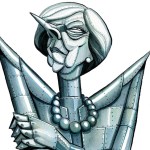
Tory activists last week were heard to refer to Mrs May as ‘Mummy’. No Corbynista calls their hero ‘Dad’. The human race is guided by myth as much as by logic, and mythology explains people to themselves more vividly than economics. The agony expressed in the liberal intelligent press is understandable. The sensible people who all voted Remain direct much of their fury against the Corbynistas who have taken over the Labour party. Fair enough. Interestingly, however, they attend so closely to what Tony Benn liked to call ‘the ish-oos’ that they ignore the bigger mythological picture. Last summer the country voted — very unwisely according to the sensible 48 per cent — in favour of Brexit.

Theresa and Philip bored the nation with their strong and stable relationship

From our UK edition

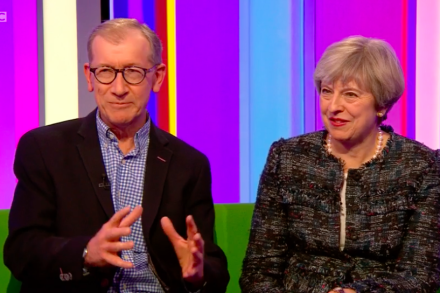
How was last night’s TV squirm-athon? The sacrificial victims handled it pretty well, at first. Theresa May and her unknown husband, Philip, were roasted live on a BBC sofa. The idea, presumably, was to make them seem relaxed, normal, unexciting, not too posh, at ease with themselves and, above all, genuine. Dull Phil sported a bland shirt, no tie, and a forgettable jacket. With his gnomish pallor and his thick-rimmed spectacles he resembled Sir Ian McKellen entering a Woody Allen lookalike contest. Mrs May was in headmistress mode. Her wandering lips – each has a life of its own – were painted in hard-Brexit scarlet. She wore a black-and-white tunic that looked like a pixellated chess board.

How the hunting community could boost Theresa May’s campaign

From our UK edition

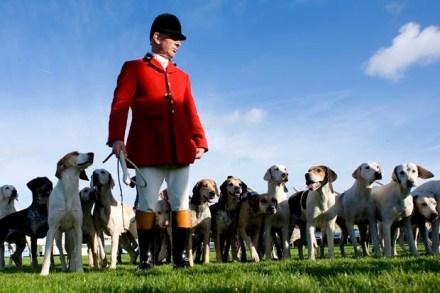
Out on the campaign trail in Leeds today, Theresa May stated that she supports fox hunting. ‘As it happens personally I have always been in favour of fox hunting and we maintain our commitment - we have had a commitment previously as a Conservative Party - to allow a free vote,' she said. The Prime Minister has consistently voted against the ban on hunting, and the general consensus has been that although she doesn’t necessarily think of it as a particularly important issue, she is supportive of the hunting community.  But it is perhaps something of a surprise that May has today come out and publicly said that she is actively in favour of fox hunting.

The four major flaws with Theresa May’s energy cap

From our UK edition

Better access to education. Tax cuts for anyone in the struggling middle. More affordable homes, and more money for the National Heath Service. There is nothing wrong with Theresa May seeking to stake out the centre ground of British politics and stop Brexit turning into a right-wing campaign to turn back the clock. But one might have imagined she’d use conservative means to achieve this, rather than raiding Ed Miliband’s last manifesto for ideas. The proposed price cap on energy companies is an alarming example of Mrs May’s left turn. There are so many ways in which the price cap is a genuinely terrible idea that it is hard to find space to list them all. But here are four big flaws to be getting on with.

Brexiteers are Marine Le Pen’s natural opponents

From our UK edition

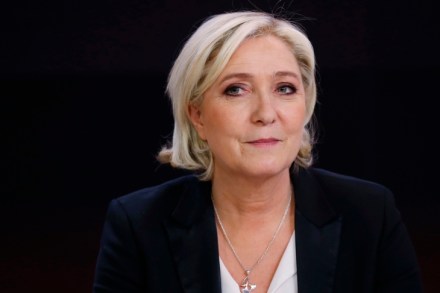
I’m a Brexiteer and I’m glad Le Pen lost. Those Brexit-bashers who say ‘Brexit-Trump-Le-Pen’ almost as one word, as if they are the same thing, all weird, all evil, all a species of fascism, have got it utterly wrong. Brexit was democratic, optimistic, generous, a positive people’s strike for better politics. Le Pen’s programme, by contrast, is mean, nativistic, protectionist and tragic. Its motor is fear, not confidence; panic, not experimentation. It has nothing in common with Brexit. I am a Brexiteer against Le Pen, and there are many of us.

The Tories hit their highest poll lead since 1983

From our UK edition

The Tories have just hit a new high in the polls: 49 per cent, handing them a 22-point lead over Labour. This margin is virtually uncharted territory for the Conservatives, with ICM pointing out that the party’s current lead has only been bettered once in the last 34 years of polling - back in May 1983. As ever, it’s less good news for Labour: the party sits on 27 per cent, according to ICM - a number which precisely matches the share of the national vote they picked up in last week’s local elections. If - and it’s a big if - this means the pollsters have pinpointed Labour's share of the vote at 27 per cent, the outcome would be disastrous for the party come June 8th. Replicated nationally, the Tories would win a thumping majority of 172.

You’re an editor now George Osborne… it’s time you made some enemies

From our UK edition

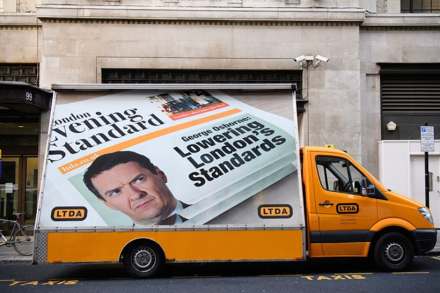
Dear George Osborne, I thought it worth passing along some advice about your new job. I’ve never edited a news-paper, but I’ve been in the business for 32 years and I’ve seen a fair few come and go. I’ve also worked for the Evening Standard in various capacities. Indeed, my first job in journalism was doing shift work on Londoner’s Diary. That’s not a bad place to start on Fleet Street (your predecessor did) and you could do worse than sit at the desk for a few weeks. Liz Smith, the veteran American newspaper columnist, describes gossip as ‘news wearing a red dress and running ahead of the pack’ and there’s something in that.

When politicians buy the newspaper front pages, they create fake news

From our UK edition

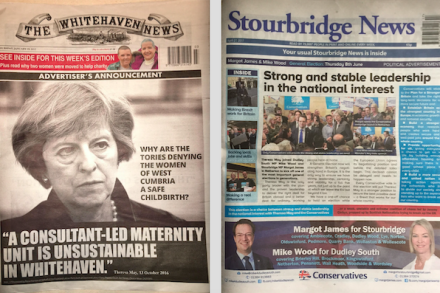
Newspapers everywhere are in trouble, with advertising revenues down about 20 per cent a year. Local newspapers are worst hit and many are on the brink of collapse, sacking staff and pages. But there can be no more depressing sign of their distress than to see newspaper owners selling front pages to political parties. Look at the above pictures: both are designed to deceive the reader and look like genuine front pages. They’re created by Labour and Conservative spin doctors, printed as so-called “cover wrap” adverts. Sure, there’s a blink-and-you-miss-it caveat saying “political advertisement" in the Labour one (left) for the Copeland by-election, there’s hardly any branding at all.

What Theresa May should put in her manifesto

From our UK edition

Will executive pay pop up in Theresa May’s manifesto? An objective of her snap election is to secure a larger majority on the basis of a smaller burden of manifesto promises than she inherited from David Cameron. But in her only leadership campaign speech last July, her reference to ‘an irrational, unhealthy and growing gap between what those companies pay their workers and what they pay their bosses’ was one of the phrases that caught the most attention. Back then, she was in favour of imposing annual binding shareholder votes on boardroom remuneration, as well as spotlighting the ratio between chief executives’ and average workers’ pay, and even forcing companies to accept workers’ representatives on boards.

The EU’s leaders are flummoxed by democracy

From our UK edition

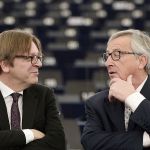
Guy Verhofstadt, the European Parliament’s main Brexit negotiator, tweeted on Monday: ‘Any #Brexit deal requires a strong & stable understanding of the complex issues involved. The clock is ticking — it’s time to get real.’ This was on the same day as media reports — allegedly leaked by associates of Jean-Claude Juncker, the European Commission president — criticised Theresa May for her naivety about Brexit talks at the dinner she gave Mr Juncker last week. These tactics are intended to affect our general election. By throwing Mrs May’s campaign slogan adjectives ‘strong and stable’ back in her face, Mr Verhofstadt was goading her at the decisive moment of her political career. So were the friends of Mr Juncker.

These election results show the coming realignment of British politics

From our UK edition

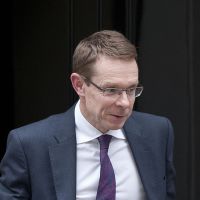
The local elections have given us the clearest demonstration yet of how UK politics is being realigned. The Ukip vote has collapsed and is moving in large numbers to the Tories. Combine this with the erosion of the Labour vote under Jeremy Corbyn, and places where you never thought the Tories would win are turning blue putting the Tories on course for a general election landslide. Who’d have predicted that the first winner of the Tees Valley mayoralty would be a Tory? Almost as jaw-dropping was Andy Street’s victory for the Tories in the West Midlands, where Labour have 21 out of 28 parliamentary seats. What so excites the Tories about Street’s win is that they think that in office, he’ll be able to show what the Tories can do for the region.

The Spectator’s Notes | 4 May 2017

From our UK edition

Guy Verhofstadt, the European Parliament’s main Brexit negotiator, tweeted on Monday: ‘Any #Brexit deal requires a strong & stable understanding of the complex issues involved. The clock is ticking — it’s time to get real.’ This was on the same day as media reports — allegedly leaked by associates of Jean-Claude Juncker, the European Commission president — criticised Theresa May for her naivety about Brexit talks at the dinner she gave Mr Juncker last week. These tactics are intended to affect our general election. By throwing Mrs May’s campaign slogan adjectives ‘strong and stable’ back in her face, Mr Verhofstadt was goading her at the decisive moment of her political career. So were the friends of Mr Juncker.

The art of the deal

From our UK edition

If elections were decided on voter enthusiasm rather than on plain numbers, Marine Le Pen would win this weekend’s battle for the French presidency. But it seems likely that Emmanuel Macron’s more numerous but less passionate supporters will prevail — more for dislike of her than admiration of him. It is when he ends up in the Elysée that his problems will start. Can a president without a party command support in the National Assembly? Who will he appoint to his government? How quickly might it unravel? Domestic woes will likely consume Macron, with foreign policy a luxury he might not be able to afford. Reports of his hostility to Brexit are exaggerated: his adviser Jean Pisani-Ferry wrote a paper highlighting the folly of being beastly to the British.

Portrait of the week | 4 May 2017

From our UK edition

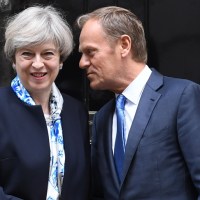
Home Jean-Claude Juncker, the president of the European Commission, told Theresa May after dinner with her on 26 April, ‘I’m leaving Downing Street ten times more sceptical than I was before,’ according to an account in Frankfurter Allgemeine Sonntagszeitung. At the dinner, also attended by Michel Barnier, the EU’s chief negotiator, and David Davis, the Brexit Secretary, Mrs May was said to have declared that Britain was not legally obliged to pay the EU ‘a penny’; Mr Juncker said ‘the EU is not a golf club’ with a subscription that could be cancelled at any time. ‘Let us make Brexit a success,’ May is said to have remarked, to which Mr Juncker replied: ‘Brexit cannot be a success.

Why Wales decided to forgive the Tories

From our UK edition

The recent Welsh poll showing a ten-point Conservative lead in voting intentions for the forthcoming general election (and also, though much less reported, the first ever Conservative lead in devolved voting intentions in Wales), came as a shock to many. The next Welsh poll, out next week, will tell us whether this first one was just an outlier or the more solid harbinger of an historic realignment in Welsh politics. But why should it be such a surprise that the governing party of the UK, with around a twenty-point opinion poll lead across Britain, should have a lead half that size in one particular part of Britain? The astonishment is that the Conservatives winning in Wales offends many deeply-held and cherished myths and assumptions. The Welsh just don’t do Conservatism, surely?

The West Midlands will tell us how big May will win in June

From our UK edition

The most intriguing aspect of today’s local elections is the contest for the new West Midlands Mayoralty. In normal times, you’d have this marked down as a shoe-in for Labour—they have 21 of the region’s 28 MPs and control six of its seven local authorities. But these aren’t normal political times and the Tories have run a vigorous campaign with a strong candidate, the former John Lewis boss Andy Street. Labour, by contrast, have an underwhelming candidate, the MP turned MEP Sion Simon—whose greatest distinction is his time as a restaurant reviewer for this magazine.

Never mind the election – Corbynism isn’t going away

From our UK edition

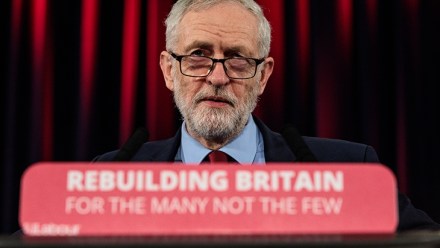
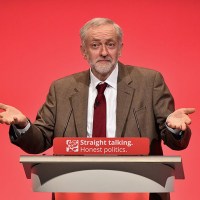
General elections are meant to produce a government and an opposition — ideally, a decent version of both. It is obvious what government this election will deliver: a Tory one with an increased majority. That, after all, is one of the reasons why Theresa May has decided to go to the country three years early. But it is not clear what opposition there will be. What passes for optimism in moderate Labour circles these days is the belief that a shellacking in this election will lead to Jeremy Corbyn’s departure, as the party’s membership sobers up and elects a new and sensible leader. But it is far from certain that this will happen.

Why binding shareholder votes on pay should be a manifesto promise

From our UK edition

Will executive pay pop up in Theresa May’s manifesto? An objective of her snap election is to secure a larger majority on the basis of a smaller burden of manifesto promises than she inherited from David Cameron. But in her only leadership campaign speech last July, her reference to ‘an irrational, unhealthy and growing gap between what those companies pay their workers and what they pay their bosses’ was one of the phrases that caught the most attention. Back then, she was in favour of imposing annual binding shareholder votes on boardroom remuneration, as well as spotlighting the ratio between chief executives’ and average workers’ pay, and even forcing companies to accept workers’ representatives on boards.