Theresa may

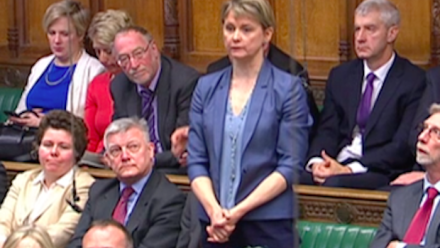
Yvette Cooper provides the real opposition at PMQs

From our UK edition

After Theresa May performed an election U-turn on Monday and called for a snap election, today's PMQs saw competing parties draw out their battle lines for the weeks ahead. The SNP's Angus Robertson criticised May for dodging the TV debates and she in turn told the SNP to get on with the day job. Nigel Evans jumped on speculation over how 'liberal' Tim Farron's Christian beliefs are. The Conservative MP asked the leader of the Liberal Democrats if he thought homosexuality was a sin -- something Farron went on to deny. While Conservatives were supportive of the Prime Minister's decision to call a snap election, opposition MPs repeatedly accused May of being someone the public can no longer trust following her broken pledge.

MPs should practice what they preach – and have a shorter summer holiday

From our UK edition

One of the consequences of the early election is that Britain will find itself without a functioning parliament for six weeks at a time when arguably it has never needed one more. I am sure that many MPs will feel entitled to a holiday after yet another election campaign – or at least those who are not sent into premature retirement. But what about Parliamentary business? The Great Repeal Bill requires debate and scrutiny – and in Parliament, not the TV studio. As thing stand, Parliament will rise in the first week of May.   It will then reconvene in the middle of June only to break up for the summer recess little over a month later. It will not return until October, after the party conference season.

The general election is a disaster for Northern Ireland

From our UK edition

There's little enthusiasm just about anywhere for this summer's snap general election, and no more so than in Northern Ireland where voters' growing apathy is mixed with a feeling of dread. Saying that politics in Northern Ireland is rarely straightforward or smooth is something of an understatement. But the timing of this summer's election could not be worse for the country: the peace process is currently navigating its way perilously through one of its most difficult periods since 1998's Good Friday Agreement. While the stasis which is paralysing Stormont shows no signs of ending: four months on since power-sharing collapsed in the region, the parties are yet to resolve their issues and agree to return to government. Attempts at resolution have had next to no success.

Theresa May’s Today interview, full transcript

From our UK edition

Nick Robinson: You have often presented yourself - you did when you ran for the leadership and to be Prime Minister - as the daughter of a vicar, committed to public service. 'I just get on with the job in front of me,' you said. So do you now regret giving your word and so flagrantly breaking it? Theresa May: I do get on with the job that is in front of me. When I became Prime Minister last July, I felt that the most important thing was stability for the country. We'd had the referendum, which had come out with a result in terms of voting to leave the European Union that hadn't been expected. Obviously David Cameron had resigned, I'd taken over as Conservative party leader and Prime Minister and I felt it was important to have a period of stability at that stage.

Why do voters find it hard to trust politicians? Because of all the broken promises

From our UK edition

‘But you promised!’ Anyone who spends much time with children (whether in an Andrea Leadsom-esque capacity as a mother or otherwise) will recognise that phrase. They’re the words of someone disappointed that the grown ups, who are supposed to be sensible, haven’t followed through. Today Theresa May broke her own promise about there being no early general election. Will helpfully reminds you of five of those promises, repeated by both the Prime Minister and her henchmen, in this post. She had been so adamant that even those who thought they knew her best after years of working together in Opposition and government had taken her at her word and were insisting until recently that May believed in keeping her promises and that there would be no snap general election.

Theresa May will campaign as being tough on Brexit, but soft on society

From our UK edition

A Brexit election, then. Theresa May will win and claim that victory is all the mandate she needs for whatever comes from the negotiations in Brussels.  The working assumption must be that includes leaving the Single Market and the Customs Union, and, of course, an end to free movement when we leave. And we are leaving.  This election should kill stone dead any Remainer dream that Brexit can be stopped.  When she takes Britain out of the EU, Mrs May will have both a referendum and a general election win on her side; what will Brexit’s opponents have?  The Lib Dems will very likely do well in the election, possibly emerging as the party of the unreconciled metropolitan Remainer vote.

The five manifesto pledges Theresa May is likely to drop

From our UK edition

It isn’t clear what changed Theresa May’s mind on calling an early general election, something which, as recently as 20 March, she was adamant would not happen. But could the trigger have been nothing to do with Brexit at all? An interesting date is 16 March, when Phillip Hammond reversed the proposed increase in National Insurance on the self-employed which he had announced in his Budget only the week before. The fuss seemed to catch Hammond – and presumably Theresa May, too – by surprise. It seemed as if it simply hadn’t occurred to them that they ought to feel bound by David Cameron’s 2015 manifesto, which promised no rise in the rates of income tax or national insurance throughout the life of the Parliament.

Even a crushing election defeat might not spell the end of Jeremy Corbyn

From our UK edition

After the referendum, Jeremy Corbyn said that Labour was ‘very, very ready’ to contest a general election. Which is good news, because that’s precisely the task he now faces. In the world of Corbyn’s most ardent supporters, the snap election has been greeted with something like glee. Their greatest fear – that Corbyn may not survive in the leadership long enough to face the public at large – has been alleviated. Momentum's Michael Chessum tweeted that there ‘absolutely is a path to victory for Labour... We'll have to be bold, but it's there’, while Paul Mason said that ‘a progressive alliance can beat the Tory hard Brexit plan’. That jubilation on the hard left is typical of the movement’s resilience.

Jeremy Corbyn backs Theresa May’s plan for a snap election: full text

From our UK edition

Jeremy Corbyn has said Labour will support Theresa May's decision to hold an early election. Here's his full statement: I welcome the Prime Minister’s decision to give the British people the chance to vote for a government that will put the interests of the majority first. Labour will be offering the country an effective alternative to a government that has failed to rebuild the economy, delivered falling living standards and damaging cuts to our schools and NHS. In the last couple of weeks, Labour has set out policies that offer a clear and credible choice for the country. We look forward to showing how Labour will stand up for the people of Britain.

Five times Theresa May ruled out a snap general election

From our UK edition

Theresa May's snap election, scheduled for 8 June, was unlikely for three big reasons. Holding off until 2020 would allow the Tories to take advantage of boundary changes that come into force in 2018. There's a fixed-term parliament act, which is a major complicating factor (Labour will probably have to back a vote in the Commons to allow this election to take place at all). Most of all, she staked a large chunk of her credibility on not U-turning on her decision that there wouldn't be one. Until this morning, her reputation for unwavering unflappability looked justified. Here are five occasions on which the Prime Minister personally, or her staff, denied that there were plans for an election.

Theresa May shows she is prepared to play political games

From our UK edition

Theresa May has just announced that she’ll move a motion in the Commons tomorrow calling for a general election on 8 June. This is despite May and her team having repeatedly ruled out going to the country early. Much of the May brand, and her appeal, is built on the idea that she is a grown-up who gets on with the job and doesn’t play political games. By going for an election, and especially when the Tories have a record poll lead over Labour, she endangers that. May is clearly aware of this danger. In her statement outside Downing Street, May tried to pitch herself against Westminster. She said that while the country was coming together, Westminster was not.

Theresa May calls an early general election for 8 June: full speech

From our UK edition

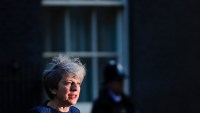
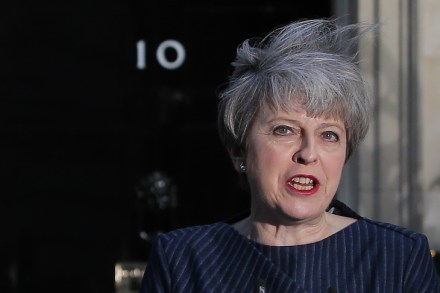
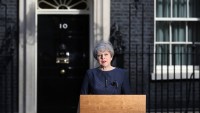
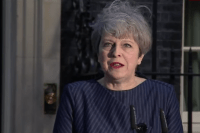
Theresa May has called a general election for June 8th. Making the announcement on the steps of Downing Street, the PM said that an early election is the 'right approach' and 'in the national interest'. Here's her full statement: 'I have just chaired a meeting of the Cabinet where we agreed that the government should call a general election to be held on the 8th June. I want to explain the reasons for that decision, what will happen next, and the choice facing the British people when you come to vote in this election. Last summer, after the country voted to leave the European Union, Britain needed certainty, stability and strong leadership. And since I became Prime Minister, the government has delivered precisely that.

How will the EU cope without Britain?

From our UK edition

Many EU officials would like to present the Brexit negotiations as a case of one nervous member, weak at the knees, appearing before a menacing and united panel of 27. But that ignores the political and ideological rifts which are already apparent in the EU. Britain’s departure not only necessitates the creation of a new relationship between us and them; it fundamentally shifts the balance in EU politics. As Angela Merkel has been worrying aloud in recent weeks, the northern European countries which have always tended to take a liberal position on economics and trade are going to have a harder job fighting off the protectionist instincts of the south.

Forget the ‘nasty party’, Theresa May has turned the Tories into the zombie party

From our UK edition

Watching Education Secretary Justine Greening discuss grammar schools this week, I felt exasperated and in desperate need of a cognac. And it wasn't because I'm opposed to grammar schools. No, there was something else bothering me: the cold air as Greening stared into the camera. It was the sort of look that could kill you slowly over time, especially when paired with such mechanical, uninspiring words. It left me as cold as Paul Nuttall's head. And it was then I realised something: this is all Theresa May's fault. She might have worried about the Tories being seen as the 'nasty party'. She need not have done. Instead, she's in danger of turning them into the zombie party.

Our message to Assad: kill a lot more of your people, but nicely. And please spin it out

From our UK edition

Let me take this opportunity to join with our Prime Minister and Foreign Secretary in commending President Trump’s swift and decisive military action against the Syrian government as being ‘appropriate’ — one of my favourite words and one which I like to use every day, regardless of whether it is appropriate to do so. The important thing was not of course the destruction of a few Syrian planes and, collaterally, a few Syrian children. The crucial point is that this moderate and judicious use of expensive missiles ‘sends out a message’ to President Assad. And the message is very simple. We will no longer tolerate Syrian children being killed by hugely unpleasant chemical weapons such as sarin or chlorine gas.

What the papers say: It’s time to stop blaming Brexit

From our UK edition

What does a spike in hate crime, a slump in sterling, supermarket price hikes, rising inflation and a squeeze on living standards have in common? The answer is simple, according to some: Brexit is to blame. But it’s time to stop pointing the finger at Brexit, says the Sun, which argues in its editorial that the vote to leave in last year’s referendum has ‘wrongly copped the blame for every negative development since’. Now that it has emerged that inflation has ‘outstripped’ pay for the first time since 2014, the same thing is happening. It’s true, the Sun admits, that the slump in Sterling is pushing up prices. But there’s also another reason for low wages: ‘the huge number of EU migrants prepared to work for less than Brits.’.

Like them or not, Theresa May’s grammar school plans will end the postcode lottery of education

From our UK edition

Grammar Schools. Now there’s a potent pair of words. Mention them, and genial conversation will instantly shift into awkward silence or seething torrents of passion. In either case, reasoned argument is in short supply. Yet now that Theresa May seems committed to overturning Labour’s ban on opening new grammar schools, discussion is vital. But instead of rehashing the same arguments in favour of academically selective schools, or raking over the same problems they can cause, it’s important instead to look carefully at the evidence about whether grammar schools really do promote ‘social mobility’. One of the major themes of anti-grammar salvos is that they don't. And to make this point, the crudest approach is typically taken.

The National Trust could teach Theresa May and the Tories a thing or two

From our UK edition

What drove Theresa May to break off from a trade trip to the Middle East to chuck a half-brick at the National Trust over some Easter bunnies? Maybe Dame Helen Ghosh, the Trust’s Director General, knows. When the two worked together at the Home Office, they got along like a house on fire: there were flames, some screaming and eventually someone (Dame Helen, as it happens) left the building through a window. Given that history, it’s probably unwise to suggest that Mrs May might learn something from Dame Helen and the Trust instead of battering them, but I’ll give it a go anyway. The lesson is about members. The Trust has lots of them: more than four million, in fact.

Regressive Conservatism

From our UK edition

Jeremy Corbyn’s leadership of the Labour party is coming to resemble a drunk trying to get home on a bike. Most of the time he just pushes it along, but occasionally he mounts the saddle and whirls into action — only to find himself swiftly spread-eagled on the road. Take next month’s local elections. Corbyn launched his party’s campaign trying to bemoan the state of Britain. There are plenty of statistics which he could have trotted out to depict a country underperforming on living standards, debt levels and social mobility. But he chose to cite a supposed decline in life expectancy — which is demonstrably and famously wrong.