Nick Hilton

Nick Hilton

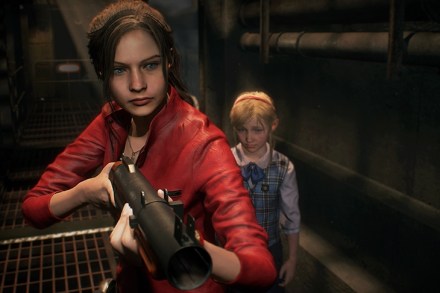
Resident Evil 2

From our UK edition

Grade: B Resident Evil 2 takes the original zombie shooter, which has become a cult classic and, to many, the quintessential horror video game, and gives it a lick of digital paint. Gone are the blocky hallways of the Raccoon City police station, along with the slow moving hordes of undead who, if you squinted, might’ve had a pixel of drool at the corner of their mouth. In their place is a German expressionist labyrinth of disorientating shadows, and antagonists so realistically putrefied the game ought to come with the sort of warnings they put on particularly pungent cheese.
The good, the bad and the ugly | 15 November 2018

From our UK edition

Every era has its western. For 30 years, from The Big Trail through to The Searchers, John Wayne reigned supreme across American cinema, a dispenser of justice forged on the battlefields of the Civil War. Then, from the 1960s, John Ford’s foundations were mixed with Italian influences to create the brutal anti-heroes of the spaghetti westerns. After that, the western began to feel old-fashioned, and started to be lampooned in films such as Blazing Saddles and Three Amigos for its reliance on archetype and cliché, before, at the close of the century, Cormac McCarthy reinvented it as something sparse, literary and realistic. And now, this era’s western takes that one step further.

The strangest Icelandic saga

From our UK edition

Everyone in Iceland has heard of Gudmunder and Geirfinnur. They were two (unrelated) men who disappeared in 1974, albeit ten months and several miles apart. Gudmunder Einarsson was a teenage labourer who loved to arm-wrestle; Geirfinnur Einarsson a construction worker and family man. Other than shared national hysteria in a country where people rarely go missing, there was nothing to link these mysteries — until, one by one, a ragtag group of petty criminals started to confess to their murders. The investigation was the biggest in Iceland’s history. It spanned decades, and saw ten people arrested in relation to the crimes, some of whom spent several years in prison. But as the fever for justice gradually gave way to journalistic scrutiny, the entire narrative began to unravel.

The Spectator Podcast: Putin’s toxic power

From our UK edition

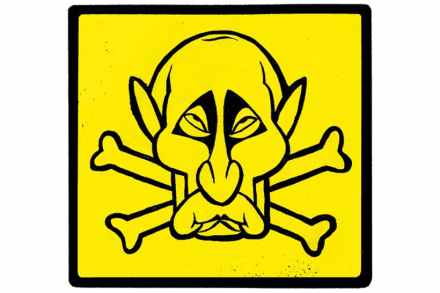
On this week’s episode, we look at the situation with Russia, and whether diplomatic relations have been poisoned. We also discuss the bullying scandal in Westminster and consider whether sledging in cricket has gone too far. The nerve agent attack on Sergei Skripal in Salisbury has led to an outbreak of antagonism between Britain and Russia. Theresa May has now expelled a host of Russian diplomats, but can anything be done to stop Putin’s assault on Western values? That’s the question Owen Matthews asks in the magazine this week, and he joins the podcast along with Tom Tugendhat, chair of the Foreign Affairs select committee, and then former Foreign Minister of Poland, Radek Sikorski, joins us. As Owen writes: "Putin lies, barefacedly and repeatedly.

The Spectator Podcast: Prince Charming

From our UK edition

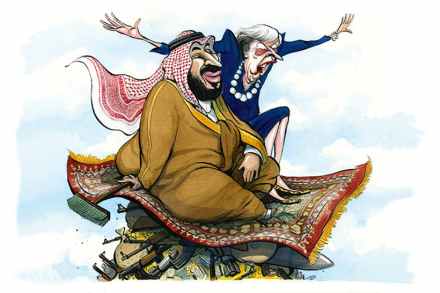
On this week's episode of The Spectator Podcast, we look at the new Saudi Crown Prince as he visits the UK. Is he the great moderniser that some imagine, or are we sweeping the more unpleasant elements of his regime under the carpet? We also consider the many strands of Labour's Brexit position, and look at a rocky week for British sport. First, Mohammed bin Salman, known to some as MBS, is making his first trip to the UK this week since assuming the role of Saudi Arabia's Crown Prince last year. He has been heralded by some as the radical modernising force that the country has been calling for, whilst others are concerned about lack of counsel and the ruthlessness of his course. What's the truth?

The Spectator Podcast: Germany’s nightmare

From our UK edition

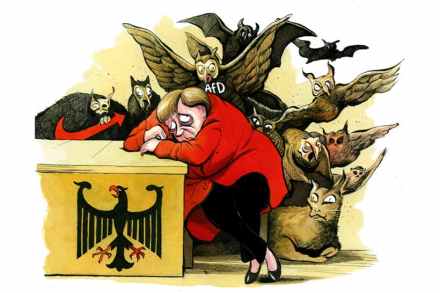
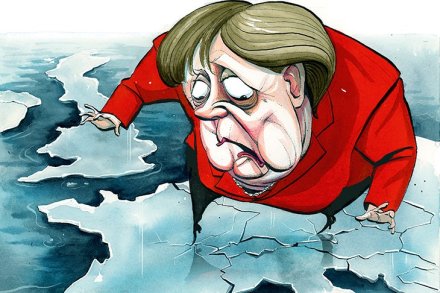
On this week’s episode, we look at Germany’s political nightmare, speak to one of the world’s most eminent psychologists, and get excited by the Winter Olympics. First up, since last year’s election, Angela Merkel’s chancellorship has seemed to be on thin ice. Her party, the Christian Democrats, have a coalition offer pending with the SPD, which would, at best, see the far right AfD become the main opposition. What is fuelling this unrest? And how long can Merkel continue in the current climate? Thomas Kielinger writes on the future of Germany’s leadership in the magazine and he joins the podcast along with Anne McElvoy, head of Economist Radio. As Thomas writes: "On Monday, Angela Merkel did something quite extraordinary.

The Spectator Podcast: Bad charity

From our UK edition

On this week's episode, we look at the Oxfam aid scandal and whether charities do more harm than good. We also tackle the controversial practice of stop-and-search before sampling some of the alcohol-free delights than might keep you off the booze this Lent. The news cycle for the past week has been dominated by revelations about the charity Oxfam, with senior figures implicated in 'sex for aid' bartering in crisis zones. Figures from Minnie Driver to Desmond Tutu have quit roles at the beleaguered charity, but bigger questions are being raised about how foreign aid is spent. In the magazine this week, Harriet Sergeant looks at the behaviour of international charities, whilst Mary Wakefield sees systemic abuse by NGO workers repeating itself again and again.

The Spectator Podcast: The crash we need

From our UK edition

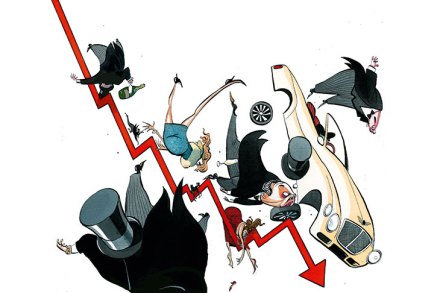
On this week’s episode, we ask whether there’s such thing as a good financial crash. We also look at the reality of the housing crisis and the ethics of dwarfs in the entertainment industry. First, with the Dow Jones taking a tumble at the end of last week, market watchers were on high alert for signs of another financial crash. In this week's magazine, Liam Halligan looks at the state of the stock market and asks: could a coming crisis could spell the end of the easy-money era? He joined the podcast to look at the behaviour of global markets at a volatile moment, along with economist and author, George Magnus. As Liam writes: "This was not really a crash: markets worldwide are still far higher than they were two months ago.

The Spectator Podcast: Lead or go

From our UK edition

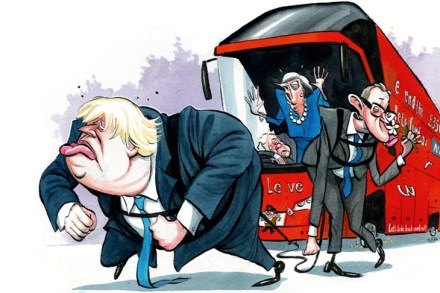
On this week’s episode we're wondering whether Theresa May can weather this latest storm, speaking to a robot expert (and a literal robot), and getting the inside story of male allyship workshops. The Prime Minister’s fortunes have ebbed and flowed since her disastrous election, but a yuletide season of relative calm has been replaced by her greatest challenge yet. 'Lead or go': that’s what James Forsyth says in this week’s cover piece, as pressure mounts on Theresa May to cobble together something resembling an agenda. He joins the podcast along with Giles Kenningham who worked at No.10 under David Cameron.

The Spectator Podcast: The fight for Europe

From our UK edition

On this week’s episode, we look at the emerging ambitions of the Visegrád Four in a new Europe. We also look at whether there’s a way out of the government’s current drift, and celebrate 70 years of radio’s finest quiz. This week’s cover story looks at growing friction between two European factions. On one side, the Macron and Merkel led federalists are looking for greater integration, whilst, on the other, the Visegrád Four are starting to reassert their anti-immigration stance. Will the alliance hold, asks John O’Sullivan in the magazine, and can it arrest the momentum of the EU project?

The Spectator Podcast: The truth about plastic

From our UK edition

On this week’s episode, we investigate the truth about plastic, the environmental enemy du jour in 2018. We also try to find a compromise on tuition fees (if there is one) and ask whether the Church of England are the most ruthless property tycoons in the country. First up: Whilst terrestrial TV was busy doing battle with its streaming nemeses for prestige drama supremacy, the single biggest televisual hit of 2017 was something rather different. The David Attenborough narrated Blue Planet II smashed to the top of the ratings chart like a marlin cresting a wave, but it also spawned a national outpouring of anti-plastic sentiment. Can we do anything to stop our rivers and oceans being polluted with single use plastic bags and coffee cups?

The Spectator Podcast: The digital inquisition

From our UK edition

On this week’s episode, we examine Twitter’s mob mentality, get to the heart of PTSD, and look at how Russia is preparing for this year’s World Cup. First up: At the end of 2017 it would’ve be hard to guess that the name of everyone’s lips during the sunrise days of the new year would be Toby Young. But thanks to a government appointment and a series of ill-advised tweets, his brief stint at the Office for Students has dominated the news cycle. In the magazine this week, Lara Prendergast writes about how our digital footprints could come back to bite us, whilst Rod Liddle laments the rise of trial by twitter. To debate the issue, we were joined by spiked editor Brendan O’Neill and the Guardian’s Dawn Foster.

The Spectator Podcast: Iran’s uprising

From our UK edition

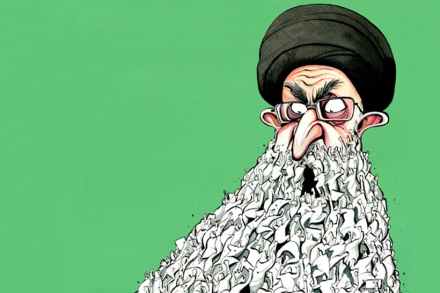
On this week's podcast, we look at the global silence around the protests in Iran. We'll also be asking whether Wilfred Owen might have been a paedophile, and railing against unnecessary subtitling on internet videos. First, in the magazine this week Douglas Murray turns his attention to the recent turbulence in Iran. Not since 2009 has the country seen such widespread disruption, but will this be another abortive uprising, like the so-called 'Green Revolution', or is this the descendant of the 1979 revolution, whose leaders are still in power? Douglas joins the podcast to discuss, along with Iranian journalist Nazenin Ansari, Managing Editor of Persian-language newspaper Kayhan London.

Toff’s jungle victory shows that millennials are, deep down, conservative

From our UK edition

All hail Georgia 'Toff' Toffolo, Queen of the Jungle! After 22 days in the Australian wilderness, the Made in Chelsea actress(?) has emerged triumphant, with more than 10 million people cheering her home at the end. The 2017 series, which concluded last night, was dominated by media discussion about the presence of Boris Johnson’s dad, Stanley, in the line-up. In the end, Stanley made it to the third week of the competition, coming across as a fairly sensible, paternal figure with many of his son’s mannerisms but little of the bravura bluster. For all the talk about how Stanley could refresh the British public’s cooling infatuation with the blond barnetted Foreign Secretary, he ended up doing little to stoke interest in the Johnson clan.

The Spectator Podcast: Carry on Brexit

From our UK edition

On this week’s episode we're looking at the Brexit situation as 2017 draws to a close. We’ll also be marvelling at all the wondrous, and infuriating, jargon to come from our EU withdrawal, and asking whether British aristocrats are being seduced by the new ‘glamocracy’. First up: the days might be getting shorter, but the crises faced by Britain's Brexit negotiations seem never-ending. Ireland has been the sticking point this week, compounding a torrid month for Theresa May. Her task is Herculean, writes James Forsyth in this week's magazine cover story, not because she herself is Hercules, but because her tasks are getting more and more difficult. Will the EU ever show mercy on her?

England are probably going to win the World Cup

From our UK edition

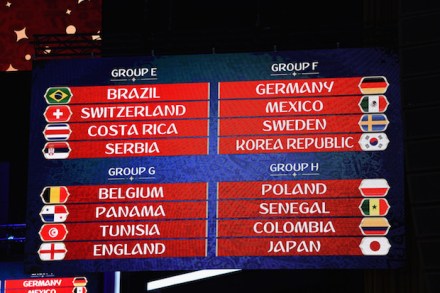
England, Belgium, Tunisia, Panama: it doesn’t make an acronym as alluring as the ‘England Algeria Slovenia Yanks’ headline The Sun ran at this stage in 2009, but English football fans will have breathed a sigh of relief after being placed in a group we might call BTEC - Belgium Tunisia England Canal folk (Panama) - because it certainly wasn’t the hardest option out there. A cautious optimism must now seep into the England set-up. Encouraging draws against Germany and Brazil proved that this generation are more dour and pragmatic than the extravagant ensemble that preceded them.

The Spectator Podcast: For richer, for poorer

From our UK edition

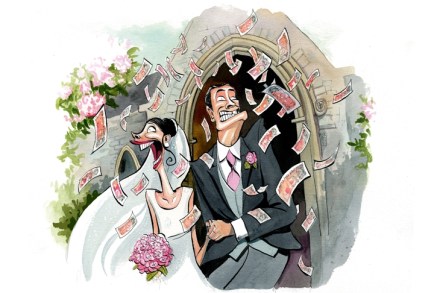
On this week’s episode we’ll be discussing whether marriage is becoming an elite institution. We’ll also be wondering if the Tory glass is half full or half empty, and lamenting the loss of Britain’s tiny train lines. First up: is marriage becoming the preserve of the rich? In this week's magazine, Ed West asks whether Prince Harry's presumably lavish nuptials will be the latest signal that marriage is becoming an increasingly rarefied institution. What can be done to reverse this slump? And ought we to be worrying about traditional unions in the 21st Century? To discuss, we were joined on the podcast by Frank Young, Head of the Family Policy Unit at the Centre for Social Justice, and Rosie Wilby, author of Is Monogamy Dead?

The Spectator Podcast: Merkel’s crack-up

From our UK edition

On this week’s episode, we look at the situation in Germany, and whether Angela Merkel can hold things together. We also speak to Norway’s immigration minister, and discuss the dying art of cottaging. After 12 years as Germany’s chancellor, Angela Merkel is this week facing the worst crisis of her premiership. Coalition talks collapsed after the Free Democrats walked away from negotiations with Merkel’s Christian Democrats. So where does this leave Germany? In the magazine this week, William Cook calls the situation ‘uniquely damaging’, whilst James Forsyth outlines the implications for Brexit. James joined the podcast, along with Thomas Kielinger, London correspondent for Die Welt.

The Spectator Podcast: Corbyn 2.0

From our UK edition

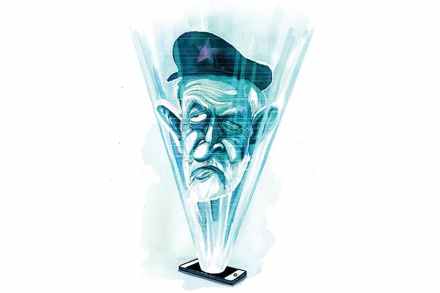
On this week’s episode we look at the social media revolution which could sweep the Tories away. We also discuss next week’s budget and agonise about the state of the nation with Jeffrey Archer. Whether it’s Jeremy Corbyn, Donald Trump or the Brexiteers, successful politicians seem to have one thing in common: a command of social media. But what about Theresa May and her party? In the magazine this week, Robert Peston is concerned that the Prime Minister might be left behind if she fails to grasp the importance of the internet. He joins the podcast along with Jamie Bartlett, Director of the Centre for the Analysis of Social Media at Demos and a tech blogger for Coffee House, and Joe Todd, from Momentum. As Robert writes: "The crude stats are humiliating for Theresa May.

The Spectator Podcast: Desert storm

From our UK edition

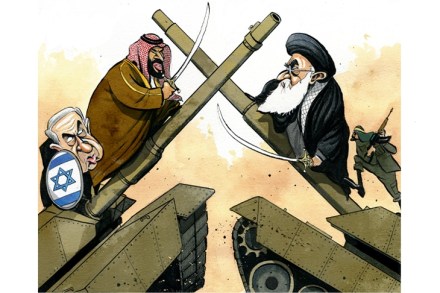
On this week’s episode, we turn our attention to the Middle East and the unlikely alliance of Saudi Arabia and Israel as they stare down a common enemy. We also consider whether the old adage ‘the night is always darkest just before the dawn’ holds for Theresa May, and wondering why there hasn’t been a great musical about British history. Last week saw a massive anti-corruption push in Saudi Arabia oust a number of princes. The putsch was initiated by Crown Prince Muhammed Bin Salman, and in this week’s magazine cover story John R. Bradley looks at how the young prince has attempted to align his country with Israeli interests in order to squeeze out a mutual antagonist: Iran.