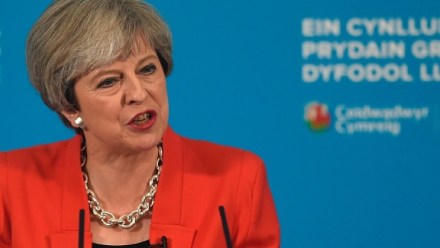
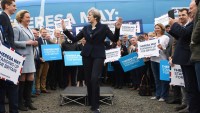
Theresa may

Will Corbyn’s supporters blame their election defeat on the Manchester attack?

From our UK edition

The Manchester murders have given British politics its first conspiracy theory with a grain of truth in it. It may sound ghoulish to discuss the political consequences of an atrocity. But terrorism is a political crime, and we are in a general election campaign. Everyone is thinking that the Manchester attack passes the advantage to Theresa May. Soon they will be saying it too. It is easy to predict how the killings will be knitted into the left’s explanation for the defeat of 2017. Against the odds, Labour was doing well in the polls, Corbyn’s supporters will say. Why one survey had the opposition a mere nine points behind the Conservatives. (Others had it 14 points down, but trust me, they will be forgotten).

Will Theresa May ever resist a backlash?

From our UK edition

Elections matter. They are fundamental to our way of life. So, while it is appropriate that the campaigns stopped on Tuesday to mourn the victims of the heinous terrorist attack in Manchester, democracy demands that they resume as quickly as possible. The terrorists must know that they will never change how our society functions. This is an odd election. Everyone assumes they know what the result will be and the real psephological debate is over just how big the Tory majority will be. On Monday, even the most panicked Tory was only concerned about what Theresa May’s U-turn would mean for the party’s margin of victory, not the actual result. But her retreat on social care will have ramifications far beyond 8 June.

This is the worst Tory campaign ever

From our UK edition

I am trying to remember if there was ever a worse Conservative election campaign than this current dog’s breakfast — and failing. Certainly 2001 was pretty awful, with Oliver Letwin going rogue and Thatcher sniping nastily from behind the arras. It is often said that 1987 was a little lacklustre and Ted Heath had effectively thrown in the towel in October 1974. But I don’t think anything quite matches up to this combination of prize gaffes and the robotic incantation of platitudinous idiocies. To have suggested that the hunting with dogs legislation might be subject to a free vote in the House of Commons was, whether you are pro hunting or against, a move of quite stunning stupidity.

First class

From our UK edition

On the Today programme a month ago, Education Secretary Justine Greening was asked whether she could name any ‘respected figure or institution’ in favour of more grammar schools. She declined to answer, which was taken to mean that she couldn’t, and that there wasn’t. I’ve been travelling a lot this year, so wasn’t around to offer my support. I’m back now. Assuming that a professor of education at a Russell Group university is respectable enough, let me wade into the debate: yes, I’m in favour of more grammar schools. Educational experts against more grammar schools — of which there are plenty — point to the current evidence from England and international evidence in their support. They’re wrong to do so on both counts.

Should there be troops on the streets?

From our UK edition

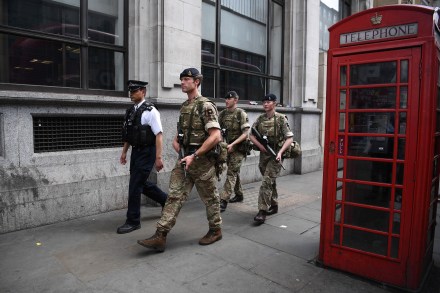
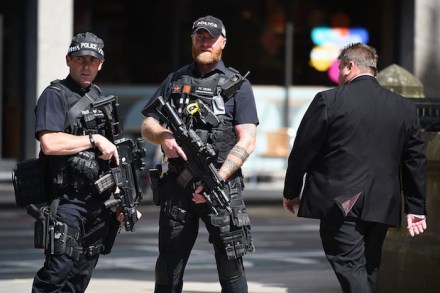
In the wake of terrorist outrages such as Monday's bombing, the British public tends to keep calm and carry on. We saw it in London after the Westminster attack in March; we saw it yesterday on the streets of Manchester – a stirring sight. That calmness in the face of evil is an attitude that has almost always been reflected by those who govern and lead us. Think of Margaret Thatcher’s steely response to the Brighton bombing. It’s the British way. But it has, until now, also been the British way not to put troops on the streets unless absolutely necessary. It’s a delicate balance: a prime minister has a duty to reinforce the police, and after a terrorist attack it’s also natural that any democracy would be put on the highest form of alert.

UK terror threat level raised to ‘critical’, soldiers deployed to the streets

From our UK edition

In her second statement of the day, Theresa May has announced that the national terror threat level has been raised from "severe" to the highest level,"critical". She added that she has also deployed the military to help armed police by triggering Operation Temperer,  a protocol that sends troops to help police with security at airports, rail networks, harbours etc. This is the first time that the level has been at critical since the foiled 2006 Heathrow plot - defined as the prospect of a terrorist attack moving from being "highly likely" to being "imminent". This has been done before, and both times it lasted for just a few days.

Theresa May condemns ‘callous’ Manchester attack, full statement

From our UK edition

I have just chaired a meeting of the government’s emergency committee COBR, where we discussed the details of – and the response to – the appalling events in Manchester last night. Our thoughts and prayers are with the victims and the families and friends of all those affected. It is now beyond doubt that the people of Manchester and of this country have fallen victim to a callous terrorist attack. An attack that targeted some of the youngest people in our society, with cold calculation. This was among the worst terrorist incidents we have ever experienced in the United Kingdom, and although it is not the first time Manchester has suffered in this way, it is the worst attack the city has experienced and the worst ever to hit the North of England.

Theresa May offers a defiant message after Manchester terror attack

From our UK edition

Theresa May has just spoken from Downing Street about the terrorist attack in Manchester. She said that the police and the security services believed they know the identity of the suicide bomber, but do not wish to reveal it for now. She said that the bomber had blown themselves up by one of the exits from the arena at the end of the concert, which would mean that the attacker did not have to go through security. The police and the security services are, she said, currently trying to establish whether the attacker was operating alone or not.  This is the second statement responding to a terrorist attack that Theresa May has had to do in the last three months.

Theresa May forced to defend U-turn in her most difficult interview yet

From our UK edition

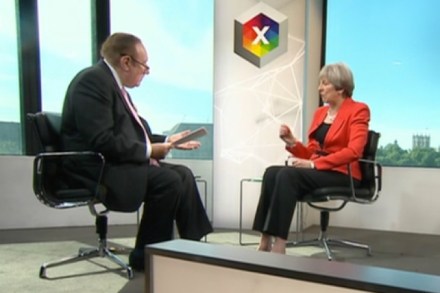
Today was not a day that Theresa May will want to repeat anytime soon. In the morning, she had to U-turn on one of the centrepieces of her election manifesto and in the afternoon, she faced the most difficult interview she has had as Prime Minister. Theresa May never really got onto the front foot in her half-hour interview with Andrew Neil. She spent the first ten minutes of the interview claiming that the principles behind the Tories’ social care policy hadn’t changed, while Andrew Neil hammered the point that something has: there is now a cap whereas the manifesto had explicitly rejected one. May was also uncomfortable on the question of whether the £8 billion extra the Tories are proposing for the NHS is all new money or not.

Why the ‘dementia tax’ U-turn is such a blow to Theresa May

From our UK edition

U-turning on a manifesto commitment just days after it was announced would be embarrassing for any politician. But it is particularly humiliating when your whole campaign is based around the idea that you offer competent, ‘strong and stable’ leadership. But even leaving aside the immediate political repercussions, this U-turn is a deep blow to Theresa May and her team. For the social care policy was totemic of the way she is trying to change the party. She and her team want to make the Tories more concerned about the just managing than the better off and less deferential to property wealth.

There’s a fairer way of funding social care. Here’s how

From our UK edition

So, the Conservatives have capitulated. After days of facing negative headlines about the ‘dementia tax’ Theresa May has given in and announced that there will, after all, be a cap on care costs faced by an individual. No wonder modern governments find it so hard to eliminate their structural deficits. So loud are the protests when they propose any tax increase or cut in spending that they are doomed to limp along with an ever-greater gap between what they feel compelled to spend and what they are politically able to raise in revenue. Public opinion may be king, but it doesn’t add up to a balanced budget.

Five reasons why the ‘dementia tax’ U-turn was inevitable

From our UK edition

'The Tory "dementia tax" could backfire for Theresa May' was the Coffee House take last Thursday, perhaps the first mention of that phrase in the media last week. It took a few days for the announcement to sink in, and for the 'dementia tax' tag to stick. But it most certainly has backfired now. Jeremy Hunt tells the Evening Standard that the government wants to 'make sure that people who have worked hard and saved up all their lifetimes do not have to worry about losing all their assets'. It seems there will, after all, be a cap on what an individual has to spend on care. Theresa May has separately promised a consultation that will at least look at a cap. https://twitter.

The drop in the Conservative lead isn’t all bad news for Theresa May

From our UK edition

On the surface, today's front pages don't make enjoyable reading for the Prime Minister. The Sunday Times leads on a YouGov poll which says the Conservative lead has been slashed to single figures for the first time since last year, while the Mail on Sunday splashes on a Survation poll -- claiming the Tory lead has dropped by five points as a result of the 'dementia tax'. [caption id="attachment_9853172" align="aligncentre" width="520"] Sunday Times/YouGov poll[/caption] Now a dip in popularity for the Conservatives isn't entirely unexpected. It comes after the party revealed a manifesto that could hardly be described as feel-good.

Why Theresa May can transform the Tory party

From our UK edition

When he was asked what kind of generals he wanted, Napoleon replied ‘lucky ones’. Theresa May certainly fits into that category, as I say in The Sun this morning. In the Tory leadership race her two main rivals, Boris Johnson and Michael Gove, destroyed each other leaving her facing Andrea Leadsom who promptly blew herself up. In this election, she is facing a Labour leader who has abandoned both the centre ground and patriotism. Now, May has skilfully exploited these openings—just look at how she is pitching to those abandoned Labour voters. But, perhaps, most relevant for the next five years is how there is no Tory alternative to her. For May is trying to change the Tory party, to move it towards the centre.

There’s a palpable desire for a no-nonsense alternative to the SNP – and Ruth Davidson is delivering it

From our UK edition

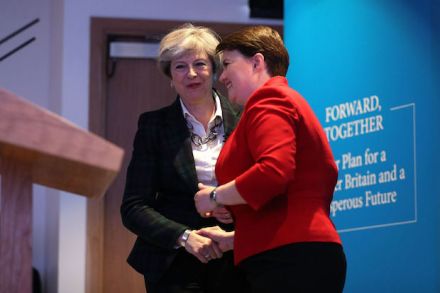
Theresa May came to Scotland today to offer her support to Ruth Davidson. Notionally, the Scottish Tory leader is supposed to support the Prime Minister but in this election, Ruth is a greater asset to the Conservative and Unionist party than Theresa.  Today’s YouGov poll for The Times confirms as much. Mrs May has a net approval rating in Scotland of -17; Ms Davidson’s is +10. Two thirds of those voters who endorsed Labour candidates in 2014 think Davidson is doing a good job and so, remarkably, do one in three voters who supported the SNP two years ago.  The same poll was interesting precisely because there was nothing startling in it.

Can the Tories boast about giving parity of esteem to mental health?

From our UK edition

Mental health only made it into all three main party manifestos for the first time in 2015. Two years later, and it would be impossible to imagine any serious political party missing it out. In fact, the first line on the ‘mental health gap’ in the Conservative manifesto suggests that they’ve already accomplished their aims: ‘It was Conservatives in government that gave parity of esteem to the treatment of mental health in the National Health Service.’ This is true - but also not very clear. It suggests mental health and physical health are now on an equal footing in the NHS. They are not. The Coalition government introduced a mandate for the health service that called for measurable progress towards ‘true parity of esteem’ by March 2015.

Power and the middle class

From our UK edition

The Labour party’s tagline for the forthcoming general election is: ‘For the many, not the few.’ Aristotle, who understood this as ‘For the poor, not the rich’, thought this a recipe for conflict and proposed a solution of which Mrs May would approve. Suspicious of monarchy, Aristotle favoured two styles of constitution: oligarchy and democracy. The problem was that both systems ran the risk of creating an inherently unstable state. In a democracy, the poor would be in control by sheer weight of numbers; in an oligarchy, the rich would gain control (presumably) by sheer weight of influence.

The Spectator’s Notes | 18 May 2017

From our UK edition

‘Exclusive invitation: I want to hear from you, Charles’, it said in my inbox. Theresa May wanted me to take part in her ‘telephone town hall’, she told me, offering ‘an opportunity to voice your opinions and ask questions directly to me in a simple and open way’. Unfortunately, the line was open only between 7 and 8 on Tuesday night, and I was engaged elsewhere. One thing I might have asked was ‘Who do you listen to before you say something in public?’ Although Mrs May has a reputation for caution, she is capable of throwing out ideas which sound as if they have not been tested on the people they might affect.