Theresa may

Corbyn or May? The papers have their say

From our UK edition

This time tomorrow, the politicians will have finally fallen silent and the polls will be open. But who to vote for? Here’s what the papers say: The Sun backs Theresa May and has a ‘simple message’ for those considering voting for Ukip or Labour: ‘don’t’. Given that the ‘Tories alone are committed to seeing Brexit through in full’, the Sun suggests a vote for the 'Kippers would be redundant. And for those who believe Labour will ensure Brexit happens, the Sun says that it 'does not believe' it 'for a second’. For those who have always voted Labour, the Sun says to remember that Corbyn's party ‘is not the moderate Labour of Tony Blair’.

Theresa May’s decision to cuddle the Donald looks worse by the day

From our UK edition

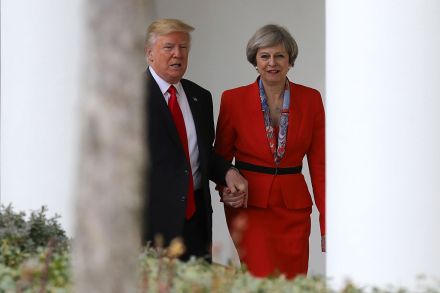
It is not often, especially in the midst of what has been a grimly dreadful election campaign for her, that one feels some measure of pity for Theresa May. But there she was today, gamely putting on her bravest, gamest, face when she was asked for her reaction to Donald Trump’s latest witless provocations.  The American president, you can hardly failed to have noticed, has not covered himself in glory since the weekend’s terrorist attack in London. When the city’s mayor, Sadiq Khan, suggested that Londoners should not be alarmed by the deployment of additional armed officers on the streets of London, Trump blustered “At least 7 dead and 48 wounded in terror attack and Mayor of London says there is ‘no reason to be alarmed!

Has Theresa May’s strong point become her Achilles heel?

From our UK edition

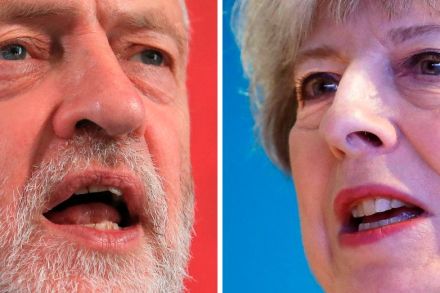
Security is supposed to be Theresa May’s strong point. Today, it looked like her Achilles heel. The Prime Minister used a speech this morning to pit herself against Jeremy Corbyn as the one to trust on Brexit and keeping Britain safe. At the same venue as her leadership launch last year, May painted a familiar image of herself as a politician who doesn’t ‘gossip’ and gets on with the job as she accused Corbyn of an 'abdication of leadership’. But in the Q and A afterwards, it wasn’t the Labour leader’s record which was up for discussion. Instead, it was May’s time as Home Secretary which came under close scrutiny.

The Christian views of Theresa May and Tim Farron are way below the radar. And that’s how they like it

From our UK edition

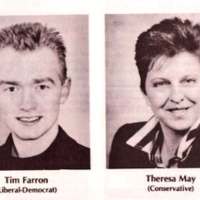
There's a mischievous, not to say malicious, Twitter photograph of Theresa May circulating this morning. It shows her sporting shoulder pads and severely slicked-backed boyish hair, campaigning in the 1987 general election. On top of it someone has added the words: 'Curbing the promotion of lesbianism in Merton's schools starts with girls having male role models in their lives'. Did she say it? No one can source the quote. But Mrs May, then as now a weekly churchgoing Anglican, did vote against the repeal of Section 28 in 2000. In those days she was an opponent of same-sex marriage, as was Tim Farron, also a weekly churchgoer. Both the Prime Minister and the Lib Dem leader held this view for religious reasons, though they preferred not to be drawn into theological debate.

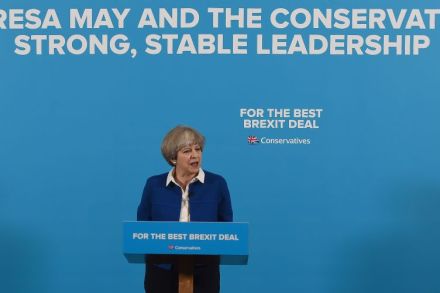
Theresa May’s ‘strong leadership’ speech, full transcript

From our UK edition

In three days, the British people will choose who they want to lead this country through the next five years. Five years that will define the future of our country for generations to come. I called this election because, as we face the start of the crucial Brexit negotiations in just a few short days, I believed it would be essential for the British Government to be in the strongest possible position going into those talks. That remains the most critical issue in this campaign. But of course, when this campaign started, we could never have predicted the tragic turn that events would take. We could never have imagined the appalling depravity that led a cowardly and callous killer to target innocent men, women and children in the way that we saw in Manchester two weeks ago.

Watch: Karen Bradley refuses to answer question over armed police numbers

From our UK edition

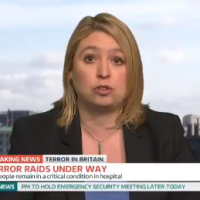
Theresa May is under pressure over cuts to armed police in the wake of the London attack. This morning, Culture Secretary Karen Bradley popped up on Good Morning Britain to try and defend the Prime Minister. The only problem? Bradley refused to answer any questions. Here's her awkward exchange with Piers Morgan: Piers Morgan: Do you know if the number of armed police has gone up or down in the last six years? Do you know the answer? Karen Bradley: Piers, what I am interested in is making sure that we have the right resources, the right powers and the right training and capabilities. I am assured by the police that they have that to deal with the counter-terrorism threat, but we need to look, learn lessons and make sure we act where appropriate...

This election will be remembered as a triumph for the wealthy

From our UK edition

This dismal, unnecessary election, conducted between the scream of police sirens and the murders of civilians, will be remembered for one thing only: the dementia tax. In years to come, political pros will shake their heads at the naivety of Theresa May. She appeared invincible, they will say. All she had to do was to keep quiet, turn up and she would win a landslide victory. Then she faced one of the great questions of the day. Everyone says they want politicians to do that. Who has not exclaimed that they must stop listening to focus groups and be brave? May was, and see how she has suffered. The PM understood that the social care system cannot cope now, and could collapse as more of us trudge into senility.

How to tackle the terrorist threat: four steps we must now consider

From our UK edition

For the second time in this election, political campaigning is suspended because of a terrorist attack. Given the volume of terrorist attacks—three in the last three months and five other plots disrupted—you might think that the issue would have dominated the campaign. But it hasn’t. Until Theresa May’s statement today talking about how there has been too much tolerance for extremism, there has been remarkably little discussion about how this country should deal with this problem. Now, you can say that we shouldn’t allow the terrorists to set the agenda. But I fear that the main reason for the absence of debate is that no one is quite sure what to do. However, it is imperative that we start talking seriously about the steps we can take.

Theresa May says ‘enough is enough’ following latest terror attack

From our UK edition

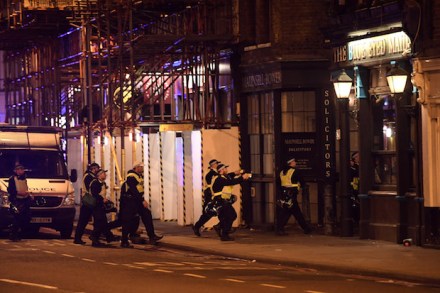
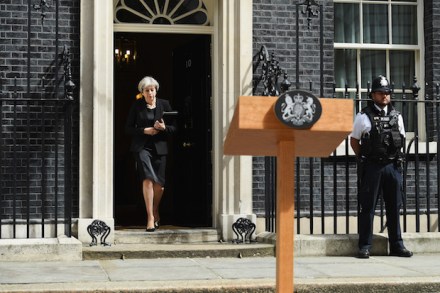
Theresa May has said 'enough is enough' in a robust statement following last night's terror attack, which left seven people dead and 48 injured. Acknowledging that this is the third terror attack Britain has experienced in three months, the Prime Minister said that while the three attacks were not connected in their planning, they are bound together by one thing: Islamist extremism.

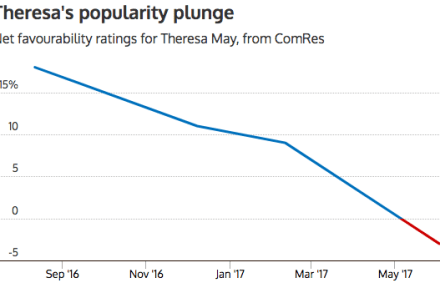
Theresa May’s popularity rating turns negative, but Tory lead remains intact

From our UK edition

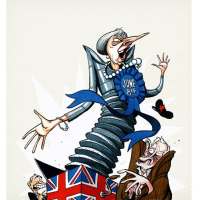
When the Conservatives were rebranded “Theresa May’s team” and the party's name purged from its literature, there were two explanations. One, that the UK system of Cabinet government doesn’t suit the Prime Minister, so wants an election where she’d campaign by diktat in order to govern by diktat. She'd go fetch a three-figure majority, then her Cabinet meetings would be a bit like the Spitting Image sketch about vegetables (above). The other explanation was more plausible, and benign: that her personal approval ratings were the highest recorded for any Prime Minister so it made sense for the Tories to campaign on the leader.

Theresa May isn’t the first to make the mistake of claiming to be ‘strong and stable’

From our UK edition

Theresa May's ‘strong and stable’ strapline has apparently been withdrawn after the electorate started to sway with nausea. Yet the words remain emblazoned on the ‘battle bus’, still crop up in interviews, and continue to litter campaign material across the country. To little effect. The phrase was soon found to be a blunt weapon, not cutting through to voters but bludgeoning them into a stupor. To be ‘strong and stable’ is so self-evidently desirable that to say so is vacuous and empty. In fact, as we have seen, this limp phrase has recently rebounded with some force: ‘strong and stable’ has become the benchmark against which to judge a Prime Minister stymied by handbrake U-turns and dithering imprecision.

Confident May tells audience, I had the balls to call this election

From our UK edition

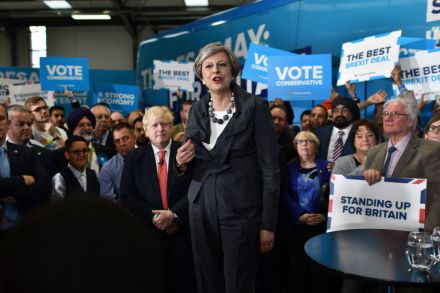
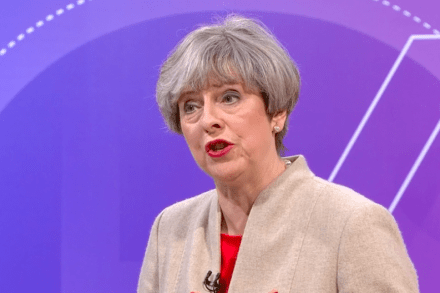
Theresa May turned in what, I think, was her best TV performance of the election tonight. May engaged with the questions more than she has in previous TV events, and was more confident and fluent than she had been on Monday night. After a prolonged Tory wobble, her performance will have steadied jangling Tory nerves. May pitched hard for the Brexit vote. She said that she had called the election ‘for Brexit’ and that if you voted Leave, you needed to make sure you got it. When she was accused of calling the election for political gain, she hit back saying that she had had the balls to call an election rather than just serving out the term the Tories had won in 2015. Her deliberate use of the word balls was very Thatcheresque, deliberately flipping the language of gender.

Corbyn bursts through 40 per cent in latest Ipsos Mori poll

From our UK edition

Only a few weeks ago, the polls brought nothing but joy for the Tories. With just six days to go until election day, that’s no longer the case. An Ipsos MORI survey out today cuts the Conservative lead down to just five points. Labour’s support has burst through the 40 per cent mark - rising by six points since Ipsos MORI's last poll on May 18th. The poll comes off the back of this week’s shock YouGov estimate, which suggested we could be heading for a hung Parliament. And YouGov’s updated election model for today doesn’t bring any better news for the Tories: it suggests that Theresa May will now fall 13 seats short of an overall majority. Today’s Ipsos MORI poll is interesting for three reasons.

Theresa May performs yet another U-turn

From our UK edition

Given that Theresa May hasn't performed one of her customary 'strong and steady' U-turns for over a week, it was about time she changed her mind on something. So, Mr S was relieved to read her interview with City AM editor Christian May. While the Prime Minister promises to defend the City in EU negotiations, it was the quick fire round that caught Steerpike's attention. May is asked to pick which restaurant out of Coq D'Argent or Simpson's Tavern she prefers: CM: Coq D'Argent or Simpson's Tavern? TM: Simpson's Tavern. When May plumps for Simpson's Tavern, the editor lets her know this is also Nigel Farage's favourite: CM: When I point out this is Nigel Farage's favourite City haunt, the PM changes her mind.

What the papers say: Are we heading for a coalition of chaos?

From our UK edition

Theresa May's warnings about a 'coalition of chaos' used to sound like empty threats. Not any longer. Since the publication of this week's YouGov poll which suggested we could be heading for a hung Parliament, the prospect of Jeremy Corbyn making it to No.10 suddenly seems less unbelievable than before. But if May does lose her majority, Corbyn would not be able to govern alone. Make no mistake, says the Sun: ‘Labour could not govern without a coalition with the SNP’. So whatever Jeremy Corbyn might say about his plan for governing - and Brexit-  there’s little doubt that it would be the Scots who ‘would call the shots’.

May’s mistakes

From our UK edition

On the eve of the US presidential election, experts at Princeton university decided that Donald Trump had a 1 per cent chance of being elected. Before the last general election, Populus, the opinion poll firm, gave David Cameron a 0.5 per cent chance of winning a majority. Much is made of the need to look at ‘the data’ when considering political arguments, but so often it is a wildly inaccurate guess with a decimal point at the end to give an aura of scientific specificity. So when we read that Jeremy Corbyn has just a 17 per cent chance of becoming prime minister, this does not mean that the election is in the bag. The Tories are still quite capable of blowing it. It’s understandable that voters have misgivings about Theresa May.

The Spectator Podcast: General shambles

From our UK edition

On this week’s episode we look ahead to the General Election, now just days away, and ask whether Theresa May might conceivably have blown her chances, or if Jeremy Corbyn as Prime Minister is still as unlikely as ever. And, for some light relief, we also be consider the role that handwriting plays in our digital society. First, the British public will be heading to the polls in just a week's time, so we took a moment to reflect on the campaign so far. In his cover piece this week, James Forsyth decries the state of this election, saying that it has left Theresa May, particularly, in a weakened state. James joins the podcast along with Tim Shipman, the Sunday Times political editor and author of All Out War.

Ignore all the bluster, the Tories will still win

From our UK edition

This is the first general election since 1997 where I have not primarily been employed as a journalist, covering the story of the campaign and its participants. Of course, I’ve still been writing about it, but from a certain distance. I miss some of the peculiar entertainments of the political circus, and some of the freaks and wild animals that provide those entertainments. But by and large, it’s rather nice to be watching things from a little way off. Especially because that distance allows me to say things like this: a lot of journalists, and a lot of politicians (especially Conservative ones) have gone stark raving mad and are talking gibberish about this election. I know why, of course. Campaigns create madness. The days are longer and the pressure greater.