Tennis

No balls

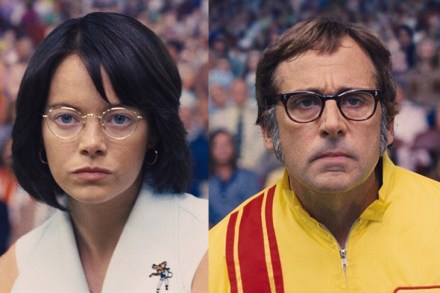
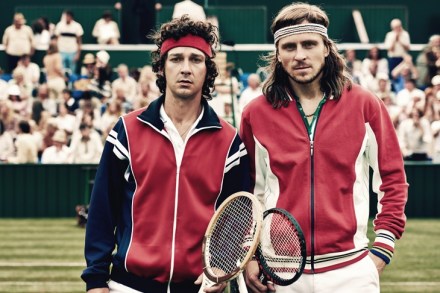
Borg vs McEnroe is a dramatised account of one of the greatest tennis rivalries of all time — between Bjorn Borg and John McEnroe (the clue was always in the title) — that doesn’t hit nearly as hard as it should. It does the job. It gets us from A to B. But it doesn’t dazzle. It doesn’t have the dramatic smarts to lend either surprising tension or excitement to otherwise familiar events, or shed any new light on them. It’s more the pt-pt-pt-pt of a stolid baseline rally and now, you will be thankful to hear, that’s it with the tennis puns. (I only had two anyhow.) The film stars Sverrir Gudnason as Borg and Shia LaBeouf as McEnroe and it all plays out in the lead-up to their most famous showdown.

My wife’s revenge has me at break point

Fifteen years ago, when I was The Spectator’s drama critic, Caroline used to complain that she had become a ‘theatre widow’. I was spending at least three nights a week in the West End while she was cooped up at home. Occasionally, I was able to persuade her to come with me, but most of the time she just made a face: ‘I’d love to accompany you to the musical version of Salman Rushdie’s Midnight’s Children, but unfortunately I have an unbreakable appointment with the sofa and the TV set.’ Well, she has her revenge. Caroline is captain of the Park Club Ladies Second Team and if she hasn’t got a match or a tournament, she’s doing ‘drills’ or playing in the ‘social’.

Always the Superbrat

John McEnroe’s father calls. In fact, he calls McEnroe’s manager’s phone, presumably because dad doesn’t have a direct line to the great man himself. John Sr, who is tennis-mad, has a request: can he come with his son to a veterans’ tournament in Belgium? McEnroe is horrified. Having dad around is a major drag. ‘I was about to say absolutely not,’ he writes — when his old rival Björn Borg, who happens to be dining with him, interjects: ‘Let me speak to him.’ Borg, who had lost his own father three years earlier, tells McEnroe Sr: ‘Don’t worry, JP, if John doesn’t bring you to Knokke-Heist, I will.

Match made in heaven | 6 July 2017

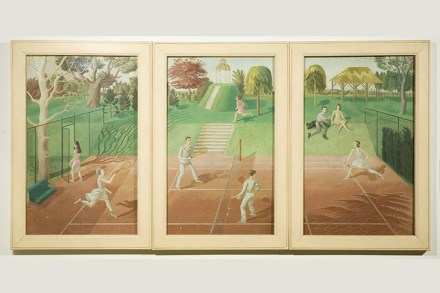
Tennis is best played with a wooden racket on a shady lawn somewhere close to Dorking. There is no need for trainers, an umpire, or a scoreboard. No need for rules at all. After Wimbledon, the tea-and-jam, grass-stained, Sunday-afternoon scenario from A Room with a View is the only one to emulate. In 1908, when E.M. Forster published his novel, lawn tennis was not yet 50 years old. Although the origins of the game reach back to the 12th century, the version played by Miss Honeychurch and Reverend Beebe and most of us today was said to have been pioneered on a croquet lawn in Edgbaston in 1859.

Andy’s ace

Who will you cheer for if Andy Murray meets Roger Federer at Wimbledon? It’s not a straightforward question, at least not for the English. The loveliness of Rodge and the awkwardness of Andy — however British — makes for a difficult and revealing choice. Different if you happen to be Scottish. I remember a conversation in the gents at Melbourne in 2010. Two Scots, companionably pissing side by side, were loudly discussing the final of the Australian Open just completed. An Englishwoman alongside them in the stands had been cheering Federer, the straight-sets winner, rather than Murray. ‘She was everything I was brought up to hate.’ But Murray was never an inevitable cheer-target for the English. There’s always been something difficult about him.

Metal fatigue in the golden generation

Not a bad week for Roger Federer then: first pootling along being cool and rich in a morning suit at the Philippa Middleton wedding, then being named in the world’s tennis top five again, with his increasingly elderly chums. It’s the first time all five (Murray, Djokovic, Federer, Nadal and ‘Stan the Man’ Wawrinka) have been over 30. Indeed, the only player born in the 1990s to reach a grand slam final is Milos Raonic; no spring chicken at 27. This is an astonishing time in tennis; a golden generation indeed. We have come a long way since Lleyton Hewitt beat David Nalbandian 3-0 to win Wimbledon. Nalbandian won just six games. That was in 2002; not so long ago, though it feels like a lifetime.

The age of Joshua

Every so often comes a moment that can set the history of sport on a different trajectory. I believe we will witness such a moment on Saturday when Anthony Joshua, of Golders Green no less, fights the veteran Wladimir Klitschko for the Heavy-weight Champ-ionship of the World. At Wembley Stadium, not a Las Vegas car park. This is a battle of the ages and for the ages, and it is right here in London. For those of us who were glued to barely audible radios at 3am to hear epic US fights or flogged around seedy London cinemas for a live transmission, the romance, the magic and the brutal beauty seems to have gone out of the heavyweight game. The story of Muhammad Ali, and the brilliant film of his Rumble in the Jungle, When We Were Kings, now feels like a romantic confection.

High life | 30 March 2017

 Gstaad It’s my last week in the Alps, and the snow is gone, replaced by brilliant sunshine. Silence reigns, broken only by the occasional clear, sharp wind. The town is now empty and clean, and the air bracing. I love the village out of season, when the shoppers have finally gone and the locals are preparing to release the cows into the mountains. Training at altitude will make it easy to go at it hard once I am back in the city — at least for a week or two. There is nothing like a three-month Alpine break for the old ticker. Dinner parties out of season are very gay affairs between old friends. Vivien Duffield gave one last week that could have been written by a Hollywood scriptwriter.

A stroke of genius

The picture had been chosen for its utterly gratuitous depiction of female beauty. It showed Justine Henin, the Belgian tennis player who won seven grand-slam singles titles between 2003 and 2007. She was fully dressed for tennis. The gratuitous beauty came from the shot she was playing. It was a single-handed backhand. Henin was five foot six and so slim she had to run round and round in the shower to get wet. She didn’t look capable of hitting the top off a dandelion. But that backhand regularly devastated opponents, fizzing down the line with astonishing power — where did that come from? — or howling across court at a quite preposterous angle.

High life | 3 November 2016

Sixty years ago this week all hell broke loose: Soviet tanks rumbled into Budapest and put down a nationalist uprising in a very bloody manner. Down south Anglo-French paratroopers jumped into the Sinai and, in cahoots with the Israelis, took over the Suez Canal in a last gasp of colonialism by the Europeans. And in Washington DC a very peed-off President Eisenhower ordered the Anglo-French to go home or else. They went home and only the Israelis howled that Ike was an anti-Semite and many other things. And where was your intrepid foreign (future High life) correspondent while all this was going on? On an aeroplane flying from New York to Bermuda for a tennis tournament.

Rio, Rio

Stuff I have learnt after two solid weeks watching the Olympics on TV. 1. Tennis and golf shouldn’t be Olympic sports. Yes, I know we won both and Rose’s final chip on to the 18th green was great to watch. But you can see this sort of thing done with a tougher range of competitors at any number of majors all the time. Olympic medals should be there to reward the Corinthian spirit not just an opportunity for millionaires to add something a bit different to their mantelpiece. 2. I still don’t understand the judging system for the diving but had arse quality been included in the women’s events — as I believe it should — the Italian girl would have done much better. 3.

Wimbledon’s ultimate one-up man

What a well-behaved Wimbledon. Apart from a bit of racket-smashing (most of the ladies), low-level swearing (Nick Kyrgios), tantrums (Kyrgios), and egregious non-trying (Kyrgios again, of course) it has all gone pretty-smoothly. So whatever happened to top-class gamesmanship? The master of this, you may be surprised to learn, was the greatest British player of all, the three-times Wimbledon champion Fred Perry. With great natural charm and remarkable good looks, Perry —who was from humble origins — fitted effortlessly into the very upper-crust world of 1930s tennis. His sexual prowess was on an Olympic scale and he bagged some of the most-beautiful women in the world, from-Marlene Dietrich downwards. And few seemed to have a bad word for him.

And your point, Professor?

Pop idol turned top boffin Brian Cox doesn’t shy away from the big issues. With programmes such as Wonders of the Solar System, Wonders of Life and Human Universe, Cox, the heir apparent to His Eminence Sir David Attenborough, has dared to dream on a cosmic scale. Are there any limits to his mighty intellect? In his latest adventure, Forces of Nature (BBC1, Monday), the ambitious prof boldly seeks to illustrate the workings of ‘the underlying laws of nature’. As wistful electronic music tinkled Eno ishly in the background, he assured us, in a metaphysical tone, that ‘the whole universe, the whole of physics, is contained in a snowflake’.

The pain of being second-best

The boys at Radio 5, bless ’em, are now including the EU referendum as part of their sports trailers. As in: ‘The European Championships; England versus Sri Lanka; Wimbledon; the EU Referendum; the Rio Olympics... don’t miss a second of this glorious summer of sport on BBC 5 Live.’ Nevertheless, the normally excitable world of sport has remained strangely immune to the dramas of the Brexit debate, though Sir Ian ‘Beefy’ Botham has put his considerable bulk behind the ‘outers’. Not surprising really. It was once said that cricket has the only trade union where the workers are to the right of the employers.

High life | 2 June 2016

Write about things you really know was the advice Papa Hemingway offered wannabe writers, so here goes: the French Open is still on, Wimbledon is coming up, and I’ve just read a lament by some French woman about how professional tennis and big-time sports have become ever more ubiquitous and ever more out of reach. Duh! A former model by the name of Géraldine Maillet has made a documentary about the 2015 French Open, not exactly a stop- the-presses kind of story. It was released on DVD just as the 2016 Open began. The French Championships, as they were called before the Open era began in 1967, was my favourite tournament — Paris being Paris and the Parisian girls being, well, beautiful and easier than most.

The Foxes have little to teach us

A few years ago a motivational speaker brought out a smart little book called Legacy: What The All Blacks Can Teach Us About the Business of Life. Everyone wanted to know how a tiny country miles from anywhere could dominate the world’s hardest team sport for so long. A lot of it, the book said, boiled down to humility, believing in the collective, going the extra yard, and, crucially, ‘no dickheads’. Better people make better All Blacks, was the message. Now the world is trying to learn from the Leicester City playbook.

High life | 5 May 2016

   New York I went downtown to Katz’s the other day and had a pastrami sandwich that made me want to shout. God, it’s good to be bad and eat bad, but not necessarily act bad. That’s the trouble nowadays. People take care of their health, eat properly, exercise obsessively, do mental gymnastics such as crossword puzzles, and then go out and act like slobs, use the F-word non-stop and talk with their mouths full. If I hear one more time that 60 is the new 40, I will punch the first octogenarian, male or female, who crosses my path. Some buffoon who recently took up tennis has written a book about how this might stop him from getting cancer.

How to do better at darts – and life

I have always been intrigued by the scoring systems for different sports, and the degree to which they contribute to the enjoyment of any game. As a friend of mine remarked, had tennis been given the same scoring system as basketball it would be tedious to play, and even worse to watch. Once you glanced at your TV and saw Djokovic leading Murray ‘by 57 points to 31’, you would shrug and change channels to something more gripping, like an unsubtitled version of Last Year at Marienbad. Tennis scoring isn’t quite socialist — one player can demolish -another — but in such cases the contest is over in a mercifully short time.

High life | 31 March 2016

My old friend and one-time doubles partner Ray Moore has stepped down as chief executive of the Indian Wells Tennis Tournament for telling the truth. As Rod Liddle wrote in these here pages a couple of weeks ago, ‘There is nothing more damaging to a career than telling an unfortunate truth.’ Ray Moore was a very good South African tennis player and is a very nice guy. He once partnered me to a final in a major tournament and we have stayed friends for 40 years and more.

Stop calling me ‘Goat’

The title of Tim Parks’s 17th novel is false advertising, because Thomas and Mary: A Love Story is barely a love story, and it’s certainly not about Mary. The intended effect is irony: the dust jacket promises ‘a love story in reverse’, and the opening chapter describes Thomas Paige losing his wedding ring on Blackpool beach during a family holiday. The next few chapters are reasonably successful. Parks opens little windows on to the Paiges’ dying marriage. ‘Bedtimes’ takes us through a week of evenings, with the Paiges always going to bed at different times. ‘Goat’ explains the nicknames they’ve had for one another over the years, ending with a painful scene in which Thomas asks Mary to stop calling him ‘Goat’.