Television

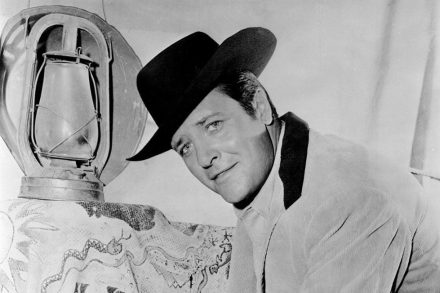
Before Yellowstone there was The Big Valley

From our US edition

One of the most popular shows today is the Paramount Network’s Yellowstone, which follows the Dutton family, led by Kevin Costner's John Dutton, who owns and runs one of the largest ranches in the country, the Yellowstone Ranch in Montana. The sprawling cattle ranch, owned by several generations of Duttons, is under constant threat by scheming developers, environmental activists and Native Americans seeking historical justice, not to mention the forces of globalization that threaten to run the family legacy out of business. Writer and director Taylor Sheridan’s hit series has been praised for its breathtaking cinematography, complex characters, gritty realism and modern relevance.
big valley yellowstone

The dark side of Ted Lasso

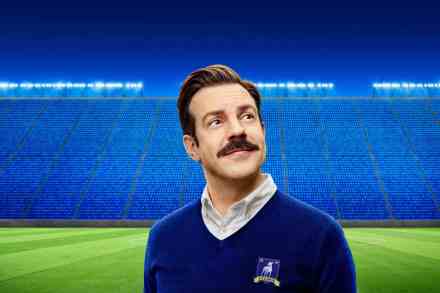
You’ll know where you are with Ted Lasso – the third season of which has just started on Apple TV – as soon as you hear the Marcus Mumford co-written theme song. It peddles a sort of sub-Coldplay uplift, with a lot of big, meaningless anthemic 'yeah's in the chorus. Bright, accessible, catchy and instantly forgettable, you still enjoy hearing it every time you watch a new episode. And that’s the show in microcosm: cheery, amusing and utterly inconsequential. Yet somehow the Jason Sudeikis vehicle has become not only Apple TV’s biggest hit to date, but the most Emmy-nominated comedy in recent years.

The perverse and addictive appeal of Netflix’s You

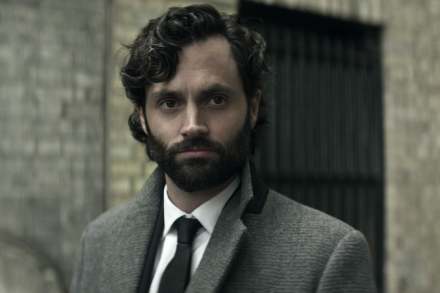
In our risk-averse, deeply fearful age, the idea of one of the most popular shows on any streaming service being a black comedy about a serial killer who has an unfortunate penchant for murdering the women he falls in love with might be something of a tough sell. But the bloody exploits of Joe Goldberg, a bookstore worker-turned-university-professor, who has so far terrorised the denizens of New York, California and London, have run to four immensely popular seasons on Netflix, with a likely fifth and final instalment in the next year or two. Not bad for a series that – intentionally or otherwise – treads a fine line between hilarity and horror, its essential ridiculousness jostling against its near-nightmarish central conceit.

childhood

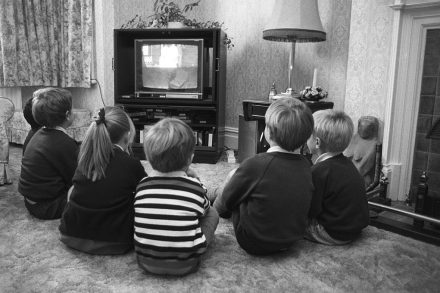
Yawn: your childhood just died again

From our US edition

We’re spending all this money to fight Vladimir Putin but what about Mindy Kaling? From Democrats to Republicans, from Atlantic to Pacific, the nation has rarely been as united as it is in hatred of Kaling’s new animated HBO show Velma. The gory and profane rehash of the Scooby-Doo franchise has a whopping 7 percent audience score on Rotten Tomatoes. YouTube commentators leapfrog over each other to denounce the show: Velma is cringe; Velma is garbage; Velma is racist! Far be it for me to agree with the mob: I’d love nothing more than to say I like this show and watch a million Twitter coronaries blossom. But alas, having seen it, I can attest that Velma’s very existence has singlehandedly wiped out centuries of human progress.

Succession and the rise of ‘eat the rich’ entertainment

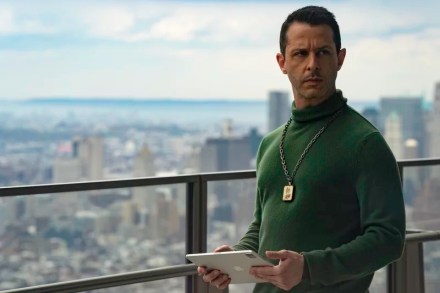
Farces, satires and straight slapstick comedies about extremely wealthy people have made popular entertainment for centuries. In film, the most notable example is Jean Renoir’s The Rules of the Game (1939), in which a group of upper-middle-class French people gather at swanky events, culminating in an affair that ends in a mistaken identity shotgun death, one that will be reported to the police as 'nothing more than an unfortunate accident'. HBO’s Succession, which returns to Sky Atlantic with a fourth season on Monday, has followed an even wealthier group of people, even more self-absorbed, distorted and cut off from the outside world than Renoir’s overzealous swingers and servants whistling past the future graveyards of Vichy.

Bored of the Rings: the Tolkien industry has gone far enough

In 1969, Henry Beard and Douglas Kenney, future founders of National Lampoon, published a satirical takedown of J.R.R. Tolkien’s Lord of the Rings, entitled Bored of the Rings. It holds up remarkably well today as a closely observed parody of Tolkien’s more windy stylistic tics. One critic, David Bratman, remarked: 'Those parodists wrought better than they knew. I think it is highly significant how close Tolkien came to inadvertently writing the parody version of his own novel – and how completely, in the end, he managed to avoid it.

The magnetism of His Dark Materials

From our US edition

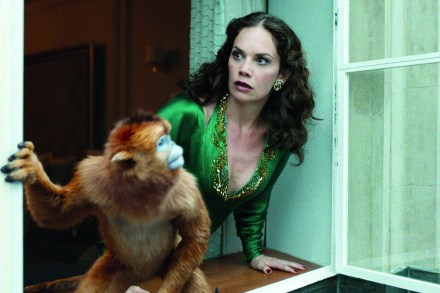
When I was in middle school back in the 1990s, there were two sets of books every boy seemed to have in his backpack. One was the Redwall series, Brian Jacques’s swashbuckling tales of heroic mice and tyrannical wildcats. The other was the His Dark Materials trilogy by Philip Pullman. It’s no coincidence, I think, that both Jacques and Pullman are British. What made these books intriguing, beyond their carefully wound plots, was that they were marketed to children yet addressed subject matter that was very much adult. In Redwall, it was the brutal violence. His Dark Materials had some of that too (in the first chapter of the first book, we witness an attempted killing; in the first chapter of the second book, we witness an accidental fatality).

his dark materials

What to watch on Netflix (while we can still share passwords)

If you share a Netflix account with a friend, relative, colleague, in-law, neighbour or ex whose password you happened to crack, your viewing days may be numbered. The streaming service is planning to fight back against password-sharing – by charging an extra fee to subscribers who let friends and family from other households use their account. In a post this month, Netflix emphasised that ‘a Netflix account is intended for one household’, adding: ‘We’ve always made it easy for people who live together to share their Netflix account with features like profiles and multiple streams. While these have been hugely popular, they’ve also created confusion about when and how you can share Netflix.

What Jeremy Clarkson has in common with Beatrix Potter

Not since the pursuit of Peter Rabbit around Mr McGregor’s garden has rural drama been writ so large. From behind the wheel of his Lamborghini tractor, Jeremy Clarkson’s face crumples as the nine-ton machine rolls back over a field mouse – only to erupt into joy as the mouse emerges unscathed from beneath the wheel. A decade ago, the Top Gear host was fending off outrage after sharing on Twitter an image of a rodent squashed by the show’s film crew. Today, the petrolhead is a man transformed, his compassion for nature and enthusiasm for rural life lighting up our screens in Clarkson’s Farm, the Amazon Prime series documenting his attempts to run a 1,000-acre farm in the Cotswolds.

Meghan Markle’s ‘upset’ over South Park

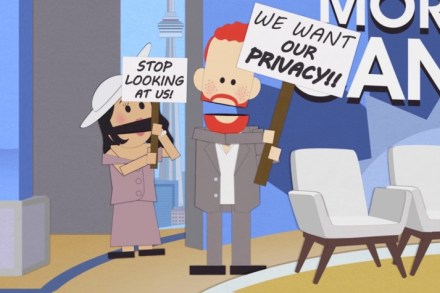
Harry and Meghan have yet to publicly speak about last week’s episode of South Park, presumably because they don’t have the staff left to formulate a press release. But California sources claim that Meghan has spent the past few days 'upset and overwhelmed' about how she was portrayed. If you’ve read anything about Harry and Meghan over the past three years, you’d think the pair would be delighted with how South Park parodied them. The entire episode, titled 'The Worldwide Privacy Tour', gives them enough fodder to moan for a few more books… or Netflix documentaries… or Spotify podcasts. Meghan can cry about how she is a victim of misogyny and Harry can claim that this was all a narrative concocted by the big, bad press.

The tragedy of Fawlty Towers

The secret of any great sitcom is the delicate balance of sit and com. Mess the 'sit' bit up and you lose the 'com'. Del Boy without Nelson Mandela House is as unthinkable as Alan Partridge without his 'grief hole' (aka the Linton Travel Tavern), which is why both of these characters eventually came unstuck. Sending the Grace Brothers' employees on holiday to Costa Plonka in the 1977 Are You Being Served? feature-length comedy fell flat because, devoid of petty department store politics, the characters had no reason to exist – thus audiences felt cheated.  Remove tightly written characters from their uncomfortable surroundings and viewers stop caring.

Is Amazon wasting Phoebe Waller-Bridge’s talents?

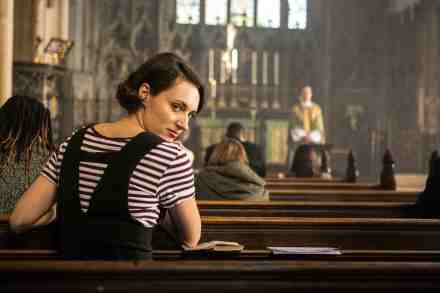
The Tomb Raider franchise seems to have been a graveyard for oddly overqualified people. Angelina Jolie played the character of Lara Croft twice after winning an Oscar, and subsequently Alicia Vikander gave the English aristocrat-turned-global adventurer a go. Neither left much of a mark – which is why it is all the more surprising that Fleabag creator and star Phoebe Waller-Bridge is to write the scripts for a new Amazon series based on the video game. It has been wryly observed that, despite her heroics in the forthcoming Indiana Jones film, Waller-Bridge herself is not expected to play Lara Croft. That’s a disappointment for those of us who would enjoy a mixture of arch smirks to the camera and jokes about kinky sex from the globe-trotting, shorts-clad daredevil.

The naked truth about sex on TV

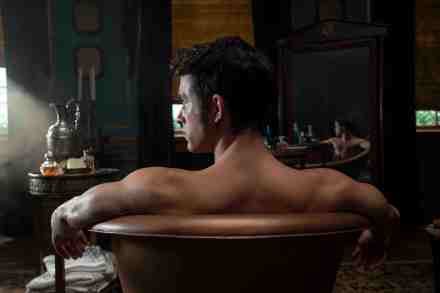
What a year it’s been for sex on TV. As we emerge blinking from the annual glut of televisual entertainment, I can’t get over how far we’ve come. Bridgerton, Babylon Berlin, Lady Chatterley… everybody’s at it, with no period in history so tragic that a few cheap thrills can’t be extracted from it. If you’d have told the teenage me that in my lifetime I’d see a comedian with breasts playing a piano with a penis on television, I’d have very much approved; having seen Jordan Gray do so on Channel 4’s Friday Night Live last year, I wish I hadn’t. Sex on TV has been such a long, strange ride.

The Last of Us is a video game adaptation that actually works

The Last of Us may be remembered as the point when Hollywood’s approach to video game adaptations finally changed. In this, it’s as significant a creative development as Jon Favreau’s Iron Man was in creating a new formula for Marvel superhero movies. The series, which began on Sky Atlantic last week, is set 20 years after a fungal pandemic wiped out modern civilisation. Joel (Pedro Pascal) is a smuggler hired to get 14-year-old Ellie (Bella Ramsey) out of a quarantine zone and across a post-apocalyptic America. It's based on a 2013 video game developed by Naughty Dog. For decades, moviemakers have struggled to create live-action films based on the intellectual property of video games.

Don’t bring back Frasier

At the end of the Frasier theme song, its star Kelsey Grammer always sang the words: 'Frasier has left the building!' And when the show finished in 2004, it felt as if Frasier, Niles, Daphne, Martin, Roz and the rest had indeed left the building. In truth, the popular programme did not end in glory. Ever since Niles and Daphne had become a couple, ending its greatest running joke, there was a sense of past glories being retrodden. By the time Daphne’s siblings appeared with the strangest 'British' accents ever known, it was hard to avoid the feeling that Frasier’s departure was past due.

The Spectator’s best TV shows of the year

The Offer (Paramount Plus) https://www.youtube.com/watch?v=iowLzO9-aew Even when you know the ending, this ten-part drama about the making of The Godfather, seen from the perspective of novice producer Albert S. Ruddy (Miles Teller), is outrageously gripping, gorgeously evocative of louche, cocktail-drenched late 1960s Hollywood, wittily scripted and superbly acted. Matthew Goode is especially watchable as superproducer Robert Evans. And this mostly true story has so many eye-popping moments – often involving the real mafia who at first resisted, then supported the movie – it feels more like the raciest and most implausible fiction. Reacher (Amazon) https://www.youtube.com/watch?

The pick of this year’s Christmas TV

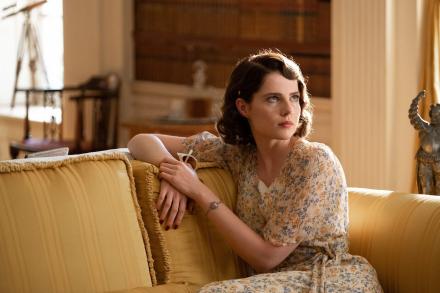
Has a certain media mogul had a visit from three ghosts recently? I only ask as this year’s Sky Christmas schedule is so packed with treats and big-hitters that it can't possibly be explained by hard-nosed commercialism. An outbreak of sudden seasonal generosity seems to be the only explanation. Whatever has triggered Sky's largesse, the result is a little something for everyone – including those of us best described as jaded anti-Christmas types. I was particularly pleased to see the return of Billie Piper in the deliciously sardonic I Hate Suzie. From Succession writer Lucy Prebble, it's the chaos comedy that makes Fleabag feel like Emily in Paris. If you need an outlet from seasonal niceties, this is it.

His Dark Materials is the perfect Christmas viewing

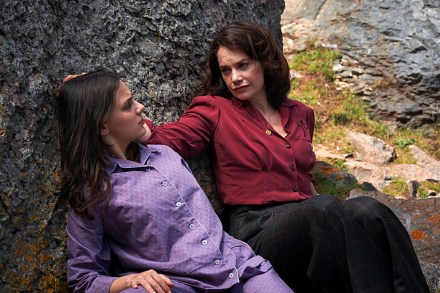
When you’re sitting on the sofa in the week ahead, stupefied into submission by food and alcohol and relatives and God knows what else, you’ll be tempted to watch something that will divert you from the gluttony. And, yes, the likes of Elf, It’s A Wonderful Life and Love Actually are all available, as they were last year. But maybe you’ll want to watch something that is not just entertaining but that makes the viewer think. Something that also has a provocative religious theme that is, if not quite the three wise men and the star of Bethlehem, as relevant this time of year as it ever is. Step forward the third series of His Dark Materials, all eight episodes of which became available on BBC iPlayer last night.

In praise of straightforward men

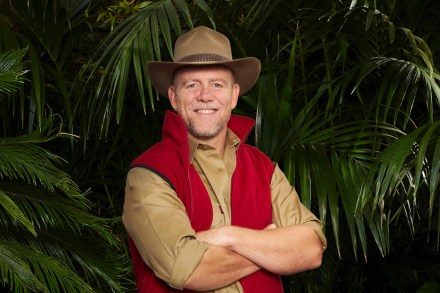
When the Queen’s granddaughter Zara Phillips married the rugby player Mike Tindall in 2011, the shallower among us wondered what she saw in him. We’re not wondering now. Watching the monstrous regiment of muppets and divas competing in the latest series of ITV's I’m a Celebrity… Get Me Out of Here! and seeing Tindall's equable nature – highlighted by the incompetent creative men who surround him, be they pop stars, actors or alleged comedians – makes it clear that the uncomplicated man is the smart woman’s choice. Tindall seems tremendously capable – an overlooked virtue in a romantic partner, and one that comes to the fore during the hard times.

On the trail of Gomorrah in Naples

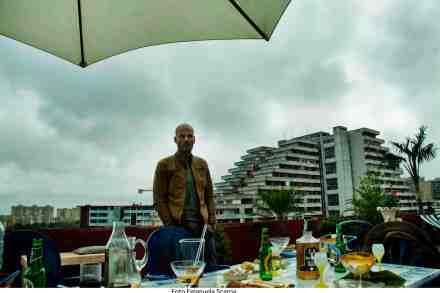
‘Isn’t Naples beautiful? I’ve always dreamt about it. I always wanted this city all for myself; I didn’t want to share it… I alone deserved it because of everything I lost and I would have done anything to get it.’ So says Ciro Di Marzio – nicknamed ‘the immortal’ because he has survived so much mafia bloodletting – in the hit TV crime drama Gomorrah.   He is not talking about the churches or castles, the arcades or theatres or museums. He may have been out on the bay at night when the words are uttered, but the Naples he knows, grew up in and by then controls is the Naples of Scampia and Secondigliano, places up on the ridgeline of the city: the Naples of high rises and concrete, the Naples of drugs and murder.