Technology

Should I pop a cheque in the post or brave the dangers of online banking?

There’s an electronic device on my desk that looks — through its bubble- wrap — like a cheap miniature calculator. It’s still in the packaging a month after it arrived because I’m irritated by the idea that I have to master a new gadget specifically designed to complicate a familiar action. The thing is a debit-card reader, and I gather I must activate it whenever I want to send money from my bank account via the internet to a new payee.

Like Uber, but for hippies

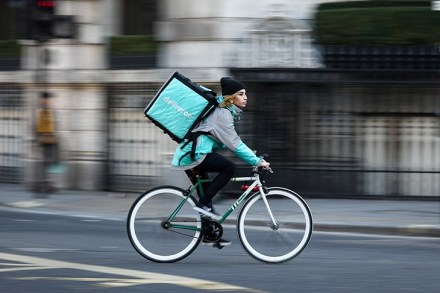
On the same day I put my spare room on Airbnb I also had my first cabshare experience, courtesy of Uber. When I mentioned this to a young friend of mine, he patted me on the back and said, ‘Welcome to the sharing economy!’ The sharing economy is one of those buzz terms that everyone uses these days — but what exactly is it? Apparently, it refers to a whole range of online goods and services that instead of buying and owning, we can borrow, rent or have access to — sometimes free, usually for a price. Likewise, we can be the ones providing these goods or services, and make a profit. Share a taxi ride, borrow a dog for an afternoon or rent out your flat for the weekend and you’re part of the sharing economy.

Soldiers of the Queen

It’s not immediately obvious, but the silhouette on the dust jacket — soldiers advancing in single file, on foot (‘boots on the ground’) isn’t one squad, but five soldiers from different campaigns. From left to right, first comes the British infantryman of the second world war; next is a ‘jock’ from (I think) the Korean war; then a jungle fighter from the Malayan Emergency or the Borneo ‘Confrontation’; then, unmistakably, the long-suffering foot soldier of Operation Banner, the 38-year counter-insurgency (or police action, no one ever quite knew which) in Northern Ireland; and finally, the technology-festooned warrior of Iraq and Afghanistan.

Are we ready for app-only bank accounts? A growing number of firms think so

Bank staff might no longer recognise your face when you walk into a branch – but a banking app might. Biometrics (the authentication of your face, voice or fingerprint) are among the futuristic features offered by a new breed of banks which reckon branch networks, call centres and websites are on the way out. These days it’s all about the app and, in some cases, the app alone. If you want to grab some of the best savings rates on offer, opening and running your account on your smartphone is your only option. Atom Bank is currently topping the tables for one and two-year fixed rate bonds (at 1.4 per cent and 1.55 per cent respectively) but doesn’t have branches or a website you can log into. The app-only bank promises 'the future of banking, available today'.

Cruel boy errors

Perhaps you are slightly concerned about your son. At present he is sitting in the crawlspace beneath your home wearing a clown costume, gleefully pulling the legs from crane flies and waiting for the cover of darkness so he can set light to your neighbours’ sheds. Well, no need to worry. You see, 50 years ago the only possible future for people like this lay in becoming a serial killer or, failing that, joining the secret police in a brutal dictatorship. But now, thanks to the wonders of technology, there are almost limitless openings for people of a sadistic disposition. To date the most prized job for the aspiring young sociopath has been designing the user interface for the ticket machines at railway stations.

Hard Brexit, soft sterling and a glimpse of the Night Manager across the water

This column comes from Puerto Pollensa in Majorca, my favourite off-season watering-hole. The hotel is full of elderly Daily Mail readers intent on making their gin-and-tonics last longer as they contemplate the news from home. Brexit is highly likely to mean ‘hard Brexit’ — departure without residual access to the single market or meaningful new trade deals with the EU or anyone else — and HM Treasury thinks that could cost £66 billion a year in tax revenues. The FTSE’s new all-time intra-day high was consoling for those with a portfolio tucked away, but an uptick in bond yields suggests equities are due for a sharp sell-off soon. And petrol prices are about to jump thanks to the weak pound and a belated Opec move to limit production.

Is that a bomb in your pocket? Or a spy? Or both?

Remember how much fun it used to be getting a new phone? I think of a friend a few years ago who was getting his first iPhone. He’d been on a waiting list, and he found out it was coming in on a Saturday when his newish girlfriend was coming to stay. She’d want to spend the weekend having wild and inventive twenty-something sex, he realised with a sinking heart, and perhaps going to the local farmers’ market. Whereas he’d want to spend it playing with his new iPhone. So he told her he was sick, and she accused him of having an affair. Which in a way I suppose he was. It’s not like that now. You get a new phone and it’s basically the same as your old phone, albeit perhaps half a millimetre thinner. Dullsville.

Is that a bomb in your pocket? Or a Russian spy? Or both?

This is an extract from Hugo Rifkind's column in the new issue of The Spectator, out tomorrow. Remember how much fun it used to be getting a new phone? I think of a friend a few years ago who was getting his first iPhone. He’d been on a waiting list, and he found out it was coming in on a Saturday when his newish girlfriend was coming to stay. She’d want to spend the weekend having wild and inventive twentysomething sex, he realised with a sinking heart, and perhaps going to the local farmers’ market. Whereas he’d want to spend it playing with his new iPhone. So he told her he was sick, and she accused him of having an affair. Which in a way I suppose he was. It’s not like that now.

Hush money

The new consumer obsession of my generation isn’t white goods, trainers or designer labels. It is — whisper it — quiet. We, the under-30s, are almost allergic to noise, so much so that many of us would happily pay extra to sit in a quiet carriage, or in the café seat furthest from the speakers, or drink in an upholstered alcove in a bar. Two of the three things — privacy, space, quiet — that our parents wanted when they bought houses with gardens in leafy streets and town suburbs are lost to us.

Mrs May the ‘Student Killer’ should count the cost of her visa crackdown

In the post-Brexit landscape whose shape was barely glimpsed in G20 discussions at Hangzhou, one thing is clear: soon we’ll have to stop waffling about trade deals and start pushing British products the world wants to buy. One such is education, at our universities, independent schools and English-language colleges — an export sector calculated in 2011 by the now defunct Department for Business, Innovation and Skills to be worth £17.5 billion. Not only does this sector attract foreign exchange, plug funding gaps for cash-strapped universities and support thousands of jobs, it also lays the ground for future relationships with students who return home to embark on business careers.

The internet of stupid things

Back in the 1980s a colleague of mine was paranoid about being burgled. Before he went away on a two-week holiday, he bought the most expensive telephone answering-machine he could find and installed it in plain view on his hall table. Each morning he phoned it from Spain and hung up once he heard the outgoing message. He’d then enjoy the rest of the day content in the knowledge that his flat was safe; if no one had stolen his absurdly flashy answering machine, he reasoned, they wouldn’t have stolen anything else. Today he could buy a Canary. These cost about £139 (the website’s canary.is) and let you view your own hallway in glorious HD from anywhere in the world.

Oil prices will drift down again as Opec fails to get its act together

How many Olympic medals did Opec win? The answer (though I’ll bet no one else has bothered to work this out) is 15, or an average of 1.07 medals per member of the world’s leading oil-producer cartel. That result — boosted, I should add, by the five-medal triumph of the Iranian wrestling team — compares with the now notorious aggregate figure of 325 for the EU, including Team GB’s 67. I highlight the contrast only to make the point that, as power blocs go, resource-rich Opec is piss-poor at managing its affairs to advantage: the indolent leadership of the Saudis (Rio medals: zero) and their permanent stand-off with Iran means timely and co--ordinated decisions rarely happen.

Why lining shareholders’ pockets is more productive than plugging black holes

The revelation by actuarial consultants Lane Clark & Peacock that 56 of the supposedly blue chip companies in the FTSE 100 index are running deficits totalling £46 billion in their defined benefit pension schemes puts the BHS story into a new perspective. It tells us that the £571 million ‘black hole’ in the chain’s pension fund was by no means out of the ordinary — it is a small fraction of the deficits declared by the likes of BT, Tesco, BAE Systems and BP, even if it might have been mitigated by wiser decisions on the part of the scheme’s trustees and greater generosity on the part of former BHS owner Sir Philip Green.

The Spectator podcast: The memory gap. Is technology taking over our minds?

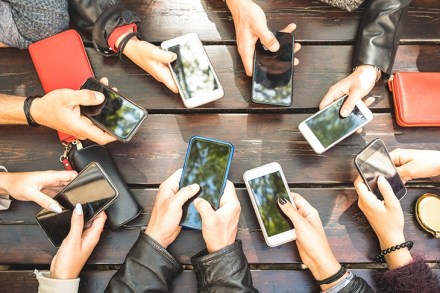
Smartphone ownership is predicted to hit 2.5 billion by 2019 and 60 per cent of internet traffic now comes through our mobile devices. But does the world becoming more reliant on handheld gadgets to guide us in day-to-day life come at a price? In her cover piece this week, Lara Prendergast claims that we are outsourcing our brains to the internet and that technology is taking over our minds. On this week's Spectator podcast, Lara is joined by Isabel Hardman, Charlotte Jee, Editor of Techworld, and Professor Martin Conway, head of psychology at City University.

When more data makes you more wrong

In a one-day international against Australia last year, Ben Stokes was dismissed for ‘obstructing the field’, a rule rarely invoked in-cricket. The bowler had thrown the ball towards the wicket (and hence near Stokes’s head) in an attempt to run him out. Stokes raised his hand and deflected the ball. After some discussion between the two on-field umpires, and a referral to the third umpire, Stokes was given out. What was most interesting was the difference in the conclusions people reached depending on whether they watched the replay in real time or in slow motion (you can find both on YouTube). Seen at speed, his raising of his hand looked nothing more than an involuntary and instinctive act of self-defence.

Heads in the cloud

The Spectator podcast: Listen to Isabel Hardman, Lara Prendergast, Charlotte Jee, Editor of Techworld, and Professor Martin Conway, head of psychology at City University discuss the memory gap. Ask me what I had for lunch yesterday and I couldn’t tell you. Names disappear as swiftly as smoke. Birthdays, capital cities, phone numbers — the types of facts that used to come so readily — are no longer forthcoming. I’m 26, yet I feel I have the memory of a 70-year-old. My brain is a port through which details pass, but don’t stay. I’m not alone. Many young people feel our memories have been shot to pieces. It’s the embarrassing secret of my generation. We can hardly recall a thing.

Nothing new under the sun

Rupert Sheldrake had it coming. In A New Science of Life (1981), he argued that animals and plants have inherited a collective memory from their predecessors, thanks to ‘morphic resonance’. This also explained why animals had telepathic powers. ‘You see, I told you so,’ I said to my wife when reading about this in Steven Poole’s exciting new book, and exchanged a secret glance with our dog. Mothers, one might add, also seem to have such psychic powers and know exactly when their teenage sons are sneaking home late at night. But Sheldrake is not your average ‘new ager’ or dog lover. He is a cell biologist.

Is the sale of our only global-scale tech firm to Japan a vote of confidence in the UK?

It’s easy to see why Arm Holdings, the UK’s only global-scale internet technology company, looked worth a quick £24 billion bet by Softbank of Japan. At $1.32 to the pound, the price is a lot cheaper than it could have been before polls closed on 23 June, when sterling stood at $1.50; that made it easy for Softbank to offer a fat premium over last Friday’s closing Arm share price — and harder for Arm’s board to say no. As for Arm’s business, it’s unlikely to be knocked by Brexit since its microchips are priced in dollars and sold chiefly to smartphone makers in Asia and the US. And its prospects — in the development of the ‘internet of things’, from driverless cars to WiFi-powered kitchens — are huge.

We need to invent something better than Machu Picchu

Don’t know if you’ve noticed, but middle-class rules now require that every dinner party cheeseboard must contain at least two cheeses which aren’t very nice. Typically one will be a veiny French cheese which is not as good as Stilton; another may be that foreign thing with rind on it which isn’t nearly as good as Cheddar. I was baffled by this for a long time, until I realised that these cheeses are not bought to be eaten, but to signal the sophistication of the occasion. Economists might call them Veblen cheeses. (One day someone should make an inedible cheese called Veblenne. They’d make a fortune.

As my pen hovers over the ballot paper, I ask: am I a roundhead or a cavalier?

My pen hovers — but refuses to touch the postal ballot paper. I pour a drink (I won’t say whether claret, schnapps or English ale) and break off to watch Versailles, with its parade of lecherous continental backstabbers. The blood stirs, but still I cannot choose. So I defer the moment of decision, Remain or Leave, until after a short trip to France… Middle-aged match Meanwhile, business as usual. Microsoft is spending $26 billion to acquire LinkedIn, the social network for job-seekers. That looks a crazy price for a venture which lost $166 million last year on revenues of $2.9 billion and has never been regarded as cool.