Tech

The battle of the oligarchs

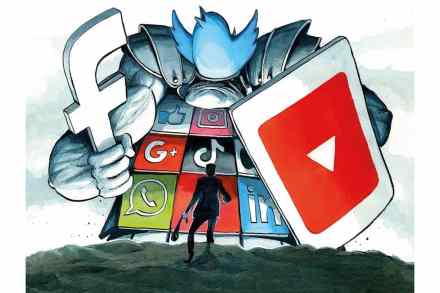
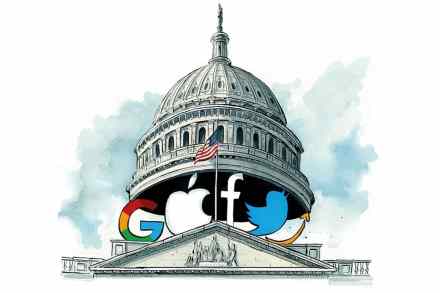
Money and power have rarely been strangers; often nations are made to shudder when the ruling elites battle each other. Britain’s late empire was divided between liberal manufacturers and aristocratic interests, whose conflicts hastened the rise of the Labour Party and the end of empire. In the United States, opposition to powerful trusts defined progressive politics for decades, ultimately laying the basis for the New Deal and a greater scope for government. In the West today we are witnessing a similar divide among the uber-rich class — epitomized by Elon Musk’s embrace of Donald Trump — that is already reshaping politics. Until 2016 the US establishment, both Republican and Democratic, embraced similar views on national security, global trade and multilateral institutions.

oligarchs
whistleblower

Whither the whistleblower: leakers and leak-hunters get a boost from tech

When Americans think about the word “whistleblower,” their minds may go to the 1970s, when Bob Woodward and Carl Bernstein began communicating with the informant who came to be known as Deep Throat, after the pornographic film of the same name (their source, a disgruntled FBI official called Mark Felt, outed himself decades later). But the history of whistleblowing in the United States predates Watergate by centuries. “Whistleblowing in this country is not new,” says Jackie Garrick, executive director at the whistleblower-support group Whistleblowers of America.

The return of CRT TVs

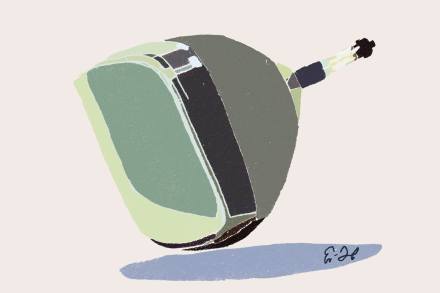
Cathode-ray televisions — the thick, “fat” CRT TVs of my youth — were dead. You couldn’t find them in secondhand shops, because who would buy one?They were sidewalk refuse, chunky e-waste, destined for the dump. In an era of economic dissatisfaction, the reduced cost of slim, high-resolution flat-screen TVs has been a major if often derided benefit. Populists often sneer at globalism — “Who cares that you can get great, cheap TVs when housing is more expensive and there are few jobs?” But even they would still use a stunning 4K — or 8K or 16 K even — OLED TV over the fat screens of the good ol’ days. And yet, for enthusiasts of retro video games and other esoteric media hobbies, what others see as trash is their treasure.

CRT

Mark Zuckerberg is really sorry for censoring you

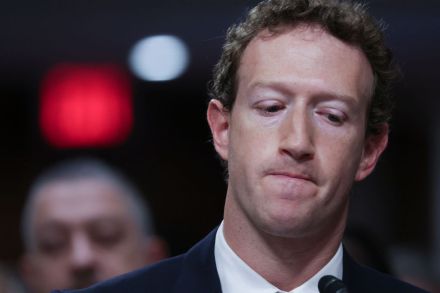
Meta CEO Mark Zuckerberg admitted in a letter to the House Judiciary Committee yesterday that the government pressured his company to censor content during the Covid-19 pandemic and said he regrets following their wishes. The committee described his comments as a “big win for free speech.” Meta produced thousands of documents for the committee’s investigation into alleged government censorship and Zuckerberg wrote the supplemental letter to outline what he had learned during the process. “In 2021, senior officials from the Biden administration, including the White House, repeatedly pressured our teams for months to censor certain Covid-19 content, including humor and satire, and expressed a lot of frustration with our teams when we didn’t agree,” he said.

Zuckerberg

The Californication of the Democratic Party

When Joe Biden was elected in 2020, an overjoyed Los Angeles Times boasted that his goal was to “make America California again.” Biden has fulfilled the Times’s vision, if with less than complete success. Over the past few weeks, however, lunchbucket Joe from Scranton has been unceremoniously dumped by the Golden State elite — Nancy Pelosi, Adam Schiff, George Clooney and a passel of tech oligarchs — to be replaced with one of their own, Vice President Kamala Harris. But given the chances of a GOP win this year, the Californians have another favorite in the wings, Governor Gavin Newsom, for 2028. Harris’s elevation and Newsom’s looming challenge are but parts of what can be best described as the Californication of the Democratic Party.

California
trump

How Silicon Valley fell for Trump

Just weeks after Joe Biden’s disastrous debate performance, the July 13 assassination attempt on Donald Trump radically shifted the election calculus yet again. Amid the intense, fast-moving news cycle, one event that would ordinarily have garnered wall-to-wall coverage went nearly unnoticed. “I fully endorse President Trump and hope for his rapid recovery,” Elon Musk posted to X on the day of the assassination attempt. In recent weeks, a legion of tech giants from the deep-blue stronghold of Silicon Valley have broken ranks and openly pledged support for the MAGA leader. With each new backer comes a slew of mega-donations to his campaign.

AI and the new way of war

What is happening in Gaza now provides a glimpse of how all wars may be fought in the future — with artificial intelligence. In The Spectator last November, I wrote about an Israeli airstrike that brought down a six-story building in Gaza City, reportedly killing more than forty civilians. One of the residents, a man named Mahmoud Ashour, dug through the rubble with his bare hands, trying to find his daughter and her four children, a girl aged eight and three boys of six, two and six months — all killed. The Israeli military would not tell me why the building was hit, beyond saying that Gaza’s armed groups put their military infrastructure amid civilians, but Amnesty International said there had been a single member of Hamas living there.

gaza ai war

Inside the May issue: technology

Western governments seem ill-prepared to grapple with rapidly advancing technology. Watch any congressional hearing where a crusty congressman tries to keep pace with Silicon Valley’s top “autists” if you need further evidence — and read Spencer A. Klavan’s analysis of the high-skill but low-status rejects uniting into a formidable social class. The Silent Generation and boomers simply cannot keep up. The Space Race is back on — and tycoons are eager to cash in on the final frontier. Shane Cashman dives into the new wild west of explorers and entrepreneurs commercializing the great unknown. Lionel Shriver brings us back to earth with a look at the electrical grid and our government’s push for green energy and electric vehicles.

technology

The VR and AR arms race

You probably don’t remember the Humane Pin, despite its dominating the tech-news cycle a few months ago. It’s an elegant AI-powered square that sticks to your lapel and can send messages, search for information and tell you about what you’re seeing, all through voice commands. The Humane company raised more than $230 million in venture backing, and its rollout included a runway appearance at Paris Fashion Week, a TED talk and a chic announcement video where the pin repeatedly misinformed its user. According to the pin, almonds have far more protein than they do, and April’s solar eclipse would have been best viewed from Australia, where it wasn’t even visible. Also, there’s no way to use the pin other than with voice control.

VR

How AI helps the tech giants

Artificial intelligence (AI) and its related technologies — machine learning and the metaverse — represent a watershed in the evolution of the global economy. Like other such shifts, its emergence is likely to favor certain interests, notably a handful of technology giants, the media and a small cadre of highly skilled programmers. Everyone else faces economic danger, certain to roil domestic and international politics in coming years. Eighty-two percent of millennials fear AI will reduce their earning ability — and they are right to be worried. The first group to lose will be the usual suspects: factory and warehouse workers as well as professionals with largely routinized occupations suited to automation.

ai
gemini

Why everybody should have seen the Google Gemini blunder coming

Has it ever bothered you that all the Founding Fathers were white? Fear not: Google Gemini AI is here to save the day. In February, Google updated its artificial intelligence LLM, or Large Language Model, releasing one called Gemini. The hope was that tech companies could build off each other’s platforms and that Google’s new AI would correct earlier mistakes made by Microsoft’s Bing, which in turn corrected mistakes made by OpenAI. Shortly after Google released Gemini to the public, internet users began quizzing the AI. Immediately problems were apparent, especially within Gemini’s image creation. When asked to replicate portraits of medieval British kings, for example, Gemini provided images containing historically inaccurate ethnicities.

Sleepwalking into censorship: a reply to Nadine Dorries

From our UK edition

In this week’s magazine I look at the threats posed by the so-called Online Safety Bill now making its way through the House of Commons. It gives sweeping censorship powers by creating a new category of speech that must be censored: 'legal but harmful'. The government will ask social media companies to do the censoring – and threaten them if they do not. The idea is for the UK to fine them up to 10 per cent of global revenue (ie: billions) if they publish 'harmful' content – but harmful is not really defined. So censorship potential is wide open. Nadine Dorries, the Culture Secretary, has suggested that the jokes of the comedian Jimmy Carr would be "harmful".

Boris is about to give Silicon Valley censors more power than ever

From our UK edition

Four years in the making, the Online Safety Bill has now been sent to senior ministers for review — a process that allows them to protest, to shout if anything obvious that has been missed. In this case, the process is invaluable because something huge has been missed. The Bill, if passed, would empower the Silicon Valley firms it’s designed to suborn. It would formalise and usher in a new era of censorship of UK news — run from San Francisco. This Bill would backfire in a way that its Tory advocates have so far proven unable to understand let alone address. That’s why it needs to be halted, and a rethink ordered. The original aim is to make Facebook, YouTube, Twitter and others liable for any genuine filth promoted online.

Will our future lives be like a video game?

From our UK edition

A few years ago, the software company Owlchemy Labs released a computer game called Job Simulator. Its premise was simple. Players find themselves in a future world, roughly 30 years from now, in which super-efficient robots have snaffled up all the jobs. No longer needed for work, humans entertain themselves instead by donning virtual reality headsets and reenacting 'the glory days' — simulating what it was once like to be an office clerk, chef, or shopkeeper. The gameplay, therefore, consists entirely of, well, yeah… carrying out endless mundane tasks: virtual photocopying, virtual cooking, virtual newspaper sales. Job Simulator is pretty tongue-in-cheek, crammed full of dry, self-referential jokes.

WhatsApp collapse throws Tory plots into chaos

From our UK edition

The world’s oldest democratic party has had a few problems with technology in recent years. Famously it was the 2018 Tory conference which saw a security breach where the official party app allowed anyone to access the private phone numbers of members of the Cabinet – or in the case of Boris Johnson change his profile picture to that of a pig. Once again, tech issues are plaguing Tory conference, with three of the world’s most popular apps – Facebook, Instagram and WhatsApp – all being offline since 4:30 p.m. today. The last of these is the favoured platform for disloyal backbenchers and scheming hacks to conspire mischievously to make life harder for long-suffering Tory whips.

tangled web

The coming stitch-up

To look upon a freshly painted wall is to behold a smooth surface; to look at it through a magnifier is to see a rough and irregular landscape — but turn the magnification up sufficiently and see it become regular again, a geometric matrix of atoms held in molecular bonds. Keep magnifying and you enter the unimaginably messy realm of the subatomic, a weird place of eldritch geometries and smeared-out, probabilistic motion. The world is smooth and rough, orderly and messy, all at once, depending on how closely you look.

Matt Hancock isn’t the only politician who is clueless about cyber security

From our UK edition

It is widely acknowledged that Britain has some of the world’s finest cyber capabilities. GCHQ is a global leader in those dark arts, and its offshoot, the National Cyber Security Centre (NCSC), is making that expertise available to businesses and others in need of help with their digital defences. All the more shocking, then, that our political leaders seem so utterly clueless. They have pledged to make Britain the ‘safest place in the world to be online’, but instead are running around like stars in a digital age ‘Carry On’ movie. Exhibit number one is Matt Hancock.

Privacy or death — the final triumph of Big Tech

‘During that time it seemed no easy thing to see any man on the streets of Byzantium, but all who had the good fortune to be in health were sitting in their houses, either attending the sick or mourning the dead… and work of every description ceased, and all the trades were abandoned by the artisans, and all other work as well, such as each had in hand.’ That’s a passage from Procopius’s History of the Wars, describing the way the bubonic plague ravaged Byzantium in 541 AD. If you want to feel historical time collapse, and the distance of centuries evaporate, it is worth reading the whole account.

amazon silicon valley

The Spectator’s guide to video conference etiquette

Video conferences are like all business meetings — 95 percent pointless and usually arranged and dominated by some self-important twerp. Still, humans attach strange importance to management habits and, now that we are living in the age of the coronavirus, many of us will have to do a lot more video conferences for work. Ever the public servant, Cockburn has compiled the following guide to video conference etiquette. 1) Dress Cockburn prefers formal attire, yet in times of isolation, the rules can be relaxed. Nudity is too much, no matter how matter impressive one's physique. Pajamas are a no-no, too. Sporting a kaftan on the call may make you feel like a charismatic tech billionaire dialing in from Mustique. But everybody knows you aren’t — so put a shirt on.

video conference