Kit Wilson

Who’s afraid of organoid intelligence?

From our UK edition

For fans of bioethical nightmares, it’s been a real stonker of a month. First, we had the suggestion that we use comatose women’s wombs to house surrogate pregnancies. Now, it appears we might have a snazzy idea for what to do with their brains, too: to turn them into hyper-efficient biological computers. Lately, you see, techies have been worrying about the natural, physical limits of conventional, silicon-based computing. Recent developments in ‘machine learning’, in particular, have required exponentially greater amounts of energy – and corporations are concerned that further technological progress will soon become environmentally unsustainable.
2022 and the Revenge of the Real 

From our UK edition

Do you get that alarming feeling, right now, that everything is suddenly, rapidly, falling apart?  At the same time, does everything also feel strangely less real to you, as though modern life were just one big, phoney act – a performative parade of political spin, sloganeering, social-media campaigning, simulated outrage, and petty culture war point-scoring? These two things are connected. We’ve spent years as a society constructing an elaborate pyramid scheme of virtual realities – from cryptocurrencies to social media influencers to startups that ‘outcompete’ each other only by posting eye-watering losses each year – all to the neglect of the real world. And now, in 2022, the real is finally catching up with us.

The Wellcome Collection’s war on itself

From our UK edition

If you, like me, have an unhealthy taste for depressing news, then you’ll have already heard about the Wellcome Collection’s decision to close its Medicine Man exhibition last weekend. The display, which featured an extraordinary range of unusual medical artefacts collected by the entrepreneur Henry Wellcome (1853-1936), has been permanently shut on the grounds that it ‘perpetuated’ sexist, racist and ableist myths, and failed to tell the stories of the historically marginalised. The decision has been cheered on by precisely nobody – both left and right, from what I can see, believe the decision will do nothing to make the world a better place. All it represents is yet another lost opportunity to learn (for free!) about our collective past – including, indeed, its many evils.

The apocalypse complex

From our UK edition

Just in case there’s an apocalypse, the super-rich are buying bunkers. Big bunkers. Bunkers with swimming pools, indoor gardens, cinemas, and, in the case of Peter Thiel’s proposed New Zealand hideout, a meditation room — a vital amenity in the advent of a nuclear war. Ever since the invasion of Ukraine, with Putin threatening to use nuclear weapons to defend Russia, paranoia has been booming. One of the biggest names in the bunker building business, Rising S — run from an anonymous-looking, corrugated iron factory in Murchison, Texas, just across the road from a campsite called ‘Stay A While’ — flogs as many as five units a day, at between $70,000 and $240,000 a pop.

Cracking consciousness: how do our minds really work?

From our UK edition

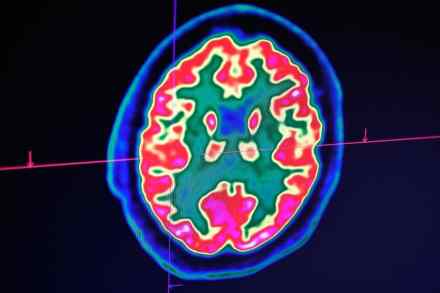
With scientists mapping our neurons in ever greater detail, and companies like Google claiming they're close to creating human-level artificial intelligence, the gap between brain and machine seems to be shrinking — throwing the question of consciousness, one of the great philosophical mysteries, back into the heart of scientific debate. Will the human mind — that ineffable tangle of private, first-person experiences — soon be shown to have a purely physical explanation? The neuroscientist Steven Novella certainly thinks so: 'The evidence for the brain as the sole cause of the mind is, in my opinion, overwhelming.'  Elon Musk agrees: 'Consciousness is a physical phenomenon, in my view'.

Will our future lives be like a video game?

From our UK edition

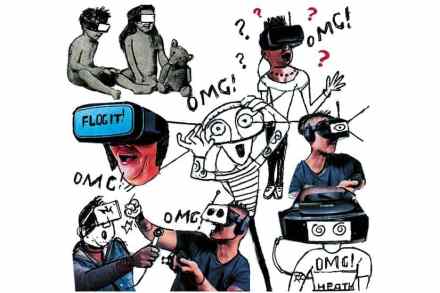
A few years ago, the software company Owlchemy Labs released a computer game called Job Simulator. Its premise was simple. Players find themselves in a future world, roughly 30 years from now, in which super-efficient robots have snaffled up all the jobs. No longer needed for work, humans entertain themselves instead by donning virtual reality headsets and reenacting 'the glory days' — simulating what it was once like to be an office clerk, chef, or shopkeeper. The gameplay, therefore, consists entirely of, well, yeah… carrying out endless mundane tasks: virtual photocopying, virtual cooking, virtual newspaper sales. Job Simulator is pretty tongue-in-cheek, crammed full of dry, self-referential jokes.

The rise of the neoclassical reactionaries

From our UK edition

A strange new ideology has been growing over the last few years, you might have noticed — amid the day-to-day chaos — the slow, proto-planet-like formation. Currently, it has no name, nor an obvious leader. Its many thousands of proponents do not even seem, yet, to consider each other fellow-travellers. But to the onlooker, they’re clearly marching the same steps to the same tune. We might call it neoclassical reactionism. The central refrain is a familiar one: the modern world is ugly, decadent, sick. But rather than seeking refuge in religion or racial politics, neoclassical reactionaries hark back to Ancient Greece and Rome — in particular, to supposedly lost values like vitality, beauty and strength. They’re obsessed with bodybuilding and Latin.

Lionel Shriver, Kit Wilson, Peter Hanington, Robert Porter

From our UK edition

28 min listen

On this week's episode, we’ll hear from Lionel Shriver on how the Biden Administration’s border policies are a gift for Trump and the Republicans. (00:52)Then Kit Wilson on what we can expect from Mark Zuckerberg’s Metaverse. (09:53)Third, it's Peter Hanington talking about his love of haikus. (18:48)And finally, Robert Porter’s notes on the bagpipes.

There’s one obvious question about immigration, but nobody is asking it

From our UK edition

If you were to close your eyes at any debate on immigration, you might reasonably picture the participants standing back-to-back, shouting and gesticulating to opposite corners of the room. On such occasions, there’s typically only one point on which everyone actually agrees: that very highly skilled migrants – doctors, engineers, scientists – are welcome here in Britain. Oddly, though, nobody ever seems follow up with the obvious question: what about the countries these migrants leave behind? Look at the four nations from which we take most foreign doctors – India, Pakistan, South Africa and Nigeria. Is it not unfair to deprive them of their brightest medical minds?

Superbad: Joe Biden’s plummeting presidency

From our UK edition

41 min listen

In this week’s episode: Has the Biden Presidency stalled or crashed?In our cover story this week, Freddy Gray assesses the state of the Biden presidency. With steadily lowering approval ratings, a disastrous Afghanistan withdrawal, and this week’s failure of the Democrats to hold on to the Virginia Governorship, how much trouble is the US’s oldest inaugurated president in? Freddy talks to Lara along with Emily Tamkin, the US editor of the New Statesman and co-host of the World Review Podcast. (00:49)Also this week: Should we welcome or fear the Metaverse?Kit Wilson writes in The Spectator this week about Facebook’s new venture into the Metaverse, a concept that most of us probably hadn’t heard of until last week.

Are we ready for the metaverse?

From our UK edition

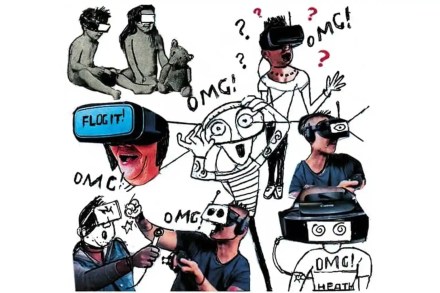
Facebook has rebranded itself as Meta and last month chief executive Mark Zuckerberg announced the creation of 10,000 jobs to help build the ‘metaverse’ — a concept so radical nobody yet knows what it really is. People in the media tend to describe it as ‘a 3D version of the internet’. Facebook describes it rather vaguely as a network of ‘virtual spaces where you can create and explore with other people who aren’t in the same physical space as you’. Some suspect it might actually be hell. The term metaverse first appeared in Neal Stephenson’s 1992 novel Snow Crash, in which future humans distract themselves from economic collapse by submerging themselves in a parallel virtual reality world.

We need to talk about transhumanism

From our UK edition

This weekend, hundreds of people from across the globe will gather in Madrid to discuss how to turn themselves into a new species. The occasion is TransVision, the world’s biggest annual meet-up of transhumanists — and probably the most important intellectual summit you’ve never heard of. This year, anti-ageing specialist Aubrey de Grey will explain why he thinks most people alive today have a 50/50 chance of living to a thousand years old. The CEO of the Alcor Life Extension Foundation, Max More, will discuss cryogenics, the process by which the newly deceased are frozen in giant, stainless steel vats and preserved for resurrection down the line.

The Springsteen-Obama podcast is rambling and sloppily edited

I was not born in the USA. But I am, technically, American — or at least, one half of me is. My mother hails from Ohio, where some of my family still live today. As a kid, I’d jet into the States on my American passport and back out again on my British one. This strange part-tourist part-citizen relationship ended up making me doubly nostalgic for the mirage of America. So for all my English cynicism, when I heard about Renegades, the new podcast by Barack Obama and Bruce Springsteen, I actually thought it sounded quite appealing. I’m a sucker for what you might call Obamaganda or Springspeak — that kind of folksy, wistful, idealistic American rhetoric, the vocabulary of which consists largely of better angels, bridges, and melting pots.

bruce springsteen barack obama

BBC sports coverage is becoming unwatchable

From our UK edition

Back when I was a kid, just before the internet flattened the world, I spent my Saturday afternoons listening to live football on the radio. The signal came and went, voices bobbed up above the waves of static and sank back down into their crackly depths, but the experience was always magical. I clung to the commentators’ every word and watched the ball dance from player to player in my mind. Probably the most memorable voice was the Northern Irish snarl of Alan Green. Anyone familiar with BBC Radio 5 Live will know his style: irate and indignant, liable to explode at any moment about some mistimed pass or bad tackle — but always, always entertaining. Green has worked for 5 Live for more than 45 years, but is now being shuffled out by the BBC.

Michael Seresin – from film noir to pinot noir

From our UK edition

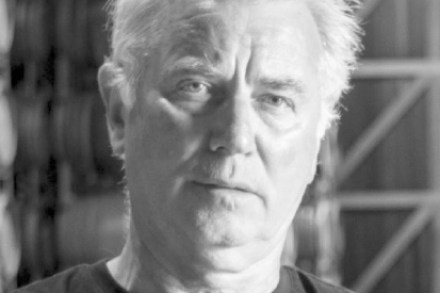
Michael Seresin claims, rather modestly, to ‘have no palate’, choosing instead to describe wine with light, colour and form. These are not your typical winemaker’s terms, but they make perfect sense given his unusual back story. Born and raised in New Zealand, Seresin emigrated to Europe in 1966 to pursue a career in cinematography. Movie buffs will know what happened next — Seresin, in his own words, ‘did really well, really quickly’, making a name for himself with a series of Alan Parker flicks: Bugsy Malone, Midnight Express, Fame. It was during this period that he leased a house in Italy — still his ‘favourite country in the world’ — and fell in love with wine.

What’s going wrong in Bristol?

From our UK edition

When a man is tired of London, he just needs to relocate to Bristol — or so the stream of westbound émigrés would suggest. Each year, hundreds up sticks and flee the capital in search of its laid-back lifestyle. Bristol prides itself on being the chilled-out alternative to the big smoke — a bit like Brighton, but further west and therefore cooler. Here they swap the ruthless capitalism of their blowhard cousins in London for giant water slides, balloon festivals and radical street art. But the city is still chippy about London’s cultural dominance.