Tech

When did Donald Trump’s tweets become so boring?

It wasn’t so long ago Trump’s tweets were easily the planet’s most important media events. Comedy zingers, outrageous denunciations of the previously undenounceable, white knuckle threats of nuclear apocalypse sent in the small hours… how we hung on the leader of the free world’s every word. But now, suddenly, it feels like he’s phoning them in – tweeting by numbers. Where’s the brio? Where’s the zip? The heart seems gone. I can’t help but wonder if he needs more Executive Time. Sure, the insults and the catchphrases are still there, but they no longer carry the famous Trump bite. Take these tweets – two of his more lively – from the last seven days: https://twitter.

donald trump tweets

Technology is damaging hands – not just heads

Silicon Valley parents are famously strict about their children’s screen time, even as they dish out their ‘crack cocaine’ technology to the rest of the world’s youth. Last week, however, Tucker Carlson upped the ante: he called on Congress to step and ban children from smartphones, as they do with alcohol. Researchers have demonstrated a link between hours spent in front of a screen and depression and anxiety levels in children. But screen usage damage isn’t just in our heads; increasingly, it’s also in our hands.  ‘Children are increasingly finding it hard to hold pens and pencils because of an excessive use of technology, senior pediatric doctors have warned,’ reports the Guardian.

smartphones technology

The sideways thinking of Silicon Valley

It was the tweet posted by the New York Times that caught my eye: ‘Silicon Valley is backing a novel idea: instead of charging students tuition, students go to school for free and are required to pay back a percentage of their income after graduation, but only if they get a job with a good salary.’ It is all happening at the Lambda School, a new online learning start-up that this week won millions of dollars in backing from a glittering line up of venture capitalists – including Google Ventures, Ashton Kutcher, the actor turned Shark Tanker, and Geoff Lewis, an acolyte of Peter Thiel, the co-founder of PayPal.

lambda school silicon valley

Meghan Murphy, Twitter and the new trans misogyny

I woke up this morning to a private message on Twitter from a young student. She had been warned that her account would be suspended if she ‘violated the rules’ again. Her crime? Tweeting details of Sheila Jeffreys’s book, Gender Hurts: A Feminist Analysis of the Politics of Transgenderism. Refusing to accept the mantra ‘Trans women are women’ is, in the eyes of many now, a crime, for which there must be punishment. Everyone from massive corporate social media machines to well-meaning liberals seem to be toeing the line. But some of us resist. Meghan Murphy for example, a Vancouver-based feminist journalist, has been permanently banned from Twitter for referring to a man who identifies as a woman as a man.

meghan murphy twitter trans

Airbnb’s boycott and Facebook’s child bride: the moral vacuum of the internet

A wise meme once said that you should never attribute to malice that which can be adequately explained by stupidity. If you want to know who said that, you can look it up online. But you don’t need to look it up online, because the internet has freed us all from the bonds of copyright law and common decency. If you did look it up online, you will find that this aphorism was originally popularized in the 1980s in The Jargon File, a computer programmers’ handbook. So needy were the nerds to avenge themselves on the physical world, source of their steamy-spectacled, spotty-faced humiliations, that they tossed this aphorism around without tracking down its source.

Airbnb’s

Did the cyber revolution save Sioux Falls?

So, here’s a proposition — an idea, a notion that might be worth exploring: the computer revolution has saved the small city. Four decades into the digitizing of our lives, some of the unintended and unexpected consequences of computerization are coming clear. And one of those consequences may be the possibilities for success found by some small Midwestern cities. The truly great cities of the nation — New York, Los Angeles — are among the most powerful economic engines ever created. The computer revolution proved to be jet fuel for the economics that brought them out of the doldrums of the 1970s. The large Rust Belt cities — Pittsburgh, Cleveland, Detroit — have either succeeded or failed to find a way out of the collapse of American manufacturing.

sioux falls

Could Amazon have picked two less deserving cities for HQ2?

Regional inequality is perhaps one of the hardest social issues America faces – the sense that a select few prosperous metropolitan areas increasingly dominate the rest of the country economically, culturally, and politically. Every election, the consequences of this inequality become more evident; it was crucial in electing Donald Trump president in 2016. When Amazon announced last year that it would embark on a mission to find its next headquarters, the (naive) hope was that by spreading around its largesse, some of this inequality could be stemmed. From Birmingham, Alabama to Pittsburgh, cities were teased with the prospect of a once-in-a-lifetime influx of economic stimulus.

amazon hq2

Tech doesn’t have a gender problem

The tech sector, we are forever being told, has a gender problem. Recently, for example, Women in Technology International reported that only a quarter of US information technology workers are women – something which it was quick to claim was a result of ‘unconscious bias’. How else, it invited us to ask ourselves, can the proportion of women in technology be so low when women receive 57 percent of college degrees and nearly half of professional degrees in law, medicine, and the physical sciences? Worse, we are led to think, the bias is inbred in the machines themselves.

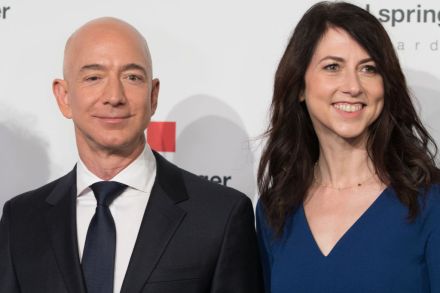
jeff bezos wife mackenzie bezos tech women gender

The yin of Andrew Yang

Single issue campaigns are often built around whimsy. The Polish Beer Lovers’ Party springs deliciously to mind, as do Jimmy McMillan’s tireless efforts to remind New Yorkers that the rent was too damn high. Andrew Yang’s attempt to become the Democratic Party candidate for the 2020 elections is based on an idea that might seem whimsical and yet he is a deeply serious man. His campaign is to address the problem of automation: how, in other words, to make the best of a future where machines have rendered millions of jobs redundant. The first thing to be said is that Yang has about as much of a chance of becoming the Democrat nominee as this author has of becoming the UFC heavyweight champion.

andrew yang