Tax

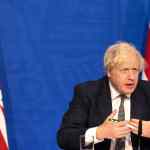
Energy bills are Johnson’s next big battle

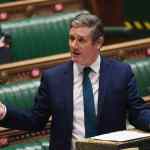
Keir Starmer is not a lucky politician. He has again been forced into self isolation after testing positive for Covid, which means he misses the first PMQs of the year. This is the Labour leader’s sixth period of self-isolation. So, instead it will be Rayner versus Johnson at PMQs at the later time of 3 p.m. this afternoon. These contests are normally more hammer and tongs than the Johnson–Starmer ones. Rayner’s style is more direct than Starmer’s; and is often more effective in rattling Johnson.  The obvious area for her to go on today is cutting VAT on household energy bills. Labour is already in favour of this and Tory MPs are getting increasingly agitated about the issue.

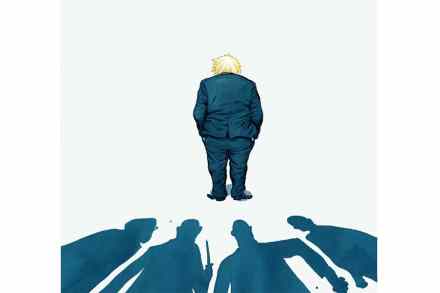
Boris could pay a heavy price for his tax hikes

Given the enthusiasm for tax cuts usually shown by Conservative MPs it is remarkable how few of them have, in public, raised objections to the government’s loose fiscal policy. True, the Prime Minister’s announcement of a hike in National Insurance ostensibly to pay for social care, elicited squeals from the back benches, yet last month’s Budget drew only muted objections. This was in spite of claims by the Resolution Foundation that the Budget will cost an average household £3000 a year – if you take into account the effect of higher prices as businesses seek to pass on their higher tax bills to consumers.

The trouble with unrealized capital gains taxes

From our US edition

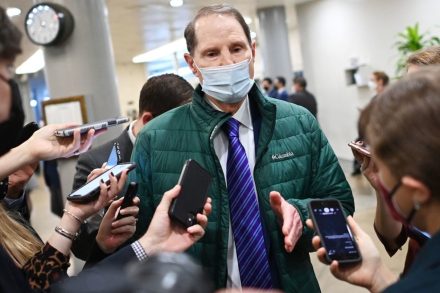
No one knows what will come out of the sausage making now going on up on Capitol Hill, but let’s take a look at one proposal to raise money to pay for some of the cost of the reconciliation bill. At the moment, capital gains are taxed only when the asset is sold or the owner dies. (The estate tax is just a tax on capital that is triggered by death rather than by sale.) Oregon senator Ron Wyden proposes that they be taxed every year whether sold or not. Unrealized capital gains are certainly a tempting target. After all, for people like Bill Gates and Jeff Bezos, practically their whole, vast fortunes are capital gains, the cost basis of their stock in Microsoft and Amazon is, at most, a few cents a share.

ron wyden unrealized capital gains tax

Who’s targeted by the $600 IRS reporting requirement?

From our US edition

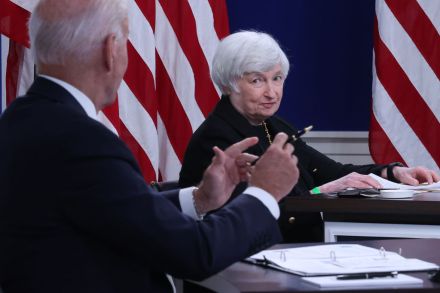
Tucked away in the reconciliation bill now bogged down in Congress is a requirement that banks report the annual deposits and withdrawals from every bank account that has activity of more than $600 a year. It would not list individual transactions, just the total money flow in and out. Ostensibly, this is to catch rich people who have been under reporting income. Secretary of the Treasury Janet Yellen gave as an example: “High-income individuals with opaque sources of income that are not reported to the IRS, there's a lot of tax fraud and cheating that's going on.” Wages, salaries and fees are already reported to the IRS through W-2 forms. So is investment income. That sort of income is what a large majority of American families depend on.

irs

A global corporation tax is a terrible mistake

International cooperation is alive and well – at least when it comes to raising taxes. One hundred and thirty six countries have now signed up to a global minimum corporation tax of 15 per cent, proposed by G7 countries in June and pushed heavily by the UK Treasury. This is another step forward for what is thought to be the biggest overhaul to the international tax system in a century. The installation of a corporate tax floor is part of a comprehensive effort to reform how multinational companies are taxed: that is, to more precisely target where profits are being made (instead of where products are being created).

Will the Pandora Papers change anything?

From our US edition

On October 3, the International Consortium of Investigative Journalists, based in Washington DC, released a huge trove of 11.9 million leaked documents pertaining to the wealth of hundreds of world leaders, public officials, and billionaires. Like the Panama Papers that were leaked in 2016, the Pandora Papers detail vast offshore holdings, perhaps as much as $32 trillion, that have allowed the beneficiaries to avoid taxes that would have been due had the wealth been held at home. For instance, a United Kingdom company controlled by Cherie Blair, the wife of former prime minister Tony Blair, acquired a £6.45 million ($8.8 million) property in London not directly but by purchasing a British Virgin Islands company.

pandora papers

Could the squeeze on living standards bring down Boris?

There is about to be a two-phase onslaught on the living standards of those on low-to-middling incomes. On 1 October the energy price cap, for dual fuel, rises from £1,150 to £1,277. This is a rise of 11 per cent, at a time when furlough is ending and just a few days before the £1,000 a year uplift to Universal Credit is removed (which presumably Boris Johnson will not be swanking about in his big speech to Tory conference). That’s the first hit to living standards. There’ll then be a gradual further erosion of living standards with rising food inflation (of around five per cent, as per what Tesco’s chairman John Allan said on my show this week).

Why the NHS needs more bureaucrats

If the NHS's cheerleaders and detractors can agree on one thing, it's this: we need fewer backroom staff. If the health service's doctors, nurses and cleaners are heroes, the pen-pushers, middle-men and legions of drab men in drab suits are sucking the vital lifeblood out of the NHS, while droning on about synergies in management. All this while claiming a salary that could have paid for another two nurses. This debate has re-emerged after it was reported that almost half of all NHS staff are managers, administrators or unqualified assistants. Helen Whately, the care minister, spoke for many when she said she feels 'strongly that the money we put into the NHS needs to go to frontline'.

Assetocracy: the inversion of the welfare state

To understand how the Tories ended up in such a muddle about who they are and what they stand for, take a walk down any of the nicer streets in Boris Johnson’s constituency. North Hillingdon is as idyllic now as it was a generation ago: spacious houses, with large drives, built before the war. The houses were, once, more or less affordable. One property on Parkway, for example, was bought for £175,000 just over 20 years ago. It’s now valued at £1 million. And what’s true in Hillingdon is true of the rest of the country too. The asset boom that started at the turn of the century has transformed the finances of families across the country, turning modest-income retirees into unexpected millionaires: a new ‘assetocracy’.

Portrait of the week: Tax rises, Tube gets busier and Taliban names its government

Home Boris Johnson, the Prime Minister, announced a new tax in the Commons branded a ‘health and social care levy’. It would increase National Insurance paid by employees and employers by 1.25 percentage points from April 2022. A year later it would become a separate tax that even pensioners still earning would have to pay. Share dividends would also see an extra 1.25 per cent tax rate. Of the £12 billion a year raised, only £1.8 billion would go to social care for the next three years. Some of the tax would go to meet the increased tax bill of the NHS as an employer paying the levy. From October 2023 there would be a cap on personal care liabilities of £86,000 over a person’s lifetime, though this would not cover accommodation.

Has it really got harder to see a GP in person?

Floating vote Voters in St Petersburg were presented with three candidates all calling themselves Boris Vishnevsky, with two believed to have changed name and appearance to draw votes from the other. It is not the first time voters have faced a confusing choice: — In a Moscow city election in 2019 voters had the option of voting for ‘Alexander Solovyov’ — though it turned out not to be the Alexander Solovyov who was in prison at the time and barred from standing. — In the 2017 local election in Ferguslie Park, Glasgow, Conservative John McIntyre was elected, with many speculating that voters had meant to opt for an independent candidate called John Goudie McIntyre.

Boris’s premiership is entering a dangerous new phase

The announcement of a tax increase for both workers and employers to fund more spending on health and social care is Boris Johnson’s biggest gamble since he won the 2019 general election. He is betting that, under the cover of Covid, he can get away with breaking his manifesto commitment not to raise personal taxes. Voters can be unforgiving of politicians who break their promises. Johnson is aware of this danger. Earlier in the crisis, when the Treasury pushed to drop the pensions triple lock — which ensures that the state pension goes up by inflation, earnings or 2.5 per cent, whichever is highest — because the Covid crisis was making it unaffordable, Johnson resisted on the grounds it was a manifesto commitment.

Time to ditch the pension triple-lock for good

Perhaps it’s finally dawned on the government that they have an intergenerational inequality problem on their hands. The decision to suspend the pension triple-lock for one year to avoid an 8 per cent increase to the state pension would suggest so. Asset wealth is already excessively concentrated in the over-55s. To even this spendthrift government, a massive bump in pensions while the rest of the economy languishes is a step too far. But that’s exactly what happens every year anyway under the triple-lock. The policy means that even when the rest of the economy stagnates, pensioners receive a boost. It is a feature of the system, not a bug, which came into place as part of the coalition in 2010 and has quite clearly run its course.

Tories brace for more tax rises to fund NHS

Any Tory rebellion on social care is unlikely to be very big this evening when the Commons votes on a resolution introducing it. There are a number of reasons for this, not least that voting against a money resolution, particularly one on an issue that is as big as a budget, is a much bigger deal than rebelling on normal legislation. Then there's the prospect of a reshuffle, with everyone in Westminster busily trying to read runes about whether Boris Johnson will move around his front bench tomorrow. If it doesn't happen, disappointed MPs are hardly going to complain in public that they'd supported the policy in the hope of career glory. If the NHS won't willingly stop spending money, and the new care policy requires that money after three years, what's going to happen?

PMQs: Starmer’s caution lets Boris off again

Today was the first PMQs clash between Boris Johnson and Keir Starmer in a packed Commons chamber. Starmer tried to pin down Johnson on whether he could guarantee that no one would have to pay their home to fund their care. Johnson dodged the question. But Starmer was limited by the fact that Labour can’t say how it would raise funds for the NHS backlog and social care, allowing Johnson to claim that Labour has no plan. Starmer is a naturally cautious politician, but his caution is leaving the field clear for Johnson on social care. Things would have been more difficult for the Prime Minister today if Labour was explicitly backing a tax on assets.

Why didn’t Tory MPs oppose Boris’s tax hike?

Boris Johnson has just announced his plans to increase National Insurance by 1.25 per cent for both workers and employers to fund extra spending on the NHS and social care. Johnson framed the measure as necessary to deal with the backlog that had built up during Covid. He claimed that without action hospital waiting lists would reach 13 million. He said that he didn’t break his manifesto promise lightly but that a ‘global pandemic was in no one’s manifesto’.  Of course, the problem with this argument is that the tax promise, as well as the commitment that no one would have to sell their house to pay for social care, were always going to be incompatible.

No, Britain isn’t a gerontocracy

Outrage over the government’s National Insurance hike is wholly justified. It is absurd to have the working-age population foot the bill for social care while those over state pension age with substantial incomes and assets don't contribute. It is regressive, reneges on a 2019 manifesto pledge and is nothing more than a sticking plaster to heal the festering wound that is our social care system. As for employer NI, this is a crude payroll tax that discourages employment at the margin and which will translate into lower wages down the line. But the insistence by inter-generational warriors that we increasingly live in a gerontocracy, where the needs of the young are perpetually disregarded, is less convincing.

Why Johnson’s tax gamble will pay off

Boris Johnson's announcement today, promising he will fix the £15 billion hole in health and social care, may well be the decision that determines his and his party's fate at the next election — and, by implication, Keir Starmer's reaction will also determine his destiny.  Probably the most important point is that after the 18 months we've had, most people would argue that putting the NHS and care for the elderly and vulnerable on a stable financial footing should be the Prime Minister's number one priority.

Why are Boris’s tax rises so popular?

It is a curious thing to exclude a vast group of generally quite well-heeled voters from funding a policy innovation that they will benefit from more than any other group. One might almost call it blatant favouritism. But Boris Johnson’s plan to pay for a big increase in resources going into social care long-term and the NHS short-term amounts to just that. By opting for a National Insurance increase to fund his proposals, the PM is ensuring that nobody over the state pension age of 66 will have to put their hands in their pockets. Neither will the extra financial burden fall on so-called 'unearned' income such as dividends on shares or interest on savings. Instead, working people under 66 will suffer a direct hit to their pay packet.

Three big problems with the government’s planned tax hike

We are in the middle of a once-in-a-generation shift: working from home. There are skill shortages across the economy, supply bottlenecks, and empty supermarket shelves. A couple of million people are still set to come off furlough, back into jobs that may no longer exist. The labour market is in utter chaos. But, hey, here’s a good idea. Let's whack a tax on jobs. Really? The government’s widely leaked plan to increase National Insurance, a tax on jobs, could not come at a worse possible time.  The government’s widely leaked plan to increase National Insurance, a tax on jobs, could not come at a worse possible time We can all debate whether the government should raise taxes to fund social care.