Tax

Only one tax cut can save Rishi Sunak

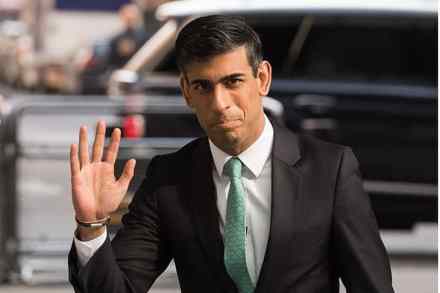
Rishi Sunak's promises on tax are lacklustre. He's announced a fiddly one-off tax break on energy that will last for just a year which hardly anyone will notice due to inflation. There's also income tax cuts up to seven years in the future, even though he is hardly likely to be Prime Minister by then (and he seldom keeps any promises on taxation for more than a few hours anyway).  Sunak’s promises and u-turns on taxes are making him look inconsistent at best, and a cynical opportunist at worst. The Tory members are right to regard his words with suspicion. But there is one tax cut that could still win the membership over: abolishing inheritance tax.
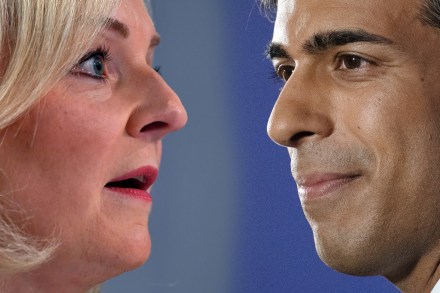
The real difference between Sunak and Truss’s tax policies

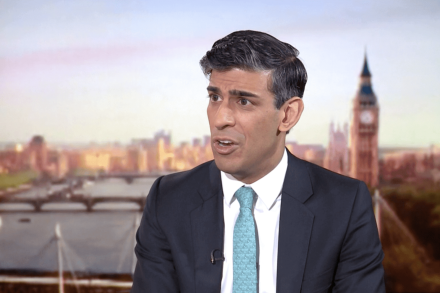
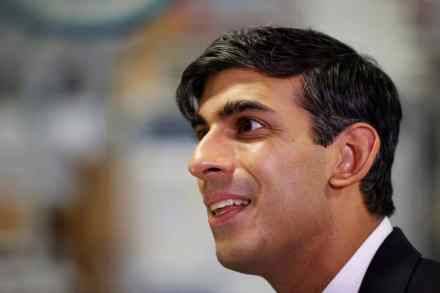
The Tory leadership race is becoming a test of patience. Today Rishi Sunak has laid out his plan to slash tax: not in a matter of days or weeks, as Liz Truss has pledged to do, but by the end of the next parliament. He’s promised to reduce the base rate of income tax by 20 per cent, by taking 1p off income tax in 2024 (as already pledged) and an additional 3p over the next parliament. As Fraser Nelson notes on Coffee House, the timing of this announcement is working against him: it’s easily characterised as a u-turn on tax cuts, when in truth the former Chancellor is far more interested in reducing the tax burden than perhaps his time in the Treasury conveyed. Team Sunak was always planning to hold back his bigger policy announcements for later in the campaign.

What Florida gets right

From our US edition

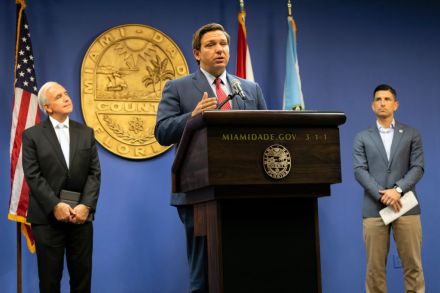
There’s a saying in Florida: “the further south you go, the more north you get.” Those familiar with the state’s geography know this reflects the reality that most of the southern regions of the state — Palm Beach, Miami, Naples, Fort Myers — have large cohorts of migrants from up north. There is even a logic to who moves where. Northerners from New York, New Jersey, Connecticut and the other New England states come down Interstate 95 and end up in southeast Florida while Midwesterners from Illinois, Ohio and Michigan travel down I-75 and settle in the southwest part of the state. This migration is not a new phenomenon. Over the past twenty-five years, Florida’s population has boomed unlike anywhere else in the country.

florida

The unspoken argument behind a windfall tax

The Financial Times story on Rishi Sunak looking at a possible windfall tax on energy firms captures how difficult such a tax is for any government, especially a Tory one. Because it begs questions why, when electricity suppliers suffered unsustainable losses in autumn and winter, when under the price cap they suffered huge and unsustainable losses – what you might call a reverse windfall – they were allowed to go bust. If you believe in capitalism and competition, you believe in swings and roundabouts: windfall profits in good times are the obverse of extreme losses in the bad. Kwasi Kwarteng repeated that mantra as failing electricity suppliers would not be bailed out.

How much did Emily Maitlis cost licence fee payers?

Off duty How many non-doms are there in the UK? – In the year ending 2020, 75,700 people filled in a tax return in which they declared themselves to be non-domiciled – down from 78,600 the previous year and 137,000 in 2008. – Of the 75,700 in 2019/20, however, only 62,200 were actually resident in Britain. – In spite of their non-domiciled status, which does not oblige them to pay tax on foreign earnings, the 75,700 people still paid £7.85bn in income tax, capital gains tax and national insurance. – The highest number of non-doms in 2019 were resident in London (45,200), followed by the South East (10,400). The fewest were in Northern Ireland (300), Wales (500) and the North East (500).

The war on workers

It is been a familiar story in recent years: a Budget that sounded reasonably good when delivered, but that unravels in subsequent days. Rishi Sunak’s spring statement was no exception. When he delivered it a fortnight ago, he said he was going to compensate low-earners by raising the primary threshold for National Insurance, bringing it into line with income tax and relieving people who earn less than £12,500 from having to pay NI at all. But as the 1.25 percentage point rise in National Insurance kicks in today, it turns out that the rise in the threshold for NI will not take effect for another three months, on 6 July. In the meantime, any employee who earns more than £9,880 a year will be paying 13.25 per cent of their earnings on NI.

Should the young pay less tax than the old?

In evolutionary terms, it is obvious why we get more conservative with age. Two strong forces, acting in the same direction, lead us not to bet on rank outsiders when we’re nearing the last race of the day. First, older people have more experience to draw on when making decisions: if you already know what you like, the need to experiment is much less. But that’s not all. The elderly also have far less time remaining to benefit from experimentation. If you happen on a new cuisine, band, social circle or holiday destination in your twenties, you have many decades to profit from the discovery. Someone in their sixties might have one or two.

Is Biden trying to crash the economy?

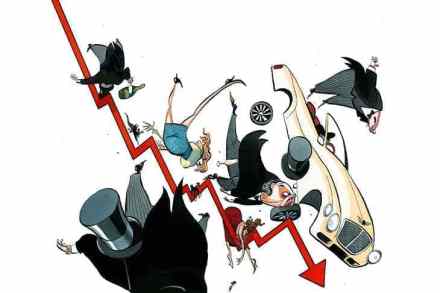
A war is raging in Ukraine. Inflation has risen to a 30-year high and may have started to spiral out of control. The country is on the brink of recession, and a gaffe-prone leadership is under increasing fire. You could be forgiven for thinking that President Biden has more than enough problems right now. But he is about to make his already miserable term in the White House a whole lot worse. How? By adding a stock market crash, and the destruction of America’s best companies, to the already worryingly long list of self-inflicted disasters. It is hard to think of a single tax that could be worse for growth This week, Biden is set to unveil a ‘billionaire's tax’ targeted at the country’s super-rich.

The Chancellor’s difficult choices

The Office for Budget Responsibility was designed to protect the Chancellor from accusations that he is cooking the books. If the forecasts are prepared by an independent body, there can’t be the suggestion – as there often was before the OBR’s creation in 2010 – that they have been politically influenced. But what the OBR cannot do is eliminate uncertainty. In recent years, the likely trajectory of the financial future changed quite a lot from one month to the next: from interest rates and inflation to the Covid pandemic and Russia’s invasion of Ukraine. The OBR itself admits that it had to conduct its work without knowing the full economic implications of the war. But it has cut its growth forecast for the UK economy anyway.

The return of fiscal conservatism

Next month, Rishi Sunak will break a Tory manifesto pledge by increasing National Insurance as the tax burden heads to a 77-year high. By declining to increase departmental spending for inflation – and using the saved money to cut the basic rate of income tax – the Chancellor has started a cautious fightback against Big Government conservatism. Much has changed in the two years since Sunak took over as Chancellor. Back then, inflation appeared dead and buried: long-term forecasts did not envisage it going above 2 per cent. Sajid Javid, Sunak’s predecessor, said he expected rates to be ‘low for long’ – and planned to borrow and spend on that basis. The Tories had quite simply lost their fear of inflation.

Rishi Sunak has just defined the next election

The biggest surprise of Rishi Sunak’s spring statement was the announcement that the basic rate of income tax will be cut by one penny come 2024. This is the first cut in the basic rate since the cut to 20p announced by Gordon Brown in his last Budget in 2007, which was of course partly paid for by abolishing the 10p starting rate of tax. Cynics will be quick to suggest that there is a long way to go before 2024 and so the tax cut might not happen. But this is to ignore the politics. The most likely date for the next election is May 2024. It would be bizarre, and electorally disastrous, for a government to announce that it intends to cut taxes just before that date and then fail to do so. Sunak has lashed himself – and the government – to the mast.

Can Sunak prove he’s a low tax Tory?

When Rishi Sunak first envisaged this year's spring statement, the idea was that it would be policy light. Instead, it would serve as an economic update on the latest forecast and give him a chance to lay out his broad tax aspirations for the year ahead. However, Russia's full-scale invasion of Ukraine means that the goalposts have moved. The Chancellor has had to adjust to the fact that he has come to the end of one crisis only to be greeted by the next. With the economic fallout from Ukraine only exacerbating the cost of living crisis, Sunak is under pressure to announce measures to ease the pressure on households. So, what can we expect?

Sunday shows round-up: Sunak says Ukraine and Brexit are not ‘analogous’

Rishi Sunak – Brexit vote and Ukraine resistance 'are not analogous' The Chancellor was in the TV studios this morning, ahead of the Spring Statement that he will deliver on Wednesday. Economic issues, like much else, have been cast into the shadows over recent weeks as the spotlight has inevitably focused on the Russian invasion of Ukraine. Even today was no exception, as in his interview with the BBC's Sophie Raworth, Rishi Sunak was first asked to address a stir caused by the Prime Minister’s remarks at the Conservative’s spring conference yesterday in Blackpool: https://twitter.com/BBCPolitics/status/1505486969094168581?

How crony capitalism makes tax season hell

From our US edition

For most Americans, tax season is accompanied by a soundtrack of wailing and gnashing of teeth. According to Pew Research Center, 56 percent of Americans hate or dislike doing their taxes, and 31 percent of those respondents say the process is too complicated. Filing your taxes is expensive, in both time and money: ProPublica reported in 2019 that "Americans spend an estimated 1.7 billion hours and $31 billion doing their taxes each year." When you're elbow-deep in documents and receipts, poring over tiny boxes filled with numbers and second-guessing whether you did, in fact, get married last year, you might ask yourself: does it really have to be this hard? The answer is no. Many other countries, like Germany, Japan, New Zealand and the United Kingdom, have "exact-withholding" systems.

tax return

Revealed: how the NHS waiting list will hit 9.2 million

Before the pandemic hit, NHS England waiting lists were at a record high of 4.4 million. Three lockdowns later, they’ve risen to six million: an unacceptable figure for a Tory government which has spent years trying to rebrand itself as the ‘party of the NHS’. Boris Johnson’s decision to break his manifesto pledge and raise taxes was directly linked to the idea that the money would first be funnelled into the health service to fix the backlog. So can he now deliver for patients? When Health Secretary Sajid Javid announced his ‘elective recovery plan’ in the House of Commons on Tuesday, he said that the waiting list would start shrinking by March 2024, though he stressed that the numbers will rise before then. By how much?

Why windfall taxes are a rotten idea

Annual profits of £9.5 billion at BP this week followed a £20 billion jackpot at Shell last week, thanks to soaring global wholesale energy prices that BP boss Bernard Looney recently said had turned his company into a ‘cash machine’. For the very same reason, Ofgem has announced a 54 per cent (roughly £700) increase in the energy price cap for 22 million UK customers, while the Chancellor is scrabbling to keep at least some of those households out of ‘fuel poverty’ by offsetting half the rise with a £200 energy discount, to be recouped over five years, plus a £150 council tax rebate.

Exclusive: Leaked NHS report shows waiting list hitting 9.2 million

Before the pandemic hit, NHS England waiting lists were at a record high of 4.4 million. Three lockdowns later, they’ve risen to six million: an unacceptable figure for a Tory government that has spent years trying to rebrand itself as the ‘party of the NHS’. Boris Johnson’s decision to break his manifesto pledge and raise taxes was directly linked to the idea that the money would first be funnelled into the health service to fix the backlog. So can he now deliver for patients? When Health Secretary Sajid Javid announced his ‘elective recovery plan’ in the House of Commons on Tuesday, he said that the waiting list would start shrinking by March 2024, though he stressed that the numbers will rise before then. By how much?

After Omicron: there’s no longer a case for restrictions on liberty

Covid-19 is in decline in Britain, with Omicron cases now falling as fast as they rose. The booster programme — which covers 95 per cent of pensioners — has helped fend off the risk of hospitals being overwhelmed. This gives Boris Johnson the chance to say that his plan worked, that Britain benefited from having the highest booster protection in Europe and that we can now repair the damage of a two-year crisis. The great recovery can begin — or it could if Johnson were able to lead. His bizarre decision to self-isolate last week — he was under no obligation to do so — gave the impression that he was hiding from questions about his parties and staff misbehaviour during lockdown.

Get ready to start paying the cost of Covid

Forget the desirability (or lack thereof) of tax hikes: can Britain survive them? That’s the economic question that kicked off the new year in cabinet this week when Jacob Rees-Mogg was reported to have encouraged the Prime Minister and his colleagues to roll back plans to bring in the new National Insurance levy this April. A recap on the proposals: the 1.25 per cent National Insurance hike will be paid by both employers and employees, and will eventually be funnelled into social care, we're told. But for the first few years, most of the tax revenue it raises (roughly £12 billion) will go to addressing the NHS backlog and the millions of people on waiting lists.

Does Boris believe in Brexit?

For once, yesterday’s Downing Street press conference included a worthwhile question, and not of the 'why aren’t you locking us down?' variety. In fact, it had nothing to do with Covid at all. Harry Cole of the Sun asked why, given that the Prime Minister had once cited the ability to remove VAT from fuel bills as a tangible benefit of leaving the EU, he was not now taking advantage of his new-found freedom, especially as bills are heading sharply upwards. Boris Johnson mumbled something about not wanting to help people who could easily afford their energy bills and that the government might consider more targeted help instead.