Students

Why we should fear the new housing bubble

It’s senseless to ask how things are going to end, because things as a general rule don’t. They rumble on, they morph, and yesterday’s drama becomes tomorrow’s eyebrow-raising justification for thinking that people used to be inexplicable idiots. Nonetheless, I read these stories of house prices rising again and I cannot help but wonder. How is it going to end? How is it even supposed to end? What is Mark Carney’s golden future? Interest rates stay low, repayments stay low, house prices keep going up and then... what? How do all these people who have overextended themselves eventually underextend themselves so as not to be utterly buggered when rates finally go back up again? What is the correct verb for underextending yourself? Is there one?

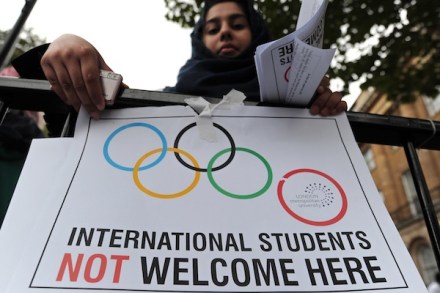
Why, once again, a fall in student immigration is good

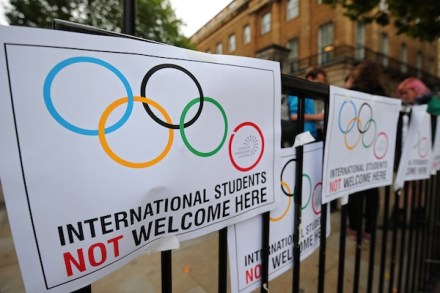
Yesterday came the news that net migration has once again fallen, this time to its lowest level for ten years. In the year ending September 2012, net migration was 153,000. That is a fall of 89,000 on the previous year when it reached a dizzy 242,000. This is undeniably good news. The public have consistently shown their desire to see net migration reduced and we now have a government which is committed to lowering net migration and has so far had considerable success. Many on the left, who cannot bring themselves to admit that net migration of 200,000 per year is too much for a small island such as ours, continue to perpetuate the idea that, in the process of reducing net migration the government is harming the economy.

William Hague’s beery legacy

Po-faced Labour MP Grahame Morris has been crying into his bitter this morning at young Tories up at York University who hold an annual ‘Hagueathon’ in honour of the fourteen pints the Foreign Secretary necked when he was a student. The game is very simple: right-wing students try to drink fourteen ales, with varying degrees of success. ‘I suspect William Hague’s capacity for 14 pints of Yorkshire bitter was a figment of his imagination,’ moans Morris to the Mirror. ‘In the current climate when the Government is supposed to be doing something about the alcohol crisis, this sets a bad example.’ Steerpike hears that Barrel Scrapper Morris has missed a trick.

Will 2013 bring an end to unpaid internships?

It’s a bit early for predictions for 2013. But my feeling is that it could be the year of the unpaid intern, or rather, the year of the paid intern if the campaign to pay people a fair day’s pay for a fair day’s work continues to gather pace. Hazel Blears did well to secure cross-party support for a 10-minute-rule bill to outlaw the advertising of unpaid internships. It does seem odd that employers are obliged to pay the national minimum wage but can advertise that they are breaking the law. Campaigners Intern Aware has been pushing this particular cause for some time and should be congratulated for its work on the bill. The fact that HMRC is doing so little to enforce such breaches suggests it is perhaps not up to the job.

St Andrew’s students beat ‘milking’ with ‘champagning’

The Daily Mail got very excited last month over 'a new student craze' called milking, where students post videos of themselves ‘pouring milk over their heads in public places’: The four-pint fad began in Newcastle and soon spread to Edinburgh, Oxford and other universities. Not to be outdone, the fine gentlemen of St Andrews University have given their own twist on the craze: ‘Champagning’: Robed up, their video speaks for itself. It certainly gives a new meaning to 'Champagne for the brain', but a damned waste of fine Pol if you ask me.

More left the UK for work in the last year than came here for it

Net migration to the UK from April 2011 to March 2012 was 183,000, down by a quarter on 242,000 the year before. That's the headline figure from today's Office for National Statistics release, and the government is using it to claim success. Immigration minister Mark Harper said: ‘This shows we are bringing immigration back under control. Our tough policies are taking effect and this marks a significant step towards bringing net migration down from the hundreds of thousands to the tens of thousands by the end of this Parliament.’ But it's worth looking a bit deeper into the figures.

Willetts attempts to limit the damage of Coalition immigration policy

There was a flutter of excitement among the Higher Education community this morning, when the education editor of the Times tweeted that David Willetts, the Universities Minister, was about to announce that overseas students would be excluded from net migration figures, and therefore from the Prime Minister’s pledge to reduce net migration to under 100,000 by the election. Straightaway I responded that I thought this unlikely. There is a strong policy case for taking students out of the political 'numbers game' on immigration. Net migration figures are supposed to measure 'long term migration', whereas most overseas students return home fairly quickly.

A U-turn on international students would be welcome

If you have been confused over the last couple of days by the mixed messages emerging from Downing Street about the government’s policy on international students, you are not alone: the same applies to many figures inside Whitehall.  The Sunday Times reported a Number 10 source saying David Cameron is 'definitely considering a change in policy', 'fearing the UK could lose billions if students are caught up in the pledge to reduce net migration to below 100,000 by 2015'. The Mail followed up the story in its leader on Monday, endorsing it but suggesting it would be a mistake – and blaming it on the Lib Dems.

Another voice: How ministers are gaming the net migration target

International students are currently the largest single category of immigrants who count in the net migration figures, which cover all those intending to stay more than a year. In the most recent figures (the year to June 2011) there were 242,000 such students — making up 40 per cent of so-called ‘long term’ immigration. However, as a new report by IPPR sets out, international students are not really ‘long term’ immigrants at all. They are far more likely to return home after a few years than the other main immigration categories of work and family: the evidence suggests only around 15 per cent stay permanently.

A law unto itself

One could meet any day in Society Harold Acton, Tom Driberg or Rowse: May there always, to add their variety, Be some rather Odd Fish at The House. Thus W. H. Auden (something of an odd fish himself) reminiscing at a Christ Church gaudy half a century ago. There have certainly been quite a lot of such fish in living memory, not least in the Senior Common Room.

In Praise of Alastair Sim

There is, I confess, little pressing need to post this clip from The Happiest Days of Your Life beyond the fact that a) it is always good to see Alastair Sim in action and b) this thought was triggered by this, entirely unrelated, story* in the Scotsman which quotes the head of Universities Scotland - a chap named Alastair Sim. The Happiest Days of Your Life, you will recall, is a splendid caper during which the exigencies of wartime demand a girls' school be sequestered at a boys' boarding school. Alastair Sim is the much put-upon headmaster and Margaret Rutherford the splendid headmistress. As always, Sim is the real star however.

Immigration to fall in 2012 — but still not on track to hit the Tory target

Immigration will remain at the heart of political debate in 2012. Economic downturns tend to heighten concerns about migrants competing for jobs and depressing wages, and spending cuts tend to sharpen resentment over migrants claiming benefits or adding to pressure on public services. The latest e-petition to garner a hundred thousand signatures will get its reward of a day in parliament, debating the effects of immigration on Britain’s growing population. And while Labour and the Liberal Democrats might be reluctant to talk about immigration, the Tory leadership clearly see it as useful in handling those on the right who are unhappy with life in coalition — commentators as well as backbench MPs.

New immigration figures

The Conservative wing of this government is on a quest to reduce net migration to, in the words of David Cameron, the “tens of thousands from the hundreds of thousands”. Liberal Democrat ministers may have dragged their feet on the issue, but there are serious doubts about whether Cameron's policies will have any real effect. As Fraser revealed last week, the coalition is struggling to secure a substantial reduction in immigration, with foreign born workers continuing to fill many jobs in Britain. This poses a threat to IDS’ welfare reform plans, as well as an electoral quandary for the Tories.  New migration figures for the period from 2009 to the present have been published today.

An American view of tuition fees

When I visited the US recently, I got talking to some American teenagers about university. They (like me) had just left school and were trying to decide where to go next. I explained that in the UK, the Government's plan to raise tuition fees to £9,000 a year had led to riots. Their jaws dropped. They couldn't understand what the fuss was about. In the US, fees can reach $40 000 a year for the private Ivy League colleges. The reaction in the UK seemed ridiculous to them. They felt we should be grateful that we didn't have to pay $40,000. [Although, to be fair, some state universities only charge around $5000].

Across Europe, students are protesting against the end of their entitlements

A month ago I found myself in the space of one week in two different countries, yet in the midsts of what felt like the same phenomenon: the political awakening of a new generation. In both London and Rome, students took to the streets to protest against government policies in numbers and in ways that those who graduated just a few years before would have found anachronistic, odd even. Unsurprisingly, given the historical, political and even emotional differences between Britain and Italy, there were differences between the protests. But as I walked the packed streets, listened to the protests, read their slogans, I heard similar arguments - particularly about the lack of fairness. When both events were finished, Whitehall and Via del Corso looked similarly destroyed.

The government takes the fight to students

The government’s response to the protest over tuition fee hikes has stiffened. Nick Clegg has written to Aaron Porter and David Cameron has penned an op-ed piece in the Standard today. They are united. The NUS should protest; debate is important. But that debate is moribund if the NUS deliberately misrepresent the government and mislead students. Cameron writes: ‘Of course these people have a right to protest. But I also believe they have a responsibility to know the full facts about what they're objecting to — and judging by the fury that's been unleashed, there are a lot of misconceptions flying around.’ It is vital that the Conservatives assist their embattled colleagues; the government must be unified.

Clegg fights back in tuition fees row

Nick Clegg has written a gloriously condescending letter to Aaron Porter, who hopes to recall Liberal Democrat MPs who vote in favour of tuition fees rises. Clegg emphasises that he was unable to deliver the tuition fee pledge in coalition, and therefore struck out to make university funding as fair as possible. After a wide consultation, it was found that the graduate contribution scheme is the fairest and most progressive outcome. He urges Porter to temper his language and not misrepresent the government’s position for political aims. ‘Grow up’ seems to be the unspoken request.

Are they the children of the revolution?

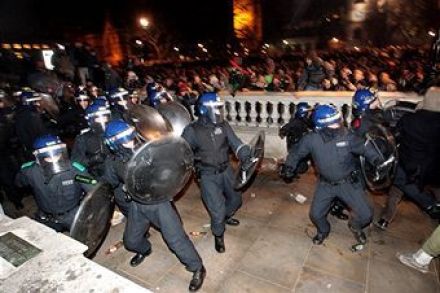
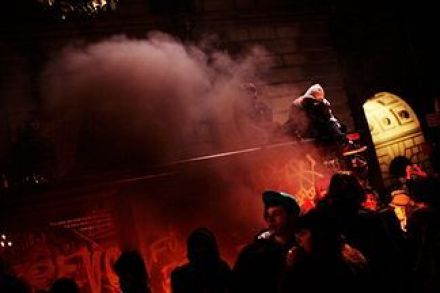
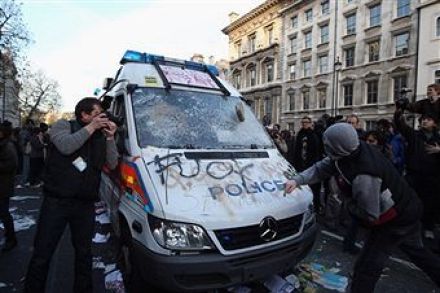
The student protests are an important short-term development, which will undoubtedly worry the coalition. But are they also, as the Met Commissioner noted, a harbinger of something else: namely, a return to a late 1960s, Continental-style protest, which will encourage other groups - from Tube drivers to Tamils - to use sit-ins, strikes and ultimately street-based violence as a political tool. The NUS rejects that their tactics are associated with violence, knowing it will turn the majority of English people against them. Blame is heaped on small groups of agitators. Anthony Barnett argues that unlike in the 1960s, "the relationship to violence is also much better, as shown by the spontaneous revulsion of the demonstrators against throwing the fire extinguisher at Millbank.

The Lib Dems are in quiet turmoil over tuition fees

A cruel north wind heralds the Lib Dem’s discontent. In public, the party has withstood criticism of its apparent u-turn on student finance, helped in part by the more puerile elements of the student protest. Ministers, from both wings of the party, have stressed that coalition necessitates compromise: tuition fees had to rise; therefore, the Lib Dems’ task in government was to protect the poorest, which they seemingly have. Backbenchers hedged their bets, saying that they were scrutinising the legislation before deciding how to vote.     But consternation has reigned in private. This morning, weeks of whispered disgruntlement broke into open tension.

Five things the student unions didn’t protest against in the last 13 years…

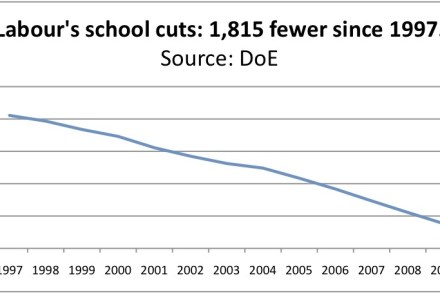
1)    That Labour cut the number of schools each year. 2)    That pupils were shepherded into ever-larger schools. 3)    That, although the budget trebled, class sizes hardly moved. 4)    That the attainment gap between private and public schools grew to become the largest of any country except Brazil (Source: OECD ) 5)    And all at a time when the supposed funding per pupil was soaring… Moral: cash doesn’t help schools. Reform does.