Spain

The demands and joys of contemporary art 

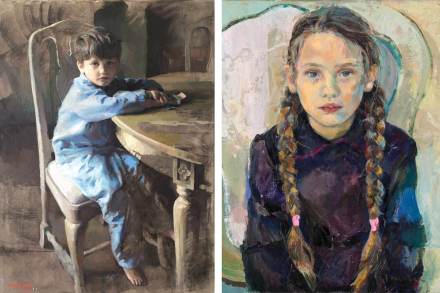
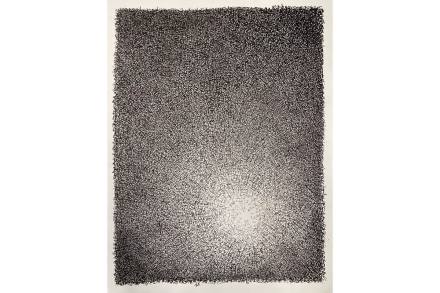
The career of artist Alberto Guerrero has been driven by an overarching desire to look for what is behind everything that we merely, and only dimly, perceive at present. The work of the forty-something Madrid-based Guerrero ranges from abstract, highly textured canvases and three-dimensional images which he calls “spherical paintings” to realistic presentations of daily life — such as his illustrated book Diary of a Quarantine showing life in the Guerrero household during Covid — and deeply reflective images of sacred art. There are few contemporary artists who have such a broad range and vision.

Guerrero

The ‘historic’ national dishes which turn out to be artful PR exercises

From our UK edition

In 1889, Raffaele Esposito, the owner of a pizzeria on the edge of Naples’s Spanish Quarter, delivered three pizzas to Queen Margherita, including one of his own invention with tomatoes, mozzarella and basil, their colours taken together resembling the Tricolore. The Italian queen loved the pizza, and Esposito duly named it after her. In that restaurant today hangs a document from the royal household, dated 1889, declaring the pizzas made by Esposito to be found excellent by the queen. And so was born the Pizza Margherita, a dish now synonymous with Naples. The queen’s seal of approval in the wake of Italian unification, which had proved difficult for Naples, came to represent the embracing by the governing royal family of an impoverished city by way of their cheapest street food.

How to survive summer in Andalusia

From our UK edition

Early on in his biography of the novelist Kingsley Amis, Zachary Leader quotes a hilariously misanthropic letter Amis wrote to the poet Philip Larkin, one of his closest friends. Amis, at the time in his early thirties, was complaining about a three-month stint he and his family – including his son Martin, then five years old - spent abroad, as required by the terms of the Somerset Maugham Prize, which he won in 1955 for his first novel, Lucky Jim (Martin would also win it in 1973 for his debut, The Rachel Papers).

Is Amber Heard staging a subtle comeback?

In just one short year, Amber Heard has transformed from arguably the most hated woman on the planet to some kind of new and improved Spanish celebrity. Amber moved to Madrid months after she was sued by her ex-husband, Johnny Depp, for defamation. In a viral TikTok video, Heard answers questions from reporters, saying in Spanish, "I love Spain so much."  When they asked if she plans on staying, she replied, "Yes, I hope so. Yes, I love living here." After being asked if she has movie projects on the horizon, she says yes and adds, "I move on. That's life." It turns out that exiling yourself to a new country for privacy can be an effective PR strategy. Take note, Harry and Meghan.

depp amber heard

A dispatch from the olive oil capital of the world

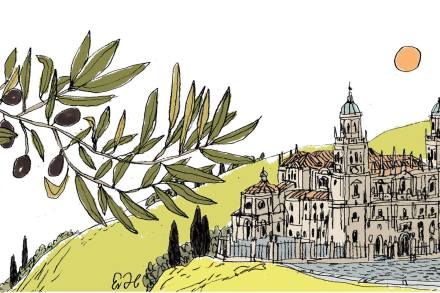
It was an extraordinary sight. For three days, and about seventy kilometers of hiking, there were just endless olive trees covering the fields, hills and mountains stretching to the horizon of the small Spanish province of Jaén. Tucked away in the southern region of Andalusia, this is the country’s powerhouse of olive-oil production. Many people assume Italy or Greece are the largest producers of olive oil. That’s a result of good branding and name recognition, a Jaén-based olive grower told me. After he pulled up alongside me in his dusty car, we walked through the endless olive groves as I was given a tutorial on olive oil production. Spain is the world’s top producer of olive oil.

olive oil

The Franco-Prussian war changed the map of Europe – so why are we so ignorant about it?

From our UK edition

Is there a single major European conflict of the past 200 years that gets so little attention in this country as the Franco-Prussian War of 1870-71? In 1961 Michael Howard brought out his history of the war, but Howard and the odd battlefield tourist apart, Rachel Chrastil’s bibliography – strong on contemporary memoirs, strong in fact on everything from the miraculous appearances of the Virgin Mary and the cult of St Radegund to the transmission of smallpox – is curiously thin when it comes to British interest.

Tinta de Toro: the Spanish red that helped Columbus make waves

From our UK edition

I am assured that this is not a legend. But a few years ago, an Irishman’s life was twice saved by a raging bull. The Irish fellow was running with the bulls at a town near Pamplona. He tripped and was virtually impaled. The bull’s horn went into one side of the chap’s stomach and out of the other. He was rushed to a neighbouring hospital, which was accustomed to bull wounds, and the surgeons saved his life. While they were doing so, the aeroplane that he should have been catching took off. There were no survivors. Fifteen years later, the Irishman developed gut rot. One doctor wondered whether scar tissue from the horn wound might be causing the problem. So the patient was opened up. Scar tissue was indeed present and was excised, as was pancreatic cancer at a very early stage.

The other side of flamenco

From our UK edition

When you hear the word flamenco you probably think of a lady dancing in a polka-dot dress, stomping her feet, accompanied by guitars and singing. And in the fair capital of Andalucía, Seville, you would have no problem finding such a sight. All across the old town, around the cathedral and in the lee of its 12-century minaret turned cathedral bell-tower, glamorous flamenco dancers are busy at it, stirring up passion on the cobbled streets and in the city-centre tourist shows. There’s no denying such flamenco demonstrations will raise your pulse and the tourists, not surprisingly, love them.

When Salvador Dalí met Alice Cooper

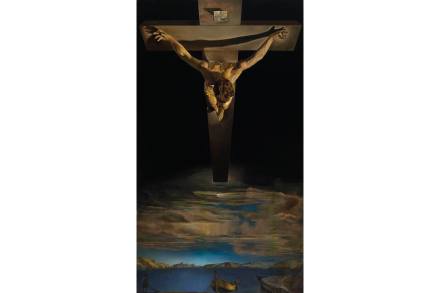
It was the ultimate summit between the two kings of pop-art camp, and one of the weirdest celebrity encounters even by the standards of 1970s New York. Salvador Dalí might have been the century’s most notorious modernist, but by the spring of 1973, when he was turning sixty-nine, his reign as the high priest of surrealism had descended into self-parody. Paintings such as his 1931 “The Persistence of Memory,” with its array of limp watches set in a barren landscape, had once sharply polarized critical opinion. For years, people saw Dalí either as a beacon of intellectual and emotional freedom, or as a madman who was more interested in money than art.

salvador dalí alice cooper

Drinking with Picasso

In February 1900, a critically acclaimed art exhibition went up at a Barcelona café called Els Quatre Gats. It was neither the first nor the last show mounted at the establishment, a popular drinking spot for avant-garde artists, writers and others. It was, however, the very first solo outing for one of the café’s regular patrons: a brash nineteen-year-old local art student named Pablo Ruiz Picasso. It has now been fifty years since Picasso died, on April 8, 1973, and even as that anniversary is being commemorated worldwide with new exhibitions and publications, he has never really faded from public consciousness. His art and even personal objects associated with him are avidly collected, and he continues to inspire filmmakers, musicians and other artists.

picasso

The rise of the ‘workation’

From our UK edition

The biggest single driver of last year’s property boom was the surge in working from home. For many, the commute went from daily chore to occasional concern, enabling them to move to areas that previously seemed beyond reach, from the Cotswolds to Cornwall. But others have gone further still – swapping ‘work from home’ for ‘work from anywhere’. These digital nomads typically ditch the nine-to-five or find flexible employers to enable them to decamp to sunnier climes in the greyest months of the year. And during a winter of high energy bills and soaring living costs at home, the trend has been growing.

There’s a sherry for everyone

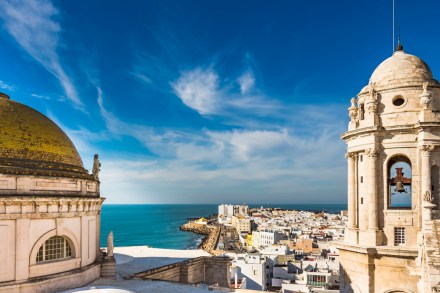
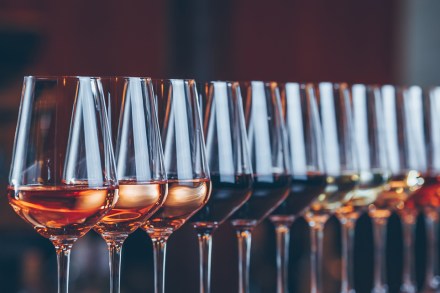
On cold nights, a zesty margarita just isn’t going to cut it. You need a bolder tipple: a glass of sherry, the fortified wine favored by retired generals, members of the Diogenes Club and Ordinariate priests swotting up on Thomas Aquinas for the next Sunday sermon. It’s an appropriate drink with which to reflect on the complexity of life itself. You can go from the crispest blanco sherry, through a series of progressively richer flavors, to the most moreish dulce rum-colored sherry. When I passed through Jerez de la Frontera in southern Spain’s Andalucía region, every bar was jammed with great quantities and varieties of sherry. I had stumbled — literally, as I was hiking a hundred miles of the Camino from the coastal city of Cádiz to Seville — upon the Mecca of sherry.

The unique style of Seville

From our UK edition

If you want to feel scruffy, head to Seville, the outrageously attractive capital city of southern Spain’s Andalucia region. It’s not just the abundant exquisite architecture – the city has one of the largest historic ‘old towns’ in Europe, with every bar, café and restaurant looking tiptop – but also the sartorial elegance that abounds among the local population, made even more striking by it coexisting in apparent easygoing harmony with the often plain awful turnout of us tourists and visitors. If Santiago de Compostela in north-western Spain is the city of rucksacks and walking sticks, then Seville – currently Google’s most searched-for flight-only destination – is the city of smart shirts.

Our provision for adults with learning disabilities is seriously inadequate

From our UK edition

This book reveals one man’s determination to enable his brother to live his best life. It is also a fable for our time. It hints at how we all might live if we turned the lens on the world. ‘Does Reuben have a learning disability’ asks Manni Coe, ‘or do we have an understanding disability?’ Coe’s younger brother Reuben, now 39, has Down’s syndrome. In brother.do.you.love.me Coe senior describes their loving upbringing in Yorkshire and Berkshire as other people stared, and Reuben’s adventures living a supported, partially independent adult life.

Spain’s caminos come calling

I haven’t come close to dying of thirst in Texas, where I live. In Spain’s little-known Extremadura, however, I found the odds increasing. Wandering through wide-open scrubland in hundred-degree temperatures, my only company was lots of Spanish bulls, unfazed by the blistering heat as I sweated my heart out. The population of Extremadura has been sparse since the Muslim occupation, but there are plenty of cattle. As I headed north from Seville on the Via de la Plata, the latest leg of my extended Camino de Santiago pilgrimage crisscrossing the Iberian Peninsula, Extremadura struck me as remarkably like Texas ranching country.

spain

The pagan pleasures of Spain’s Finisterre

From our UK edition

It was starting to feel rather spooky on the pathway to Finisterre. Only two days before I’d been in the celebratory environs of Santiago de Compostela with its endless arrivals of jubilant pilgrims. Now dark clouds were scudding across the Galician hills in the distance and the only sound I could hear was the wind blowing – in an accusatory manner, it seemed – through the trees beside me. While Santiago de Compostela marks the official end of the famous Camino de Santiago pilgrimage, with the purported remains of St James the apostle in the basement of its cathedral, a minority of hardy souls continue for another 86 kilometres to the Galician coast.

The curious rhythm of life in Spain’s Santiago de Compostela

From our UK edition

Surely no other city can claim to have so many backpacks and walking sticks on its narrow cobbled streets. In Spain’s Santiago de Compostela it always looks like there is a giant hiking convention going on. These aren’t your average ramblers, though. They are pilgrims, as the city marks the end of the famous Camino de Santiago pilgrimage. The Camino, or the Way of St James, is most associated with the 500-mile route from the base of the French Pyrenees westward though Pamplona, Burgos and Leon.

The secret holiday spots beloved by the Spanish

From our UK edition

Ask a Spaniard where they vacation, and you may get a touch of the Matador effect in response. The chest lifts, the head is tilted up with the bottom lip pushed out accompanied by the reply: 'España! My country.' For like the Greeks, when you have so many domestic splendours to choose from, why would you go anywhere else? It’s estimated that about two out of three vacationing Spaniards remain in country for the holidays. But where do the Spanish go? It’s a bit of a mystery—perhaps intentionally so. With swarms of Brits inundating their land, you can’t blame the Spanish for wanting to safeguard a few vacation refuges. Recently I’ve been encountering Spaniards on the move for their holidays.

Sitges: the idyllic beach town down the road from Barcelona

From our UK edition

About sixty years ago, before my wife was born, her parents set off on a driving holiday to the Continent. They drove down through France and into Spain and ended up in Sitges. They went no further. They’d found the perfect holiday resort, a historic town with a sandy beach and a few bars and cafes, somewhere to sit back and enjoy the sunshine, with a bit of local culture thrown in. Sixty years later, Sitges is a lot busier, but British tourists are still relatively rare. Most visitors are Spaniards, mainly daytrippers from Barcelona. There are some modern buildings, and a lot more bars and cafes, but the town still looks much the same. Compared to most Spanish beach resorts, it’s remarkably unchanged. My wife Sophie and I first went to Sitges in 1999.

The Spanish islands worth investing in – from Mallorca to Ibiza

From our UK edition

Another summer starts, and so another series of the irrepressible reality show, Love Island. Attention is focused on a rustic six-bedroom Mallorcan farmhouse being blinged up with ‘bright colours and neon signs’ for this year’s fame-hungry contestants. Its exact location is a closely guarded secret. An appetite for privacy and rural isolation on the Balearic Island has been strong trend since the pandemic started, with property hunters decamping from cities or the Spanish mainland.