Spain

What Spain’s social media ban gets wrong

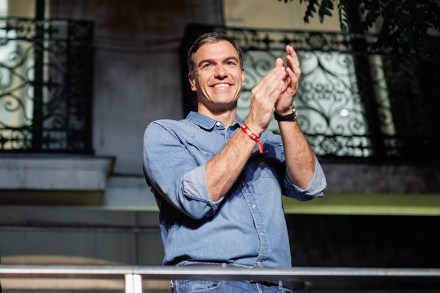
Spain’s Socialist prime minister Pedro Sánchez is proposing a ban on under-16s using social media, following the example set by Australia last year. Speaking at the World Government Summit in Dubai earlier this week, Sánchez said: "Today our children are exposed to a space they were never meant to navigate alone… We will protect [them] from the digital Wild West." The Spanish premier’s announcement comes at a time when several other European nations are also attempting to combat the harmful effects of social media on children. France’s ban on under-15s using social media is expected to become law later this year, while Greece, Portugal and Denmark have signaled their intention to enact similar legislation.
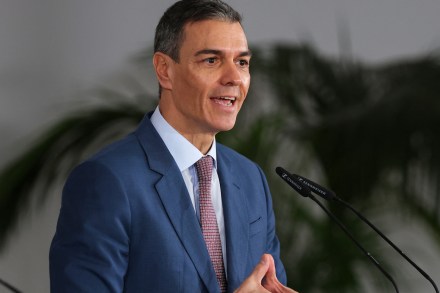
What Spain’s social media ban gets wrong

Spain’s Socialist prime minister Pedro Sánchez is proposing a ban on under-16s using social media, following the example set by Australia last year. Speaking at the World Government Summit in Dubai earlier this week, Sánchez said: ‘Today our children are exposed to a space they were never meant to navigate alone… We will protect [them] from the digital Wild West.’ The Spanish premier’s announcement comes at a time when several other European nations are also attempting to combat the harmful effects of social media on children. France’s ban on under-15s using social media is expected to become law later this year, while Greece, Portugal and Denmark have signalled their intention to enact similar legislation.
The long history of kidnapping Latin American chieftains

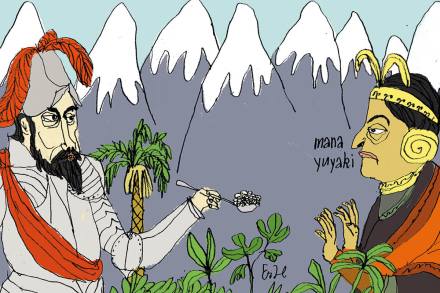
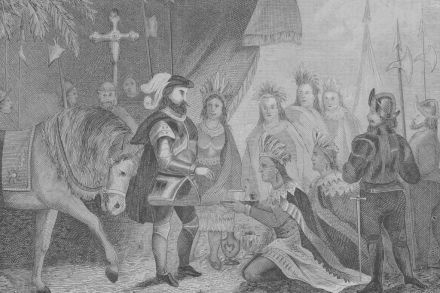
One of the few benefits of being an anthropologist is the uncanny exhilaration one feels watching novel current events as re-runs from previous episodes in the history of mankind. Donald Trump’s capture of Nicolás Maduro, President of Venezuela, is no exception. Kidnapping Latin American emperors is a continental tradition. It’s simply the most practical method for breaking the chain of command in the region. It triggers succession chaos, enables the extraction of resources and keeps the rest of the hierarchy more or less intact. In earlier centuries, it was Spain and Portugal. Today, it’s the United States. In the colonial era, the objective was to secure enough gold to beat European rivals.

latin american

Why Christmas comes early for thousands in Spain

From our UK edition

Every time I hear about someone winning ten million pounds/euros/dollars in a lottery, I think (and I’m sure I’m not alone in this): ‘Yeah, but… wouldn’t it have been better if ten people had won one million?’ Well, that’s more or less what happens in Spain. Tomorrow nearly 2,000 people will share the first prize in the Christmas lottery, each winning €400,000 (£350,000). The same number stand to share the second (€125,000 each) and third (€50,000 each) prizes. So in total almost 6,000 Spanish households will suddenly be looking forward to a much better life. No wonder there are such explosions of joy the length and breadth of Spain every year on 22 December.

I met Jesus – and he’s an old Spanish gardener

As the old Jewish proverb goes, “Man plans and God laughs.” But nothing, in my experience, makes Him clutch His sides quite like hearing about my Mediterranean gardening ambitions. Every winter, my horticultural memory performs a factory reset. I somehow forget the summer mornings when the thermometer climbs past 90°F by 8 a.m. and the plants wilt by noon. The brutal, arid wind that strips moisture from the leaves faster than I can water? Erased from my mind. What blight? And the way perfect fruit splits overnight after a thunderstorm? Never happened. Come spring, I’m suddenly possessed, clicking “add to cart” on tomato varieties with names like 1980s cocktail bars: Pink Jazz, Green Zebra, Cosmic Eclipse.

jesus garden
inca Llullaillaco

Inside the Inca ritual of child sacrifice

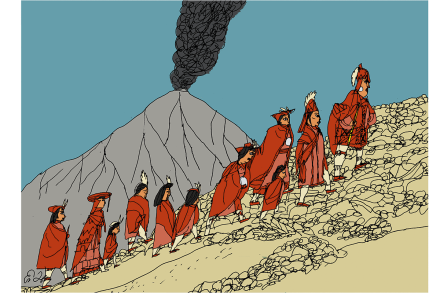
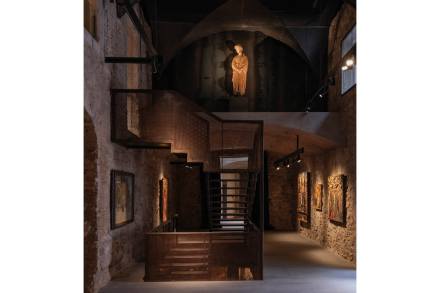
The children of Llullaillaco don’t look too different from the living children I’ve seen around Salta. They’ve got the same diamond-shaped faces, pecan-colored skin and straight, pitch-dark hair. Of course, the children of Llullaillaco are smaller, as people five centuries ago were wont to be – and dead. I’m talking about three Incan child-sacrifice mummies, estimated ages five, six and 15. As of about 25 years ago, they’re permanent residents of Salta, Argentina, the capital of a province of the same name in the country’s northwest. As the crow flies, the city isn’t that much closer to Buenos Aires than to Lima. Due west of Salta, in the Andes, is the peak of the volcano Llullaillaco.

Reconciling dreams with reality

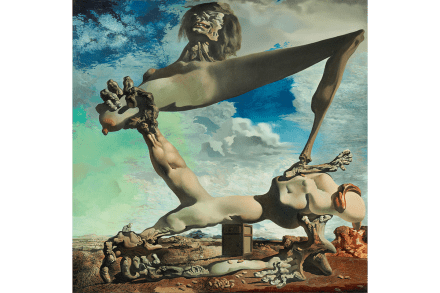
Should you be waiting in line at the Philadelphia Museum of Art to see the exhibition Dreamworld: Surrealism at 100, don’t be put off by “Tête” (1974), a sculpture by Joan Miró that is big and ugly and plopped down directly at the entrance. Be aware that Miró’s true métier was painting; “Tête” was cranked out long past his prime. You can’t blame an old man for cashing in on his reputation, particularly when his formative years were burdened by poverty. You can blame a curator for including a flagrant piece of product as a how-do-you-do to a centennial celebration.

Surrealism

‘My ghastly lonely life’ on the Costa Brava – Truman Capote

From our UK edition

‘I can’t write books drinking all day and going to every soiree in Manhattan,’ Truman Capote complained. In order to write In Cold Blood, his ‘non-fiction novel’ about the murder of the Clutter family in Holcomb, Kansas, Capote and his partner Jack Dunphy therefore went to Palamos, a fishing town on the Costa Brava. Leaving New York in April 1960, they sailed to Le Havre, then drove across France with two dogs, one cat, ‘25 pieces of luggage’, and 4,000 pages of notes and transcripts. The killers, Dick Hickock and Perry Smith, were on death row. Their executions, Capote hoped, would take place later that year, at which point he would return to America and have his ending.

Letters

Letters from Spectator readers, September 2024

The cunning of the Democrats’ lawfare Wow! A tour de force of snark! But wonderful for it. My late father-in-law would have said that instead of brushing his teeth in the morning, the author gets a file and sharpens his tongue. As depressing as this article is, it is likely an accurate assessment of what’s going on. Particularly the image of Trump and Biden essentially playing the roles of Walter Matthau and Jack Lemmon in the Grumpy Old Men movies. Carry on, America. Down Under, we have our own problems, as well as being affected by yours, same as every other country. — David Gerber Tellingly prescient. The 800-pound gorilla the next generation will be forced to address will be unsustainable entitlement transfer payments.

All the fun of the feria: why August is the time to visit Málaga

From our UK edition

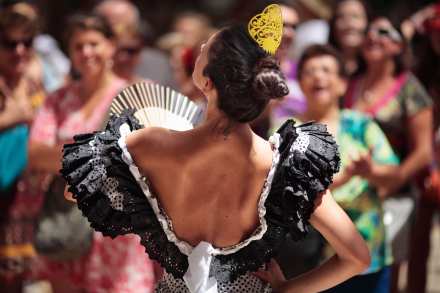
If I were a doctor specialising in alternative treatments, and someone came to me feeling depressed, I wouldn’t send them off with a herb-based elixir or a bunch of St John’s Wort. I wouldn’t cleanse their chakras or refer them to an acupuncturist. I’d send them off to Málaga’s annual fair, which this year runs from 16 to 23 August. Summer in Andalusia is feria season – the best cure that I know of for a bout of the blues. Usually lasting three or four days, or an entire week in the regional capitals, ferias are occasions of pure alegria (joy) and inclusivity.

The remote Spanish wine region that rivals Rioja

From our UK edition

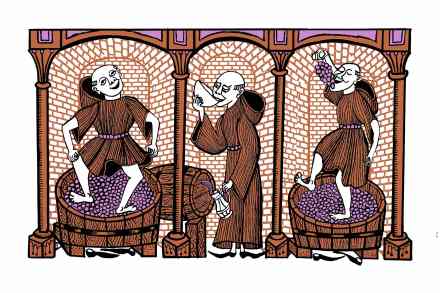
A.E. Housman once wrote that the English villages of Clunton and Clunbury, Clungunford and Clun ‘are the quietest places under the sun’. He’s almost right. I grew up in Clunton and the only place I’ve felt a deeper sense of quiet is Escaladei, a village high up in the mountainous Priorat region of Spain, which is home to the Cellers de Scala Dei vineyard. Getting there from Barcelona isn’t for the faint of heart, as the roads weave erratically along the hillsides. Driving there, I gripped the steering wheel tightly and drowned out my fears with music from a local reggaeton station. Once safely at the vineyard, Roger, our guide, impressed on us the importance of two things in Priorat: Garnacha and monks.

The man who’s destroying Spain

From our UK edition

Madrid In the mid-1990s, Spain’s socialist prime minister Felipe Gonzalez saw his political career collapse under the weight of a corruption scandal. A Supreme Court investigation revealed a fraudulent contracting scheme that illegally funded the Socialist party’s (PSOE) election campaigns. Despite intense media pressure from government-aligned outlets, two brave judges upheld the rule of law. Three decades later, another socialist Prime Minister – Pedro Sanchez – faces a similar reckoning. But this time, the scandal combines political manipulation, personal ambition and institutional degradation. Corruption is as old as power itself, yet in Sanchez’s case it takes on a uniquely modern and dangerous form.

Rafael Nadal: king of the orange brick court

From our UK edition

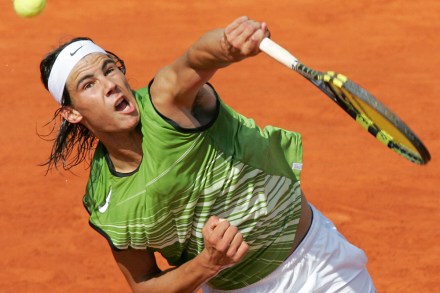
Even the greatest have setbacks. It is how they respond that makes them great. Take your chances, forget the lapses. The triumvirate who ruled men’s tennis this century – Novak Djokovic, Rafael Nadal and Roger Federer – each won just 54 per cent of the points they played. It was about turning it on when it counted. No one could turn it on like Nadal on Parisian clay. The orange brick dust of Roland Garros on which he slid and scampered so well seemed to inspire the Spaniard with magical powers. From 19 visits to the French Open, he returned to Mallorca only five times without the Coupe des Mousquetaires – and once was due to injury. No performer was so suited to a stage.

Barcelona rising

Barcelona is one of the world’s great cities; happily, it seems to be waking up from a lengthy nightmare of its own conjuring. During the anti-everything leadership of its previous mayor, failed actress Ada Colau, empty storefronts, open-air drug markets and sidewalks reeking of urine proved unconducive to outside investment. A deal to establish a local branch of the Hermitage Museum fell through, thanks to political virtue-signaling by local officialdom. Anti-tourism campaigners stepped up their activities over a period of years, even as cities such as Madrid and Málaga began to boom with historic renovations, new luxury hotels and cultural projects designed to attract visitors. Fortunately, things seem to be turning a corner.

Barcelona
Spanish

Why did Spain leave behind such terrible food?

I can still remember it: probably the worst seafood dinner of my life. A slice of fish that was simultaneously cold, hot, dry, crumbly and rubbery, surrounded by overcooked vegetables and accompanied by a mysterious whiff of cigarette smoke. It was so repellent that even though I was famished, I summoned the waiter, returned the dish and retired to my room, there to endure a dinner of Pringles from the minibar. What made it worse was that I was in a celebrated fishing port. All I had to do was look out the window and I could see trawlers bringing in some of the world’s finest fish from some of the planet’s richest seas. It was dismaying, saddening, deflating and left me starving. What it was not, however, was surprising.

A ‘Trump tornado’ is about to hit Europe

There is a wind of change blowing through the West. It emanates from Washington DC, where President Donald Trump continues to dash off executive orders; more than fifty by the end of last week, the highest number in a president’s first 100 days in four decades. The liberal mainstream media is rattled. The New York Times magazine ran a piece at the weekend in which it described Trump as "the leading light of a spate of illiberal leaders and parties flourishing in democracies around the world." The paper namechecked some of them: Poland, Holland, India, France, Germany, Italy, Brazil, Hungary and Russia. What unites and motivates these "illiberal" parties is their opposition to what the NYT called "liberal creep," which they regard as a civilizational threat.

Trump

Why is Spain so anti-Trump?

From our UK edition

Spain has been receiving some lavish praise of late in the British press. ‘Booming Spain is on track to a new age of prosperity’ was the headline in the Times last week, a response to the news that its GDP is forecast to grow by 2.5 per cent this year. The Financial Times was similarly effusive about Spain’s economy in a piece last October, in which it quoted the country’s prime minister, Pedro Sánchez. ‘I can say that Spain is living an extraordinary moment. Our country is experiencing great success.’ The Times explained that Spain is growing at three times the rate of the Eurozone for three reasons: immigration, tourism and lower energy prices.

Portrait of the week: Trump’s victory, Kemi’s shadow cabinet and footballer killed by lightning

From our UK edition

Home Kemi Badenoch, the new leader of the Conservative party, appointed a shadow cabinet. She made Robert Jenrick, whom she beat for the leadership, shadow justice secretary; Dame Priti Patel, shadow foreign secretary; Chris Philp, shadow home secretary; Mel Stride, shadow chancellor. Alex Burghart was given Northern Ireland and the Cabinet Office, with Laura Trott at education, Edward Argar at health and James Cartlidge at defence. Badenoch had been elected leader by 56.5 per cent of the 95,194 members’ votes (compared with the 57.4 per cent for Liz Truss in 2022), in a turnout of 72.8 per cent (compared with the 82.2 per cent in 2022). The Pitt Rivers museum in Oxford returned to Borneo a sun hat acquired in 1923 from the Brooke family, who ruled Sarawak.

Dam shame: what really caused Valencia’s floods?

From our UK edition

Who is to blame for the devastating floods that hit Valencia on 29 October? The mob that surrounded King Felipe at the weekend and drove Prime Minister Pedro Sanchez out of town with a hail of mud and stones was angry at the failure to forecast the flood and warn people to get out of its way. The BBC would like us to be angry at man-made climate change for causing the storm – putting out a headline the very next day: ‘Scientists say climate change made Spanish floods worse.’ Charts of rainfall in Spain show no trend towards a higher frequency of more extreme downpours Yet Valencia had a similarly terrible flood in 1957, in which 81 people died, long before climate change became the go-to excuse for any bad weather.

The treasures of sherry

From our UK edition

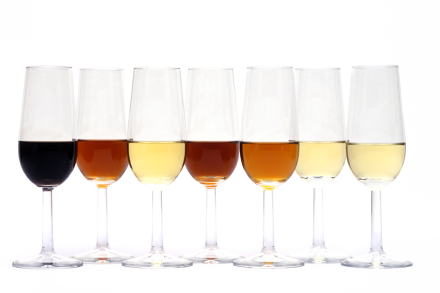
We were talking Spain and drinking Spanish. The UK and Spain are very different societies, but we did find points of comparison. As a very broad generalisation, Spaniards can be divided into three political groupings. There is a Europhile elite who take their political identity from a projected European future, and almost none from their nation’s past. To them, Spanish history is largely a record of backwardness, poverty, oppression and conflict. The EU is a means of ensuring that this past can be left in the past. British wine-lovers should not talk too loudly about the treasures of sherry The two much larger groups cannot forget the past, and especially the civil war.