Spain

Is it wise for Spain to goad Donald Trump?

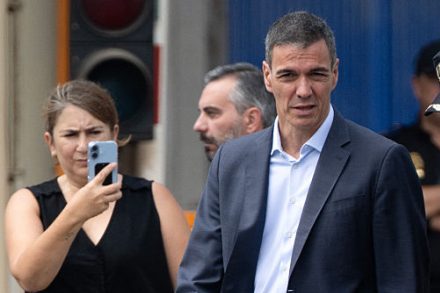
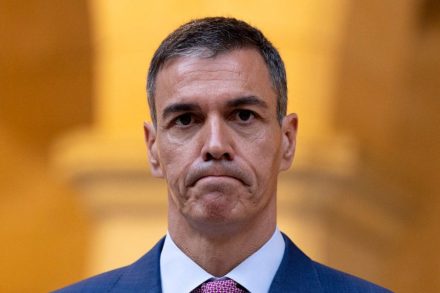
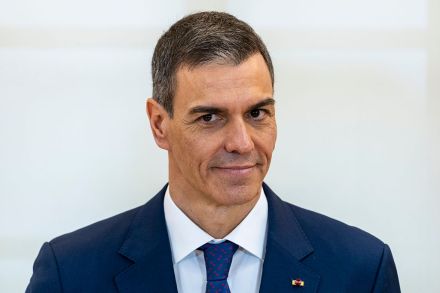
Spain’s refusal to allow the United States to use its military bases at Morón de la Frontera (Seville) and Rota (Cádiz) for its war on Iran, arguing that the US-Israeli attacks are "unilateral military actions outside the United Nations charter" has brought the simmering conflict between Pedro Sanchez, Spain’s socialist Prime Minister and President Trump to a head.   Sanchez’s carefully calculated strategy has been to position himself as one of Trump’s leading opponents on the world stage On Wednesday Sanchez followed up by delivering a stunning rebuke to Trump. Speaking for ten minutes on national television, he said that his government's position could be summed up in four words: "No a la guerra" (No to war).

What Spain’s social media ban gets wrong

Spain’s Socialist prime minister Pedro Sánchez is proposing a ban on under-16s using social media, following the example set by Australia last year. Speaking at the World Government Summit in Dubai earlier this week, Sánchez said: "Today our children are exposed to a space they were never meant to navigate alone… We will protect [them] from the digital Wild West." The Spanish premier’s announcement comes at a time when several other European nations are also attempting to combat the harmful effects of social media on children. France’s ban on under-15s using social media is expected to become law later this year, while Greece, Portugal and Denmark have signaled their intention to enact similar legislation.

The long history of kidnapping Latin American chieftains

One of the few benefits of being an anthropologist is the uncanny exhilaration one feels watching novel current events as re-runs from previous episodes in the history of mankind. Donald Trump’s capture of Nicolás Maduro, President of Venezuela, is no exception. Kidnapping Latin American emperors is a continental tradition. It’s simply the most practical method for breaking the chain of command in the region. It triggers succession chaos, enables the extraction of resources and keeps the rest of the hierarchy more or less intact. In earlier centuries, it was Spain and Portugal. Today, it’s the United States. In the colonial era, the objective was to secure enough gold to beat European rivals.

latin american

I met Jesus – and he’s an old Spanish gardener

As the old Jewish proverb goes, “Man plans and God laughs.” But nothing, in my experience, makes Him clutch His sides quite like hearing about my Mediterranean gardening ambitions. Every winter, my horticultural memory performs a factory reset. I somehow forget the summer mornings when the thermometer climbs past 90°F by 8 a.m. and the plants wilt by noon. The brutal, arid wind that strips moisture from the leaves faster than I can water? Erased from my mind. What blight? And the way perfect fruit splits overnight after a thunderstorm? Never happened. Come spring, I’m suddenly possessed, clicking “add to cart” on tomato varieties with names like 1980s cocktail bars: Pink Jazz, Green Zebra, Cosmic Eclipse.

jesus garden
inca Llullaillaco

Inside the Inca ritual of child sacrifice

The children of Llullaillaco don’t look too different from the living children I’ve seen around Salta. They’ve got the same diamond-shaped faces, pecan-colored skin and straight, pitch-dark hair. Of course, the children of Llullaillaco are smaller, as people five centuries ago were wont to be – and dead. I’m talking about three Incan child-sacrifice mummies, estimated ages five, six and 15. As of about 25 years ago, they’re permanent residents of Salta, Argentina, the capital of a province of the same name in the country’s northwest. As the crow flies, the city isn’t that much closer to Buenos Aires than to Lima. Due west of Salta, in the Andes, is the peak of the volcano Llullaillaco.

Reconciling dreams with reality

Should you be waiting in line at the Philadelphia Museum of Art to see the exhibition Dreamworld: Surrealism at 100, don’t be put off by “Tête” (1974), a sculpture by Joan Miró that is big and ugly and plopped down directly at the entrance. Be aware that Miró’s true métier was painting; “Tête” was cranked out long past his prime. You can’t blame an old man for cashing in on his reputation, particularly when his formative years were burdened by poverty. You can blame a curator for including a flagrant piece of product as a how-do-you-do to a centennial celebration.

Surrealism

Barcelona rising

Barcelona is one of the world’s great cities; happily, it seems to be waking up from a lengthy nightmare of its own conjuring. During the anti-everything leadership of its previous mayor, failed actress Ada Colau, empty storefronts, open-air drug markets and sidewalks reeking of urine proved unconducive to outside investment. A deal to establish a local branch of the Hermitage Museum fell through, thanks to political virtue-signaling by local officialdom. Anti-tourism campaigners stepped up their activities over a period of years, even as cities such as Madrid and Málaga began to boom with historic renovations, new luxury hotels and cultural projects designed to attract visitors. Fortunately, things seem to be turning a corner.

Barcelona
Spanish

Why did Spain leave behind such terrible food?

I can still remember it: probably the worst seafood dinner of my life. A slice of fish that was simultaneously cold, hot, dry, crumbly and rubbery, surrounded by overcooked vegetables and accompanied by a mysterious whiff of cigarette smoke. It was so repellent that even though I was famished, I summoned the waiter, returned the dish and retired to my room, there to endure a dinner of Pringles from the minibar. What made it worse was that I was in a celebrated fishing port. All I had to do was look out the window and I could see trawlers bringing in some of the world’s finest fish from some of the planet’s richest seas. It was dismaying, saddening, deflating and left me starving. What it was not, however, was surprising.

A ‘Trump tornado’ is about to hit Europe

There is a wind of change blowing through the West. It emanates from Washington DC, where President Donald Trump continues to dash off executive orders; more than fifty by the end of last week, the highest number in a president’s first 100 days in four decades. The liberal mainstream media is rattled. The New York Times magazine ran a piece at the weekend in which it described Trump as "the leading light of a spate of illiberal leaders and parties flourishing in democracies around the world." The paper namechecked some of them: Poland, Holland, India, France, Germany, Italy, Brazil, Hungary and Russia. What unites and motivates these "illiberal" parties is their opposition to what the NYT called "liberal creep," which they regard as a civilizational threat.

Trump

Letters from Spectator readers, September 2024

The cunning of the Democrats’ lawfare Wow! A tour de force of snark! But wonderful for it. My late father-in-law would have said that instead of brushing his teeth in the morning, the author gets a file and sharpens his tongue. As depressing as this article is, it is likely an accurate assessment of what’s going on. Particularly the image of Trump and Biden essentially playing the roles of Walter Matthau and Jack Lemmon in the Grumpy Old Men movies. Carry on, America. Down Under, we have our own problems, as well as being affected by yours, same as every other country. — David Gerber Tellingly prescient. The 800-pound gorilla the next generation will be forced to address will be unsustainable entitlement transfer payments.

Letters

In the studio with Merche Gaspar

I was sitting cross-legged on the floor of artist Merche Gaspar Caro’s studio in Barcelona on a rainy Monday morning when I asked myself, “Why isn’t this artist better known?” We had met by chance some months earlier, when I passed by the Galeria Subex, which at the time was hosting a show of her recent work. I was initially drawn in by the exhibition poster, which displayed a stunning image of a young woman wearing a dark-blue dress and a white apron. Once inside the gallery, I was enthralled by canvases of mothers and daughters, drawings of birds and paintings of children playing or curled up in bed reading stories. Many featured a wonderfully cool, contemporary palette of mauve, gray and sapphire.

Things are about to get ugly in Venezuela

At 3:45 a.m., the sun was not yet out in the Venezuelan valley of Caracas, but Andrés, a twenty-two-year old who lives in the outskirts, woke up and with the Gloria Al Bravo Pueblo national anthem at maximum volume, roused his family too. From deep in the valley, Natalia showed up to the polls at 7 a.m. She then headed back to pick her elderly parents; “they can skip the line now,” she tells me.  Like them, thousands of others got up Sunday morning with a mission: make the Venezuelan presidential election — the most consequential one in twenty-five-years — fraud-proof. The logic: the world has to see what Venezuelans see, eyes don’t lie.  “It's 5 a.m. and we have work!,” said the face of the opposition, María Corina Machado.

venezuela

Going ham in Andalusia

In Spain you can eat all day — and we did. Earlier in the summer, I spent two days in Andalusia, and most of the forty-eight hours were taken up by mealtimes. A breakfast of the sweet porridge poleá started the day, then ham-tasting for a mid-morning snack followed by a two-hour lunch. I didn’t think it was possible to eat all day, but when the food is this good and meticulously chosen, it is. Spanish chef José Pizarro led the way, taking us to his favorite restaurants and showing us where he sources the ham and caviar for his own.

ham

The divine Dalí and his ‘Christ’

I arrived in the city of Figueres early one January morning to visit one of the most popular, and bizarre, art museums in the world, the Teatre-Museu Gala Salvador Dalí. It houses a dreamlike picture that, for the first time since it left over seventy years ago, has made a temporary return journey to Spain. Originally simply titled “The Christ,” the 1951 canvas depicting the giant figure of a man on a cross, shown at an overhead angle hovering over a moody seascape, was painted by the most famous son of Figueres, Salvador Dalí. Through April 30, it forms the centerpiece of a show exploring its creation, history, local connections and symbolism.

Dalí

A culinary tour of southern France and northern Spain

If I’d known what a whole monkfish looks like, I would never have ordered it. It was only weeks later that I saw a picture of the horrid creature: small, wicked eyes, prehistoric head, skin like rusty medieval armor and a gaping mouth overflowing with jagged teeth. Truly the stuff of nightmares. We’d popped over the border from France into San Sebastián, Spain, for a bite of dinner, selecting a spot a stone’s throw from the Baroque exuberance of Santa Maria del Coro. The daily special was monkfish, and for some reason — perhaps an excess of sun that day — the image that came to mind was, inaccurately, that of the innocent red mullet. The daily special in a fishing town is bound to be fresh, so it seemed fair to give it a try.

france

A fairytale wedding in Mallorca

“You are Kevin?” “Pardon?” Embarking on a solo week driving around Mallorca, then losing my drivers license in transit? Not my finest hour. A fairytale wedding near the citrus grove-laden seaside town of Sollér brought me to the largest island of the Baleriacs. A chest infection, some big deadlines and three hotels to review an hour’s drive south of the venue inspired me to hire a car, so I could pootle around at my own pace. I realized my problem in Barcelona, waiting for my connecting flight. Paying for a coffee, I spotted my license was missing. I’d booked via OMIO (a journey planning site that pulls together trains, planes, ferries and coaches — I love that thing), which I quickly consulted to confirm the dearth of public transport on the island.

vida mallorca

The demands and joys of contemporary art 

The career of artist Alberto Guerrero has been driven by an overarching desire to look for what is behind everything that we merely, and only dimly, perceive at present. The work of the forty-something Madrid-based Guerrero ranges from abstract, highly textured canvases and three-dimensional images which he calls “spherical paintings” to realistic presentations of daily life — such as his illustrated book Diary of a Quarantine showing life in the Guerrero household during Covid — and deeply reflective images of sacred art. There are few contemporary artists who have such a broad range and vision.

Guerrero

Is Amber Heard staging a subtle comeback?

In just one short year, Amber Heard has transformed from arguably the most hated woman on the planet to some kind of new and improved Spanish celebrity. Amber moved to Madrid months after she was sued by her ex-husband, Johnny Depp, for defamation. In a viral TikTok video, Heard answers questions from reporters, saying in Spanish, "I love Spain so much."  When they asked if she plans on staying, she replied, "Yes, I hope so. Yes, I love living here." After being asked if she has movie projects on the horizon, she says yes and adds, "I move on. That's life." It turns out that exiling yourself to a new country for privacy can be an effective PR strategy. Take note, Harry and Meghan.

depp amber heard

A dispatch from the olive oil capital of the world

It was an extraordinary sight. For three days, and about seventy kilometers of hiking, there were just endless olive trees covering the fields, hills and mountains stretching to the horizon of the small Spanish province of Jaén. Tucked away in the southern region of Andalusia, this is the country’s powerhouse of olive-oil production. Many people assume Italy or Greece are the largest producers of olive oil. That’s a result of good branding and name recognition, a Jaén-based olive grower told me. After he pulled up alongside me in his dusty car, we walked through the endless olive groves as I was given a tutorial on olive oil production. Spain is the world’s top producer of olive oil.

olive oil

When Salvador Dalí met Alice Cooper

It was the ultimate summit between the two kings of pop-art camp, and one of the weirdest celebrity encounters even by the standards of 1970s New York. Salvador Dalí might have been the century’s most notorious modernist, but by the spring of 1973, when he was turning sixty-nine, his reign as the high priest of surrealism had descended into self-parody. Paintings such as his 1931 “The Persistence of Memory,” with its array of limp watches set in a barren landscape, had once sharply polarized critical opinion. For years, people saw Dalí either as a beacon of intellectual and emotional freedom, or as a madman who was more interested in money than art.

salvador dalí alice cooper