Soviet union

Welcome to Transnistria: the country that’s not a country

I’ve been on holiday to a country that doesn’t officially exist. It has its own border, passport, flag, currency and army but no one recognizes it – not even its main sponsor, Vladimir Putin. Transnistria is sandwiched between its proper motherland Moldova – which is itself really Romania – and Ukraine, which Putin thinks is part of his motherland. Confused? It doesn’t get any easier.  In 1992 there was a short war between the newly created state of Moldova and separatist, ethnic Russians which resulted in nearly 1,000 deaths and the breakaway "country" (via a peace accord) policed by Russian "peacekeepers.
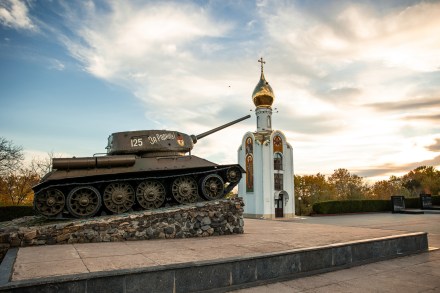
Transnistria

The clandestine side of Roger Scruton

From our UK edition

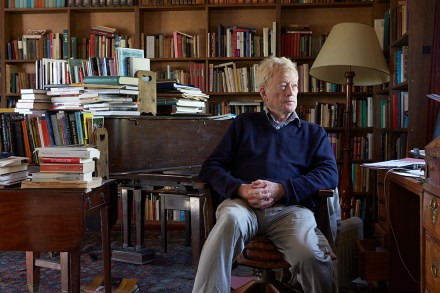
Sir Roger Scruton is remembered by most people as a conservative philosopher. Softly spoken and thoughtful in conversation, he was brave and unconventional in his views. Few things are as unconventional as being a convinced and articulate conservative. It cost him advancement in the academic world. But he was admired, liked and even loved by many. And today his work continues to be influential. But there was a part of Scruton’s life that is not well-known. It was clandestine. This secret life is currently being commemorated and honoured in an exhibition in Brno, the historic and rather beautiful second city of the Czech Republic. It is a two-and-a-half-hour train journey from Prague unless you are willing to face a direct flight on Ryanair.

The Adventures of Elektronik is not your average children’s comedy

For people from the former Soviet Union, the holiday season brings with it two certainties: mayonnaise and movies. Mayonnaise, because no winter festivity is complete without the traditional mayo-infused salads with such evocative names as “herring under a fur coat” and “Olivier,” which are eaten for days straight. These calorific concoctions are best accompanied by a dozen or so cult films from around 1965 to 1985, which are ritually rewatched every year by Homo Sovieticus and his descendants. Of these classics, one of the most beloved is the musical The Adventures of Elektronik (1979). Adapted from the novels of the science-fiction writer Yevgeny Veltistov, the movie tells the story of a young robot named Elektronik.

Art and radicalism in 1930s Britain

From our UK edition

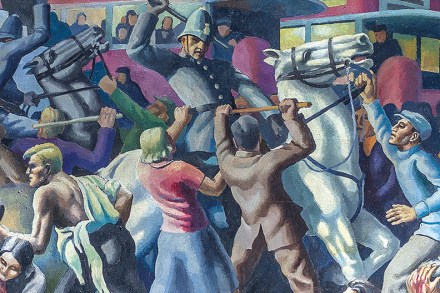
What is art for? How can it, should it, relate to the political framework of its time? How far can it shade into ‘propaganda of the imagination’? These are some of the questions threading through Andy Friend’s compelling account of the first decade of the Artists International Association, or AIA, a vital but under-explored British movement welding art and politics against the growing threat of international fascism.  The story opens in 1933 in the candlelit rooms of Misha Black above Seven Dials, Covent Garden, where a dozen impecunious jobbing artists met to discuss a sensational report from the Soviet Union.

Cambridge University should be ashamed of itself for honoring Angela Davis

Remember Angela Davis? Few people under fifty do. Was Cambridge University counting on that historical ignorance when it decided to honor Angela Davis with an honorary degree?   In case you, Dear Reader, are a little fuzzy about Davis, I note for the record that the former Black Panther and two-time vice-presidential candidate on the Communist Party ticket with Gus Hall is the recipient of many honors, including the Soviet Union’s Lenin Peace Prize.  Cambridge University, of course, has long demonstrated a certain fondness for Commies, as the names “Kim Philby,” “Guy Burgess” and “Anthony Blunt” remind us.

Zohran Mamdani’s grocery chain will be a crime against New Yorkers

Of all the policies proposed by Zohran Mamdani, the socialist winner of last week’s New York’s Next Top Mayor competition, the idea of city-run grocery stores has proved the most divisive. If you want to reduce prices at halal carts by taking away regulations on street vendors, you’re going to get 80-plus percent approval rating. But state-owned groceries are another story. Modern history is strewn with tales of state-owned grocery disasters.

Zohran Mamdani

The tragic fate of Ukraine’s avant-garde

From our UK edition

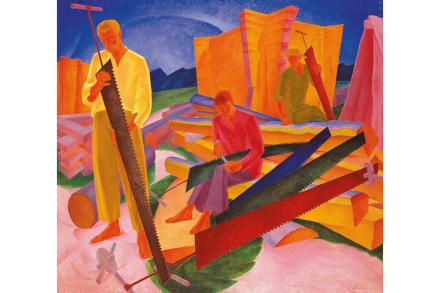
In a recent interview Oleksandr Syrskyi, the new commander-in-chief of the Ukrainian army, said that he spends his time off reading books on the country’s ‘difficult history’. If even he finds it difficult, where do us non-Ukrainians start? In the introduction to its new exhibition, the Royal Academy makes a brave attempt at explaining the political background to Ukrainian modernism, developed in a brief window of creative opportunity before it was slammed shut by Soviet repression.

Soviet America’s revolutionary wars

Niall Ferguson is far from the first intellectual to compare the United States today to the Soviet Union of old. But Ferguson’s Free Press essay “We’re All Soviets Now” stirred up more discussion, and outrage, than earlier forays by others on the same theme. (Ferguson himself credits the Princeton professor Harold James with originating the phrase “Late Soviet America.”) Joe Biden already seemed like America’s analogue to the superannuated Soviet premiers of the 1980s even before his disastrous June 27 debate with Donald Trump — who is himself older in 2024 than Brezhnev, Andropov or Chernenko were when they died.

Soviet

Will the Caucasus ever be tamed? 

From our UK edition

How to get your head around that searingly beautiful but complicated land that lies between the Caspian and Black Seas? The early Arab historian Al Masudi called the Caucasus jabal al-alsun, the mountain of tongues, and through the centuries the place has certainly seen its fair share of peoples, many of them troublesome, many of them troubled. Indeed, for somewhere you might think would be a transcontinental backwater, its outcrops, secluded valleys and expansive plains usefully separating its formidable neighbours – Russia to the north, Turkey and Iran to the south – it’s proved remarkably busy over the centuries; also persistently relevant. The turbulence of the region is rarely far from the news.

The man who made Reagan

Ronald Reagan has been dead for nearly twenty years, but sometimes it still feels like he’s still the head of the Republican Party. The fortieth US president has been etched in American folklore as one of the country’s most effective and historic statesman, the man who stared down the Soviet Union and pursued policies that ultimately brought down the so-called “Evil Empire” in December 1991. Republican politicians of all stripes, from presidential aspirants to local councilmembers, utter his name at every opportunity. The first GOP presidential debate took place at the Reagan Library in Simi Valley, California, where multiple candidates looked back at the 1980s as a time when the mighty US shook off the cobwebs from the Vietnam War and rediscovered its self-confidence.

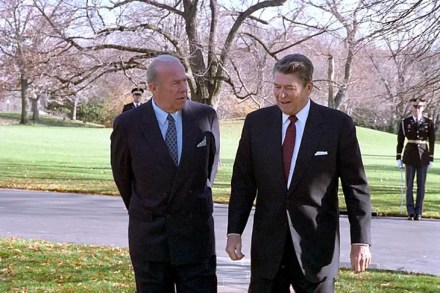
President Reagan walking with George P. Shultz outside the Oval Office (Wikimedia Commons)

Who or what are ‘the Palestinians?’

It’s so cute when politicians like AOC and Rashida Tlaib, to say nothing of hysteric undergraduates and ill-informed lefties across the country, complain that Israel is an “apartheid state” that is illegitimately “occupying” the land West of the Jordan River from the Golan Heights down to the border of the Sinai Peninsula.  Responding to the murderous attacks on Israeli civilians by Hamas on October 7, AOC decried “the occupation of Palestine” while Tlaib urged “ending the occupation, and dismantling the apartheid system” that can “lead to resistance.” Hermeneuts of the world, unite! What does Tlaib mean by “resistance” here? Slaughtering innocent partygoers? Incinerating and beheading babies?

palestinians

Too in thrall to today’s dogmas: ITV1’s A Spy Among Friends reviewed

From our UK edition

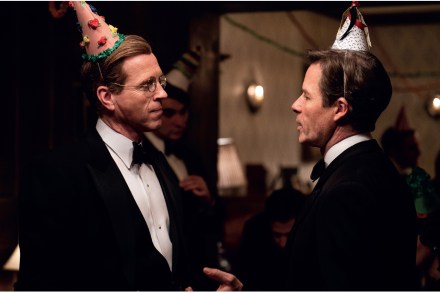
In 2014, Ben Macintyre presented a BBC2 documentary based on his book A Spy Among Friends: Kim Philby and the Great Betrayal. The programme managed to shed new light on a familiar but still irresistible story by concentrating on Philby’s relationship with his old chum – and fellow Cambridge man – Nicholas Elliott. Elliott was sent in 1963 by the Secret Intelligence Service (SIS) to question Philby in Beirut where Philby had become the Observer’s foreign correspondent after a long and successful career betraying his countrymen to the Soviets. Elliott did elicit some sort of confession, but a few days later, Philby absconded to Moscow.

The Doomsday Clock has been corrupted by ideology

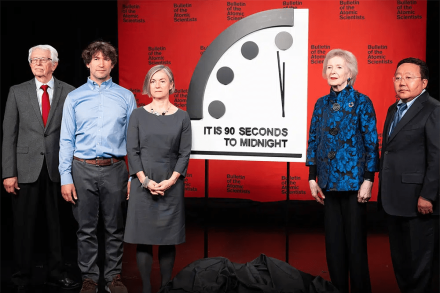
Ever since I can remember, I have always been aware of something called the “Doomsday Clock,” a symbolized calculation produced by a panel of prominent scientists of just how close humanity is to destroying itself. Published on the cover of every issue of the Bulletin of the Atomic Scientists, a journal founded in 1945 by Manhattan Project physicists, the clock’s hands would move toward or away from the dreaded midnight hour depending on how near Armageddon was believed to be. As a kid, the Doomsday Clock seemed an appropriate warning of how the conflict between the US and the Soviet Union might accidentally spin out of control.

The year the Russian empire really collapsed

From our UK edition

In a quiet suburb of Moscow, a twenty-minute metro ride from the Kremlin, is the Soviet Union’s answer to Disneyland. Between a budget supermarket and a teacher training college is the Exhibition of Achievements of National Economy, known to locals by its Russian-language acronym, VDNKh. The ‘Kh’ is said like you are clearing your throat. Every year, tens of thousands of visitors pass under the triumphal arch that stands at the entrance to the VDNKh. It looks like London’s Marble Arch and is topped with two gold-plated proletarians holding up a bundle of wheat. Past it, there’s stalls selling hot dogs, an imposing statue of Lenin, and a water fountain that plays out old Communist songs. The main attraction, though, is the horseshoe of pavilions around the park.

A Soviet version of Martin Parr: Adam Curtis’s Russia 1985-1999 –TraumaZone reviewed

From our UK edition

Russia 1985-1999: TraumaZone – even the title makes you want to scream – is Adam Curtis’s Metal Machine Music: the one where he frightens off his fans by abandoning the trademark flourishes that made him so entertaining and instead goes all pared-down and raw and grim. If you don’t know or remember what those trademark flourishes were, let me refer you to a cruelly funny pastiche which you can easily find on YouTube called The Loving Trap. This sends up poor Adam as a pioneer of the collage-umentary, a genre resembling ‘a drunken late-night Wikipedia binge with pretence to narrative coherence’ which ‘vomits grainy library footage onto the screen to a soundtrack of Brian Eno and Nine Inch Nails.

What does Russia really want?

From our UK edition

The question of ‘why’ Russia invaded Ukraine has been forgotten amid war’s fog. Greed and malice partially explains it. History, geopolitics and culture reveals more. A country which has more land than anyone else on Earth is not grabbing territory for territory’s sake. Logically, Russia should be giving away land to anyone who might manage it better. But that’s not how Putin thinks. He is pursuing a dogged policy of annexations – first in Georgia, then in the Crimea, and now of four further Ukrainian districts.

The Cuban Missile Crisis has become a cultural touchstone

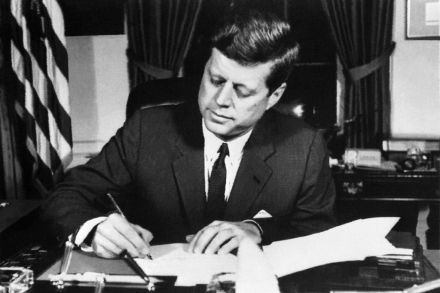
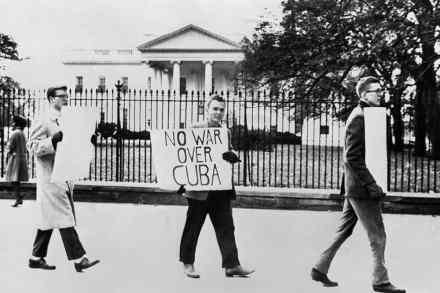
At the beginning of 1962, President John F. Kennedy had high hopes for a peaceful year with the Soviet Union, the United States’ most dangerous adversary. On December 30, 1961, Kennedy issued a statement offering his good wishes for the new year to Soviet Premier Nikita Khrushchev and the Soviet people. Ten months later, in October of 1962, the US and the Soviet Union were on the brink of war. The Soviets had moved missiles into Cuba, which initially went undetected by US intelligence. On October 14, an American U-2 spy plane took pictures showing missile base construction taking place in Cuba. The next evening, American analysts realized the implications of what that construction meant.

What Washington was like during the Cuban Missile Crisis (2002)

From our UK edition

On 27 October 1962, US Defense Secretary Robert McNamara stepped out of crisis meetings and looked up at the sky. ‘I thought it was the last Saturday I would ever see,’ he recalled.  This month marks 60 years since the Cuban Missile Crisis. In 2002, Peregrine Worsthorne wrote about what it was like to be in Washington during humanity’s closest shave. Forty years ago the Americans won what I hope will be the nearest thing to nuclear war between superpowers — of which only one is left — ever fought; and the fact that they won it without firing a shot should not diminish but rather increase the extent of the victory. What I am referring to is known, of course, as the Cuban Missile Crisis, which is how it will go down in history.

Joe Biden and the Sovietization of America

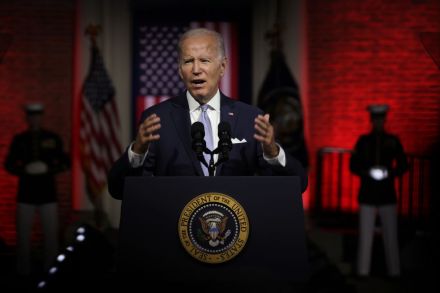
I write with the clangorous strains of Joe Biden’s speech at Philadelphia’s Independence Hall still ringing in my ears. By the time you read this, the attendant tinnitus will doubtless have abated. The effects of the speech, however, will be echoing throughout the land for many months if not longer. The commentator Ben Shapiro was, I believe, correct in judging Biden’s brief speech “the most demagogic, outrageous and divisive speech... ever seen from an American president.” In sum, “Joe Biden essentially declared all those who oppose him and his agenda enemies of the republic. Truly shameful.” But what has been true of Joe Biden from before his administration began continues to be true.

biden

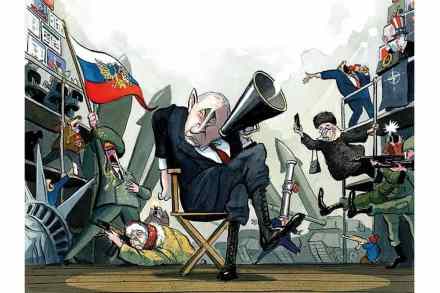
Vladimir Putin is simply mad

Vladimir Putin is mad: not in the cognitive but in the emotional sense of the word. He is an odd mixture of the cold, the plotting, the calculating, and the bloodless; the emotional, the impulsive, the hotblooded, and the sentimental. He is mad, in other words, in precisely the way that Adolf Hitler was mad. And like Hitler, Putin is disconnected from the world of fact but not of logic. This is a fundamental truth about the man that I think the West had never experienced before February. His condition became apparent in the diatribe against the West that he gave on Friday, which corresponded almost exactly to Hitler’s customary rants.

nuclear tactical putin war