Soviet union

Tales from the Gulag: why I’m helping survivors tell their stories

From our UK edition

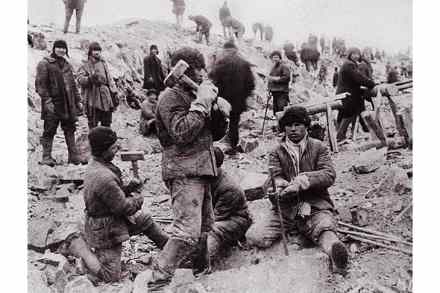
I trudge up the concrete stairs of a council block of flats in west London. Up three floors. Then along one of those outside corridors, past several doors until I reach the final one. It is already open and there she is — smaller than I remember and with a charming, friendly smile. I guess that is because Ivanna knows me better now. She trusts me more. After what she has been through, it’s not surprising that it takes time to gain her trust. She welcomes me into her little one-bedroom flat and before long, I am in a different world — a world of Ukrainians, Poles and Soviets, deportations, helping resistance fighters, being arrested… it is a world of memories which mean so much to her. She is 96, and the people she was closest to are long gone.

Joe Biden and the grand battle of ideas

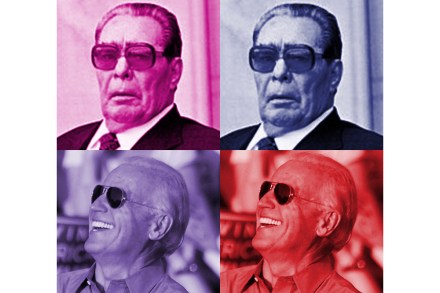
Well, Donald Trump doesn’t seem so bad now, does he? I don’t say that because Joe Biden has turned out to be as competent or less, but because at his press conference in reaction to the fall of Kabul, he sounded Trumpian. By which I mean, honest. Honest that staying in Afghanistan so long was a mistake, that their government was corrupt, that if its army wasn't prepared to defend itself then we shouldn't do it for them, and that this is what a withdrawal looks like: horribly, brutally honest. The endgame was a disaster because America’s intel was wrong, so the US had less time to get out than it thought, and because Biden lacks the acuity to respond to changing conditions. Biden looks like Brezhnev after heart-attack number seven.

biden

Why the far-right flourishes in East Germany

From our UK edition

A spectre is haunting Germany — the spectre of the AfD. Having come to prominence on a wave of anti-migrant sentiment, most German commentators believed that the Alternative für Deutschland was now a spent force. The party had been able to attract centre-right voters following the 2015 migrant crisis, many of whom may not have agreed with its entire manifesto but sought a political outlet for their scepticism of Merkel’s handling of the crisis. But last year, its national polling dropped to just over half the level of support it enjoyed in late 2018. The pandemic has brought to the surface many of the AfD’s most extreme members and activists, including anti-vaxxers and conspiracy theorists. This seemed to have made them unelectable — or so we were told.

Blast from the past | 6 June 2019

From our UK edition

How many people do you think died at Chernobyl? 10,000? 50,000? 300,000? The correct answer, according to the never knowingly understated World Health Organisation — in a thorough report released nearly 20 years after the 1986 explosion — was ‘fewer than 50’. Ah, but what about all the mutant babies who ended up with two heads and webbed feet? What about the inevitable epidemic of cancers? Well, yes, it’s true that 4,000 more cases of thyroid cancer were loosely attributable to Chernobyl, mainly in children and adolescents. But the survival rate was 99 per cent.

Georgians on my mind

Long before Achilles chased Hector around Troy and Homer wrote about the οἶνοψ πόντος, the ‘wine-dark sea’, people living in what is today the republic of Georgia were making wine. Archaeologists have found evidence of wine making there dating from 8000 BC: an impressive statement to the inventiveness to which necessity gives birth. Stretching from the Black Sea to the Caucasus Mountains, Georgia is home to a wide variety of climates, types of soil and geographical physiognomies. Today it is home to some 500 varietals, few of which are familiar to westerners (even though many if not most western grapes probably have precursors in Georgia and the Black Sea ‘cradle of wine’).

georgian wine

What does Belarus’s opposition leader want?

From our UK edition

There is an assumption that those fighting tyranny must instead want Western-style democracy, that the arc of history bends towards liberal representative government, allied inevitably to Washington and Brussels. Many former Soviet Union countries saw their politburos overthrown by young middle-class people espousing the desire for this kind of politics — from the Rose Revolution in Georgia to the Orange Revolution and Euromaiden protests in Ukraine (whether or not they eventually received that form of government is a different matter). But there is no logical imperative that connects dissatisfaction towards an autocrat with the kind of government and geopolitical order that will replace him, whether in Eastern Europe or elsewhere.

Riveting: Dear Comrades! reviewed

From our UK edition

Andrei Konchalovsky’s Dear Comrades! is based on a true event and set in 1962 in the Russian city of Novocherkassk where the local factory, the Novocherkassk Electric Locomotive Plant, went on strike. This doesn’t sound especially sexy, I know, but it is superbly acted and so rivetingly told my concentration did not waver for an instant which, given how hard it has been to concentrate lately, is high recommendation indeed. (It wouldn’t be fair to list the films I couldn’t concentrate on, as the problem is likely mine, but… Mank!) Konchalovsky certainly has a wild CV. He has worked with Tarkovsky. He made the wonderfully hypnotic The Postman’s White Nights, about a remote Russian village whose only contact with the outside world is their postman.

The quick-witted Russian who saved millions of lives

From our UK edition

Spectator contributors were asked: Which moment from history seems most significant or interesting? Here is Dominic Cummings’s answer: In the early morning of 26 September 1983, Stanislav Petrov of the Soviet Union’s Air Defence Force was on duty, monitoring his country’s satellite system, when the siren sounded. His computer indicated that the US had just launched five nuclear-armed intercontinental ballistic missiles, and protocol required him to notify superiors immediately. Soviet strategy was to ‘launch on warning’, and many in Moscow believed Ronald Reagan was planning a first strike.  But Petrov had a gut feeling this was a false alarm. Five missiles seemed too few, and the system itself was new.

Biden’s Brezhnev vibes

Like many other Americans who had the misfortune to live under socialism, I’ve been having lots of flashbacks lately. In particular, I find that the presumptive President-elect Joe Biden gives out serious Brezhnev vibes. The general secretary of the Soviet Union from 1964 to 1982, Leonid Brezhnev was not a healthy man. He was a chain-smoking workaholic who’d been appointed to a series of very stressful positions — you try to rise in ranks under Joseph Stalin. He served in World War Two, when he was wounded, and suffered a concussion. Brezhnev’s mind and body took a toll; his first, minor stroke happened in 1951, when he was still in his forties.

brezhnev

Olivia de Havilland’s Red Scare

Olivia de Havilland, who has passed aged 104, will forever be remembered for the role of Melanie Hamilton in Gone with the Wind, a performance that earned her a Best Supporting Actress nod from the Academy. She would go on to star in acclaimed romantic dramas like To Each His Own and The Heiress, both of which brought her Oscars for Best Actress, but to fans of classic movies she will always be Scarlett O’Hara's sickly cousin, love rival but ultimate ally. She was cinema’s quintessential southern belle: genteel on the surface, steel underneath. Less well known is that de Havilland was a lively anti-communist and worked to expose and counter the influence of Soviet sympathizers in Hollywood.

olivia de havilland

From letter to worse

It is a truth generally acknowledged that any statement of civil principles will now be met with pitchforks and personal attacks, insinuations of racism, sexism, classism and white privilege, not forgetting online guerrilla action by the army of the fashionably aggrieved, led by their crack troops, the transsexuals. Take this week’s letter to Harper’s magazine, ‘A Letter on Justice and Open Debate’.

letter

Culture is going underground: meet the rebel army

From our UK edition

Among the first to arrive was a Labour grandee. Then others drifted over: academics, musicians, writers, a nurse. They came from different directions, some looking shifty, others excited. The secret meeting point was an inconspicuous pub in north London. Queueing shoppers nearby assumed the growing crowd was waiting to get into the supermarket. In groups of five those gathered were led down a suburban street to a derelict leisure centre. For one night only, the gym had been turned into a makeshift theatre. The audience, of up to 30 people, had congregated to flick a collective V at the social distancing measures, and to watch A Hero of Our Time, a three-hander adapted by HUNCHtheatre from the 1840 novel by Mikhail Lermontov.

The problem with mystery podcasts like Wind of Change

From our UK edition

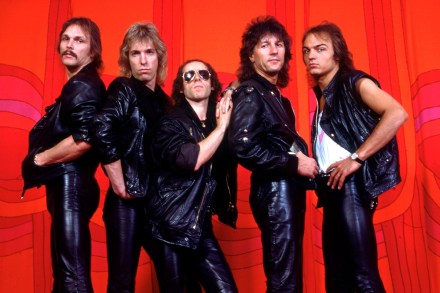
Did the US secretly write a power ballad in order to bring down the Soviet Union? That’s the question behind Wind of Change, a serial documentary that has topped the podcast charts. It’s the work of an investigative journalist called Patrick Radden Keefe who claims to have once received a tip-off, from an intelligence contact, that the song ‘Wind of Change’ — recorded by the hair metallers Scorpions — was actually a CIA campaign to encourage anti-Soviet uprisings. Now he wants to prove it. This week’s episode, the fourth of eight, takes Keefe to a collectors’ convention in Ohio in pursuit of an internet user called ‘Lance Sputnik’ who creates customised versions of GI Joe action figures.

In his new piano concerto Thomas Ades’s inspiration has completely dried up

From our UK edition

There’s nothing like a good piano concerto and, sad to relate, Thomas Adès’s long-awaited first proper attempt at the genre is nothing like a good piano concerto. Not in the version we heard at its UK première in the Royal Festival Hall, anyway. What a disappointment! Perhaps Adès can rescue it, but he’d have to hack away at the score as ruthlessly as Bruckner dismantling his Third Symphony. That work wasn’t necessarily improved by its revisions but, honestly, almost anything would be an improvement on the first two movements of the 21-minute concerto performed by Kirill Gerstein and the LPO conducted by the composer. You knew there was something wrong after ten seconds.

The beauty of Soviet anti-religious propaganda

From our UK edition

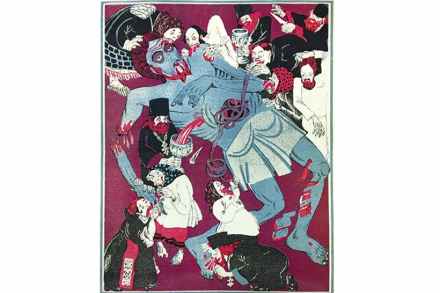
Deep in the guts of Russian library stacks exists what remains — little acknowledged or discussed — of a dead and buried atheist dream. The dream first took shape among Russian radicals of the mid-19th century, to whom the prospect of mass atheism seemed the key to Russia’s salvation. When Lenin seized power in 1917, the Bolsheviks integrated it into their vision of heaven on earth. To the extent that people in the West have heard of this atheist dream, it has come to them mainly through the voices of its enemies. In 1983, Ronald Reagan put Lenin’s rejection of religion at the heart of Soviet unfreedom in his ‘Evil Empire’ speech.

Why Roy Cohn is not one of the world’s most evil men

From our UK edition

New York   The Roy Cohn documentary Bully. Coward. Victim: the Story of Roy Cohn was successfully screened at the Lincoln Center last week to a full house. Cohn was once Donald Trump’s lawyer, and after the screening the event turned into an anti-Trump show. Had I known this would happen, I would have stayed away, but what is a poor little Greek boy trying to make it in the movies to do? As a young man, Cohn was an aide to Senator McCarthy. He made his name by ensuring that Joel and Ethel Rosenberg, who spied for the Soviet Union, were sent to the electric chair. And here’s the problem with the documentary: the treacherous Rosenbergs emerge as heroic victims, while my friend Roy Cohn comes out of it looking worse than Satan. There is something very wrong here.

How a sadistic Kremlin tormented Jewish musicians

From our UK edition

The new episode of the Holy Smoke podcast looks at the cruel cat-and-mouse game that the Soviet Union played with Jewish classical musicians at a time when it was sneakily trying to extinguish both their religion and their ethnic identity. It's prompted by the story of Maria Grinberg, the magnificent Russian Jewish pianist whose recorded legacy was mysteriously suppressed by the authorities, possibly because of her support for Israel; I recently wrote a column about her in the Spectator's arts pages. My guest is the brilliant young Israeli pianist Ariel Lanyi, who explains how Jewish composers had to find surreptitious ways of referring to their Jewishness – something they could do only fleetingly, often in the disguise of socialist realism.

Why did the Soviets not want us to know about the pianist Maria Grinberg?

From our UK edition

Only four women pianists have recorded complete cycles of the Beethoven piano sonatas: Maria Grinberg, Annie Fischer, H. J. Lim and Mari Kodama. I’ve written before about the chain-smoking ‘Ashtray Annie’ Fischer: she was a true poet of the piano and her Beethoven sonatas are remarkably penetrating — as, alas, is the sound of her beaten-up Bösendorfer. Lim produced her cycle in a hurry when she was just 24; it’s engaging but breathless. Kodama’s set, just completed, is a bit polite. Which leaves Maria Grinberg (1908–78), whose recordings remain just where the Soviet authorities wanted them. In obscurity. That is shameful — and not because she was the first woman and the first Russian to record all the sonatas.

Double diamond | 13 June 2019

From our UK edition

‘It is no easier to make a good painting,’ wrote Vincent van Gogh to his brother Theo, than it is ‘to find a diamond or a pearl.’ He was quite correct. Truly marvellous pictures are extremely rare. To make one, Vincent went on, you have to ‘stake your life’ (as he, indeed, was doing). Well, there is just such a jewel of a painting — only one by my count — in Francis Bacon: Couplings, an exhibition at Gagosian, 20 Grosvenor Hill. In some cases, the title of the show is literal. Several pictures depict two naked men in a ferocious sexual tangle. As a subject, this is perhaps still slightly daring today; it would have been astonishingly outré in 1953 when Bacon produced this dark masterpiece, ‘Two Figures’.

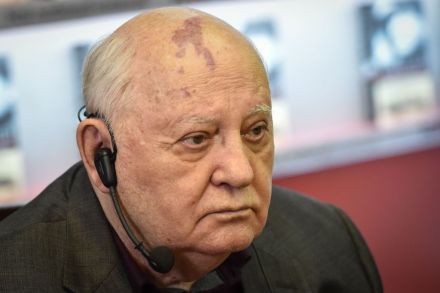
Gorbachev’s war and peace

Tolstoy tried to write a history of Napoleon’s invasion of Russia, but found that his story required the broader canvas of fiction. We like to think that fiction emerges from reality, and that a novel, which is as much as species of hallucination as it is a social document, might retain enough of its physicality to be, as we say of War and Peace,’realist’. But the traffic between fiction and reality goes in both directions. ‘What force moves the nations?’ Tolstoy asked in the philosophical coda that, returning fiction to history, he added to the end of War and Peace. The discipline of history, its reliance on facts, was at the heart of the Enlightenment.

gorbachev