James Bartholomew

James Bartholomew is the author of The Welfare of Nations.

The clandestine side of Roger Scruton

From our UK edition

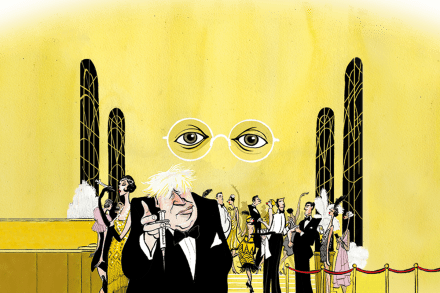
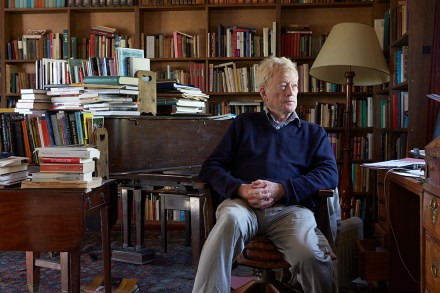
Sir Roger Scruton is remembered by most people as a conservative philosopher. Softly spoken and thoughtful in conversation, he was brave and unconventional in his views. Few things are as unconventional as being a convinced and articulate conservative. It cost him advancement in the academic world. But he was admired, liked and even loved by many. And today his work continues to be influential. But there was a part of Scruton’s life that is not well-known. It was clandestine. This secret life is currently being commemorated and honoured in an exhibition in Brno, the historic and rather beautiful second city of the Czech Republic. It is a two-and-a-half-hour train journey from Prague unless you are willing to face a direct flight on Ryanair.
Reform’s risky economic experiment

From our UK edition

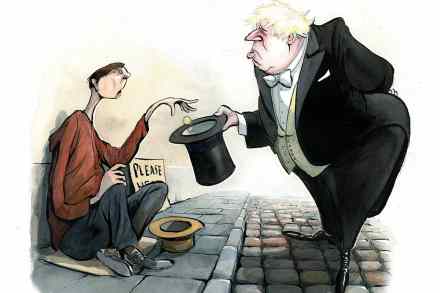
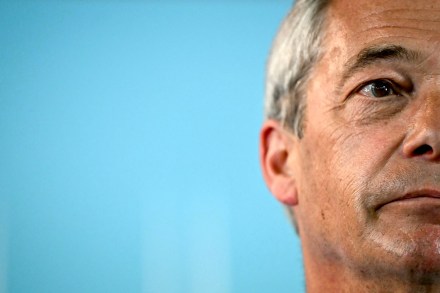
At last they have found it. Or, at least, they think they have. Sir Keir Starmer and Kemi Badenoch have been hunting around for months trying to find Nigel Farage’s Achilles’ heel. While they have been searching, the popularity of the Reform party has soared ahead of that of their own parties. But now, finally, they reckon to have identified the weak spot. In their shared enthusiasm, they both described Reform’s emerging tax plans as ‘fantasy economics’. Starmer gave the bemused workers at a glass factory a seven-minute harangue about it, declaring Reform’s plans a ‘mad experiment’. Badenoch fumed that ‘Jeremy Corbyn's “magic money tree” is back’ with a Reform sticker on it.

Che Guevara was a sadist

From our UK edition

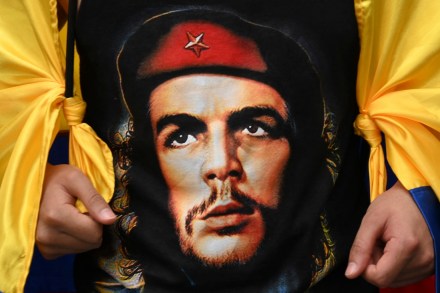
Che Guevara died 57 years ago this month and yet, even now, he remains the epitome of revolutionary cool. You never know when he is going to pop up. I came across him recently in the lobby of a hotel in Kandy in the highlands of Sri Lanka. There he was with that determined, heroic look under a dashing beret with a red star badge. He was on a poster dominating the wall above the capitalist till where the luxury hotel took payment. Guevara didn’t care. He took out his pistol, held the barrel at the boy’s neck and fired. The boy was almost decapitated The famous photo was taken by a professional photographer, Alberto Korda, during a funeral in Havana in 1960. Thus began the spread of the famous image around the world. Today you have a choice of hundreds of different T-shirts.

Why isn’t Lenin as reviled as Hitler?

From our UK edition

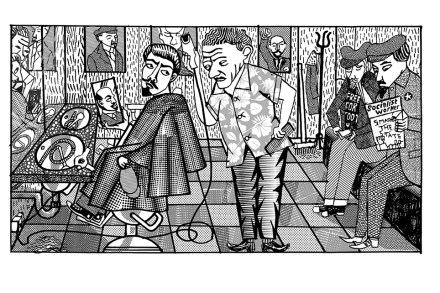
Around the corner from me is a barber’s shop decorated with black-and-white photographs of icons of the 20th century. James Dean is there with the usual cigarette hanging out of his mouth; Marilyn Monroe is perching on the edge of a pool table. A poster for the film Taxi Driver is alongside a photo of Frank Sinatra and the Rat Pack – and also a photo of Lenin. I guess the aim is to appear edgy, alternative and rebellious. But obviously there is no image of Hitler. That would be unacceptable: Hitler was a fascist who invaded countries and killed millions of people. It would be tasteless to display an image of him. But Lenin is apparently OK.

If Sister Nijole can be happy, so can you

From our UK edition

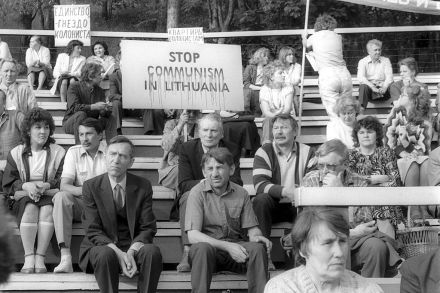
In the past five years I’ve met many people who’ve had direct, sometimes horrific, experience of communist rule. But I was more excited about doing a recent interview than I had been about any of the previous ones. It was going to be with a nun in a convent in Lithuania. I had imagined the scene: we would enter a large, gloomy, medieval stone convent. We would be cautiously admitted into a cavernous hallway and then ushered by a silent nun into a small, bare room for visitors. Then, dressed in black nun’s garb, Sister Nijolė Sadūnaitė would enter the room, head bowed, and sit in a plain wooden chair, her face lit only by a candle.

Douglas Murray, Lionel Shriver, Julian Glover and James Bartholomew

From our UK edition

20 min listen

On this week's episode, Douglas Murray says the world is becoming claustrophobic, (00:55) Lionel Shriver struggles to get through South African airport security, (08:29) Julian Glover maps out the countryside battle lines, (16:52) and James Bartholomew buys a tank. (22:13) Produced by Angus ColwellEntries for this year's Innovator Awards, sponsored by Investec, are now open. To apply, go to: spectator.

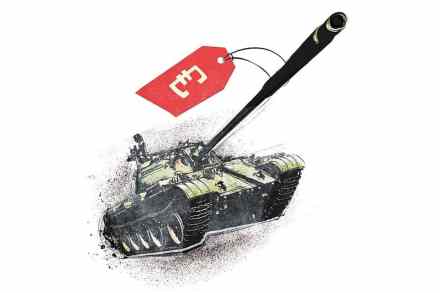
Why I’ve spent £68,500 on a tank

From our UK edition

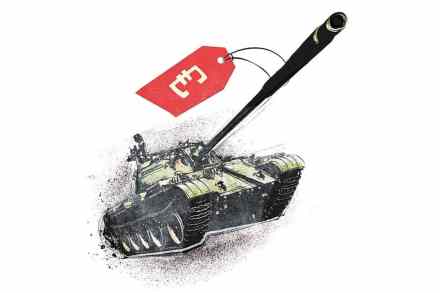
Buying a tank is not as easy as you might think. When we started looking for one, people delighted in telling us: ‘Oh, you should have bought one in the 1990s. There were hundreds available for practically nothing!’ Well, not anymore. Especially not if you are picky about what sort of tank you want. I’m collecting artefacts for a new museum of totalitarianism and wanted a T-54 or T-55, two models which are pretty much the same as each other with just a few alterations and which are the most-produced tanks in history.

James Bartholomew, Freddy Gray and Kate Andrews

From our UK edition

20 min listen

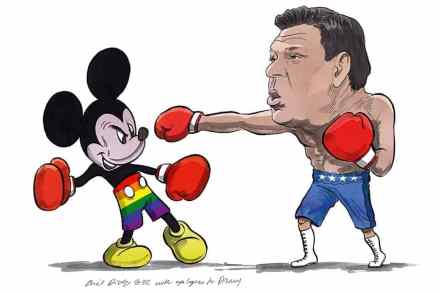
On this week's episode, we’ll hear from James Bartholomew on how taking in a Ukrainian refugee has improved his social clout. (00:50) After, Freddy Gray on the Republican fight against Disney. (06:27) And, to finish, Kate Andrews on overcoming her arachnophobia. (13:46)Entries for this year's Innovator Awards, sponsored by Investec, are now open. To apply, go to: spectator.

My stock has soared since I’ve taken in two Ukrainians

From our UK edition

I have temporarily taken in two Ukrainian refugees and suddenly find that, for very little sacrifice, my stock has soared. People who have regarded me as a hard-nosed, right-wing bastard are suddenly confused and struggling to readjust. A woke young relative who has despaired of my ignorant, reactionary views on Black Lives Matter, climate change, gender and so on suddenly sees a halo above my head. My mother-in-law on the Costa Brava reports mentioning that her daughter and son-in-law have Ukrainian refugees is like being sprinkled with gold dust. Her social circle is in awe. Never have I received so much praise for doing hardly anything at all.

Assetocracy: the inversion of the welfare state

From our UK edition

33 min listen

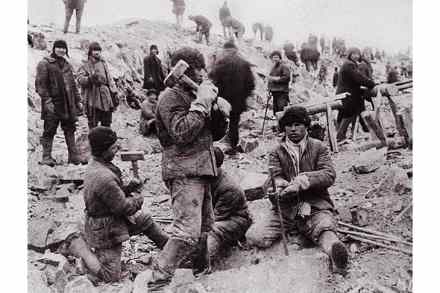
On this week's episode: why is the Prime Minister so desperate to support the assetocracy? In The Spectator’s cover story this week, after Boris Johnson revealed his plan to pay for social care with a National Insurance increase, Fraser Nelson says there has been an inversion of the welfare state. Is it right to ask the working poor to pay more taxes to help cover the social care of people who could easily fund it themselves? Kate Andrews, The Spectator’s economics editor, joins Fraser to discuss. (00:47) Plus, why is our knowledge of Soviet atrocities so poor? Attempting to fix this, James Bartholomew has been interviewing and recording the stories of survivors of Soviet oppression and torture.

Tales from the Gulag: why I’m helping survivors tell their stories

From our UK edition

I trudge up the concrete stairs of a council block of flats in west London. Up three floors. Then along one of those outside corridors, past several doors until I reach the final one. It is already open and there she is — smaller than I remember and with a charming, friendly smile. I guess that is because Ivanna knows me better now. She trusts me more. After what she has been through, it’s not surprising that it takes time to gain her trust. She welcomes me into her little one-bedroom flat and before long, I am in a different world — a world of Ukrainians, Poles and Soviets, deportations, helping resistance fighters, being arrested… it is a world of memories which mean so much to her. She is 96, and the people she was closest to are long gone.

Party time: what is the cost of freedom?

From our UK edition

34 min listen

How free are we after freedom day?(00:27) Also on the podcast: Why does it take hours to refuel your car in Lebanon?(10:19) and finally… Is British gardening wilting or blooming?(21:21) With The Spectator's economics editor Kate Andrews, Michael Kill, CEO of the Night Time Industries Association, journalists Paul Wood and Tala Ramadan, author James Bartholomew and gardener and writer Ursula Buchan.

The strange death of the English garden

From our UK edition

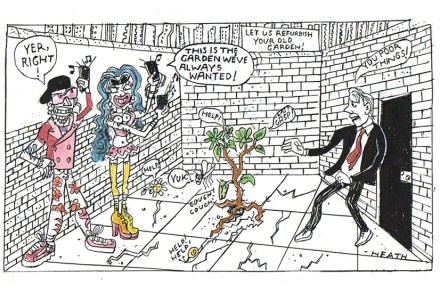
Gardening is dead. It had been ailing for a long time and it sometimes looked as though it might pull through. But I knew it had finally kicked the bucket when the last of the three patches of grass I used to be able to see behind my house was replaced with a plastic lawn. Then there was a ghastly death rattle: plastic ivy was draped over an electric gate which serves to let the owner’s car into the paved area formerly known as the front garden. And that came after the arrival of dozens of plastic balls in the neighbourhood. They are supposed to be imitations of Buxus sempervirens trimmed into a ball shape but their relentless perfection and over-vibrant colour means they don’t deceive anyone. They must be wonderfully low-maintenance.

An open letter to my golf club

From our UK edition

Dear Mike, Thank you for asking me, along with all the other members, whether I would like to become part of the golf club’s new ‘Equality — Diversity — Inclusion (EDI) Working Group’. The short answer is I would rather spend a couple of hours in the mud, picking up old beer bottles and condoms out of the river which winds though the course, than sit on such a ‘working group’. It is difficult to describe -exactly why I think this venture is a bad idea but I will have a go. Let’s take the words of the title of the new committee. What kind of ‘equality’ is it going to work at? Obviously the club cannot attempt to make all members financially equal.

The rotten legacy of communism in Albania

From our UK edition

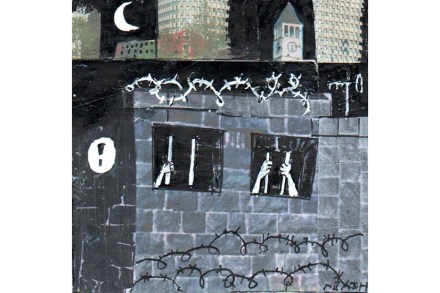
Our heavily laden taxi turned off the main highway from Tirana and started to negotiate the rough, one-track road. The road wound its way around the edges of the mountains until we reached the ruins of Spaç prison, once a slave labour camp in the communist era of Albania. Two three-storey buildings housed the large cells where 54 men at a time had lived and slept. They were required to work gruelling shifts, filling metal wagons with copper ore and pushing the along uneven rails, some of which were under water. If they failed to fulfil their quota, they would have to do a second shift. And if they failed again, they would be put in a punishment cell. That meant sleeping half-starved in a tiny cell on a concrete floor. The temperature could fall to minus 18˚C.

Racism, poverty and the ‘controversy paradox’

From our UK edition

It might seem puzzling that we have seen such a furore about racism and racial discrimination at this particular time in our history when all possible measures of racism indicate that there is less of it in Britain than at any time in the past 70 years. A decade ago, 41 per cent of us ‘-strongly agreed’ that we would be content for our children to marry someone of a different race. That has now risen to 70 per cent. In 2006, 55 per cent ‘strongly disagreed’ that you had to be white to be ‘truly British’. That has risen to 84 per cent.

Hero or double agent? An encounter with Lech Walesa

From our UK edition

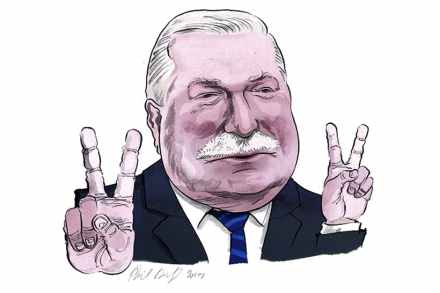
Lech Walesa is probably the most famous of all the thousands — actually millions — who struggled against the oppression of Communist rule in Eastern Europe and the Soviet Union. The only person with a similar level of fame is Vaclav Havel in what was then Czechoslovakia. Walesa was the leader of the Solidarity trade union which, according to the legend, grew from ten members to ten million in a single year, fundamentally challenging the totalitarian rule of the Communist party. He was awarded the Nobel Peace Prize in 1983. He was imprisoned multiple times.

The awful rise of ‘virtue signalling’

From our UK edition

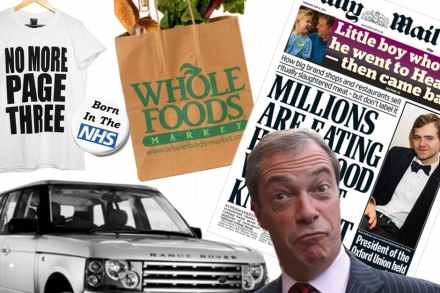
190 years of The Spectator   18 April 2015 Go to a branch of Whole Foods, the American-owned grocery shop, and you will see huge posters advertising Whole Foods, of course, but — more precisely — advertising how virtuous Whole Foods is: ‘We are part of a growing consciousness that is bigger than food — one that champions what’s good.’ This is a particularly blatant example of the increasingly common phenomenon of what might be called ‘virtue signalling’ — indicating that you are kind, decent and virtuous. We British do it, too. But we are more sophisticated, or underhand.

What explains the idiocy of the liberal elite? It’s their education

From our UK edition

We’re closing 2017 by republishing our twelve most-read articles of the year. Here’s No. 6: James Bartholomew on the liberal elite's reaction to Brexit and Trump: Enough! Enough! For months, the so-called liberal elite has been writing articles, having radio and TV discussions, giving sermons (literally) and making speeches in which it has struggled to understand those strange creatures: ordinary people. The elite is bemused by what drives these people to make perverse decisions about Brexit and Trump. Are they racist, narrow-minded or just stupid? Whatever the reason, ordinary people have frankly been a disappointment. Time, ladies and gentlemen, please! Instead, let’s do the opposite. Let’s try to explain to ordinary people what drives the liberal elite.

Letter to a young Corbynista

From our UK edition

We’re closing 2017 by republishing our twelve most-read articles of the year. Here’s No. 11: James Bartholomew explains to his nephew why he is not voting for Jeremy Corbyn: Dear John, I really hope you won’t be offended by this letter from your uncle. I have nothing but respect for you and I would hate to damage the friendly relationship we have had since I first met you when you were six years old. I understand from your aunt that you voted Labour in the latest election and that you are a ‘Corbynista’. In fact even your aunt herself — a lifelong Tory as far as I know — has been saying how nice Jeremy Corbyn is and how much better he handled the Grenfell Tower tragedy than Theresa May did.