Snp

Diary – 14 May 2015

For the 2005 general election, I had a party featuring a gigantic cheesecake with differentiated segments by allegiance. It contained no purple, which you could call leftie bias, but it genuinely didn’t seem necessary. It certainly wasn’t because I couldn’t think of a purple fruit. The Lib Dems did badly out of that, but mainly because you should never put banana on a cheesecake; they did fine in 2010, when I represented them with lemon macaroons. No colourful theming for 2015; the stakes were too high, and I decided that it was a waste of soft fruit. Just booze and crisps and, by 10.15, depressed people; exactly like 1992, in fact, before we discovered finger food. At 1 a.m., I went into Adam Boulton’s programme on Sky News to talk results with Harry Cole.
Making Labour work

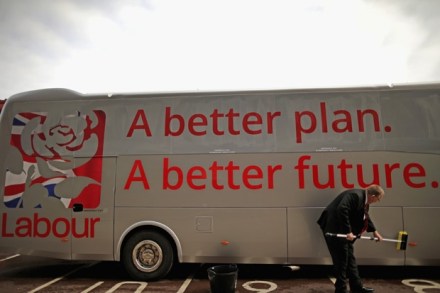
[audioplayer src="http://rss.acast.com/viewfrom22/thelastdaysofmiliband/media.mp3" title="Dan Hodges and Andrew Harrop discuss the final days of Miliband" startat=34] Listen [/audioplayer]The Labour party is in a worse position today than after its defeat in 1992. Then, the electorate sent Labour a clear and simple message: move to the centre, don’t say you’ll put taxes up and select a more prime ministerial leader. This time, the voters have sent the party a series of messages, several of which are contradictory. The reasons Labour failed to win Swindon South are very different from why it lost Morley and Outwood and the reasons for that defeat are different again in Scotland, where almost all seats fell to the nationalists.

Tory MP teaches SNP MPs Westminster etiquette

On Monday when 56 SNP MPs descended on Westminster, the youngest of the new intake Mhairi Black gushed that everyone had been so nice. Two days in, and cross-party relations have begun to cool. Carol Monaghan, the MP for Glasgow North West, claims that Simon Burns, the Tory MP for Chelmsford, scolded her as well as her fellow SNP politicians for their bad etiquette: https://twitter.com/Carol4GlaNW/status/598423992509321216 However, Burns has clarified the situation to Mr S: 'I was giving a talk about how to debate in chamber. If you agree you say 'hear, hear' and I mentioned that in recent years an unfortunate habit of clapping has occurred and that is deplorable.

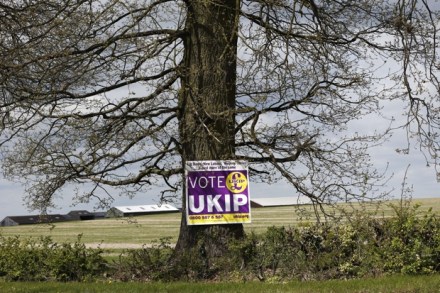
It’s Labour’s loss if they don’t take Ukip voters seriously

Almost four million people voted for Ukip on 7 May. That, in itself, is an astonishing achievement for a party which is a) newish and b) endured more vilification than even Ed Miliband had to put up with, from both the press and of course the BBC. It would be nice to think that at some point we will get over our obsession with the SNP and Nicola Sturgeon - and start taking Ukip as seriously as we do the Nats. Or, almost three times more seriously, if we wish to be properly democratic. Ukip was crucial to the Conservative victory, taking enormous numbers of votes from Labour supporters north of Watford. Labour seems determined not to take them seriously and simply to dismiss Ukip supporters as vile racists.

New SNP MPs take drinking advice from Alex Salmond

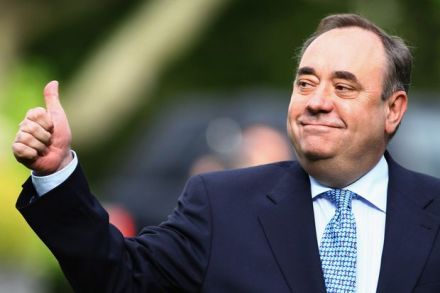
Ahead of the arrival of 56 SNP MPs in Westminster yesterday, Alex Salmond offered his new colleagues some advice in a recent interview. He said: 'Make your voice heard, represent your constituents, and stay out the Strangers Bar'. So far, so good. In fact, Salmond will no doubt be glad to hear that his fellow MPs have taken his advice and stayed out of the Strangers bar. Instead, they have opted to make Parliament's sports and social bar their new base. Word reaches Steerpike that a few members of staff had their noses put out of joint last night when the lesser frequented bar was unexpectedly busy. 'It was packed full of the SNP gang - on a Monday,' Mr S's mole sighs.

How will SNP MPs operate in Parliament?

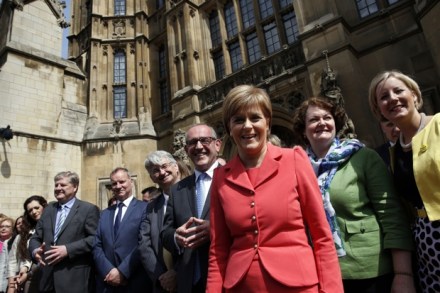
Most of the new SNP MPs celebrated their party’s amazing result in the general election today with a photo call outside Parliament. They certainly looked an impressive bloc of parliamentarians, illustrating just how different this Parliament will look and feel from the last. But one of the interesting questions is how much freedom will these new MPs have to pursue their own interests, or whether they will be expected to operate as a bloc, and not outside the bloc. Many backbench MPs take up personal campaigns on a matter affecting constituents, or a small issue where they hope they can effect a change in the law. Some do this when it is not their party’s policy, in the hope that they can change the party too.

Britain’s youngest MP is given a warm Westminster welcome

Warning: The SNP revolution has begun in Westminster. This afternoon Nicola Sturgeon arrived at parliament with her 56 newly elected SNP MPs in tow. However, despite talk of discord between the Scots and English, Mr S is assured that so far relations are remarkably civil. Mhairi Black, the 20-year-old student who ousted Labour's Douglas Alexander from his seat to become the youngest MP for centuries, told the BBC's Tim Reid that the English can't be too scared of the SNP as everyone has been very polite so far: https://twitter.com/TimReidBBC/status/597757323684229120 Oh the innocence of youth.

Why Ukip will descend into sectarian chaos

Yes, yes, I know it's supposed to be 'unfair' that Ukip ended up with only one MP while securing 13 per cent of the popular vote. But that's first-past-the-post for you. You have to win a seat to get into Parliament. The British electorate was offered the chance to to ditch FPTP back in 2011 and said, nope, we'll keep the unfair system. As for Ukip coming second and third in all those Labour seats, it's impressive but I suspect not terribly significant. White northern working-class voters were protesting against the fact that none of the major parties gave a toss about the destruction of their communities by the merciless progress of modernisation.

Diary – 7 May 2015

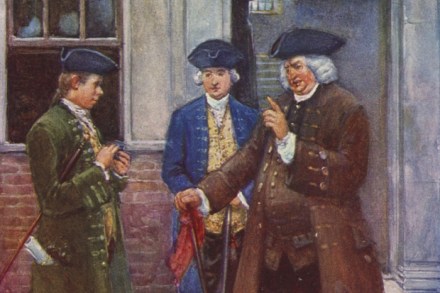
I am writing a play about Dr Johnson and his Dictionary. It will be performed in Scotland later this year. Five out of the great man’s six helpers were Scots (the only Englishman, V.J. Peyton, was considered a fool and a drunkard) and it’s timely to think of all those Scotsmen working away to consolidate the English language while their descendants try to define the general election. As a fully functioning Willie (‘Work in London, Live in Edinburgh’), I am startled by the zeal with which the SNP plans to take its revenge on Westminster after a decisive ‘no’ vote in the referendum.

Let them eat (Sturgeon) cake

An interesting election day parcel has arrived at the Spectator office: it contains a box of 'party leader cupcakes' from Sky News. ‘We recommend eating David, Ed, Nick, Nigel, Nicola, Natalie and Leanne whilst they are still delicious and fresh,’ says the accompanying letter. Funny thing, though, somebody at the channel — we suspect a furtive Scot Nat — has packed our box full of Nicola Sturgeons (see picture). Not a David, Ed, Nick, Nigel, or Natalie in sight. Oh well, we are still grateful. Two of the cakes are now protecting Nicola’s modesty on this week’s Spectator cover image. Thank you Sky!

The disunited kingdom

Never before — at least, not in living memory — has there been such a disconnect between north and south Britain. We vote together, but cast our ballots in very different contests. Scotland and England, semi-detached in the past, are more estranged than ever. The mildewed contest between David Cameron and Ed Miliband touches few hearts north of the Tweed; the battle between Labour and the SNP still mystifies many of those sent north to observe the strange happenings in Scotland. Edmund Burke wrote of another revolution: ‘Everything seems out of nature in this strange chaos of levity and ferocity, and of all sorts of crimes jumbled together with all sorts of follies.’ Something similar might be said of this Scottish insurrection.

Scotland’s nasty party

You get bad losers in politics and bad winners, too, but it’s surely a rare business to get a bad winner who didn’t actually win. Yet this, since they lost last September’s referendum, has been the role of the SNP. Dismay, reassessment, introspection, contrition, resignation; all of these have been wholly absent. Instead, they have been triumphalist. Lording it, with cruel and haughty disdain, over their vanquished foes. Who, we must remember, they didn’t even vanquish. Well, maybe they’ve vanquished them now. I write this pre-election, with the polls all saying that the Nats will win something between almost every Scottish seat and actually every Scottish seat. Only, of course, you don’t call them ‘Nats’ any more, do you?

Miliband’s tablet of stone may cost him my vote

You have the advantage over me. You know the result of the general election, whereas I do not — a consequence of the moronically linear progression of time. Indeed, you may already have fled to one of those countries with a much lower tax rate and less fantastically irritating politicians — Algeria, for example, or Benin. Or Chad. And you are reading this digitally on some patched-in fibre-optic service, the electricity generated by goats trotting forlornly around a gigantic hamster wheel outside — but you are nonetheless delighted with your new life, despite the flies and the occasional gang of marauding, maniacal jihadis. At least you’re not here to experience Britain being well and truly sturgeoned.

Nick Clegg got coalition wrong. Tomorrow, he’ll pay the price

It’s hard not to feel a bit sorry for Nick Clegg. He’s a decent man who took a tough decision to put his party into coalition with the Conservatives, and lost half of his support as a result. Tomorrow, his party will be hammered. His great miscalculation was imagining that in England the Lib Dems would emerge with a list of achievements voters would applaud – as they did in the 2003 Holyrood elections when, after four years of coalition, the Lib Dems overtook the Scottish Conservatives to become the third-largest party. On the radio the other day Clegg vainly paraded his boast list, his own version of Kelly Clarkson’s Because of You. 'It’s because of us that 27 million people have received huge tax cuts.

I have worked out the only possible way to build a viable government (but it’s not pretty)

For the past few days the BBC website has had an interactive game where you have to build your own coalition, using a series of possible results from tomorrow’s election. It ought to be marketed as an educational test, far more challenging even than Michael Gove’s rigorous school tests. But finally, I think I have done it. I have worked out the only possible way to build a viable government using the composition of the House of Commons which the polls appear to be predicting. Take Nate Silver’s analysis of the polls this morning, which predicts the following: Tories 281 seats, Labour 266, SNP 52, LibDem 26, DUP 8, Sinn Fein 5, Plaid Cymru 4, SDLP 3, Ukip, Greens and UUP one apiece.

This election campaign has shown a democracy in a horrible state of disrepair

It is often said that we get the politicians we deserve. But throughout this election I have kept wondering, ‘Are we really as bad as all this?’ The answer must be ‘yes’. This bland and empty 'campaign' has not only been the fault of the main parties competing to govern the UK – it has also been a reflection of what they believe we, the general public, now expect from our politics. Of course the result is aggravating, in part because we keep trying to enjoy contradictory things. For instance at some point in recent years it was decided that any statement outside a vague centre-left orthodoxy constituted a ‘gaffe’.

Why elections are bad for your health

The excitement and anxiety was tangible during the election of 1997. Even as a child I was able to pick up on it. I saw the signs of stress in the adults around me: jiggling knees, bitten lips, my mother twirling hair around an index finger. Elections are stressful and this can cause serious health problems – anxiety, obsessive compulsive tendencies and even depression.

Scotland is on the verge of becoming a one-party state

My constituency is one of the SNP’s most coveted prizes. If they win in Midlothian they can win almost anywhere. This is Gladstone’s old seat, where the modern political campaign was born. He wrested it away from the Conservatives in 1880, after a series of stirring speeches on the government’s foreign policy failures. On Thursday the SNP are hoping to pull off a similar upset. The momentum behind the nationalists is incredible. Everything I’ve seen and heard in the last couple of weeks points to an SNP victory here. My entire family is voting for them. My mother suggested that I should do the same. ‘Give your dead grandfather a vote,’ she said without irony. A straw poll of my neighbours reveals that the rest of my street have become nationalists too.