Sexuality

Gay civil partners should resist pressure to ‘upgrade’ to marriage

Apparently I’ve proposed to my civil partner. He claims that on BBC Radio 2, on the Jeremy Vine show (he thinks it was the JV show) I expressed myself in terms which presumed his prior acceptance. I can’t remember a thing about it — on live radio one does tend to throw these thoughts out heedlessly — but my partner swears I said, ‘Oh yes, well I suppose we’ll have to get an upgrade.’ He found this a graceless way of popping the question, and has forbidden me from using the term ‘upgrade’ again. Ah well. But in that case, if not ‘upgrade’, what shall we call it?

A secret sperm donor service in post-first world war London

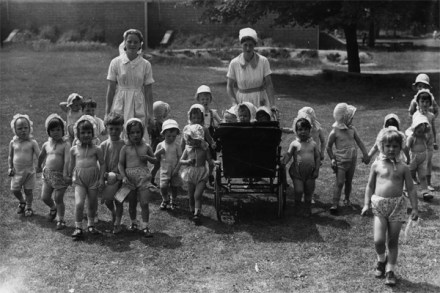
These days there are sophisticated and scientific solutions to the dismal problem of unwanted childlessness — there are IVF, Viagra and well-established egg and sperm donor services. We think of these as recent advantages and give thanks for the modern age. But what only very few people are aware of is that long before sperm donation was practically or ethically possible, in the early 20th century, a secret sperm donation service existed for those women most in need. Helena Wright was a renowned doctor, bestselling author, campaigner and educator who overcame the establishment to pioneer contraceptive medicine in England and throughout the world. Kind, intelligent, funny and attractive, Helena had a way with words and a devoted set of friends.

Douglas Murray’s diary: My gay wedding dance-off with Julie Burchill

The pilot refuses to get going until everyone is seated and quiet. When we take off there are raucous cheers. I am on a midday budget-airline flight to Ibiza. Louder cheers welcome the drinks trolleys which are noisily ransacked. Along from my seat a gentleman is reading The Spectator. It transpires we are heading for the same occasion. The ceremony takes place on a raked clifftop amphitheatre on the beautiful and quiet north side of the island. Boiling sun, cliffs and glittering sea boast the backdrop. Assembled friends and family swelter in the full lamp glare of the sun. I keep my jacket on. Though this may sound like sunstroke, the ceremony is conducted by Benedict Cumberbatch.

Burlesque is not as bad as stripping. It’s far worse

A female friend asked me to a burlesque night she had organised. She honestly thought I would enjoy it. ‘Come and see naked women who aren’t being exploited,’ she said. My friend said this because I sometimes hide from the world in the dark caves of Hackney, where ladies collect pounds in a pint glass and then turn around a pole with all the joie de vivre of a rusty weathervane in a light gale. On a wet weekday afternoon there are typically six or seven punters in these stews, who half-watch the show while drinking lager, munching crisps and thumbing through Loot or watching the cricket on the screen in the corner. I like these places. Flesh, alcohol, crisps, cricket, literature — the five pillars of civilised manhood, all accessible from one bar stool.

How can I write like that about my family? Easy. My wife isn’t reading

People often ask how I get away with writing about my wife so often. Doesn’t Caroline mind being cast as the matronly foil to my errant schoolboy? I’d love to say that she perches on my shoulder, chortling with pleasure as she vets every word, but the truth is she never bothers to read any of my stuff. That’s how I get away with it. The same is also true of my children, which is just as well considering the things I write about them. In last weekend’s Sunday Telegraph, for instance, I wrote a 1,600-word essay about why men with demanding jobs are less likely to complain about their ‘work-life balance’ than high-flying career women.

The unfair sex – how feminism created a new class divide

James is 15 years old, coming up to his GCSEs; and the researcher he is talking to is clueless about girls. Yes, he tells her, girls at his school, underage girls, do indeed have sex. With guys in their class, like him. The researcher is surprised. Haven’t girls gone studious; aren’t they collecting the top grades, leaving the boys behind? James states the obvious. ‘It’s not girls with As or A*s,’ he explains. ‘Girls with As are virgins.’ Today, almost a quarter of girls report having underage sex. But there are almost as many girls waiting till they’re 20 or more. This isn’t random, a question of whether and when the right boy appears. Instead, it’s a parting of the ways.

Zero tolerance for people who watch fairy-folk sex cartoons

A man in New Zealand has just been sent to prison for three months for watching cartoons of pixies, elves and trolls enjoying sexual intercourse. I don’t know, from the court report, if this was inter-species fairy-folk sex, i.e. if it was a nasty scene of one of those enormous, wart-festooned Norse Huldrefolk applying himself with great vigour to the epicene and vulnerable form of a mere elf. This information is not recorded. We know simply that Ronald Clark was dispatched to chokey and a local campaigner against child abuse said outside the court that while the convicted man had watched only cartoons of these creatures having sex, it was the sort of thing which might lead to him trying it out for real.

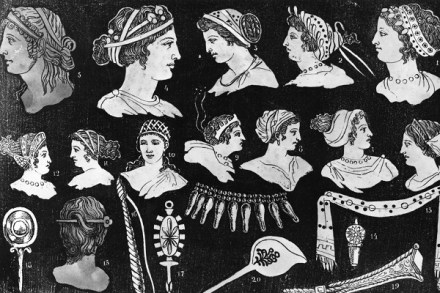
Was Katherine Philips a lesbian love poet?

To my Excellent Lucasia , on our Friendship. I did not live until this time Crowned my felicity - When I could say without a crime I am not thine, but thee. This carcass breathed, and walked, and slept, So that the world believed There was a soul the motions kept; But they were all deceived. For as a watch by art is wound To motion, such was mine: But never had Orinda found A soul till she found thine Which now inspires, cures and supplies, And guides my darkened breast: For thou art all that I can prize, My joy, my life, my rest. No bridegroom’s nor crown-conqueror’s mirth To mine compared can be: They have but pieces of this earth, I've all the world in thee.

Long life: Polite silence on my old prep school’s possible paedophile

It is usually a mistake to return to places one has known as a child. I have only once been back to the large, white-stuccoed, early-Victorian manor house in Hertfordshire where I was born and brought up, and it was a dispiriting experience. Although the house was near to the town of Ware, less than an hour’s drive from central London, it was set in unspoiled country alongside a village in which the names of some of the inhabitants had been there in the Domesday Book. Apart from a small row of bleak pre-war council houses on the edge of the village, there was nothing there to offend the eye or to suggest proximity to a great city. My parents, finding the house too expensive to run, sold it in 1959, when I was 19 years old, and I didn’t go back for some 20 years after that.

Gay sympathy for Cardinal Keith O’Brien

Were you to try to identify the sort of journalist least likely to feel sympathy for Keith O’Brien, I suppose you’d place near the top of your list a columnist who was (a) an atheist, (b) especially allergic to the totalitarian mumbo-jumbo of the Roman Catholic church, (c) gay, and (d) a strong supporter of the coalition government’s plans for same-sex marriage. If so, this columnist regrets to disappoint. The downfall of the former Archbishop of St Andrew’s and Edinburgh has come to pass at least in part because he did not mince his words. I admire such people. As to O’Brien’s homosexual behaviour and the charge of hypocrisy… well, to that in a moment. Keith O’Brien’s career has been distinguished by simplicity of expression.

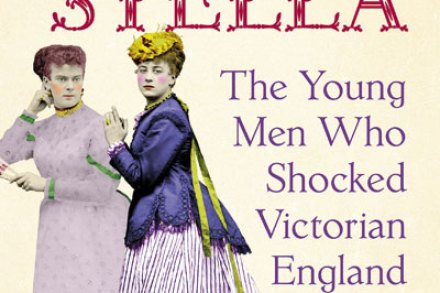
‘Fanny and Stella: The Young Men Who Shocked Victorian England’, by Neil McKenna – review

Mick Jagger, the Danny La Rue of rock, impersonates a woman on the cover of the 1978 Stones album Some Girls. Vaudeville performers in the Jagger mould love to put on lipstick and ‘false bubbies’ (as Neil McKenna calls them). Boy X-Factor contestants, with their shaved eyebrows, diamond earrings and nails lovingly manicured, present an almost Gloria Swanson-like image of adornment. Perhaps it is merely romantic to suggest that the stylised wigs and gowns worn by our bishops and high court judges also have a homoerotic component. The former Pope Benedict XVI’s ruby-red pumps were nothing compared to the faux ermines worn in the House of Lords.

Thinly veiled threats

No one could ever accuse Shereen El Feki of lacking in courage. To spend five years travelling around the Arab world in search of dildos, questioning women about foreplay and anal sex, is not a task many writers would relish. Sex and the Citadel is a bold, meticulously researched mini Kinsey Report, rich in anecdote and statistics. El Feki’s father is Egyptian and a devout Muslim, her mother a Welsh Baptist, who converted early to Islam. An only child, with fair northern features, she grew up in Canada and was raised as a Muslim.

Stop shouting at Hilary Mantel – there are real outrages to address

It started the other week, when David Cameron was in India. Although it started like a bout of malaria starts, so I suppose the more precise term would be ‘recurred’. There he is in Amritsar, touring the site of a massacre, possibly in that hat. And all Britain wants to know is what he thinks about what Hilary Mantel thinks about the Duchess of Cambridge. What, I thought to myself, the hell is wrong with us? It’s a pretty expansive ‘us’, this, and it includes Cameron himself.

Sorry, but Parliament is full of sex pests

The news is dominated by tales of ‘sexual misconduct’ by men in positions of power, and nowhere is the smell of sleaze as strong as in Westminster. Our politicians work in a building formally known as a ‘palace’ where they are often treated like kings — and, occasionally, behave like them. Even more occasionally, the rest of the world catches a glimpse of what is going on. There has always been a certain tolerance of sexual misbehaviour, which is more often the subject of jokes than outrage. One Tory minister is teased by his colleagues for blowing his parliamentary staff budget on hiring a beautiful researcher, only to find her turn up for work having acquired a large engagement ring.

Lord Rennard doesn’t need an inquiry. He needs a swift kick to the shin

I was seated at a rather stiff and formal BBC dinner a dozen or so years back, one of those ghastly occasions upon which the boss class attempt, painfully, to commune with the corporation untermenschen over noisette of chicken, or something similar. There were perhaps 15 of us, drawn from various levels of the BBC strata, with the then head of news — and now director-general — Tony Hall seated somewhere democratically in the middle. Along from me was a lowly but attractive female production assistant whose dining was interrupted by an unwelcome hand snaking along her inner thigh. The errant hand belonged to the well-lubricated reporter on her immediate left.

The pleasure of reading Rumer Godden’s India

Rumer Godden’s prose tugs two ways at once. It is subtle, descriptive, and light, but also direct and unashamed of being turned inside out until darkness consumes it, rendering what was beautiful irrelevant and suddenly opaque. There is also a lot of it. Rumer Godden OBE (1907-1998) wrote over sixty works of fiction and non-fiction over a lifetime divided between England, where she was born, India, where she spent much of her young adulthood, and Scotland, where she lived for the last twenty years of her life. Godden’s three best-known novels, Black Narcissus, Breakfast with the Nikolides, and Kingfishers Catch Fire are set in India.

Cardinal Keith O’Brien’s prayers

As the late Christopher Hitchens used to say of the most vociferous, gay-obsessed clergy: ‘I have a rule of thumb for such clerics and have never known it to fail: Set your watch and sit back, and pretty soon they will be found sprawling lustily on the floor of the men's room.’ In Cardinal Keith O’Brien’s case it was not on the floor of the men’s room but – if the stories of several former young novices are true – in late-night prayer sessions that His Eminence brought himself low. This is allegedly the same Keith O’Brien who was the author of last year’s tumescent comparison of civil marriage equality for gays with the introduction of slavery.

Moore, Burchill etc. redux

It’s an odd thing. I had been a little nervous of writing (subscribe here) about the Suzanne Moore twitter business because, much though I like and respect Moore and Burchill and the excellent Julie Bindel, it seemed to me to be a Crouch End dispute of negligible wider importance. And here we were with Algeria on fire, our Prime Minister poised to make some historic fudge on the EU and northerners freezing their balls off in ten feet of snow, and benefits being cut a bit and horses being devoured by the untermensch and so on and so on. Hugely important stuff. And yet online at least, the Moore stuff provoked an overwhelming response, both pro and anti.

Do political correctness and the culture wars make us less tolerant?

I have a confession. I saw a report on the Suzanne Moore row, and fled immediately for the safety of the sports pages. A lot of self-important people making a lot of noise, I thought to myself, as a glib heterosexual, while gawping at the latest act in the life and times of Mario Balotelli. But, as time passed, the fury of the Moore row made me revisit Culture of Complaint, the late Robert Hughes’ analysis of the culture wars. It’s sometimes said that we Brits don’t do culture wars; that we are much too sensible to be provoked into believing that trivialities are serious. This view appears to be a hangover from the over-egged claims Victorians made about ‘English exceptionalism’.