Sci-fi

Spielberg fumbles his final sci-fi

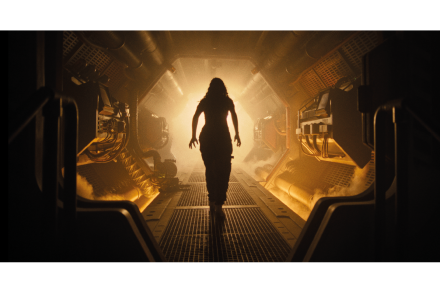
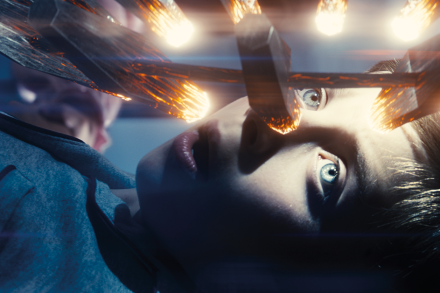
Steven Spielberg has said his latest film, Disclosure Day, is ‘the summation of my life in science fiction’, which began with Close Encounters of the Third Kind and ends here. (He is now 79.) I adored Close Encounters when it first came out in 1977 and still do – that final scene must be one of the greatest final scenes in cinema, greater even than The Terminator. But Disclosure Day is not its match, not nearly. What we have here instead is a forgettable action film with the bones of your average conspiracy thriller. There may or may not be life on other planets, but this poor Earthling felt the life drain from her at around ten minutes in.
Why I’m increasingly drawn to optimistic sci-fi

You know you’re getting old when you see Geena Davis from Thelma & Louise cast as a granny sex symbol and Alfred Molina as a character so elderly you’re supposed to believe that he could drop at any time. This is one of the running gags of The Boroughs, a sci-fi/monster series set in an upmarket, Stepford Wives-esque desert retirement village, and clearly aimed at ageing farts like I very nearly am who imagine themselves to be much younger and groovier than they now are. ‘Don’t worry, wrinkly kids,’ the series reassures us. ‘By the time you hit your seventies you’ll be taking more drugs and having more sex – even crazy, orgy sex [note to squeamish viewers: this scene takes place off camera] – than ever before.

Better than Hollywood: Netflix’s The Eternaut reviewed

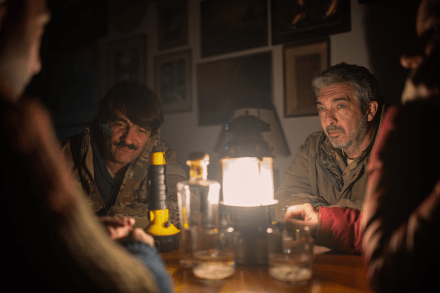
‘Next time you do a review, you’ve got to find something you like. You’ve been far too negative,’ said the Fawn. ‘Well, it’s hardly my fault if everything on TV is crap at the moment. I can’t just call up good stuff to order,’ I said. ‘Try,’ said the Fawn. Luckily – and unwontedly – Netflix has come to my rescue with a dystopian sci-fi series called The Eternaut. Though I’m not totally convinced by the name – a conflation of ‘eternity’ and ‘astronaut’ – it’s a very enjoyable watch, which confirms, yet again, Delingpole’s Iron Law of Television: always go for the shows with subtitles. This one is from Argentina, based on a graphic novel written by Hector German Oesterheld with artwork by Francisco Solano-Lopez.

Black Mirror season seven offers a welcome return to form

From our US edition

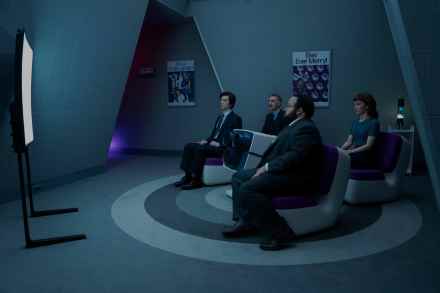
Charlie Brooker’s cautionary technological tales have now been running for well over a decade, and they are almost in danger of seeming old-fashioned. When Black Mirror began in 2011, Instagram was only a few months old, the iPhone was a new novelty just coming into the mainstream, and Elon Musk was best known for being CEO of Tesla. Now, virtually everything in the world has changed, and Big Tech plays roles in our lives that the ever-cynical Brooker could barely have imagined. There is, naturally, a residual irony that in order to afford the budgets – and starry casts – that the show continues to demand, it long since left its original home on Britain’s Channel 4 for the deeper-pocketed Netflix, which still funds it into its seventh series.

black mirror

Cartoonish, sub-Armando Iannucci comic caper: Mickey 17 reviewed

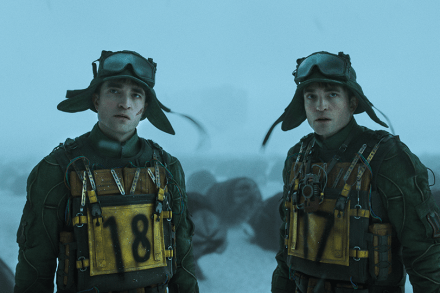
Mickey 17 is the latest film from the South Korean writer-director Bong Joon-ho, who won an Oscar for Parasite and made Snowpiercer and Okja. It’s a dystopian sci-fi satire starring Robert Pattinson twice over (all will be explained) but while it initially kicks some decent ideas around, it eventually descends into a cartoonish, sub-Armando Iannucci comic caper with, as far as I could ascertain, nothing fresh to say. It’s not the biggest disappointment I’ve had in my life but it’s up there. The film is set some time in the future and Pattinson plays Mickey 17, a crew member on a space-colonisation mission who, in the opening sequence, has fallen into a deep crevice on the ice planet that is Niflheim. (I’ve always had my reservations about Niflheim; ask anybody.

Severance returns to the office

From our US edition

On its surface, “corporate art” is comforting and accessible. It’s bright, friendly and visually simple, featuring flat cartoon vector people — with their bendy arms and odd proportions — who are jumping, dancing, reading or running. They’re always happy. Always. This art is used in every HR manual, charity about-us page, Facebook help section and LinkedIn jobs application. It’s uniform, indistinct, impersonal and insincere. The more you see it, the more you start feeling unsettled. Severance, the Apple TV+ sci-fi office thriller show from Ben Stiller, leans into that discomfort. The managers at Lumon Industries have perfectly clipped hair and overly broad smiles with flashy grins. Their white-wall offices are clean and organized, accented with single-color carpets.

severance

The Terminator is still the best

The Terminator is James Cameron’s first film, made a star of Arnold Schwarzenegger, is celebrating its 40th anniversary – there’s a 4K restoration out in cinemas – and I’ve never seen it. I’m not wholly ignorant of 1980s action films, it may surprise you to hear. I’ve seen Diehard. I know a single fella in a vest can see off an entire army. But Terminator passed me by and now I’m glad to have rectified that. It’s engrossing, suspenseful, has a personality all of its own and absolutely stands the test of time. That last scene with the crawling, whirring, clanking arm? Best scene ever. Cameron, who would go on to make Aliens, Titanic and Avatar, was reportedly living out of his car when he sold the script to producer Gale Anne Hurd for $1.

Please stop making Alien movies

In the Alien films, a xenomorph is a monstrous, all-consuming life form that exists only to make more and more copies of itself. Once the first xenomorph appears, it’s only a matter of time until all those gleaming chrome walls will be covered in creepy black goo and the humans suspended lifeless from the ceiling in webs of slime with their chests ripped open. The xenomorphs are not curious about the world. They don’t care that they’re in a spaceship in the middle of outer space. As far as they’re concerned, we’re all just warm bodies in which to incubate their young. The only thing they want to do is make more and more and more and more of themselves.

Why you should never watch sci-fi series on streaming channels

Jason Dessen, the hero (and, as you’ll discover shortly, anti-hero) of Apple TV’s latest sci-fi caper Dark Matter, is a physics professor at a second-rate university in Chicago. You can tell he’s not that good at his job because he introduces the concept of Schrödinger’s cat (surely the only interesting bit in the entirety of physics) five minutes before the end of a lecture. ‘Oh and the cat dies,’ he says to the uninterested students as they file hurriedly out of class. With no time constraint, sci-fi series on streaming channels can keep spinning you along for all eternity Still, at least he’s happy. His teenage son might have been genetically engineered to fit the phrase ‘but he’s a great kid’ and his hot wife Daniela is beyond perfect.

Minority Report is superficial pap – why on earth stage it?

Minority Report is a plodding bit of sci-fi based on a Steven Spielberg movie made more than two decades ago. The setting is London, 2050, and every citizen has been implanted with an undetectably tiny neuroscanner which informs the cops about crimes before they’ve been committed. However, as the first scene reveals, the undetectably tiny neuroscanner can be removed from the flesh with a corkscrew. The character who gouges out her tag is a computer geek, Julia, who invented the surveillance method in the first place. She stands accused of planning a murder and she goes on the run to clear her name. The actors appear to be trapped inside a tangerine lunchbox Sound familiar?

Dune, an enduring monument to cultural appropriation

From our US edition

One of the Ukraine war’s minor celebrities is Ramzan Kadyrov, a Russian politician and Islamic hardliner who rules his native province of Chechnya as a personal fiefdom. Kadyrov and his combative underlings have been active on social media from the beginning of the conflict, posing with guns and trophies and boasting about their martial prowess.  Before they became villains in the Western press, tarred by their association with Russian aggression and Islamic fundamentalism, the Chechnyan mountain clans’ struggle for independence was a Victorian cause celebre, akin to Western support for Ukraine today.

dune

A tangle of nonsense from the sloppy Caryl Churchill: A Number, at the Old Vic, reviewed

A Number, by Caryl Churchill, is a sci-fi drama of impenetrable complexity. It’s set in a future society where cloning has become possible for those on modest incomes. A Cockney father reveals to his grown-up son that he’s a replica of his older brother who died, aged four, in a car crash that also killed his mum. The son reacts with anger and bafflement. But Dad soothes him with happy news. The boy’s DNA was stolen by a gang of scientists who created 20 more copycat zombies, and these replicas are now scattered across the globe. Dad plans to cash in by suing the boffins for £5 million. No sooner has Dad finished this yarn than he admits it’s untrue. The mother didn’t die in a car crash and the timeline he gave was incorrect.

The frustrating promise of infinite freedom in video games

From our US edition

Starfield is intermittently, unexpectedly profound. As my custom spaceship lands on one of the game’s thousand planets, and my customized character steps into the neon lights of a strange alien city, I’m struck by the sheer scale of this digital universe. This is the game I dreamed of as a sci-fi nerd child and teen, burying myself in The Icarus Hunt, The Long Earth, Foundation, Hyperion, Dune and boundless other sci-fi novels that transported me from a rural Australian library and into space. And here I am, transported there again, through an Asus M16 gaming laptop. There’s a big galaxy out there, and it’s yours to explore. And yet, however vast, it’s a desolate universe.

starfield

Has Hollywood lost interest in making sci-fi movies for adults?

From our US edition

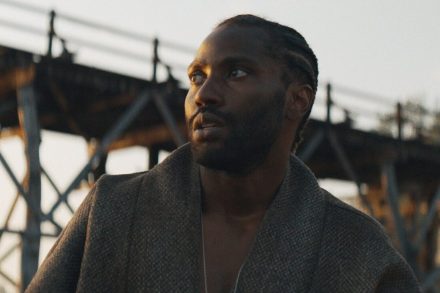
A decade ago, Alfonso Cuarón’s sci-fi thriller Gravity soared into theaters, to ecstatic reviews and a vast box office. Its success was all the more surprising — and welcome — because it had been dogged by reports of disastrous test screenings and production chaos, with its innovative, visual effects-heavy story apparently beset by the envelope-pushing demands of the technology that it required to depict its world. The movie could easily have been a colossal flop, but instead it seemed to herald a brave new dawn for ambitious, intelligent science fiction filmmaking that soared into the stratosphere, in both senses. Ten years on, the success of Gravity, or even Ridley Scott’s The Martian, are very distant memories.

john david washington the creator sci-fi

M3GAN is a biting satire of screen-obsessed parenting

From our US edition

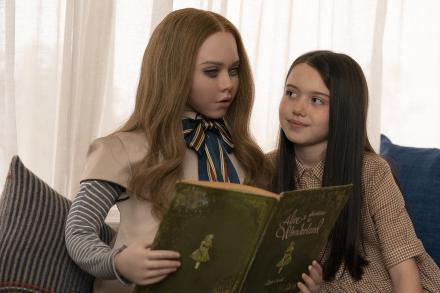
There’s a bit of moviegoing conventional wisdom that says January is the dumping ground for Z-list schlock films, all the genre fare not good enough for the holiday or summer seasons. And that’s why M3GAN — directed by Gerard Johnstone, and boasting story and production credits from legendary horror/thriller director James Wan — is such a pleasant surprise. It’s a nasty little cinematic bonbon packed with memorable images, and one that manages to say a few interesting things about modern life. After eight-year-old Cady (Violet McGraw) witnesses her parents’ deaths in a horrific auto accident, she’s sent off to live with her single aunt Gemma (Allison Williams).

‘The Fifth Head of Cerberus’ at 50

From our US edition

Gene Wolfe’s sci-fi novella, The Fifth Head of Cerberus, was published fifty years ago this year. It is a minor masterpiece. Set in the town of Port-Mimizon on the imaginary planet of Saint Croix, the story follows a family who are descendants of French colonizers. A sister planet, Saint Anne, was also colonized by the French. The original inhabitants of both planets were shapeshifters, and one of the early questions of the novella is whether the current inhabitants of both planets are in fact French or shapeshifters who, according to one theory, killed the would-be colonizers and permanently took on their form. The story is narrated by one of two brothers, who live in a large house on 666 Saltimbanque.

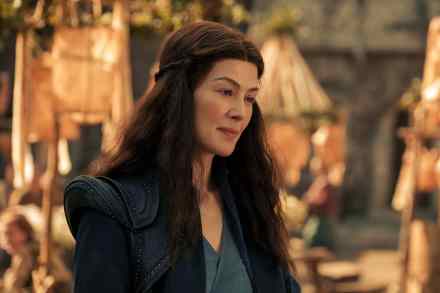
Even worse than the book: Amazon Prime’s The Wheel of Time reviewed

A couple of years ago, in that near-forgotten era when we could travel almost freely, I canvassed social media as to what should be my relaxing but involving holiday read during a fortnight in Greece. One suggestion — and this is why you should never trust the literary advice of random strangers — was Robert Jordan’s The Wheel of Time series. I started the first book full of bright hope. It would be my new Tolkien-meets-Game of Thrones. Besides the strong personal recommendation and the slew of five-star reviews on Amazon, what persuaded me was the fact that the late author had served two heavily decorated tours of duty as a helicopter door gunner in Vietnam. Then he went on to do a physics degree and worked for the US Navy as a nuclear engineer.

A blisteringly bonkers first episode: Doctor Who – Flux reviewed

BBC1 continuity excitedly introduced the first in the new series of Doctor Who as ‘bigger and better than ever’ — presumably because the more accurate ‘bigger and better than it’s been for a bit’ doesn’t have quite the same punch. Still, Sunday’s programme was a definite, even exhilarating improvement on those of recent years. Since Chris Chibnall became the showrunner in 2018, thrills have taken a firm second place to solemn lectures on how the most dangerous monster of all is human prejudice. Yet at no stage here did the Doctor (Jodie Whittaker) encounter some acknowledged hero of black and/or women’s history — and so allow us a self-satisfied bask in having risen above the bigotry of less enlightened times.

The genius of I’m Sorry I Haven’t a Clue

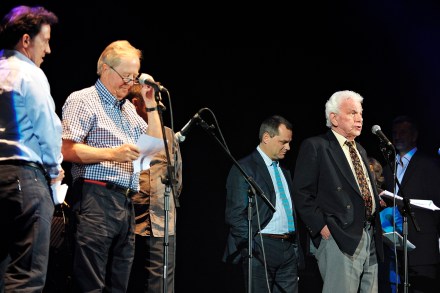
I’m Sorry I Haven’t a Clue has just been voted the greatest radio comedy of all time by Radio Times, ahead of Hancock’s Half Hour and the brilliant Round the Horne. The first two episodes of series 73 (can you believe it?) are also the last Tim Brooke-Taylor recorded before losing his life to coronavirus earlier this year. Brooke-Taylor was part of the original cast of the self-styled ‘antidote to panel games’, which first aired in 1972 with Bill Oddie, Jo Kendall and the show’s deviser Graeme Garden as fellow performers (Barry Cryer joined during the first series and Willie Rushton two years later).

Absorbing and beautifully designed: Jane Eyre reviewed

Blackeyed Theatre is another victim of the virus. Its production of Jane Eyre was midway through a UK tour, and due to visit China for a month, when the pandemic shot its plans to bits. Last month the show was revived on stage and committed to film. Kelsey Short (Jane) leads a team of just five actors who tell the story as Charlotte Brontë wrote it. The costumes, hairstyles and habits of speech seem authentically Victorian. The director, Adrian McDougall, has rejected the fashionable habit of presenting Jane as a rad-fem freedom fighter surrounded by grotesque male oppressors. His version reminds us how sympathetic the novel is towards men. Mr Rochester (Ben Warwick) is a romantic enigma, a dashing, grizzled buccaneer who is also decent, honourable and kind-hearted.